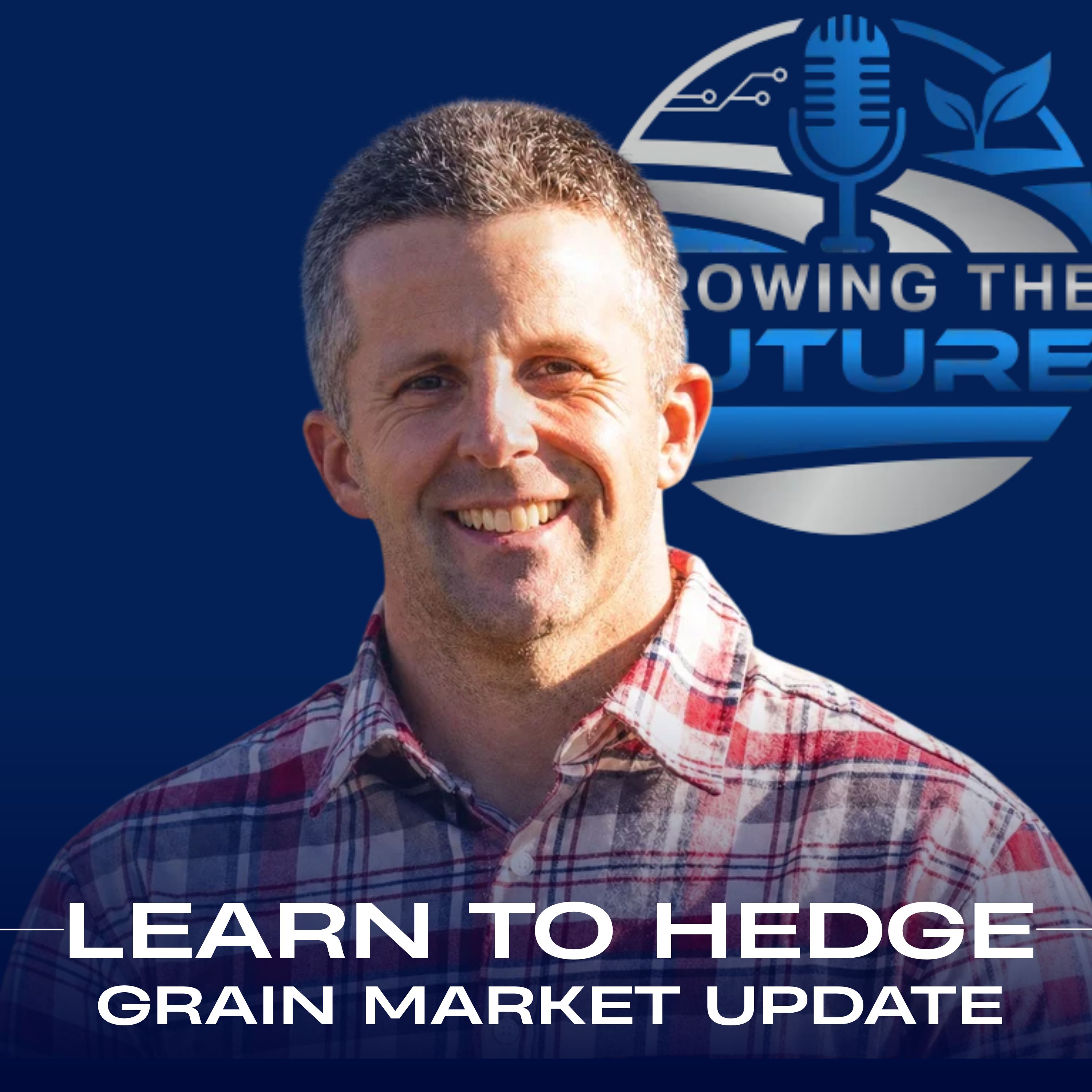
Dan opens with a farmer’s moment: grain in the bin, bills coming due, prices down. Ryan explains why growers are uneasy, how his market view has shifted over the last six weeks, and what changed the ground under corn when the USDA released two surprising reports. He walks through the topics he watches: weather in South America, the Black Sea, the StatsCan yield estimate on December 4, India demand, biodiesel policy and Canada’s export pace. On canola, Ryan shows how he builds a yield scenario from the five-year average, crush and exports, and explains why lower prices can draw in demand. He also shows how he reads trend, divergence and seasonal charts. In the second half, Dan and Ryan preview Learn to Hedge, a six-week Friday course on futures, basis, options and technical analysis, and Ryan explains why he thinks nobody should trade alone. Key Topics • How the USDA reports reshaped the corn market, and what followed in wheat • Canola yield, crush, exports and carryout in one worked sc
(00:20) - TBPN Merch Drop (05:48) - Jensen Out (09:45) - Colette Kress Takes NVIDIA's Helm (29:11) - Short Seller Flagged NVIDIA's Risk (37:47) - Post-Jensen Era Begins (54:18) - GPT-6 Cyber (57:40) - Dylan Patel discusses the potential fallout from a leadership crisis at Nvidia, including succession challenges, slower decision-making, tighter China restrictions, and risks to the open-source AI ecosystem. A semiconductor and AI analyst, he also evaluates possible CEO candidates, shifting advantages among AI labs, and how specialized data is driving uneven gains in model capabilities. (01:28:58) - Eric Newcomer, founder of the tech publication Newcomer and co-founder of the Cerebral Valley AI Summit, discusses the event’s origins and growth into a major gathering for AI leaders. He also explores leadership uncertainty at Nvidia, opportunities for competing chipmakers, and Silicon Valley’s political realignment following the midterm elections. (01:39:17) - Tantum Teddy discusses his book
This is our full interview with Dylan Patel. We discuss how Jensen Huang's resignation could reshape NVIDIA's role as the central bank of AI, who could replace Jensen as CEO, how Chinese AI labs are reacting, the future of US chip export restrictions, and what Jensen's departure means for venture capital and AI startups. TBPN is made possible by: Ramp - https://ramp.com Public - https://public.com Cisco - https://www.cisco.com Console - https://www.console.com CrowdStrike - https://www.crowdstrike.com Figma - https://www.figma.com MongoDB - https://www.mongodb.com NYSE - https://www.nyse.com Railway - https://railway.com Shopify - https://www.shopify.com/ Codex - http://openAI.com/codex Sign up for TBPN’s daily newsletter at TBPN.com Follow TBPN:
Dig into the inaccuracies of flat maps and how different map designs can shift our point of view. Uploaded 29-03-21 -- Fourteen Greenlands could fit in Africa— but you wouldn’t guess it from most maps of the world. The fact is, every world map humans have ever made is wrong. Actually, it’s impossible to make a flat map of the whole spherical world 100% right. So why do we bother with these inaccurate maps at all? Kayla Wolf explores how even the simplest changes in map design can shift our point of view. Lesson by Kayla Wolf, directed by Hernando Bahamon, Globizco Studios. Support Our Non-Profit Mission ---------------------------------------------- Support us on Patreon: http://bit.ly/TEDEdPatreon Check out our merch: http://bit.ly/TEDEDShop ---------------------------------------------- Connect With Us ---------------------------------------------- Sign up for our newsletter: http://bit.ly/TEDEdNewsletter Find us on Twitter: http://bit.ly/TEDEdTwitter Peep us on Instagram: http://bit
Lukas is still in Rome, and he and Saila start with tennis, the USTA days and why one-on-one sports beat team sports, why youth sports even have subs, and why zoomers say "brutal" about everything. They cover pickup clips and whether anything real survives a camera, the great log-off that never comes, taxing unrealized capital gains and the K-shaped economy, the origin of "below my line," Peter Thiel moving to Argentina, why nobody ever actually leaves Twitter, a boomer who starts a fight at a gas station and loses, suicidal motorcyclists, headlights that are out of control (and work like lawyers), merch made in China and tagged in Italy, why the reorder is never the same product, 2% Europe, the slippery slope as a law of nature, a Roman Airbnb host who wanted cash in hand, picking your dystopia by how many years in the past you want to live, and a $500 dinner called a hobby. Plus: re-anonymizing. Bonus episodes on Substack: https://plausiblydeniable.substack.com/podcast Polymarket: ht
Practice more problem-solving at https://brilliant.org/TEDEd/ Uploaded 22-03-18 View full lesson: https://ed.ted.com/lessons/can-you-solve-the-buried-treasure-riddle-daniel-griller After a massive storm tears through the Hex Archipelago, you find five grizzled survivors in the water. As an act of gratitude for saving them, they reveal a secret – the island they were just on holds some buried treasure. But when the sailors try to describe the island, something seems off. Can you find the booty despite their strange instructions? Daniel Griller shows how. Lesson by Daniel Griller, animation by Patrick Smith. Thank you so much to our patrons for your support! Without you this video would not be possible! Cailin Ramsey, Seung Hoon Shin, John Saveland, Nicolle Fieldsend-Roxborough, Venkat Venkatakrishnan, Sandy Nasser, CG Nobles, Yoga Trapeze Wanderlust, Jaron Blackburn, Alejandro Cachoua, Thomas Mungavan, Elena Crescia, Edla Paniguel, Anna-Pitschna Kunz, Tim Armstrong, Alessandro , Erika B
Nvidia is facing a severe corporate crisis as its board evaluates whether to dismiss co-founder and CEO Jensen Huang amid mounting scandals. The executive is confronting explosive accusations regarding two extramarital affairs, including one with a foreign associate suspected of espionage and another with a direct corporate subordinate. These developments have triggered significant financial fallout, wiping out hundreds of billions in market value and causing the company's stock price to plummet. Furthermore, analysts warn that his potential departure could drastically alter U.S. artificial intelligence policy and international semiconductor regulations, given his unique prominence as an industry advocate. With no clear successor in place, the unfolding situation threatens to destabilize global technology markets and uproot the leadership of the world's most dominant AI hardware supplier.
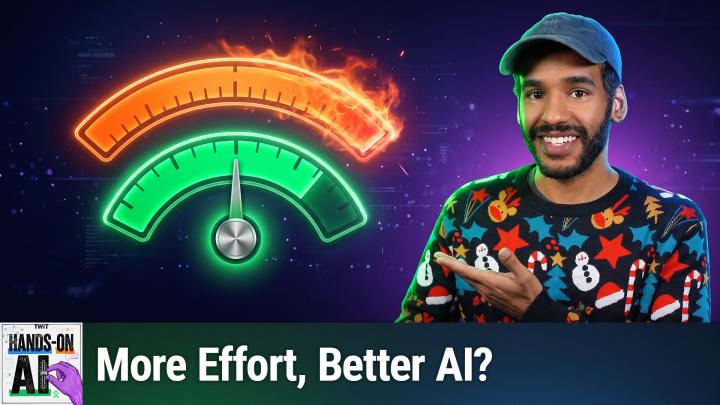
Which AI model should you use, and how much effort should it put in? Using Claude as the example, Mikah Sargent explains its four model families, Haiku, Sonnet, Opus, and Fable, and its five effort levels, and shows that ChatGPT and Gemini have the same two dials. He explains what an AI model's "thinking" actually is and what changes when you switch models or turn up the effort. He compares an easy job on a light setup and a heavy one, tests a logic puzzle with one right answer at two effort levels, and explains why the top setting isn't automatically the best one. Then he shares a way to choose that works in any chatbot. Send your AI questions to [email protected] Host: Mikah Sargent (https://twit.tv/people/mikah-sargent) Download or subscribe to Hands-On AI at https://twit.tv/shows/hands-on-ai Want access to the ad-free audio and video and exclusive features? Become a member of Club TWiT today! https://twit.tv/clubtwit Club TWiT (https://twit.tv/clubtwit) members can discuss this epi
"You're a fishmonger!" By taking a closer look at Shakespeare's words--specifically his insults--we see why he is known as a master playwright whose works transcend time and appeal to audiences all over the world. Lesson by April Gudenrath, narration by Juliet Blake, animation by TED-Ed. View the full lesson: http://ed.ted.com/lessons/insults-by-shakespeare
What happens when you make an entire curriculum AI-ready? What if the biggest opportunity for AI in education isn't a better AI model, but making our national curricula accessible to AI in the first place? In this episode, Ray and Dan talk with John Roberts (https://www.linkedin.com/in/johnrobertsuk/), CEO of Oak National Academy (https://www.thenational.academy/), about how England is building the digital foundations for AI in education, and why other countries should be paying attention. Born during the pandemic, Oak now provides over 13,000 curriculum-aligned lessons. But its most significant contribution might be turning curriculum knowledge, teaching resources, prerequisite skills and common misconceptions into structured, machine-readable data that anyone can build upon. We explore how this open approach is helping EdTech companies innovate, why Oak's AI assistant Aila has demonstrated measurable benefits in independent research, and what Australia and other countries could learn
Sunrise CEO Saeed Badreg joins us to break down the Anthropic IPO countdown and how Solana could unlock 24/7 trading from day one. We cover how to participate, how much volume and how many new traders it could bring to Solana, and Sunrise’s growth. We also look at DTCC, Backpack’s push into Japan and the latest Solana news. ~This episode is sponsored by Tangem~ Tangem Use Code: "PBN" for Additional Discounts! GUEST: Saeed Badreg, CEO of Sunrise & Founder of Wormhole Labs Follow Sunrise on X 00:00 Intro 00:10 Sponsor: Tangem 01:15 Ondo gears up for massive Anthropic IPO 02:00 Sentiment vs Liquidity BLACKHOLE? 03:20 $NVDA scandal vs $ANT 06:20 Sunrise growth rate 07:50 Sunrise tokenization engine behind Solana 09:40 East Asia market opportunity 12:50 Global demand 14:25 Will Anthropic IPO launch on Solana day 1? 15:00 $ANT volume on Solana vs Nasadaq? 16:00 $ANT hit all time high in first week? 16:40 How many new traders do you think will be onboarded? 17:15 Pre-IPO Perps Rewards for $AN
What makes a smart glasses demo stand out? Engadget’s Cherlynn Low is joined by Brenda Stolyar from the NYT Wirecutter to go over their experiences with Google’s hands-on sessions for the new intelligent glasses by Warby Parker and Gentle Monster. 0:45 - What Google got right with the new Intelligent Eyewear launch with Warby Parker and Gentle Monster 40:05 - Tech sin confession: I never charge my devices until it’s too late Follow Brenda Stoylar's work at: https://www.nytimes.com/wirecutter/authors/brenda-stolyar/ Watch the episode on Youtube: https://www.youtube.com/@Engadget Privacy & Opt-Out: https://redcircle.com/privacy
In today's episode of Milk Road Crypto, John sits down with James Lavish, co-managing partner of the Bitcoin Opportunity Fund, board director at Strive, and author of The Informationist, to break down why Bitcoin is struggling despite growing institutional adoption and what could finally trigger its next major rally. Lavish explains how capital rotation into AI stocks and gold, selling from early Bitcoin holders, and tightening financial conditions have created one of the most painful periods for Bitcoin investors in years. ~~~~ ~~~~~ ~~~~~ Tools & Channels ~~~~~ Follow Milk Road on Social Media: Milk Road Twitter:https://link.milkroad.com/X Apple Podcasts:https://link.milkroad.com/apple-podcast ~~~~~ GUEST INFO James Lavish X: https://x.com/jameslavish Substack: https://www.jameslavish.com/ Disclaimer It should not be considered as financial, legal.
Nvidia’s co-founder Jensen Huang has officially resigned after admitting to an affair with an alleged Chinese intelligence asset and facing a report of a second alleged affair with a direct report. In this bonus episode, Brian, Zoë, and Leah break down how Nvidia’s board turned on its founder, what interim CEO Colette Kress means for the company — and how this moment could be a golden opportunity for Nvidia’s competitors.
“We’re playing for the machines. We just don’t know it yet.” Michael Dunworth joins the show to explain why he’s willing to bet a Bitcoin that RSA encryption will be broken within ten years, and why he believes Bitcoiners need to rethink their security assumptions. We discuss AI-assisted hacking, the risks of third-party services, and why a customer data leak can turn into a physical security threat. Michael explains why he thinks Bitcoin’s social layer is weakening, while we debate development priorities and the trade-offs involved in changing the protocol. We also discuss AI’s appetite for data and energy, what happens to privacy if encrypted information becomes accessible, and Michael’s theories about reconstructing past events. Finally, we explore what money and community could look like in that future, and whether Bitcoin could become a ledger of truth for machines. BitGo - Secure your Bitcoin with institutional grade security. AnchorWatch - Insured Bitcoin custody, security & inh
Where do squid, jellyfish and other sea creatures begin life? The story of a sea urchin reveals a stunningly beautiful saga of fertilization, development and growth in the ocean depths. Lesson by Tierney Thys, visualization by Christian Sardet (CNRS/Tara Oceans), Noé Sardet, and Sharif Mirshak (Plankton Chronicles Project, Parafilms). View the full lesson: http://ed.ted.com/lessons/how-life-begins-in-the-deep-ocean
Chance is back again with a review of another new Apple product. This week, we dive into the HomeView, the app experiences, speaker quality, what it’s like to use Siri AI and more on Apple’s first smart display. Also, Apple releases its best holiday ad in years and the new Apple TV 4K also launches. And in Happy Hour Plus, John Ternus apparently pressures Craig Federighi to move faster on AI. Visit quince.com/happyhour (https://quince.com/happyhour) for free shipping on your order and 365-day returns. Visit glean.com/happyhour (https://glean.com/happyhour) to unlock an exclusive offer just for Happy Hour listeners. Hosts Chance Miller @ChanceHMiller on Twitter (https://twitter.com/ChanceHMiller) @ChanceHMiller on Instagram (https://instagram.com/ChanceHMiller) @ChanceHMiller on Threads (https://www.threads.net/@ChanceHMiller) Benjamin Mayo @bzamayo on Twitter (https://twitter.com/bzamayo) @[email protected] (https://mastodon.social/@bzamayo) @bzamayo on Threads (https://www.threa
Jensen Huang is out at Nvidia, leaving a power vacuum that stretches across the AI industry. NLW examines the allegations behind his departure, who stands to benefit, and what happens when the industry loses one of its most influential figures. From China policy and open source to the financial commitments supporting the AI buildout, the consequences go far beyond Nvidia. Check out How We Got Here Ep. 3 - How Gambling on Everything From Our Phones Became Normal Brought to you by: Granola - The AI notepad for people in back-to-back meetings. Try it free granola.ai/brief (http://granola.ai/brief) Newsletter: https://aidailybrief.beehiiv.com/ Interested in sponsoring the show? [email protected]
Anthropic’s AI is working to build the next version of itself. For the first time ever, an independent team got a chance to investigate this. METR spent 11 weeks inside the lab, with access to data almost no one outside Anthropic has seen. They found (https://metr.org/blog/2026-11-05-anthropic-ai-rd-acceleration-assessment/) its AI is improving twice as fast as last year. Largely due to AI doing the work. To put that into perspective: in 2023 Claude couldn’t interpret images or search the web. This year, it helped crack a math problem that had stumped the best mathematicians for 87 years. Now imagine another jump like that, but in months instead of years. AI companies could build models far more powerful than today’s, before anyone could understand or control them… and then use them to build more capable successors even faster. Researchers call this recursive self-improvement. And it seems to be where we’re heading. METR found nothing inside Anthropic that suggests this process is like
Mastering core network protocols through the Wireshark Certified Analyst (WCA) certification provides practical troubleshooting skills that can elevate IT and security careers. Holly and Ethan are joined by Wireshark expert and educator Chris Greer to break down the WCA certification. Chris shares study tips, lab resources, and details about the exam format and prep courses.... Read more » (https://packetpushers.net/podcasts/n-is-for-networking/n4n070-wireshark-certified-analyst-wca-certification/)
Mastering core network protocols through the Wireshark Certified Analyst (WCA) certification provides practical troubleshooting skills that can elevate IT and security careers. Holly and Ethan are joined by Wireshark expert and educator Chris Greer to break down the WCA certification. Chris shares study tips, lab resources, and details about the exam format and prep courses.... Read more » (https://packetpushers.net/podcasts/n-is-for-networking/n4n070-wireshark-certified-analyst-wca-certification/)
Maurie chats with Winnipeg restaurant owner Christine Patterson about her viral decision to ban children under 15 from her new restaurant, Anthony Ippolito and Stephan James join us to talk about I Play Rocky, the true story behind the making of the original Rocky, and Rupert Grint stops by to discuss Eboneezer, a dark new take on A Christmas Carol. Plus, we get into a Toronto couple facing eviction over alleged “farting” complaints, a mayoral candidate in Welland who blasted voters after losing his election, and a corgi that stole the show by running loose during an NFL game. Hosted by Simplecast, an AdsWizz company.
Full Title: The Petrodollar, Tech Giants & Debt: Who Really Benefits from the Iran War? | Simon Dixon & Mario Nawfal Original title: THE IRAN WAR WAS PLANNED BY TRUMP TO BENEFIT HIS DONORS – w/ Simon Dixon Host: Mario Nawfal Channel: @MarioNawfal Date of recording: 9 November 2026 Watch on YouTube: https://www.youtube.com/watch?v=mg6LuX0D3XA During a podcast interview, host Mario Nawfal and guest Simon Dixon examine the underlying geopolitical and financial forces driving global conflicts, specifically arguing that the recent Iran war was strategically orchestrated to serve the interests of corporate elites, technology conglomerates, and financial backers rather than the American public. The discussion highlights how the traditional petrodollar system is collapsing as the United States transitions from a global hegemony into a multipolar world order characterized by regional trade networks and alternative payment systems. Furthermore, the speakers analyze how Gulf nations like Saudi
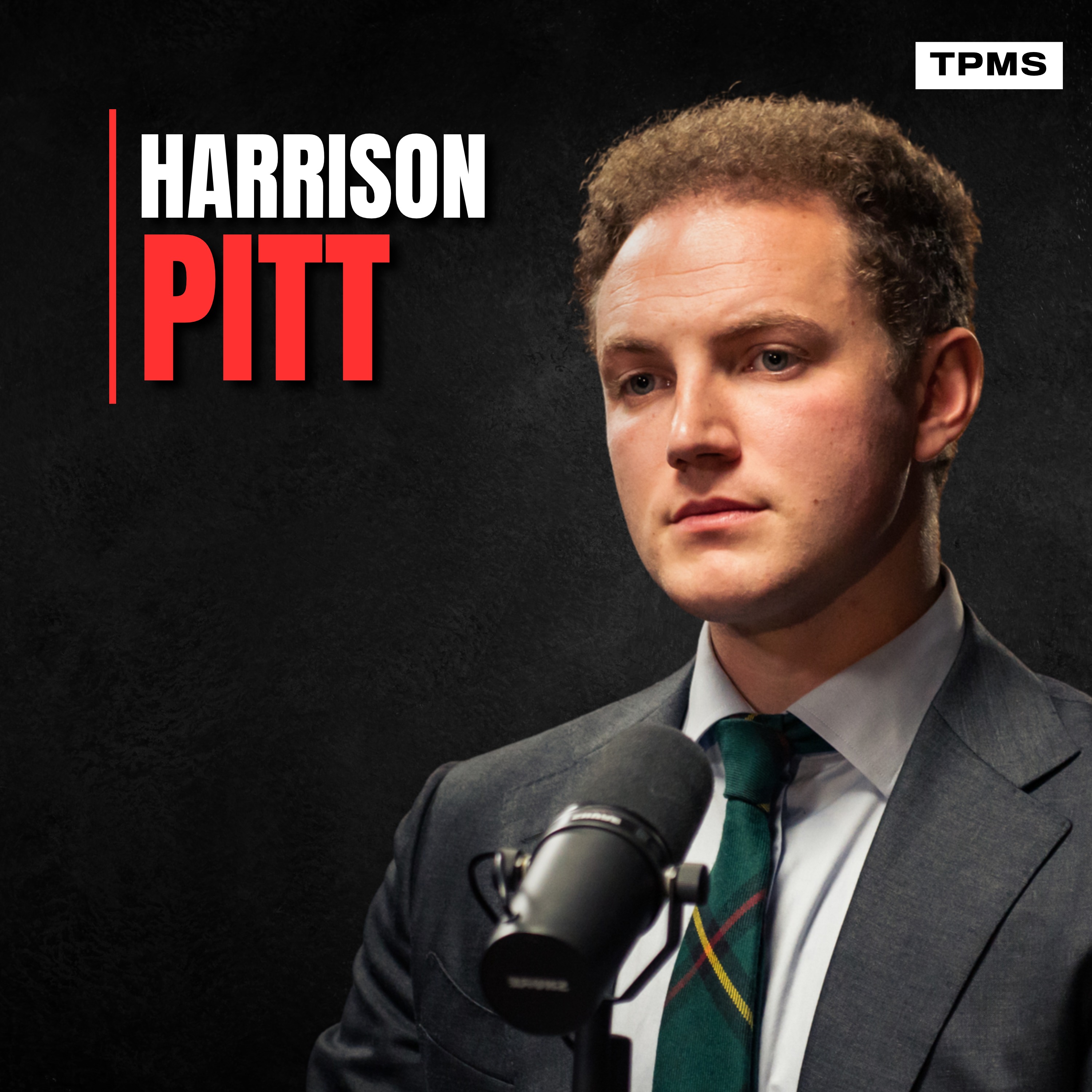
Harrison Pitt is a writer specialising in philosophy and intellectual history, a senior policy fellow at Restore Britain, a contributing editor at The European Conservative and a fellow at the New Culture Forum. Born in 1998, he is writing a book that sets out a systematic philosophy of national belonging. Harrison and I argue about the question underneath almost every other political fight in Britain right now: what actually makes someone part of a nation and does it matter? We go through citizenship, values, what Harrison calls demographic security, why he thinks the post-1945 consensus overcorrected and whether a mass democracy can work without a shared people. - - - - - - - - - - - - - - - - - - - - - - - - - - - - - - - - - - - - - - - - - - - - - - - - - - TIMESTAMPS: 00:00:00 - Why Is Britain Failing? 00:03:12 - Have Conservatives Lost Their Confidence? 00:08:27 - Can You Even Define British Values? 00:12:06 - Citizenship By Descent 00:18:14 - Why Should We Care? 00:27:07 - Are