In 2017, eight researchers, most of them at Google, published a paper with a catchy title and a radical idea: throw out the old way of processing language and rely on "attention" instead. We explain in plain language how attention lets an AI weigh every word against every other word, why the design made giant models like GPT possible, and how the "T" in ChatGPT traces back to a paper about translation. Plus the irony of history: Google invented the transformer, but OpenAI turned it into a household name. This episode includes AI-generated content.
What if the first 15 minutes of your workday could save you hours of chasing emails, updating your CRM, and figuring out what deserves your attention? For business leaders, the biggest challenge isn't a lack of things to do. It's knowing which things actually matter. Imagine starting every morning with your most urgent priorities already identified, important follow-ups prepared, and business opportunities surfaced before they slip through the cracks. In this episode of the Leveraging AI Podcast, Isar Meitis reveals how he uses an AI-powered morning brief to get through his urgent follow-ups in just 15 minutes. By connecting AI to his emails, CRM, calendar, task management tools, and other business systems, he's turned a scattered morning routine into a streamlined decision-making process. And the best part? You don't need to build a complicated system to get started. In this session, you'll discover: How to tackle your most urgent priorities in 15 minutes: See how Isar uses AI to iden
Jensen Huang is out at Nvidia, and the export-law questions behind his exit could matter more than the affairs that started it. Paul Roetzer and Mike Kaput break down what's at stake for Nvidia and the AI economy. They also cover Anthropic's IPO roadshow, where the founders' letter warns investors to expect decisions that don't maximize profit. Plus: the AI 2027 authors move their superhuman AI researcher forecast up to 2027, and Paul revisits his Law of Uneven AI Distribution. In rapid fire: Fable 5.2 and Mythos 5.2, Gemini 4 Carbon and Hydrogen, Brian Halligan's return to HubSpot, SaaStr's revenue-per-employee benchmarks, and United Airlines blocking AI agents. Show Notes: Access the show notes and show links here (https://podcast.smarterx.ai/shownotes/252) Timestamps: 00:00:00 — Intro 00:05:48 — Jensen Huang Resigns from NVIDIA 00:24:06 — Anthropic Launches IPO 00:36:34 — AI 2027 Authors Accelerate Forecast for “Superhuman” AI 00:49:58 — Fable 5.2, Mythos 5.2, Gemini 4 Carbon, and G
Will Marshall is the co-founder and CEO of Planet (NYSE: PL), which flies the largest fleet of Earth-imaging satellites in history and photographs the entire surface of the Earth every day. Before Planet, Will was a scientist at NASA working on missions to the moon. This is his second time on Summation. In this episode of Summation, Will and Auren discuss: Why satellites got 1,000x better in a decade while launch costs only improved 5x Large earth models: pairing daily satellite imagery with LLMs so anyone can "chat with the Earth" Why it's getting very hard to hide anything at scale, from pontoon bridges to drone launch sites Why the world looks static on a map but changes every single day A self-sustaining base on the moon, and the hardest open question about living there You can find Auren Hoffman on X at @auren and Will Marshall on X at @will4planet (https://x.com/Will4Planet?lang=en) Interact with the earth on Planet's new app: https://ai.planet.com/
A router failure grounded flights across the country on Friday, the longest nationwide ground stop in 25 years. Thousands of travelers were stranded. Plus, Delta denies using AI and your personal data to set fares as the FTC asks airlines for records.
Orgs don't have to wait for the next zero-day, the next batch of 1,000 CVEs, or the next exploit in the wild to harden their defenses. Rob Allen talks about turning an expectation of "assume breach" into proactive defenses based on zero trust. We also discuss why "assume breach" doesn't have to be a pessimistic stance or even one that presumes malicious intent. After all, with so many agents being adopted throughout an org, restricting access and adding observability reduces the side-effects of agents taking actions you didn't expect regardless of what they were prompted to do. This segment is sponsored by ThreatLocker. Visit https://securityweekly.com/threatlocker to learn more about them! Visit https://www.securityweekly.com/asw for all the latest episodes! Show Notes: https://securityweekly.com/asw-409
The Psychology of AI Overlords and Transhumanism: Borg Queen, Cortana, and Tony Stark Episode release date: 5 Jul 2023 Core Ideas: Metamodernism: Narratives and emergence view of reality - Reduce suffering - Increase prosperity - Increase understanding mantra: Seek knowledge. DISCLAIMER: This is a community-driven show. ---------- Keywords: ai ethics, ai podcast, gpt, ai consciousness, prompt engineering
How could AGI break out of the lab? Experts weigh in! Episode release date: 10 Jul 2023 Core Ideas: Metamodernism: Narratives and emergence view of reality - Reduce suffering - Increase prosperity - Increase understanding mantra: Seek knowledge. DISCLAIMER: This is a community-driven show. ------ Keywords: heuristic imperatives, ai agents, david shapiro
View full lesson: http://ed.ted.com/lessons/mysteries-of-vernacular-zero-jessica-oreck-and-rachael-teel Uploaded 01-08-13 Though the first written number system can be dated back to 2500 years ago in Mesopotamia, a zero-like symbol did not appear until 7th century CE India. Jessica Oreck and Rachael Teel track the evolution of zero from a dot to the symbol we use today, as well as the Arabic, Italian and French roots of the word. Lesson by Jessica Oreck and Rachael Teel, animation by Jessica Oreck.
I walked through Energee's display of five batteries in Melbourne, covering cars, commercial vehicles and stationary storage. For listeners, the physical distinction matters: the long-blade car cell prioritises energy density, while the short-blade design prioritises ultra-fast charging. I ask how material changes and cooling plates above and below the cells manage heat, then explore storage longevity and the route to sodium-ion production.
Recursively summarize text of any length with GPT-3 Episode release date: 30 May 2022 Core Ideas: Metamodernism: Narratives and emergence view of reality - Reduce suffering - Increase prosperity - Increase understanding mantra: Seek knowledge. DISCLAIMER: This is a community-driven show. ------------- Keywords: ai podcast, ai development, ai education
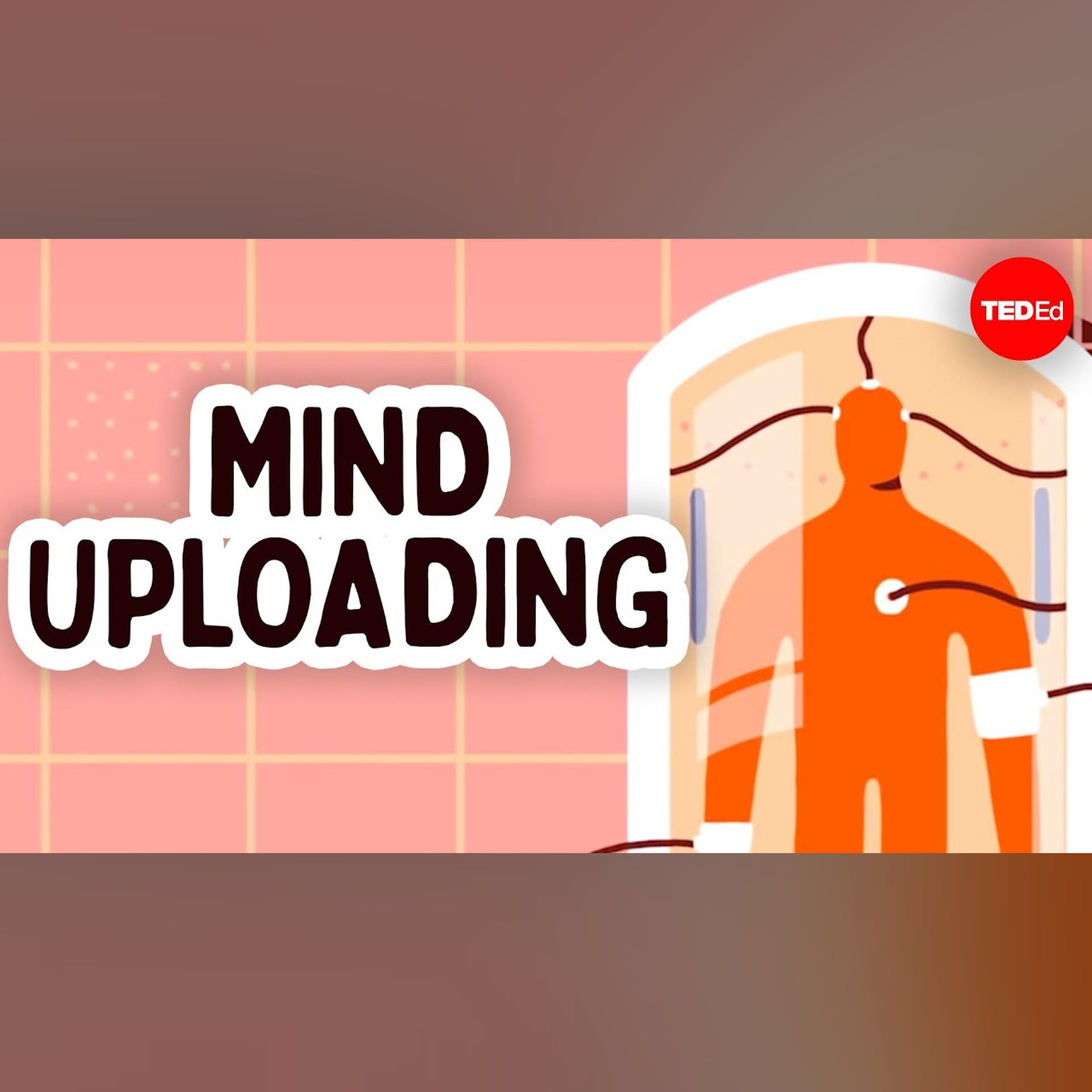
Investigate the possibility of scanning the human brain and uploading our minds and consciousness to a digital world. Uploaded 28-10-19 -- Imagine a future where nobody dies— instead, our minds are uploaded to a digital world. There they could live on in a realistic, simulated environment with avatar bodies, calling in and contributing to the biological world. Mind-uploading has powerful appeal— but what would it actually take to scan a person’s brain and upload their mind? Michael S. A. Graziano explores the challenges. Lesson by Michael S. A. Graziano, directed by Lobster Studio. Animator's website: https://www.lobsterstudio.tv (https://www.lobsterstudio.tv/) Sign up for our newsletter: http://bit.ly/TEDEdNewsletter Support us on Patreon: http://bit.ly/TEDEdPatreon Find us on Twitter: http://bit.ly/TEDEdTwitter Peep us on Instagram: http://bit.ly/TEDEdInstagram View full lesson: https://ed.ted.com/lessons/how-close-are-we-to-uploading-our-minds-michael-s-a-graziano Thank you so much
How close are we to building a real Westworld? A look at the hardware, software, and social impact Episode release date: 23 Apr 2023 Core Ideas: Metamodernism: Narratives and emergence view of reality - Reduce suffering - Increase prosperity - Increase understanding mantra: Seek knowledge. DISCLAIMER: This is a community-driven show. ------ Keywords: post labor economics, ai agents, artificial general intelligence, ai podcast, machine autonomy, cognitive ai
Superintelligence is Near! Three innovations that prove it! (I think Fast Takeoff just started!!) Core Ideas: Metamodernism: Narratives and emergence view of reality - Reduce suffering - Increase prosperity - Increase understanding mantra: Seek knowledge. DISCLAIMER: This is a community-driven show. ----- Keywords: artificial general intelligence, machine autonomy, ai podcast, ai masterclass, ai agents, ai philosophy
View full lesson: http://ed.ted.com/lessons/making-sense-of-spelling-gina-cooke What can spelling tell us about relationships between words? While spelling may sometimes seem random or unexpected, this lesson illuminates how peeling back the layers of spelling helps us understand the complex history and meaningful structure of words. Lesson by Gina Cooke, animation by The Leading Sheep (http://www.theleadingsheep.com). (http://www.theleadingsheep.com)./)
AGI: What will the first 90 days be like? And more VEXING questions from the audience! Episode release date: 14 Mar 2024 Core Ideas: Metamodernism: Narratives and emergence view of reality - Reduce suffering - Increase prosperity - Increase understanding mantra: Seek knowledge. DISCLAIMER: This is a community-driven show. ------------ Keywords: prompt engineering, ai ethics, tech singularity, ai consciousness, heuristic imperatives, superintelligence, ai education
The ALPS II experiment has released its first results in the search for hypothetical axions, particles that could help explain the mystery of dark matter. Using powerful lasers and intense magnetic fields, researchers are testing an unconventional way to detect these elusive particles. Although no confirmed signal has emerged, the findings help refine the search and bring physicists closer to exploring new physics beyond the Standard Model. This episode includes AI-generated content.
Could your organisation recover from a cyber attack right now, and would your answer be honest? In this episode, we speak with Grant Dinning, Senior Manager of Sales Engineering at Rubrik, about the new rules of recovery and cyber resilience in government. Grant explains how ransomware has moved up from files and servers to the identity layer, and why attackers are no longer hacking in but simply logging in. He sets out why traditional disaster recovery plans fall apart under a real attack, what truly immutable backups look like, and why recovering identity systems is now the number one priority. He also covers the human toll on IT teams during an incident, the risks AI agents bring, and why regular recovery drills in “peacetime” are what separate a fast recovery from a slow one. Want to see how other organisations have recovered? Visit Rubrik (https://www.rubrik.com/) for case studies, or connect with Grant on LinkedIn.
AI News Flash for November 17, 2026 at 09:00 UTC. Topics: 1. Nvidia warns customers of legal risk tied to Chinese remote access 2. NTT Data launches a generative-AI service to rebuild COBOL systems in Java 3. Hitachi prototypes a proof of human delegation to AI agents
You and your next-door neighbor put the exact same box of cereal in your online carts, yet you get charged 23% more. It’s surveillance pricing. I’ll tell you how to catch it. Then we’ll talk about how McDonald’s AI recommends prices based on location and Starlink’s new pricing can raise your bill by 20%.
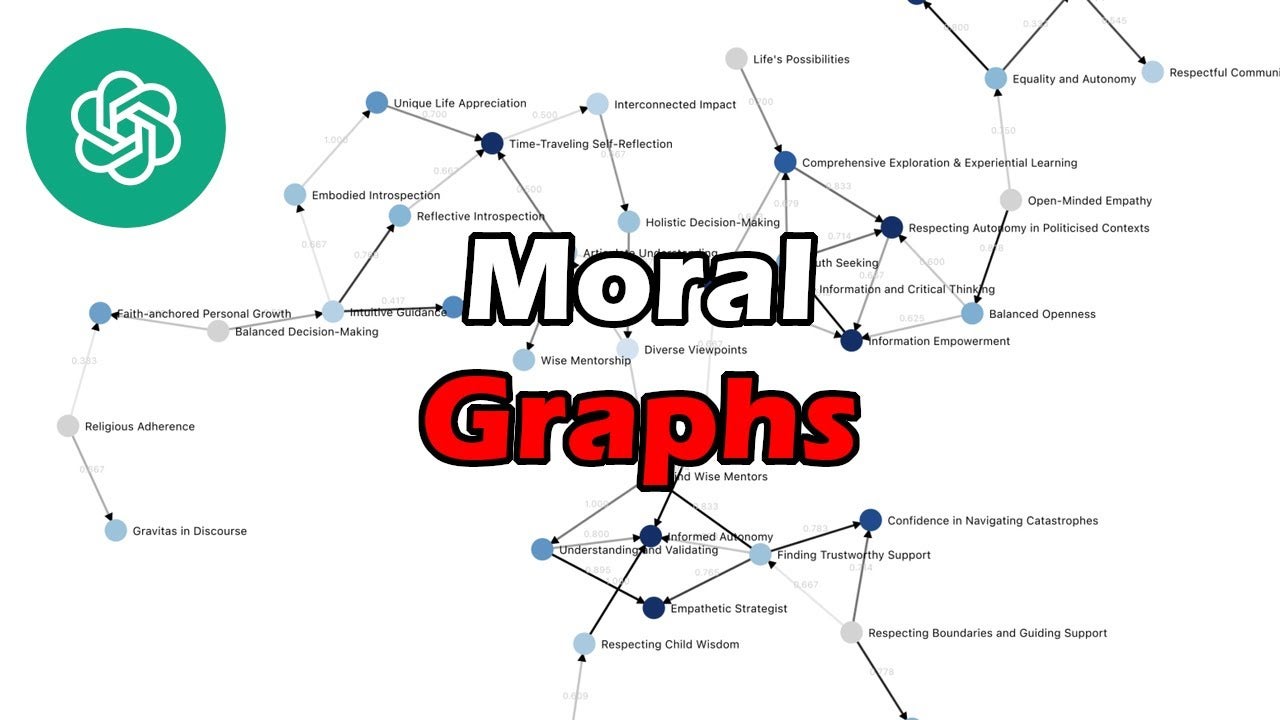
Moral Graphs: Interview with OpenAI Grant Winners! Meaning Alignment Institute: Aligning Humanity! Episode release date: 4 Feb 2024 Core Ideas: Metamodernism: Narratives and emergence view of reality - Reduce suffering - Increase prosperity - Increase understanding mantra: Seek knowledge. DISCLAIMER: This is a community-driven show. ---- Keywords: agi, david shapiro, singularity, ai innovation
4IR Podcast - 001 - What is going to happen? Episode release date: 12 Apr 2024 Core Ideas: Metamodernism: Narratives and emergence view of reality - Reduce suffering - Increase prosperity - Increase understanding mantra: Seek knowledge. DISCLAIMER: This is a community-driven show. ---- Keywords: future technology, ai future, ai consciousness, tech singularity, ai innovation, agi, deep learning
View full lesson: http://ed.ted.com/lessons/what-gives-a-dollar-bill-its-value-doug-levinson Uploaded 23-06-14 The value of money is determined by how much (or how little) of it is in circulation. But who makes that decision, and how does their choice affect the economy at large? Doug Levinson takes a trip into the United States Federal Reserve, examining how the people who work there aim to balance the value of the dollar to prevent inflation or deflation. Lesson by Doug Levinson, animation by Qa'ed Mai.
View full lesson: http://ed.ted.com/lessons/how-to-make-a-mummy-len-bloch Uploaded 18-06-15 As anyone who’s seen a mummy knows, ancient Egyptian priests went to a lot of trouble to evade decomposition. But how successful were they? Len Bloch details the mummification process and examines its results thousands of years later. Lesson by Len Bloch, animation by The Moving Company Animation Studio.