AI Data Centers: The Hidden Cost of Power, Water & Pollution
Listen through the publisher, then discuss the episode here or arrange an in-person Roundtable. Your city determines where to meet.
Roundtables are designed for groups of four, with a shared subject and room for everyone to speak. Come for discussion, with no dating expectation.
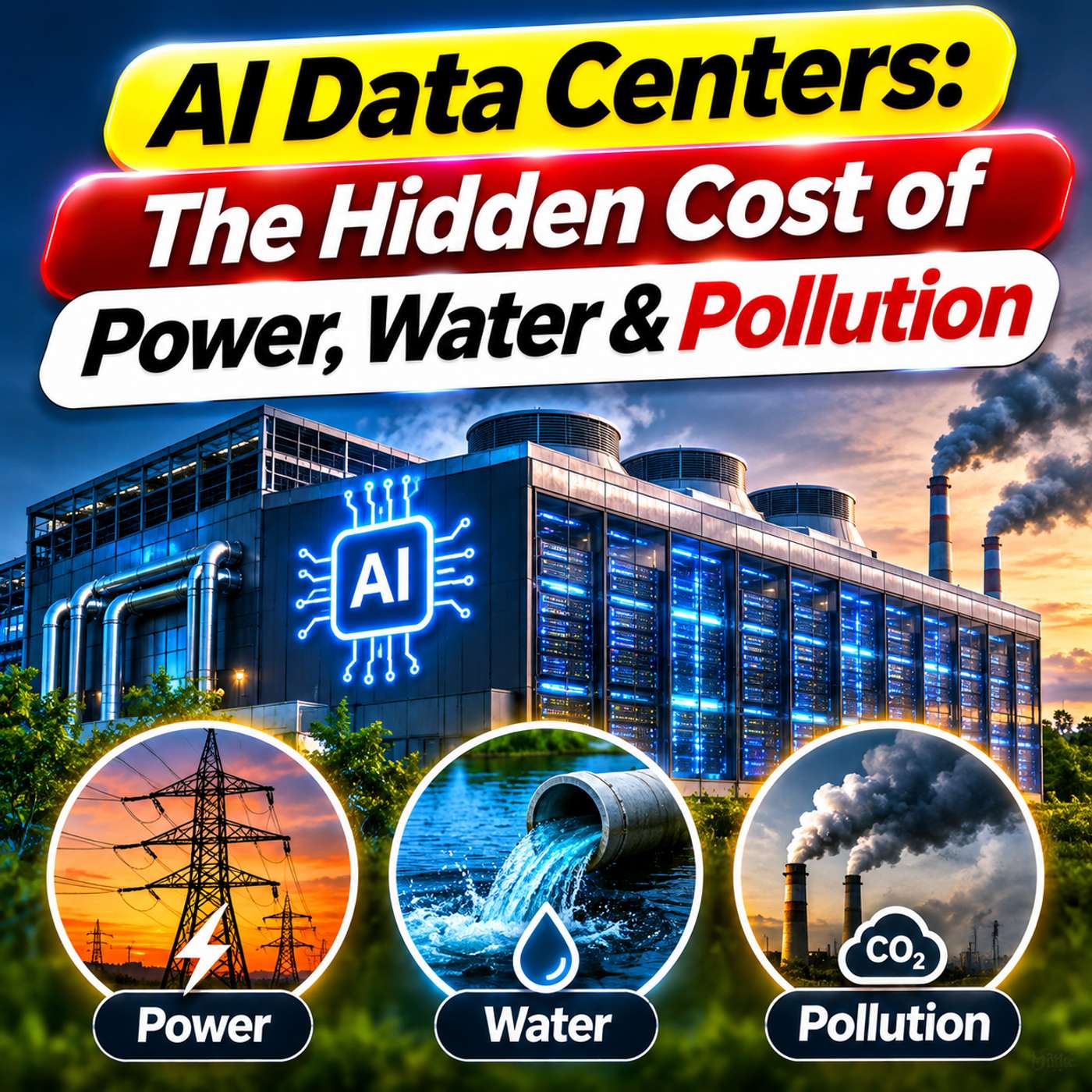
What does it really cost to generate an AI image, ask a chatbot a question, or run a powerful artificial intelligence model? The answer goes far beyond software and computing power. Behind the convenience of AI lies a growing network of massive data centers consuming electricity, water, and land, often raising serious concerns for the communities surrounding them. In this episode of TechDaily.ai, host David and expert guest Sophia explore the environmental impact of AI data centers, the rapid expansion of hyperscale computing infrastructure, and the growing resistance to the physical costs of the artificial intelligence boom. From electricity grid pressure in Ireland to water consumption controversies in Chile and Oregon, this conversation examines how the demand for AI computing is reshaping local infrastructure, public resources, and the relationship between technology companies and communities. In This Episode, You'll Discover: How hyperscale AI data centers differ from traditional server facilities and why generative AI requires enormous computing resources. Why high-performance GPUs generate significant heat, creating demand for industrial cooling systems and constant electricity. How AI data centers place pressure on local power grids and raise questions about energy costs, fossil fuel dependence, and renewable energy transitions. Why Ireland's concentration of data centers has become a major example of electricity infrastructure challenges. How large technology companies' water consumption has sparked environmental concerns and community protests in Chile and Oregon. Why the episode highlights Google's reported use of 29% of the municipal water supply in The Dalles, Oregon. How evaporative cooling systems consume water and why alternative closed-loop cooling technologies involve different engineering trade-offs. Why communities are questioning the balance between data center resource consumption, permanent employment, and local economic benefits. How corporate nondisclosure agreements and limited public access to infrastructure data have contributed to disputes over transparency. Why opposition to AI infrastructure is becoming a broader debate about public accountability, digital sovereignty, and corporate control of essential technology. The discussion also explores the environmental trade-offs of modern cooling technology. While closed-loop cooling can reduce water consumption, certain designs may increase electricity requirements. These competing demands raise an important question: Can AI infrastructure expand sustainably without placing additional pressure on communities already facing energy and water challenges? Beyond the environmental impact, David and Sophia examine the economic promises driving the generative AI boom. Technology companies promote artificial intelligence as a source of productivity, innovation, and economic growth, but local residents increasingly want to know whether those benefits justify the infrastructure costs. The conversation connects data center development to wider concerns about the physical expansion of technology, including autonomous vehicles, smart surveillance systems, and the growing influence of major technology companies over public infrastructure. As governments explore digital sovereignty and public-interest technology alternatives, the episode asks whether communities should have a greater role in deciding how and where AI infrastructure gets built. Is the AI revolution creating a more productive future, or are local communities being asked to absorb too much of its environmental and economic burden? Listen now to explore the hidden physical costs of artificial intelligence, the growing backlash against hyperscale data centers, and the decisions that could shape the future of sustainable computing. Share this episode with anyone interested in the real-world impact of AI development.
Episode information is provided by the publisher. Listening takes place on the publisher’s service.
Listen at the source ↗