Should psychedelics be legal? You might be hearing about states and countries legalizing psychedelics. In 2020, Oregon became the first US state to decriminalize psilocybin and legalize it for therapeutic use. In 2022, Colorado followed suit. Researchers have recently been touting the benefits of psychedelics for health conditions like depression, anxiety, PTSD, addiction, cancer-related distress, and the list goes on. However - like cannabis - psilocybin is still illegal under US federal law. Given that ongoing fight, you might have questions. I know I do. Are psychedelics the next weed? Is that a good thing? Are psychedelics dangerous? Do they actually have scientific benefits? How do psychedelics work? In this episode of Huge If True, we find out. Thank you to Dr. Ben Rein, neuroscience researcher and consultant on this episode. If you enjoy Huge If True, you’ll love Dr. Rein’s videos on TikTok! https://www.tiktok.com/@dr.brein?lang=en Chapters: 00:00 The big debate about psychedeli
The brand’s Black Friday and Cyber Monday campaign is its biggest promotion of the year, featuring its strongest public pricing of 2026. From the intelligent flagship Saros 20 and powerful Qrevo Edge 3 Pro to the affordable Qrevo S Pro and versatile F25 Steam and F25 XT, there's a perfect cleaning solution for every home. Enjoy exclusive Black Friday deals, special bundled gifts, and full warranty coverage when you shop through official links. Upgrade your cleaning routine with Roborock today! New episodes of 9to5Mac Daily are recorded every weekday. Stories discussed in this episode: Apple releasing Product(RED) versions of two products soon, per report (https://9to5mac.com/2026/11/23/apple-releasing-productred-homepod-mini-and-airpods-max-per-report/) TIME’s Top 100 Photos of 2026 list includes a shot taken on iPhone 18 Pro (https://9to5mac.com/2026/11/24/times-top-100-photos-of-2026-list-includes-a-shot-taken-on-iphone-18-pro/) iPhone Handoff: Here's the latest on carrier availabili
Dive into the German tale of Godfather Death and his godson, the doctor who tries to master mortality. Uploaded 12-03-20 -- A husband and wife were in despair. The woman had just given birth to their 13th child, and the growing family was quickly running out of food and money. Wandering into the woods, the father encountered a skeletal figure with sunken eyes and a gaunt face: this was Death himself, come to offer his services as Godfather. Iseult Gillespie tells the tale of Death and the doctor. Lesson by Iseult Gillespie, directed by Yael Reisfeld. Animator's website: https://www.yaelreisfeld.com/ Sign up for our newsletter: http://bit.ly/TEDEdNewsletter Support us on Patreon: http://bit.ly/TEDEdPatreon Find us on Twitter: http://bit.ly/TEDEdTwitter Peep us on Instagram: http://bit.ly/TEDEdInstagram View full lesson: https://ed.ted.com/lessons/the-tale-of-the-doctor-who-defied-death-iseult-gillespie Thank you so much to our patrons for your support! Without you this video would not b
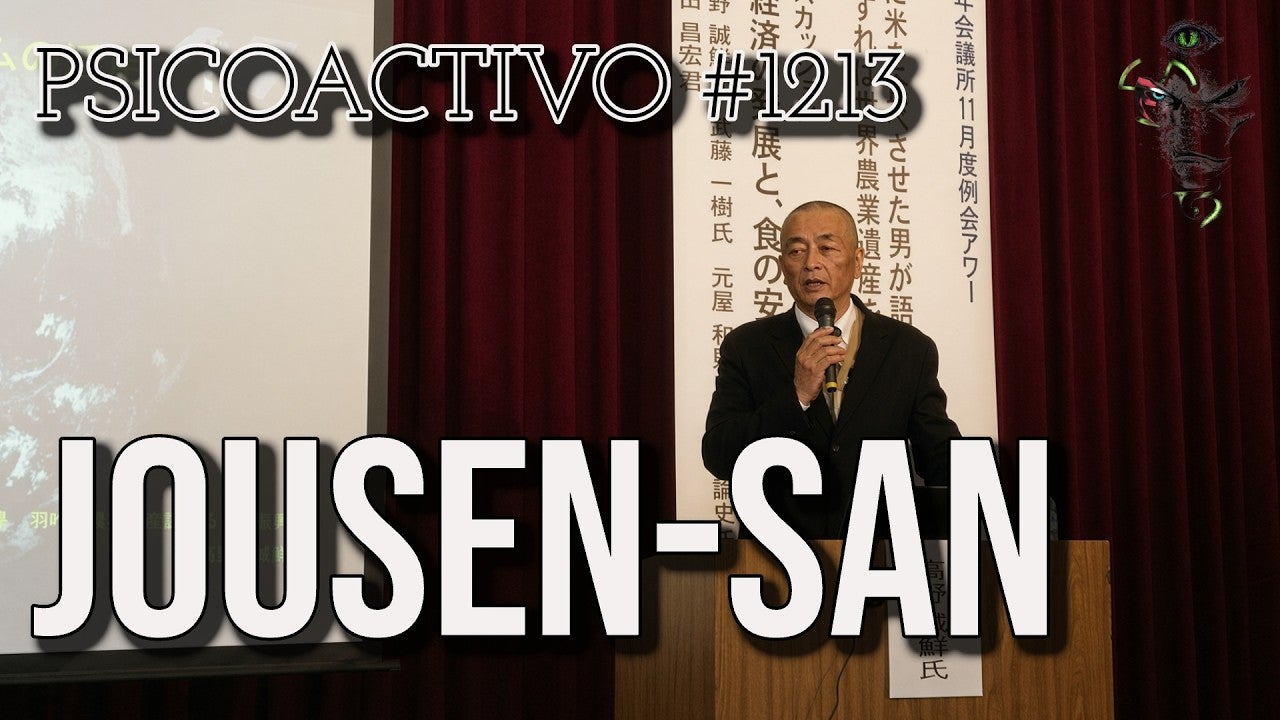
In a wildly anticipated Psicoactivo, we finally seem to be getting closure on that viral clip posted by Jesse Michels of the Japanese NASA historian who now claims to have Roswell UFO Crash material in his possession: Mr. Takano Jousen. Go to www.outlawwinecompany.com to get a good deal or visit @OutlawWineCompany on Instagram. Timestamps 00:00 Start of the episode. 08:01 Sponsor ad 10:05 Rest of the episode. Sources: Full American Alchemy episode: https://youtu.be/NO-z5BaM61U?si=U4jHni_qeIkeDmIY Jesse interview with the Japanese Defense Minister: https://www.youtube.com/watch?v=U3bNSUiCvPg&t=15s (https://www.youtube.com/watch?t=15s&v=U3bNSUiCvPg) Old Jousen clip: https://x.com/AlchemyAmerican/status/2052905052419821827 New Jousen clip: https://x.com/AmericanALCHMY/status/2125004196688609695 New sick logo created by Mr. Cole Watkins: @yeoldeking_creatives All My links: https://allmylinks.com/pavelanche Follow Pavel on X: https://x.com/pavelibarrameda Follow Psicoactivo on X: https://x.
How to find your true self. Freedom is not just about money, time or location. It’s about becoming someone you never want to escape from.Watch this if you’re ready to stop running… and start leading yourself. This is the truth about freedom no one else will tell you.My private network for entrepreneurs ⚜ - http://newelite.pro/search-for-freedomJoin the Icon Blueprint personal brand academy waitlist - https://t.me/+AwtcD_v7V4xiNGE1My instagram - https://www.instagram.com/jackhopfitness?igsh=aGhqMm1iNHg2eXg5&utm_source=qre Episodes created by entrepreneur and masculinity ace Jack Hopkins for his youtube channel, this podcast is dedicated to helping men rediscover their inner strength and confidence in a society that often promotes feminine values over masculine ones.Follow the podcast for valuable insights, inspiring stories, and practical advice on how to embrace your masculinity, build your confidence, and achieve your goals. Whether you're looking to improve your relationships, advanc
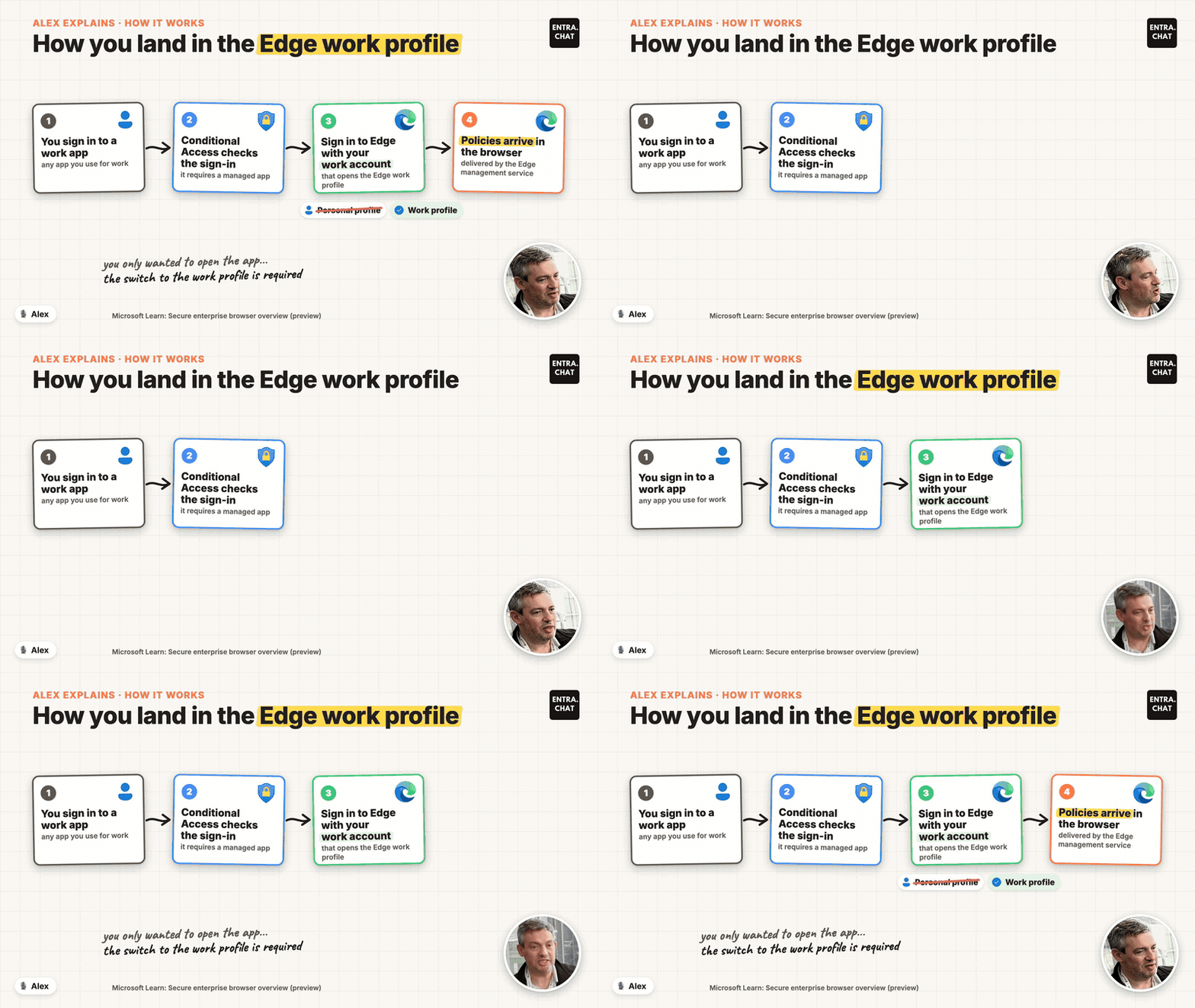
This episode was recorded in person at Microsoft Ignite. A big thank you to Increment (https://www.increment.inc/) and IDFusion (https://idfusion.io/) for sponsoring my travel to the event so I could record it there. Giving a contractor, a newly acquired team or a BYOD user access to your private web apps has meant a VPN client, a managed laptop or a virtual desktop. Microsoft now has a preview that builds Global Secure Access into Microsoft Edge for Business: the user signs in to Edge with their work account and gets your private apps and protected internet access, with nothing else to install. Recorded at Microsoft Ignite with the people who built it: Arunesh Chandra (Head of Product, Microsoft Edge for Business), Narendra Acharya (Head of Engineering), Patrizio Chiquini (Product Manager) and Alex Pavlovsky (Product Architect, Global Secure Access). This episode also starts a new monthly Global Secure Access series on Entra.Chat, co-hosted by Andres Canello (Ex-Microsoft Entra PM), w
In 1984, two first-time chip designers, Steve Furber and Sophie Wilson, created what would become the most popular processor in the world (ARM). I interviewed Steve about how they did it with such a small team that had no formal training. We also covered a bunch of questions about hardware design and his answers were so clear. I learned a lot and hope you enjoy the episode! Podcast links: • YouTube: https://www.youtube.com/watch?v=3K9L0dRRzOs • Transcript: https://www.developing.dev/p/e075-steve-furber Thank you to this episode's sponsors for supporting my work: • Chargebee: billing and monetization infrastructure for the AI economy, so your pricing can evolve alongside your product, check them out at https://www.chargebee.com/ Timestamps: (00:00) Intro (00:27) Building his first computer (05:28) BBC Micro (10:28) Designing the ARM processor (17:15) Why their design was better (23:38) Emulators and interpreters (25:58) Instruction sets and microarchitecture (31:08) How they learned chi
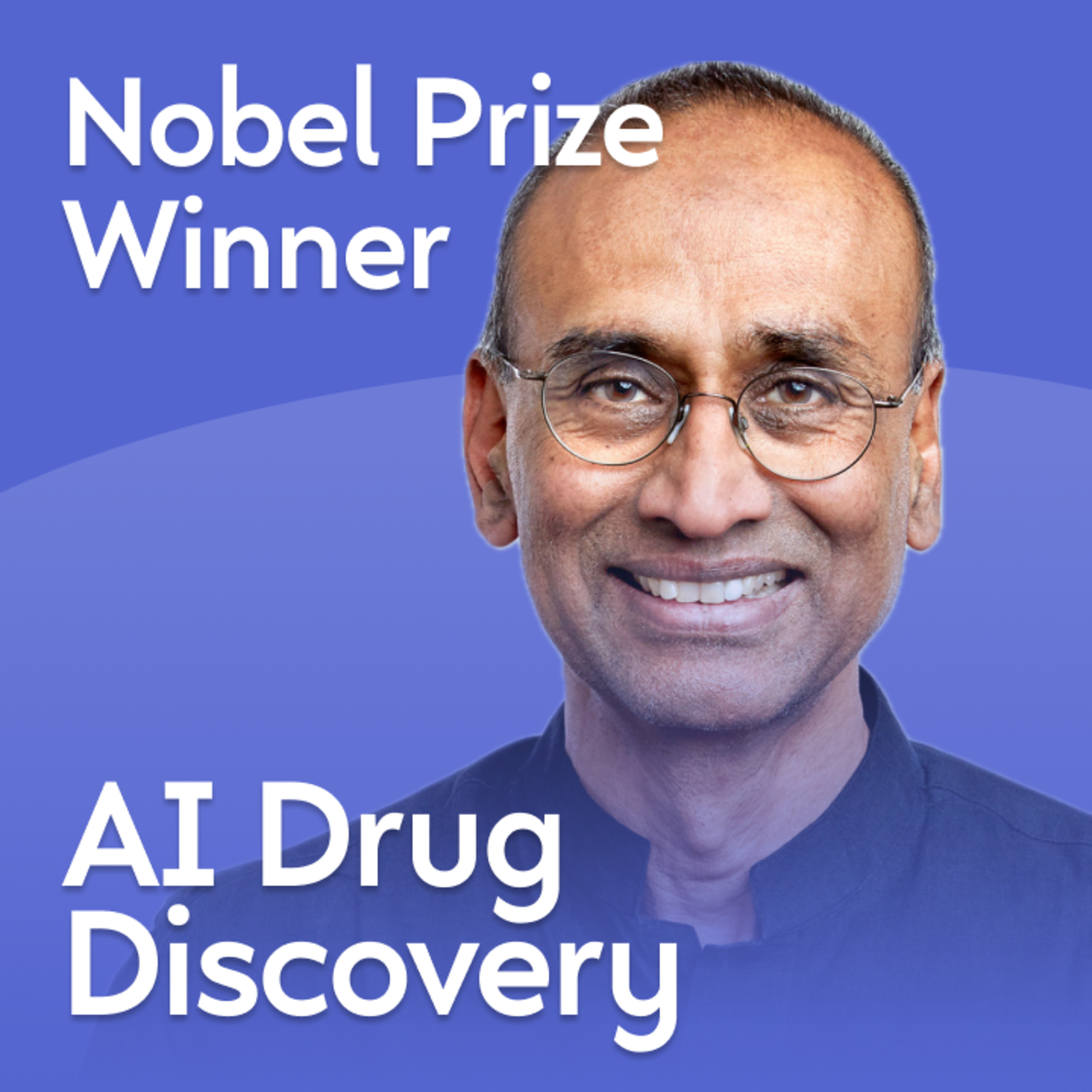
Venki Ramakrishnan (Molecular biologist, Nobel Prize): "The experimental part [of drug discovery] is always going to be the bottleneck." Recent headlines about using AI to speed up drug discovery made me curious about what that looks like and where it is today. So I flew to the UK to interview Venki Ramakrishnan who is on the scientific advisory board of Demis Hassabis' Isomorphic Labs. He has described himself as a "failed physicist" starting originally with a physics PhD who changed fields because he felt his work was incremental. After pivoting into molecular biology without a degree he discovered the field of work that eventually led to his Nobel prize. So aside from drug discovery, I also asked him about how AI is impacting the field of biology, how biology compares to physics, and the politics behind the Nobel prize. Podcast links: • YouTube: https://www.youtube.com/watch?v=-1q0zA21AkY • Transcript: https://www.developing.dev/p/e074-venki-ramakrishnan Thank you to this episode's
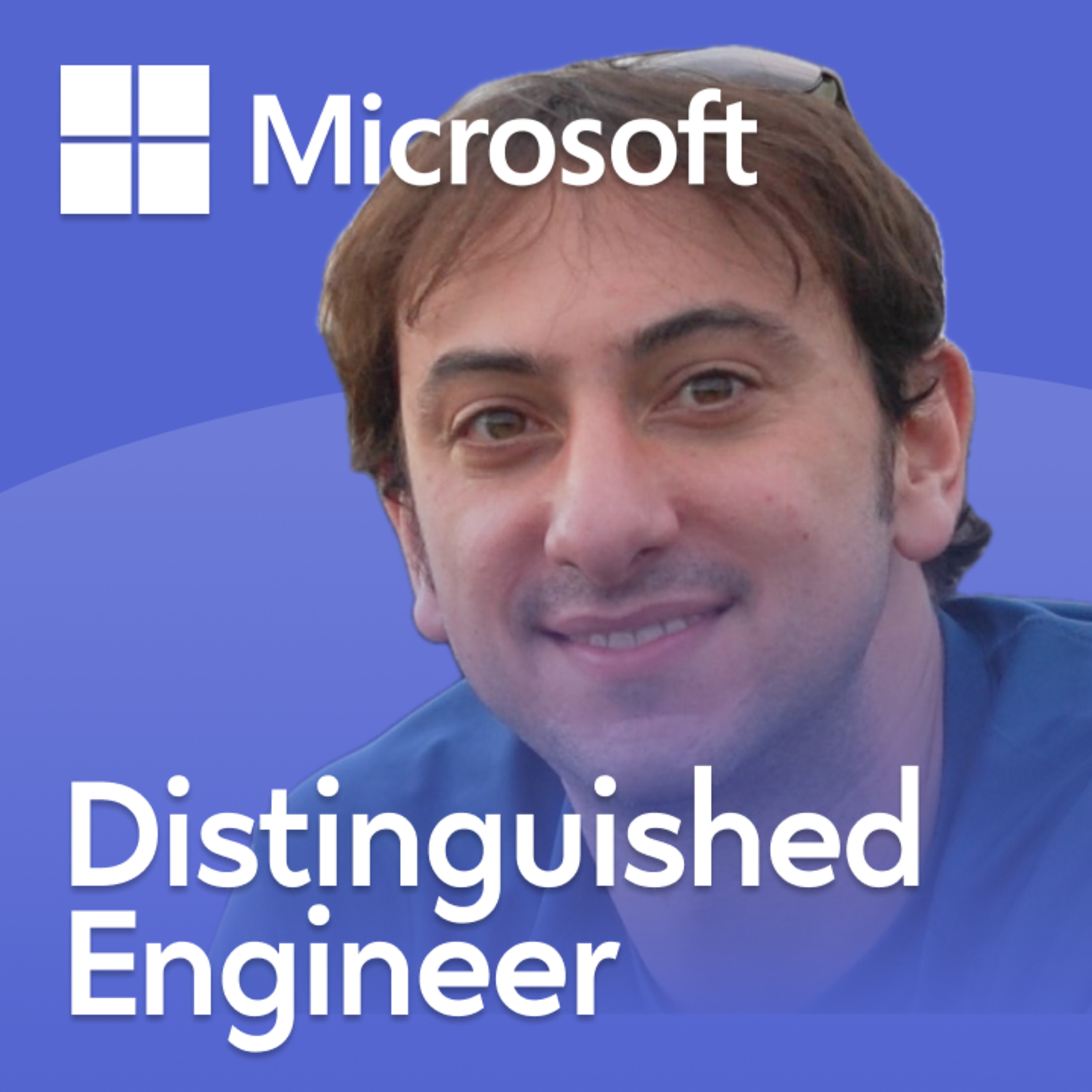
Stephen Toub is a Distinguished Engineer at Microsoft who single-handledly rewrote the GitHub Copilot runtime (400,000-line codebase) in Rust. We talked about why/how he did it, how Rust compared with other languages, and everything he learned in the process. Podcast links: • YouTube: https://www.youtube.com/watch?v=PLMOVlZC4eU • Transcript: https://www.developing.dev/p/e073-stephen-toub Thank you to this episode's sponsor for supporting my work: Timestamps: (00:00) Intro (01:06) Why the Copilot runtime needed a Rust port (05:38) Why he chose Rust (11:28) Discussing rollout strategies (21:57) How he caught regressions (32:08) Guiding the agents (42:11) Catching regressions before prod (45:16) Which models he used (50:03) The end benefit and costs (01:03:24) When to do a full rewrite (01:06:40) Career learnings on the way to Distinguished (01:16:00) Top technical book recommendation (01:17:49) Advice for young engineers (01:21:00) Outro Where to find Stephen: • GitHub: https://github.co
New community initiatives should have a realistic long-term support plan before launching.
Share your view, then see how readers voted. No sign-in required. This poll is shared across stories.
Do you agree or disagree?
Common Quandary
A Common Quandary to discuss
Another conversation to explore, separate from this news story.
Your host demands shoes off, but their floor is filthy. Must you obey?
A host has a strict shoes-off rule and points to a neat row by the door. Inside, the floor is visibly sticky and covered with pet hair. You are wearing clean shoes, no socks, and would rather not spend the evening barefoot.
When does respect for a host's home yield to a guest's comfort?