Listen through the publisher, then discuss the episode here or arrange an in-person Roundtable. Your city determines where to meet.
Roundtables are designed for groups of four, with a shared subject and room for everyone to speak. Come for discussion, with no dating expectation.
Welcome back to the show. Let’s take a quick step back in time. Think about how far we’ve come: we went from pressing a classic OB fetoscope up against a pregnant belly just to catch a faint, muffled thumping, to relying on advanced, continuous electronic monitoring. We live in an era of high-tech obstetrics. But even with all these modern advancements, room for error still exists, especially during the high-stakes chaos of the second stage of labor. In fact, this exact vulnerability was flagged as a critical warning in ACOG’s Clinical Practice Guideline Number 10. The issue? Relying on an external fetal heart rate Doppler that can silently mistake the maternal heart rate for the fetal heart rate. And now, a team of authors from New York writing in the AJOG are bringing even sharper focus to this danger, introducing a brand-new term for your clinical radar: "The Dolphin Sign." It’s a striking visual descriptor for a phenomenon born from maternal-fetal Doppler ambiguity—and if it goes unrecognized, it can leave a child at a devastating risk of acidosis. If you want to know how to spot it, what it means for your delivery room management, and how to protect your patients, you're going to want to stay tuned. PROMO CODE: https://aspiredrinks.com/discount/CHAPANOSPINOBG 1. ACOG CPG #10, October 2025 2. VINTZILEOS A, CHAVEZ M. The Dolphin Sign on fetal heart rate tracing: maternal-fetal signal ambiguity during the second stage of labor. American Journal of Obstetrics & Gynecology, 2026; 0 3. Kiely, D.J., Oppenheimer, L.W. & Dornan, J.C. Unrecognized maternal heart rate artefact in cases of perinatal mortality reported to the United States Food and Drug Administration from 2009 to 2019: a critical patient safety issue. BMC Pregnancy Childbirth 19, 501 (2019). https://doi.org/10.1186/s12884-019-2660-5
Episode information is provided by the publisher. Listening takes place on the publisher’s service.
For all the references, links, and a written breakdown, see the associated StayCurious Metabolism Newsletter: https://staycuriousmetabolism.substack.com/p/how-a-mothers-diet-rewrites-her-childrens?r=40ekz2 What your mother ate during pregnancy may shape your cardiovascular health today. New research published in Nature Cardiovascular Research reveals that a maternal Western diet—high in sugar and saturated fat—can epigenetically program her offspring to develop atherosclerosis and heart disease. In this video, I’ll break down how maternal nutrition impacts epigenetic bookmarks activate inflammatory genes, and why this matters for obesity, diabetes, and cardiovascular disease. We’ll also explore how ketogenic diets, healthier nutrition choices, and lifestyle interventions may help reverse this metabolic programming and support lifelong heart health. Most importantly, you’ll see why epigenetic legacy is not destiny. While we may inherit predispositions, lifestyle, nutrition, metabolic he
What NVIDIA is trying to build next… You're probably hearing a lot about AI, DeepSeek, NVIDIA and more right now. If you want the big picture (and to start from the beginning), watch this Huge Conversation with NVIDIA CEO Jensen Huang. In the last few years, NVIDIA has skyrocketed to become one of the world's most valuable companies. That's because, beginning in the 90s, they led a fundamental shift in how computers work, now unleashing the current explosion of what’s possible with technology. A huge amount of the most futuristic tech you’re hearing about - in AI, robotics, gaming, self-driving cars, breakthrough medical research - relies on new chips and software designed by him and his company. During the dozens of background interviews I did to prepare for this, what struck me most was how much Jensen Huang has already influenced all our lives over the last 30 years, and how many are saying it’s just the beginning of something even bigger… We all need to know what he’s building and
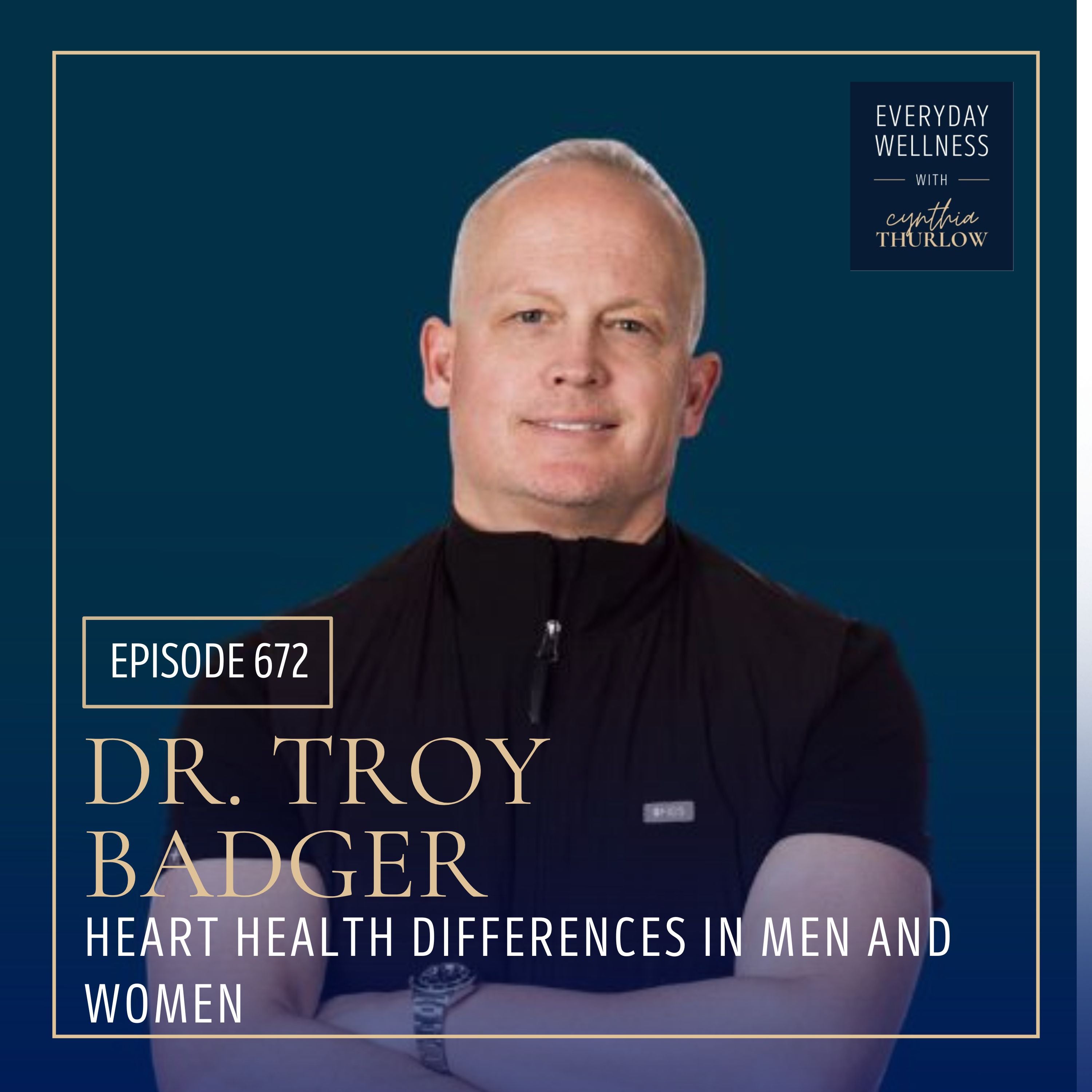
Today, I’m honored to connect with Dr. Troy Badger. He is a board-certified cardiologist and interventionalist and the founder of Cardiostrong, a concierge preventive cardiology clinic in Provo, Utah, focused on reducing cardiovascular risk, optimizing metabolic health, and improving strength and cardiorespiratory fitness for executives and athletes. In today’s conversation, we discuss Dr. Badger’s gender- and age-specific approach to heart health, including treatment differences for men and women, and diagnoses such as INOCA, SCAD, vasospastic disease, and Takotsubo. We examine emotions and their influence on heart health, coronary ischemia and cardiomyopathies, labs and diagnostics, how Dr. Badger assesses risk in his patients, and the differences between a CAC and a CCTA. Dr. Badger also shares the labs he finds essential for all patients and discusses the role of VO2 Max, cardiovascular training, and lifestyle—specifically nutrition, the use of GLP-1 drugs, and a multidisciplinary
You can learn more about CuriosityStream at https://curiositystream.com/spacetime Uploaded 06-03-19 PBS Member Stations rely on viewers like you. To support your local station, go to: http://to.pbs.org/DonateSPACE Check out the new Space Time Merch Store! Support Space Time on Patreon See Matt in NYC at Caveat March 7th at 9pm: Bad ideas come and go in physics. But there’s one bit of nonsense that is perhaps more persistent than all others: the perpetual motion machine. No working perpetual motion machine has ever been experiment verified. All break the laws of thermodynamics. In fact, we classify based on WHICH law of thermodynamics they break. We have perpetual motion machines of the first kind - they violate energy conservation - they pump more energy out than they need to keep running. This includes most of the historical devices. Then there are machines of the second kind - they’re a bit more subtle in their wrongness because break the second law of thermodynamics - extracting ene
In today's brief: Lake Erie, 1957: a newly released Air Force report says two boys saw a humming, bell-shaped craft near the Enrico Fermi Atomic Plant. Skinwalker Ranch: owner Brandon Fugal calls the new files landmark and recalls a daylight saucer over the mesa. Warship footage: a 20-second 2020 infrared clip shows a light crossing a US Navy ship in the Middle East, with no Pentagon assessment. Martha's Vineyard, 1957: a spiked, nickel-coloured object that the Air Force put down to a radar-reflector balloon. Loch Ness: reported sightings jump to 15 this year, up from six in 2025. The Book of Miracles: a 16th-century manuscript of comets, blood rain and multiple suns heads to auction at Christie's. Quick hits: a 1952 file blames the saucer wave on temperature inversions; more Pentagon UFO files are on the way. Every story and source: https://believepod.com/ufo-paranormal-news-22-november-2026/ New episodes every morning. Keep your eyes on the sky. Sources: FOX 2 Detroit: https://www.fo
A kiss can be wonderful. It can create an instant connection, spark romance, or make you feel closer to someone. But a kiss can also have the opposite effect — and sometimes ruin everything. So what makes kissing so powerful, and why can one kiss make such a difference? There's some fascinating science behind it. https://www.scientificamerican.com/article/why-we-kiss/ We spend an enormous amount of time worrying about what's going to change. What's next? What's coming? How do we prepare? But what if we're paying attention to the wrong things? Some of the most important forces shaping our lives never change, and understanding them may be far more valuable than trying to predict the future — something humans are notoriously bad at. Morgan Housel, partner at The Collaborative Fund and author of Same as Ever: A Guide to What Never Changes (https://amzn.to/3SwWn6u) (https://amzn.to/3SwWn6u)), joins me to explain why the things that stay the same may be the most important things to understan
If you’ve scrolled through your feed lately, you might havecaught a buzzworthy new study suggesting that eating avocados during pregnancy could lower your odds of having a C-section by more than a quarter. On the surface, it sounds like an easy, delicious prescription—grab some guacamole and avoid major surgery. Today, we’re going to put that study under the microscope. We’re dissecting the November 2026 Kuopio Birth Cohort paper by Cheng and colleagues to see what the data actually says- and more importantly, what itdoesn't. Because in obstetrics and nutritional science, how a study is designed, who funds it, and what variables get left out can completely change how we interpret the results. Understanding a study's limitations isn't about being cynical; it's about separating real clinical breakthroughs from statistical noise so you can make truly informed decisions. Let's dive into the data- no spin. Aspire Drinks - Greentea-powered energy drink: 1. F. W. Cheng, N. A. Ford, K. Backman
Now, if you’ve been in OB care for more than a month, you know that preeclampsia is one of those topics we talk about constantly. We have endless guidelines, algorithms, and diagnostic criteria plastered all over our unit walls. But here’s the truth: despite all the literature out there, the real world doesn't always read the textbook. The clinical nuances… The gray areas…That’s where things get tricky. Take a classic labor and delivery scenario: Your patient in active labor throws a blood pressure in the severe range. You follow protocol and get a repeat BP 15 minutes later—and it’s back down in the non-severe range. So, what now? Does that initial single severe reading still count toward a diagnosis of preeclampsia with severe features, or does severe range have to be sustained? And let’s make it even more interesting: What if later in the shift, she hits another severe-range BP, but again, it drops to non-severe on the 15-minute recheck- yet both of those spikes under that standard
Yes, we have covered cervical cancer screening many, many times on this show. It is truly a testament to science and research just how far we have come from using slide-based cytology for cervical cancer screening. Primary high-risk HPV, as a screening modality, has been favored for many years and is now officially part of the age-based, ACOG cervical cancer screening guideline (July 2026). We will summarize that update in this episode. Plus, we will also review about what to do when the hrHPV expanded genotype panel returns positive for 56/59/66. Modern cervical screening reports frequently refer to HPV 56, 59, and 66, typically grouping them together into a single pooled result (often labeled as a trio "HPV 56/59/66"). This is due to the widespread adoption of extended HPV genotyping technology. WE, what do we do with that? Listen in for details. 1. ACOG Committee Statement No. 28: Screening for Cervical Cancer; July 2026 2. Massad LS, Clarke MA, Perkins RB, Garcia F, Chelmow D, Cheu
Reporting on court cases should protect personal privacy when details add little public value.
Share your view, then see how readers voted. No sign-in required. This poll is shared across stories.
Do you agree or disagree?
Common Quandary
A Common Quandary to discuss
Another conversation to explore, separate from this news story.
You scratched a borrowed heirloom and repaired it perfectly. Do you confess?
You borrow a family heirloom for an event and accidentally leave a small scratch. A careful repair makes it almost invisible, and its owner happily accepts it back without noticing anything.
What is confession for when the harm has already been repaired?