Listen through the publisher, then discuss the episode here or arrange an in-person Roundtable. Your city determines where to meet.
Roundtables are designed for groups of four, with a shared subject and room for everyone to speak. Come for discussion, with no dating expectation.
Despite being documented throughout history, there’s surprisingly little research on stuttering. This summer scientists came up with the first consensus guidelines on the condition, and they shed new light on the neuroscience behind it. In this episode of Science Quickly, host Rachel Feltman interviews Gerald Maguire, a psychiatrist and a researcher, who helped come up with those guidelines and experiences stuttering himself. Recommended Reading: Stuttering Treatment and Research Society (https://stutteringresearch.org/) “The New Science of Stuttering,” by Jack Tamisiea, in New York Times. Published online October 18, 2026 (https://www.nytimes.com/2026/10/18/science/the-new-science-of-stuttering.html) Our theme music was composed by Dominic Smith.
Episode information is provided by the publisher. Listening takes place on the publisher’s service.
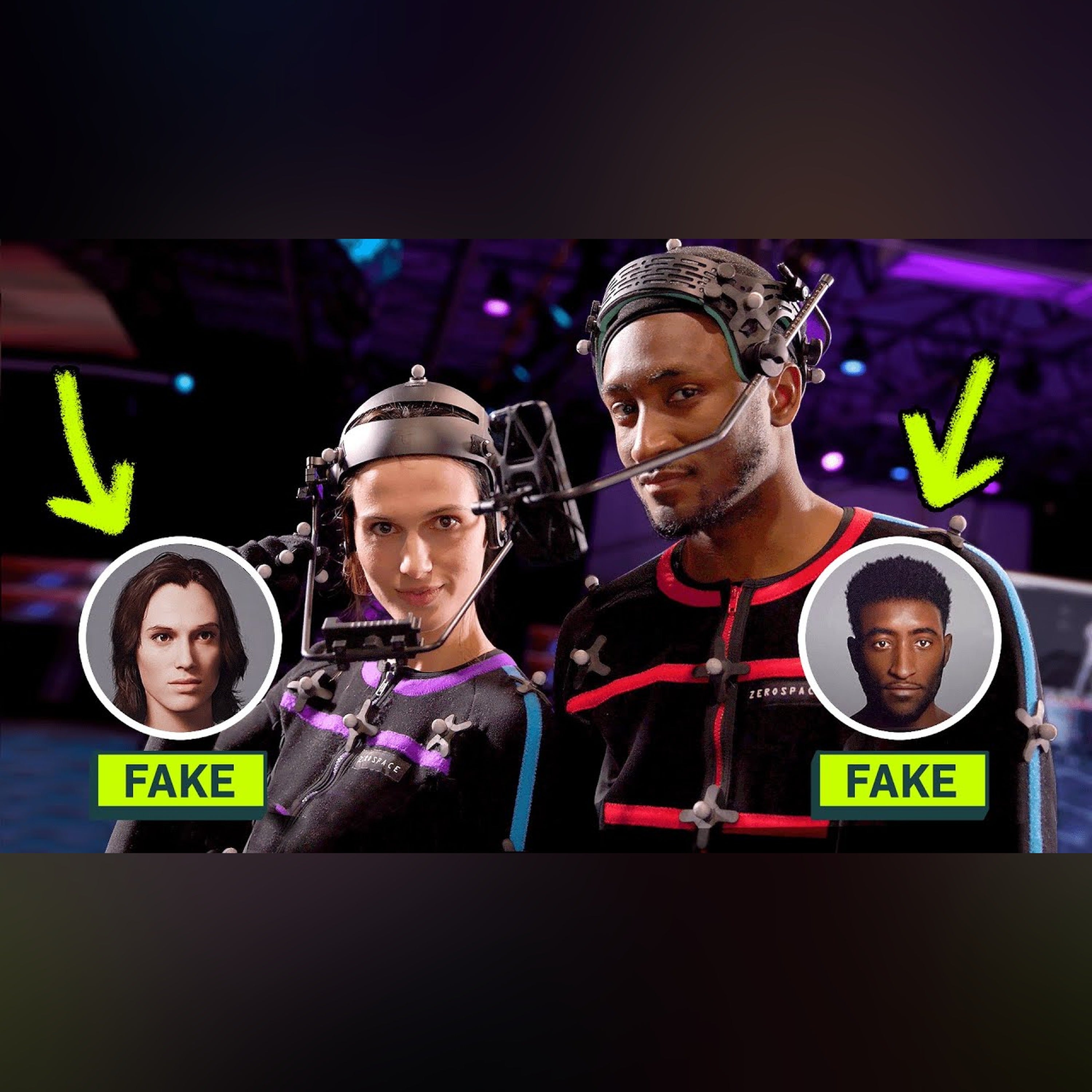
This new tech is changing how movies get made. So @mkbhd and I tested it out... Watch MKBHD's video: https://youtu.be/RM7SobH8ZO0 I’ve been obsessed with sci-fi movies since I was a kid. I love being transported to another world. But lately, I’ve been wondering: How do those worlds look so… REAL? The tech behind movies has exploded in complexity and realism, changing how stories come to life on screen. Luckily, at the same time, those tools are becoming more and more available to more people telling stories. It’s not just blockbusters like Avatar 2 or Avengers or Dune. It’s also smaller budget films like Everything Everywhere All at Once or even… YouTube creators? In this video, Marques Brownlee and I test out 3 movie-making tools that are changing how movies, shows, and maybe even YouTube videos (??) get made. We’re at ZeroSpace Studios in New York to show you how each of these crazy technologies work - and how you might be able to use them. Along the way, we hit big questions like: W
PBS Member Stations rely on viewers like you. To support your local station, go to: http://to.pbs.org/DonateSPACE ↓ More info below ↓ Uploaded 20-01-20 Sign Up on Patreon to get access to the Space Time Discord! Sign up for the mailing list to get episode notifications and hear special announcements! Check out the Space Time Merch Store The three body problem is famous for being impossible to solve. But actually it's been solved many times, and in ingenious ways. Some of those solutions are incredibly useful, and some are incredibly bizarre. Hosted by Matt O'Dowd Written by Matt O'Dowd Graphics by Leonardo Scholzer and Adriano Leal Post Production: Yago Ballarini, Max Willians, Pedro Osinski Directed by: Andrew Kornhaber Executive Producers: Eric Brown and Andrew Kornhaber End Credits Music by J.R.S. Schattenberg: https://www.youtube.com/channel/UCRl6-nb4iOnsij-vnpAjp0Q Physics - and arguably all of science changed forever in 1687 when Isaac Newton published his Principia. Within it we
When a family moved into an apartment in New York, they had no idea just how much history the building held. Over the years, it had reportedly served several purposes, including a city hall and a jail. But they wouldn't learn those details until after some frightening experiences had already begun. On their very first night, the mother came running into her son's room, terrified by a man who had appeared in her bedroom. He hadn't simply frightened her. According to her account, he'd made it very clear that the family wasn't welcome. And things only became stranger from there. As the family settled in, they experienced unexplained sounds, unsettling physical encounters, and incidents that made them question what was actually moving around their home. Had something remained behind from the building's long history? And was it determined to make the new occupants leave? #RealGhostStoriesOnline #TrueGhostStories #HauntedApartments #HauntedJail #HistoricHauntings #NewYorkGhostStories #Parano
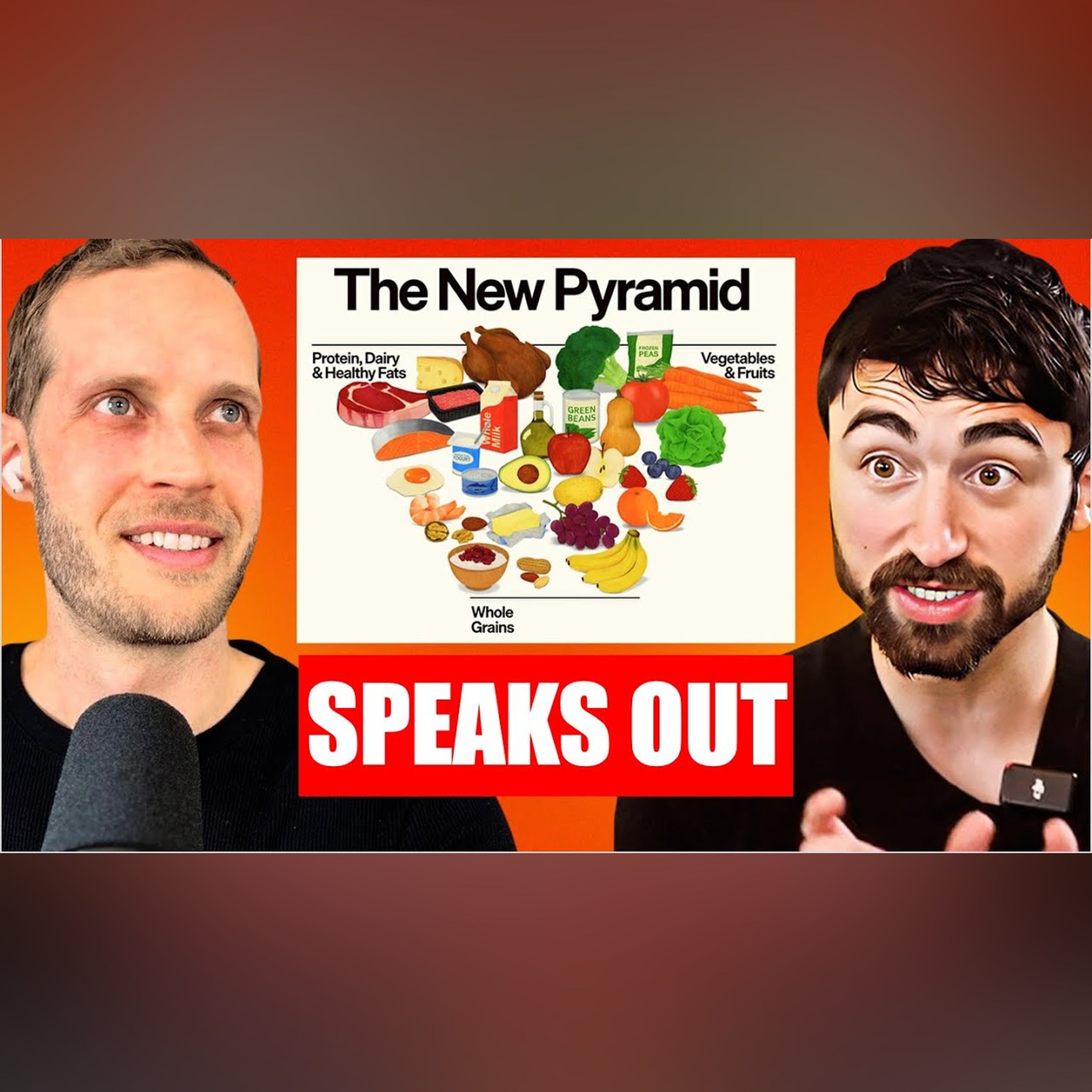
For a written digest on the guidelines, see the StayCurious Metabolism Letter: https://staycuriousmetabolism.substack.com/p/the-new-dietary-guidelines-actually?r=40ekz2 The 2025–2030 Dietary Guidelines are being marketed as a major reset with a simple message: put “real food” back at the center of the American diet. And in a lot of ways, they do represent progress. But when you actually read what’s written, some of the most important details raise real questions. For example, the document still states that saturated fat should not exceed 10% of total daily calories. To separate signal from spin, I’m joined by Dr. Ty Beal PhD, who worked on the evidence review side of the Guidelines process, to explain what the scientific background documents actually say, what happens after scientists submit reviews, and why the final public-facing document can end up with compromises, inconsistencies, or imprecise terminology. If you want a clear, good-faith breakdown—what’s genuinely better, what sti
Explore the history of IQ tests; how they measure a person’s intelligence and the ways they have been used to justify scientifically baseless ideologies. Uploaded 27-04-20 -- In 1905, psychologists Alfred Binet and Théodore Simon designed a test for children who were struggling in school in France. Designed to determine which children required individualized attention, their method formed the basis of the modern IQ test. So how do IQ tests work, and are they a true reflection of intelligence? Stefan C. Dombrowski explores how the tests have been used throughout history. Lesson by Stefan C. Dombrowski, directed by Kozmonot Animation Studios. Animator's website: https://www.kozmonot.tv/ Sign up for our newsletter: http://bit.ly/TEDEdNewsletter Support us on Patreon: http://bit.ly/TEDEdPatreon Find us on Twitter: http://bit.ly/TEDEdTwitter Peep us on Instagram: http://bit.ly/TEDEdInstagram View full lesson: https://ed.ted.com/lessons/the-dark-history-of-iq-tests-stefan-c-dombrowski Thank
☀️ HARNESSING THE POWER OF THE SUN — THE SCIENCE BEHIND C60 EVO! What happens when scientists recreate extraordinary, sun-like temperatures inside a laboratory to produce one of the most fascinating carbon molecules ever studied? Michael Jaco welcomes Patty Greer and Chris Burres back to Unleashing Intuition for a fascinating behind-the-scenes look at C60 Evo, the technology used to produce ESS60, and the science behind this unique carbon molecule. Chris takes us inside the laboratory to explain the intense temperatures, specialized production methods, and purification processes involved in creating ESS60 — C60 Evo's proprietary form of Carbon 60. The conversation explores the relationship between antioxidants, mitochondria, cellular energy, and oxidative stress, along with why C60 Evo combines ESS60 with carefully selected extra virgin olive oil. Patty and Chris also share their perspectives on wellness, personal experiences, and the growing interest in carbon-based technology. Inside
In the rainforests of Madagascar, one species of lemur displays a striking resemblance to an opera singer. Like trained sopranos, these lemurs use special vocal techniques to make their calls carry across the forest. In this episode of Science Quickly, we dive into fascinating new research into how this one species, Indri indri, evolved to have such a striking musical ability and how scientists are tuning in with conservation in mind. Recommended Reading: “Dynamics of Jaw Kinematics and Fundamental Frequency Suggest Vocal Tract Tuning in the Indris’ song,” by Filippo Carugati et al, in PLOS Computational Biology. Published online September 21, 2026 (https://journals.plos.org/ploscompbiol/article?id=10.1371%2Fjournal.pcbi.1014781) “Passive Acoustic Monitoring for the Estimation of Density of the Singing Lemur (Indri indri),” by Valeria Ferrario et al, in Conservation Science and Practice. Published online October 9, 2026 (https://conbio.onlinelibrary.wiley.com/doi/10.1111/csp2.70428) Ou
In the debut episode of our new book club, we dive into Entangled Life, by Merlin Sheldrake, a fascinating exploration of the hidden world of fungi. Join us as we discuss mushroom intelligence, underground fungal networks that connect plants, fungi with more than 23,000 mating types and the surprising role a ”pretty golden mold” played in making penicillin widely available. Recommended Reading: Entangled Life. Merlin Sheldrake. Random House, 2020 (https://www.penguinrandomhouse.com/books/566795/entangled-life-by-merlin-sheldrake/) See the hidden fungal network so big it could stretch to Proxima Centauri and back (https://www.scientificamerican.com/article/see-the-hidden-fungal-network-so-big-it-could-stretch-to-proxima-centauri-and-back/) Out of Sight, ‘Dark Fungi’ Run the World from the Shadows (https://www.scientificamerican.com/article/mysterious-dark-fungi-are-lurking-everywhere/?search=fungus) Our theme music was composed by Dominic Smith.
What does it mean to do math in a world where artificial intelligence might do it better? That’s the question mathematicians are grappling with as AI systems advance. Could this technology be a boon to the field, or should mathematicians unite to fight against it? On this episode of Science Quickly, Scientific American senior reporter Joseph Howlett reads his December/January cover story, “The End of Math as We Know It.” In his piece, he speaks with leaders in the field who are embracing AI as an opportunity to solve age-old problems and others who see it as a hindrance to the true art of mathematics. Science Quickly is produced by Rachel Feltman, Fonda Mwangi, Allison Rodgers and Jeff DelViscio. This episode was edited by Allison Rodgers. The original article was fact-checked by Jennifer Hackett and copyedited by Angelique Rondeau and Aaron Shattuck.’
Paid endorsements should be clearly distinguished from independent recommendations.
Share your view, then see how readers voted. No sign-in required. This poll is shared across stories.
Do you agree or disagree?
Common Quandary
A Common Quandary to discuss
Another conversation to explore, separate from this news story.
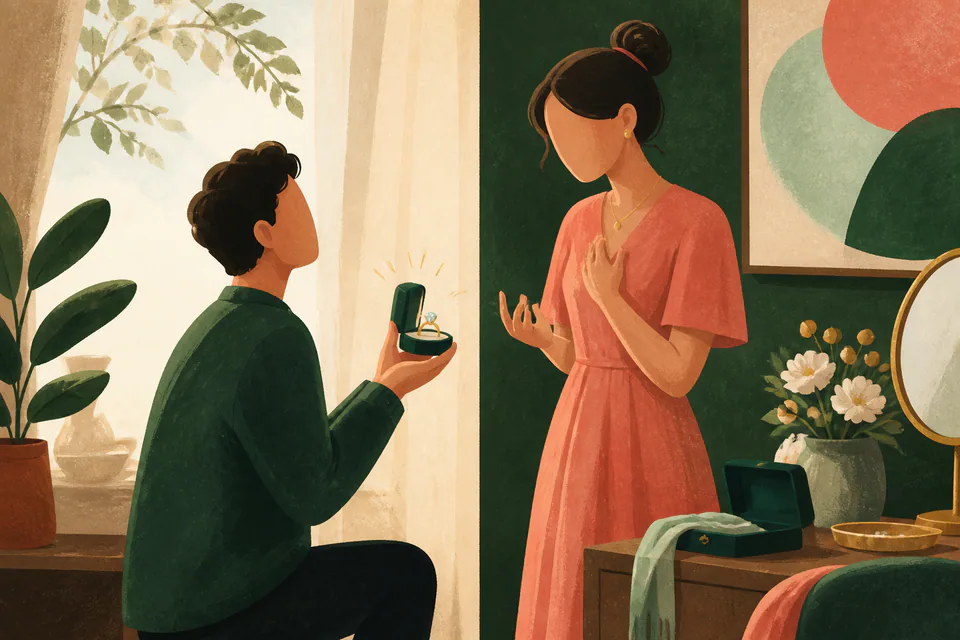
The proposal is perfect and the ring is terrible. When do you say so?
Your partner proposes with a costly ring chosen after months of secret planning. You love the proposal and want the marriage, but strongly dislike the ring you would be expected to wear every day. Returns are possible for one week.
How much honesty can a loving gesture reasonably be asked to survive?