ENCORE: Do you actually need more protein? What the science says
18 min
Listen through the publisher, then discuss the episode here or arrange an in-person Roundtable. Your city determines where to meet.
Roundtables are designed for groups of four, with a shared subject and room for everyone to speak. Come for discussion, with no dating expectation.
Protein is having a major moment, showing up in everything from snack foods to coffee drinks—but do we actually need more of it? In this episode of Science Quickly, Rachel Feltman speaks with science journalist Bethany Brookshire about what has happened with the rise of the protein craze, how much protein people really need and why most of us are already getting plenty. They explore where the trend came from, what the science says about daily intake and how there are potential downsides to focusing too heavily on protein at the expense of overall diet and sustainability. This episode first aired in May 2026. Recommended Reading: Protein is being added to everything from Starbucks’ cold foam to Pop-Tarts. Here’s how much you actually need (https://www.scientificamerican.com/article/protein-boosted-foods-are-everywhere-now-but-do-we-actually-need-more-protein/) The Science That Could Change How You Think about Protein (https://www.scientificamerican.com/article/how-much-protein-do-you-need-experts-explain/) This episode was edited by Alex Sugiura, with fact-checking by Shayna Posses, Jennifer Hackett and Aaron Shattuck. Our theme music was composed by Dominic Smith.
Episode information is provided by the publisher. Listening takes place on the publisher’s service.
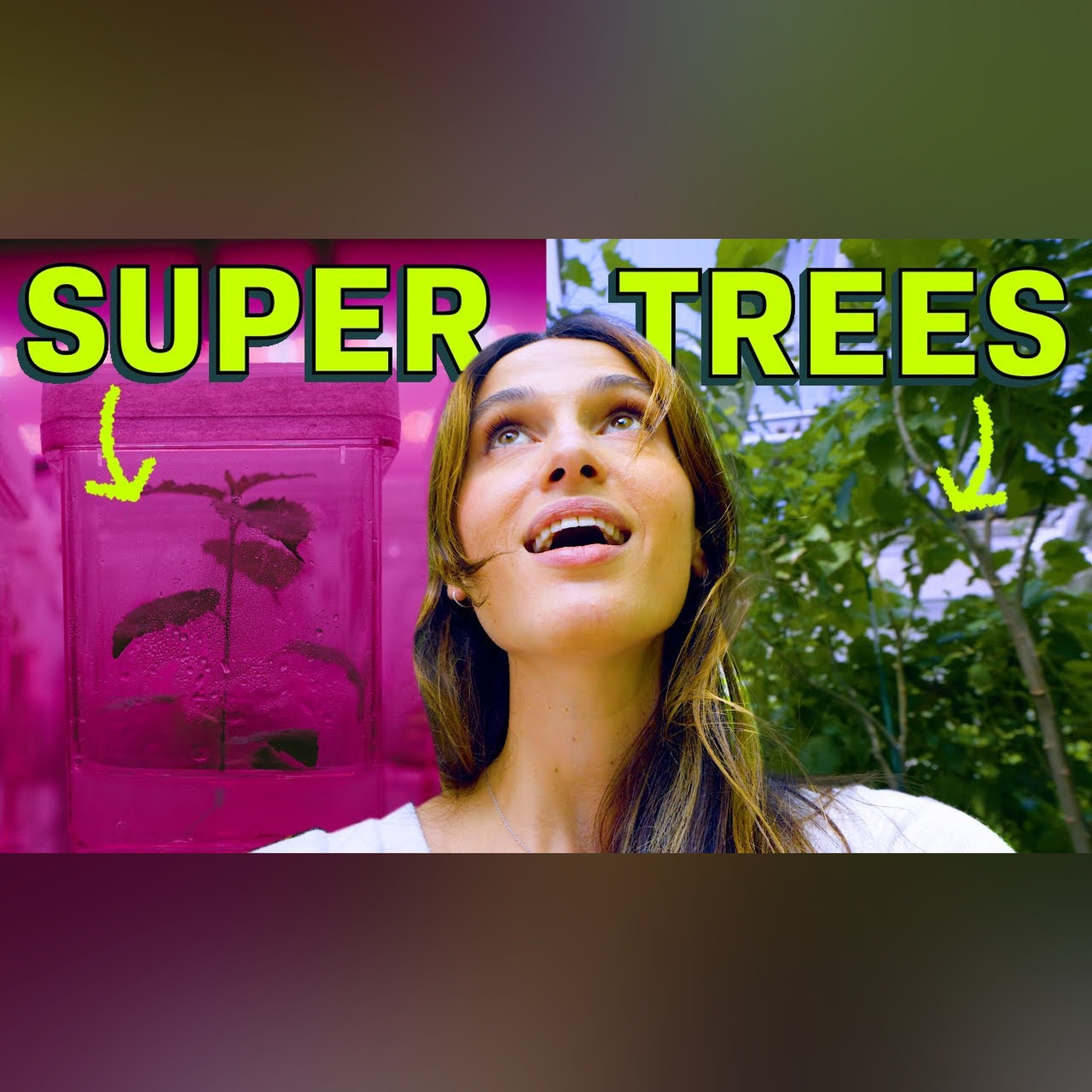
These trees have been genetically modified to capture more carbon. Should we use them? You may have heard that the United States Supreme Court recently weakened the power of the Environmental Protection Agency (EPA) to regulate emissions. That decision harms our ability to fight climate change. In this video, I look for hope in a new research effort - but it's important that new science be paired with regulation. As Mr Beast put it in this video, "we're going to need all the help we can get." Recently, I visited a greenhouse full of super trees. Over the past few decades, genetic engineering has given us the power to manipulate living things - crops, animals, even humans. At the same time, we’ve been unable to adequately slow climate change. The trees I saw are an effort to use one to help the other, led by a group of researchers at a company called Living Carbon. If it works, it could strengthen one of our best allies in this fight. Hold on though, easier said than done. In this video
Whelks have long been a traditional seaside snack but they are still an important catch in some English ports as they're now exported, mainly to South Korea and are worth as much as £20 million a year to the UK. However, whelks are adapted to live in cold water and in the UK are at the southern limit of their temperature range. Recent marine heatwaves have been devastating to stocks. This week we are looking at the impact that our warming waters are having and today we report from Whitstable in Kent. A new report warns that the UK risks missing targets on climate, nature and food production unless rival visions for the countryside find common ground. In a paper published in the Land Use Journal Professor Sir Charles Godfray, Director of the Oxford Martin School, says that without changes to the way we use land and what we eat the UK would need an extra 4.5 million hectares of land by 2050 to meet net zero and biodiversity targets. We are all supposed to be eating more pulses and farmer
Is it bad to leave your phone charging overnight? Should you avoid using it while it's plugged in? And can the way you charge it shorten the life of the battery? There are plenty of myths about smartphone charging, and some of the advice you've heard may be completely wrong. Listen as I separate fact from fiction and reveal what really helps keep your phone's battery working longer. https://www.makeuseof.com/myths-misconceptions-charging-your-phone-debunked/ You probably think your brain simply takes in information and tells you what's happening around you. But that's not quite how it works. Your brain is constantly making predictions about what you're going to experience — and those predictions can actually shape what you feel and perceive. Even something as simple as expecting a shot to hurt can make it feel more painful. So how much of your reality is created by your own expectations? Andy Clark, professor at the University of Sussex and author of The Experience Machine: How Our Min
UAP Files Podcast S4 | E41 (Full Episode Linked Below) FULL EPISODE: https://youtu.be/DTeqmNx6hj0 What if the biggest obstacle to UFO disclosure isn't the government, but the UFO community itself? In this episode of UAP Files, I'm joined by documentary filmmaker Darcy Weir, who has spent close to two decades investigating UFOs, government secrecy, extraterrestrial encounters and some of the most controversial personalities in the subject. Darcy doesn't hold back. We discuss the growing influence of UFO celebrities, the money being made from disclosure, the increasingly divided UFO community and whether some of the people promising us answers are actually making it harder to uncover the truth. From Dr Steven Greer and Chris Bledsoe to Mick West, Susan Gerbic, Sean Kirkpatrick and the Pentagon, we explore some uncomfortable questions about an industry built around one of humanity's greatest mysteries. ️ IN THIS EPISODE, WE DISCUSS: THE UFO INDUSTRY: Has the search for extraterrestrial li
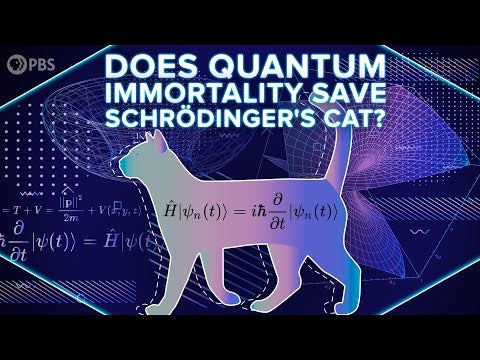
PBS Member Stations rely on viewers like you. To support your local station, go to: http://to.pbs.org/DonateSPACE ↓ More info below ↓ Uploaded 03-03-20 Check out Antarctic Extremes on PBS Terra: https://www.youtube.com/watch?v=EvRAuy1ZmTc Sign Up on Patreon to get access to the Space Time Discord! Sign up for the mailing list to get episode notifications and hear special announcements! Check out the Space Time Merch Store To quote eminent scientist Tyler Durden: "On a long enough timeline, the survival rate for everyone drops to zero." Actually… not necessarily true. If the quantum multiverse is real there may be a version of you that lives forever. Hosted by Matt O'Dowd Written by Matt O'Dowd Graphics by Leonardo Scholzer, Yago Ballarini, and Pedro Osinski Directed by: Andrew Kornhaber Executive Producers: Eric Brown and Andrew Kornhaber End Credits Music by J.R.S. Schattenberg: https://www.youtube.com/channel/UCRl6-nb4iOnsij-vnpAjp0Q If we can’t ever peer into these other realities t
New podcast episode between Ege Erdil and Daniel Kokotajlo. I thought this was going to be a debate, but they ended up agreeing on a lot more than I expected. Their main point of disagreement is how likely it is that we get some intelligence explosion that gives us AIs more competent than any human expert before 2029. Ege puts this possibility at around 20%, whereas Daniel thinks it’s higher than 50%. They agree that there is not a huge difference in probability, and that, in either case, the situation is crazy enough that our civilization really needs to grapple with how the world might be transformed, and we need a plan that actually makes sense. In particular, we should stop antagonizing China if we think some kind of global treaty will be needed to make superintelligence go well. There was another important crux about how well we should expect future AIs (that swamp humans in population size and cognitive power) to treat us, and how relevant it is that current AIs, by and large, se
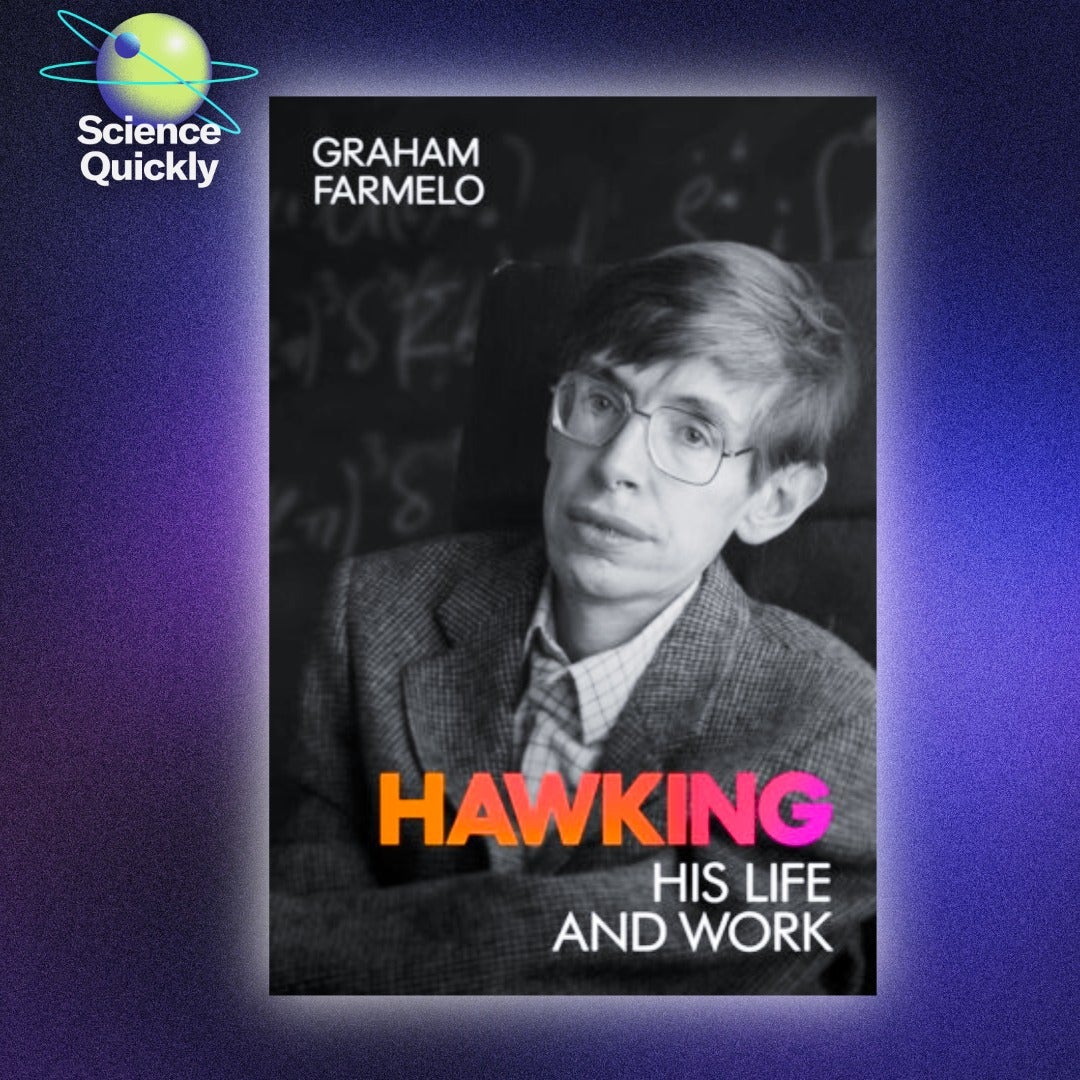
The story of A Brief History of Time only scratches the surface of Stephen Hawking’s extraordinary life. In this episode, books and culture lead Bri Kane talks with award-winning biographer Graham Farmelo about his new book Hawking: His Life and Work. They explore Hawking’s unconventional childhood, his devastating motor neuron disease diagnosis, the relationships that shaped his life, and the groundbreaking black hole research that changed physics forever. It’s a revealing look at the man behind the scientific legend. Recommended Reading: Hawking: His Life and Work. Graham Farmelo. Bantam, 2026 (https://www.penguinrandomhouse.com/books/622065/hawking-by-graham-farmelo/) The Quantum Mechanics of Black Holes (https://www.scientificamerican.com/article/the-quantum-mechanics-of-black-hole/) The Nature of Space and Time (https://www.scientificamerican.com/article/the-nature-of-space-and-time/) The Elusive Theory of Everything (https://www.scientificamerican.com/article/the-elusive-thoery-o
In this episode of Science Quickly, we take a tour of the latest space headlines. Senior editor Lee Billings explains why NASA’s Voyager 1 reaching a light-day from Earth is a remarkable milestone, what SpaceX’s dramatic Starship rocket catch could mean for the future of reusable spaceflight and why the long-running BepiColombo mission is finally preparing to enter orbit around Mercury after a years-long journey through the solar system. Recommended Reading: Voyager 1’s ‘light-day’ milestone is only the beginning (https://www.scientificamerican.com/article/voyager-1-reaches-one-light-day-milestone/) Voyager 1 is a light-day away. What now? (https://www.scientificamerican.com/article/voyager-1-is-a-light-day-away-what-now/) After 8 years in space, the spacecraft BepiColombo is finally nearing Mercury (https://www.scientificamerican.com/article/european-spacecraft-bepicolombo-is-finally-nearing-mercury-after-8-years-in-space/) Two probes are about to arrive at Mercury for an up-close loo
In the rainforests of Madagascar, one species of lemur displays a striking resemblance to an opera singer. Like trained sopranos, these lemurs use special vocal techniques to make their calls carry across the forest. In this episode of Science Quickly, we dive into fascinating new research into how this one species, Indri indri, evolved to have such a striking musical ability and how scientists are tuning in with conservation in mind. Recommended Reading: “Dynamics of Jaw Kinematics and Fundamental Frequency Suggest Vocal Tract Tuning in the Indris’ song,” by Filippo Carugati et al, in PLOS Computational Biology. Published online September 21, 2026 (https://journals.plos.org/ploscompbiol/article?id=10.1371%2Fjournal.pcbi.1014781) “Passive Acoustic Monitoring for the Estimation of Density of the Singing Lemur (Indri indri),” by Valeria Ferrario et al, in Conservation Science and Practice. Published online October 9, 2026 (https://conbio.onlinelibrary.wiley.com/doi/10.1111/csp2.70428) Ou
Keeping a league competitive is more important than maximizing rewards for its strongest teams.
Share your view, then see how readers voted. No sign-in required. This poll is shared across stories.
Do you agree or disagree?
Common Quandary
A Common Quandary to discuss
Another conversation to explore, separate from this news story.
Someone you love asks, “Do you think I’ll be okay?” What if you do not?
A relative with a poor prognosis asks whether you think they will recover. They seem to need reassurance, but you believe the odds are very low and do not want to spend the remaining time pretending.
Can preserving hope justify saying more than you believe?