Listen through the publisher, then discuss the episode here or arrange an in-person Roundtable. Your city determines where to meet.
Roundtables are designed for groups of four, with a shared subject and room for everyone to speak. Come for discussion, with no dating expectation.
A numinous dream helped inspire NPR reporter ALLISON AUBREY’s new book, Your Turn: How to Create A Midlife You Love (https://www.amazon.com/dp/1668207257?plpRedirect=mhFallback&ref=clp_hp_h_pc). In the book, she explores stories of people making big midlife pivots: following their intuition, rediscovering their creativity, and staying open to adventure. For Jungians, the first half of life is about ego development and building a life out in the world. In the second half, our orientation often shifts, and we become interested in the interior, spending time with questions of meaning, and searching for our inner compass. What is deep inside me that is trying to come forward? Many of the transitions Allison writes about began with a difficult experience: the death of someone close, a divorce, the loss of a job, or the last child leaving home. Painful life experiences can often mark our shift to a more interior focus. In her book’s chapter on dreams, Allison draws on Jungian sources (including an interview with Lisa) to look at dreamwork as a tool for navigating such transitions. Our dreams are always available to us as we grapple with dilemmas that can feel insoluble. Join Allison and hosts Lisa Marchiano (https://lisamarchiano.com/) and Deborah Stewart (https://thisjungianlife.com/about/) for an exploration of the inner and outer dimensions of an enriching midlife, and of the crucial role our dreams can play. Allison Aubrey is the author of the national bestsellerYour Turn: How to Create A Midlife You Love (https://www.amazon.com/dp/1668207257?plpRedirect=mhFallback&ref=clp_hp_h_pc) and host of the podcastYour Turn with Allison Aubrey (https://www.npr.org/podcasts/g-s1-143389/your-turn-with-allison-aubrey) She is an award-winning Health & Science Correspondent, a contributor to CBS Sunday Morning, and the creator of the How To Thrive As You Age project. Follow Up the Episode Read Allison Aubrey’s book, Your Turn: How to Create A Midlife You Love (https://www.amazon.com/dp/1668207257?plpRedirect=mhFallback&ref=clp_hp_h_pc) Check out our This Jungian Life Dream School holiday offer (https://thisjungianlife.com/dreams-in-the-body/)
Episode information is provided by the publisher. Listening takes place on the publisher’s service.
Missing someone you love? Struggling with heartbreak, emotional pain, or the sadness of letting go? This gentle sleep hypnosis offers a comforting space to acknowledge your feelings, release some of the weight you're carrying, and drift into peaceful sleep. When someone is no longer part of your life in the way they once were, the nights can feel especially difficult. Memories return, emotions become stronger, and moving forward may seem impossible. You don't have to forget someone to begin finding peace. You don't have to erase the beautiful moments you shared or force yourself to feel better before you're ready. This compassionate guided sleep hypnosis invites you to approach your emotions with kindness, acceptance, and patience. After a soothing relaxation, you'll imagine walking along a quiet path beside a peaceful river, slowly counting down from fifteen to one as your body settles more deeply into rest. Through a gentle visualization, you'll have the opportunity to thank the rela
Are you still full of ambition and ideas, but finding that your energy just isn't keeping up with everything you want to achieve? Do you feel exhausted before the day has even begun, frustrated that the things you once managed so easily now feel overwhelming? In this episode, Adele explores the impact of perimenopause and menopause on energy, motivation and the mental load we carry, particularly when balancing careers, business and everyday life. She discusses why exhaustion shouldn't simply be dismissed as part of being busy, the importance of seeking support and how to work with your changing energy rather than constantly fighting against it. Discover practical ways to rethink your workload, give yourself permission to slow down and use Adele's red, amber and green approach to make the most of the energy you have. ____________ Check out Adele's FREE symptom assessment here: For extra support: [email protected] ____________ From your host : Adele Johnston For more deta
Jason is a medically retired Army veteran from Southern Illinois. After years of dealing with injuries and health challenges—including TBI, PTSD, depression, and chronic knee, back, hip, and shoulder problems—he developed a severe food addiction, gained significant weight, and was taking multiple medications. In 2018, after encouragement from a close friend and psychologist, Jason began a ketogenic diet. He ultimately lost about 80 pounds and was able to discontinue his anxiety and depression medications. In 2023, still struggling with food addiction, cravings, inconsistent energy, allergies, and inflammation, Jason transitioned to a carnivore diet. Since then, he has experienced significant improvements in each of those areas. His experience sparked a deep interest in carnivore nutrition, metabolic health, strength, longevity, and understanding how diet and lifestyle influence physical and mental performance. Today, Jason focuses on continually improving his health, strength, resilien
A hypnosis session for anyone who feels their work does not quite fit them or value them. It lets your intuition compare three possible career futures. In this session: The tiny pebble in the shoe feeling, when a job looks fine on paper but does not feel right Watching three versions of you over three years: staying put, changing things from within, or moving on Radical ownership, seeing yourself as a leader who changes things from the inside Finding a place that respects your boundaries and pays you what you feel you are worth Letting your intuition show what feels closer to, or further from, what you truly want FREE STUFF AND DISCOUNTS: Limited places: https://courses.adamcox.co.uk/sessions (US: https://courses.adamcox.co.uk/sessions-usd) Get $25 to Spend at The Hypnotist Store Find the Hypnosis Session You Need No more scrolling through hundreds of podcast episodes. What's Your Hypnotic Type? About 4 minutes. Take the test (https://adamcox.co.uk/suitability-test/) Work With Adam Dir
Inner Peace Meditation Music: Calming the Body and Soul Enter a state of profound tranquility as you embark on a journey of inner peace with our soothing meditation music. Designed to calm the body and soul, this melodic oasis invites you to release stress, find solace, and reconnect with your innermost self. Let the gentle melodies and harmonious tones envelop you, creating a serene atmosphere that gently guides you into a deep state of relaxation. As the music resonates within, feel the tensions of the body melt away, and the mind become still and clear. Allow the soothing sounds to wash over you, bringing a sense of harmony to every fiber of your being. As you surrender to the music's embrace, experience a gentle release of worries, anxieties, and the weight of daily life. In this peaceful sanctuary, you can cultivate a connection to your innermost self. The meditation music acts as a gentle guide, supporting you in finding clarity, balance, and inner harmony. As you immerse yoursel
Sharing a meal at the same table, a practice known as commensality, helps families and communities build trust and connect across generations. While many people believe the 1621 harvest feast shared by the Pilgrims and the Wampanoag people started an unbroken annual tradition, American Thanksgiving history actually followed a much more uneven path. Indigenous peoples held seasonal harvest and gratitude ceremonies for generations before 1621, and the Plymouth meal was largely forgotten for about 200 years. George Washington issued the first national Thanksgiving proclamation for Thursday, November 26, 1789, and magazine editor Sarah Josepha Hale later persuaded Abraham Lincoln to set a regular November date in 1863. The holiday did not become federal law until 1941, after public confusion over a date change. When gathering for a holiday dinner, Harvard research shows that asking open-ended follow-up questions makes conversations more engaging and boosts likability. Keeping a few neutral
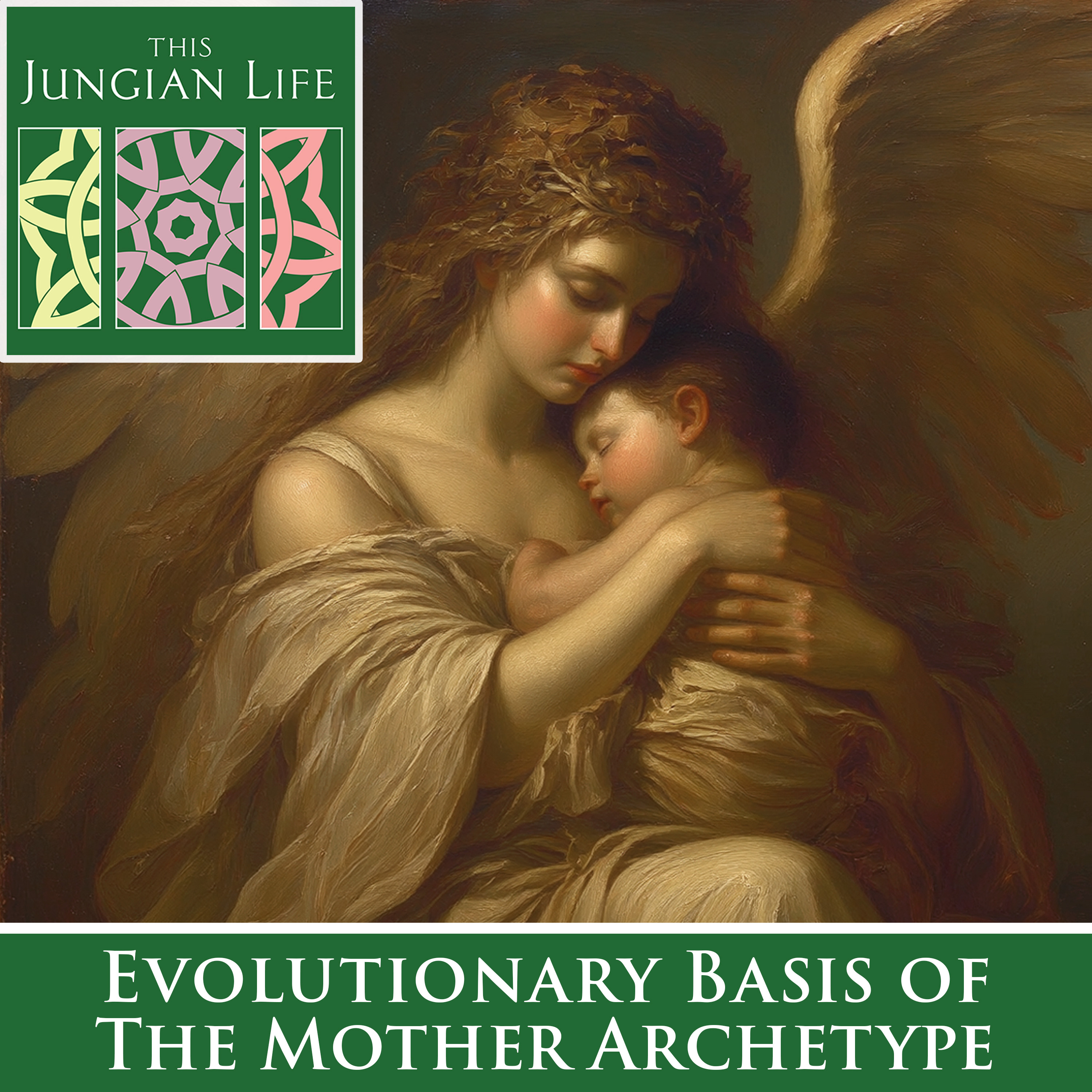
This week on the podcast, we attempt no small task: to bring together neurobiology and Jungian thought to explore the possible evolutionary roots of the mother archetype. Jungian analyst Lisa Marchiano welcomes back GARY CLARK, author of Carl Jung and the Evolutionary Sciences (https://bookshop.org/a/99234/9781032624518) and a visiting research fellow at the University of Adelaide. When a new mother cradles an infant, the mother archetype is constellated. Maternal instinct means previously unknown behaviors now feel completely natural: crooning to the baby in a singsong voice, cradling her on the left side, rocking her gently to sleep. This shows up in the culture in the endless representations of the mother archetype - such as the Madonna and child - in art, religion and literature. Jungians explain such maternal experiences as universal patterns of behavior that organize psychic energy related to mothering. Science, on the other hand, presents us with evidence pointing to ancient par
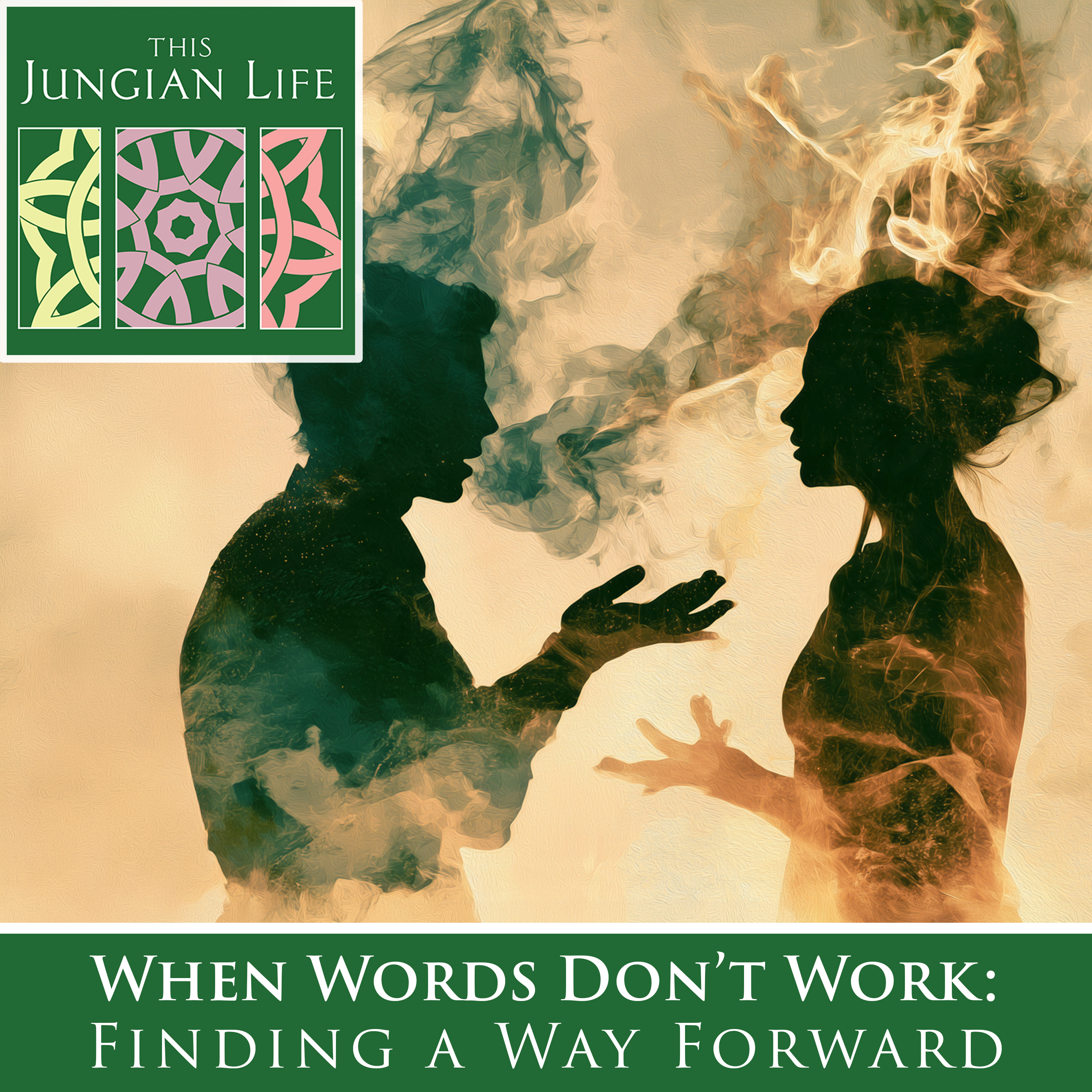
Whether it’s an intractable dispute at the United Nations or a teenager’s dirty clothes on the floor, some conflicts are impossible to solve with words. When we raise difficult issues in our relationships, such as whether to have a child, address a partner’s alcohol consumption, or negotiate spending, we may discover that the other person stonewalls. A refusal to engage can take us from one difficult question to another: what does obstruction say about the relationship? Are we strong enough to handle difficult conversations? When repeated attempts at communication fail, a different approach may be needed. Deb shares her mentor’s rule: if you have clearly raised an issue three times without a meaningful response, it is time to step back and find support, perhaps from a friend, a therapist or a lawyer. This can lead to self-examination, a new perspective, or facing a painful reality and developing the strength to act. The famous conflict between Jung and Freud proved unresolvable, leadin
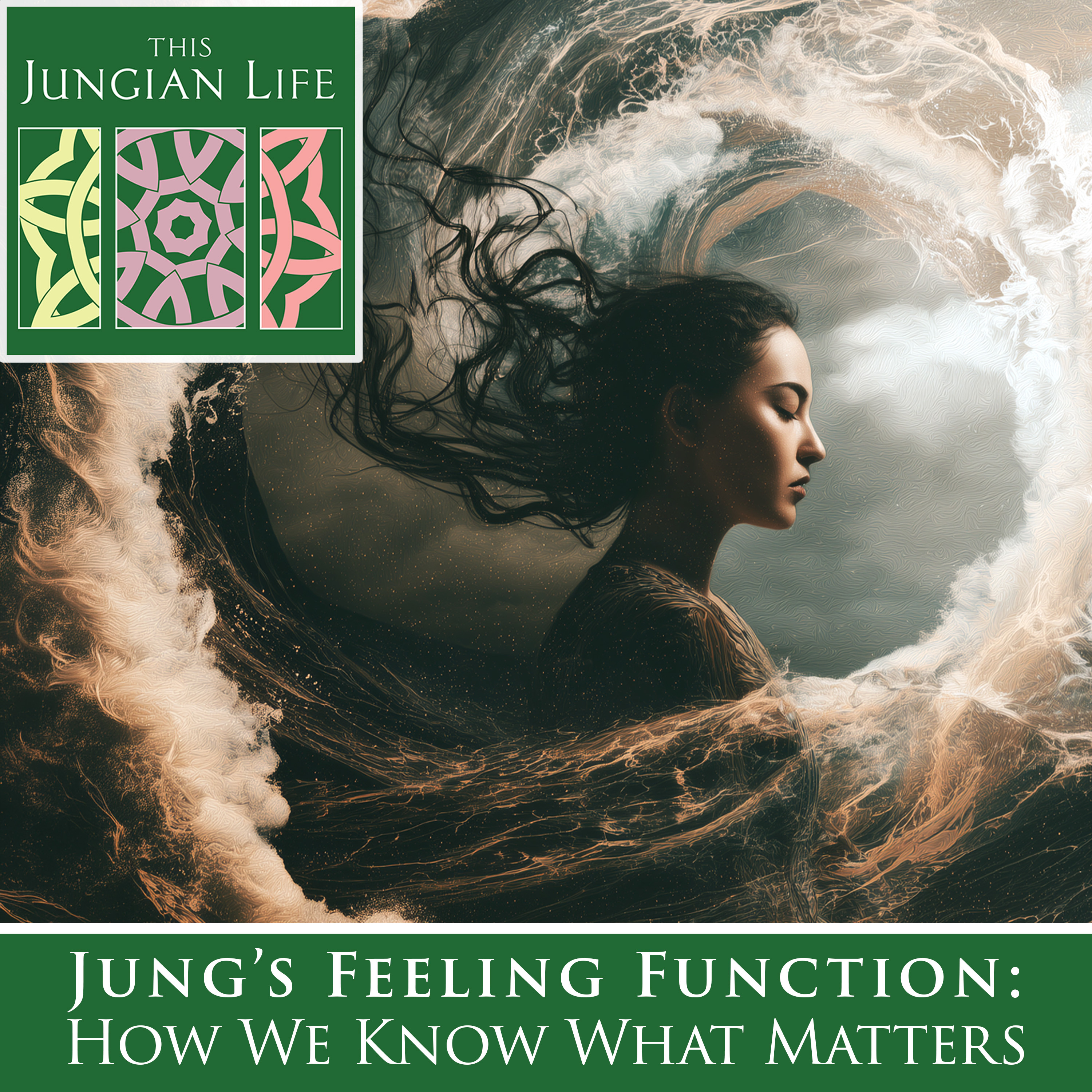
Two people stand at the rim of the Grand Canyon. One is overcome with awe at nature’s grandeur, while the other sees an enormous rift in the landscape. What accounts for the difference? This week, Jungian analyst and scholar JOHN R. WHITE joins Lisa Marchiano and Deborah Stewart to explore Jung’s feeling function, our capacity to discern what matters. One of Jung’s best-known legacies is his categorization of ego functions: typology. Whether we are extraverted or introverted (terms Jung introduced), our four basic ego functions sort themselves into intuition, sensation, thinking, and feeling. We have all four functions but prefer some over others. Jung’s system led directly to the creation of the widely used Myers-Briggs Personality Type Indicator. The feeling and thinking functions are both ways of making judgments, but the feeling function is based on personal values: if you were a military commander, would you be like Napoleon, directing his troops from the hilltop -- or like Braveh
Reports of research should distinguish clearly between association and proven causation.
Share your view, then see how readers voted. No sign-in required. This poll is shared across stories.
Do you agree or disagree?
Common Quandary
A Common Quandary to discuss
Another conversation to explore, separate from this news story.
Your neighbor saves a public parking spot with an orange cone. Do you move it?
Street parking is scarce after a snowstorm. Your neighbor spent an hour digging out the space in front of their home and now guards it with an orange cone, even though curb spaces legally belong to everyone. You arrive tired and the cone is blocking the only open spot.
Can effort create a personal claim to something public?