Listen through the publisher, then discuss the episode here or arrange an in-person Roundtable. Your city determines where to meet.
Roundtables are designed for groups of four, with a shared subject and room for everyone to speak. Come for discussion, with no dating expectation.
There’s a long-standing trend towards offering “everything as a service”–including infrastructure and application software (and hardware!). This “EaaS” model turns vendors into rent-seekers: In order to keep getting the features they want, users need to keep the subscription current, and they no longer own their own infrastructure. John and Johna discuss how tech teams can... Read more » (https://packetpushers.net/podcasts/heavy-strategy/hs150-can-ai-shield-you-from-it-rent-seekers/)
Episode information is provided by the publisher. Listening takes place on the publisher’s service.
Brain chips don't read your mind. They do something weirder... This is Neuralink’s Next Gen R1 surgical robot. It’s one of several new ways scientists are now trying to combine the human brain with a computer, which sounds like science fiction because… it is! But not anymore. And you need to know about this right now, because human clinical trials are happening and this tech is moving fast. Some people want to use it to make you superhuman. But I think most people aren’t seeing what’s really huge if true here. This story isn’t about how to make us more like machines Instead, this might be one of the most cutting edge ways to keep us human. Visit http://mercury.com (http://mercury.com/) to join over 300 thousand entrepreneurs who love Mercury. Mercury is a financial technology company, not an FDIC-insured bank. Banking services provided through Choice Financial Group and Column N.A., Members FDIC. Chapters: 00:00 What if you put a chip in your brain? 01:02 What does a human brain feel l
This week, we’re getting back to basics and explaining everything you need to know about smart glasses. Out special round table discussion breaks down how they work and the difference they might make in your everyday life. Plus, Grand Theft Auto 6 is the talk of the games industry, but how accessible is the title for blind and partially sighted players? Sightless Kombat will be joining us with his first impressions.
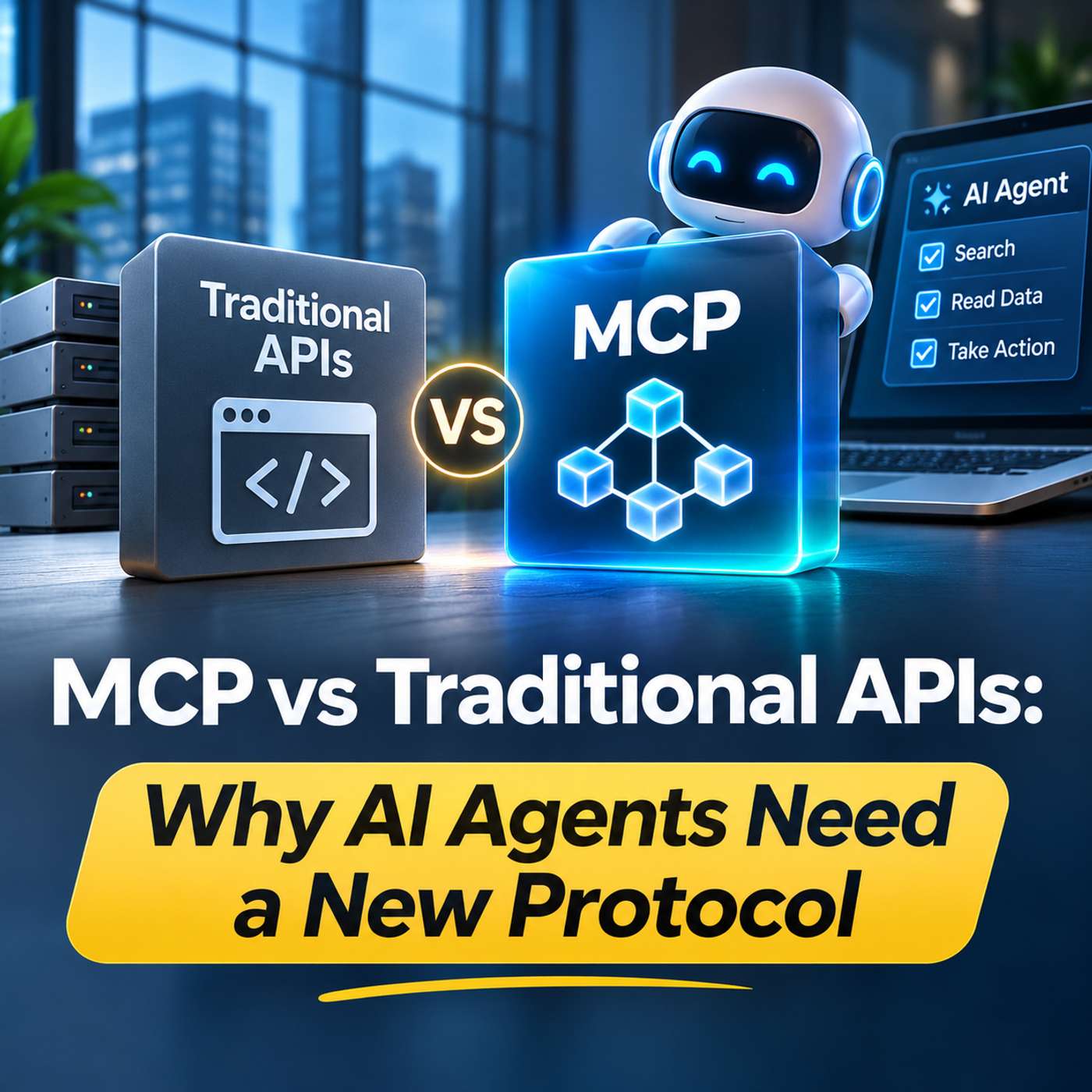
What if your AI application could connect to databases, process refunds, manage Kubernetes clusters, and communicate with enterprise tools without requiring weeks of custom integration code? In this episode of TechDaily.ai, host David and AI expert Sophia explore Model Context Protocol (MCP), a new approach to connecting AI models with external tools, APIs, and enterprise systems. Discover why traditional API integrations create major challenges for AI developers and how MCP is changing the way intelligent applications access data, discover tools, and execute complex workflows. Imagine building an AI-powered customer support assistant that needs to retrieve orders from PostgreSQL, search thousands of products through Elasticsearch, process Stripe refunds, and send Slack notifications. Traditionally, each integration requires custom authentication, error handling, and API-specific code. Switching between AI models like Claude, GPT-4, and Gemini only adds to the complexity. MCP offers a
The Decoder book is coming May 27th, 2027 - it’s called HOW TO GET WHAT YOU WANT: AN INSTRUCTION MANUAL FOR AMBITIOUS PEOPLE and it’s all about how to be more effective in work and life. I asked Hank Green to read an early draft, and he came on to guest host once again and talk to me about it. Pre-order here: https://static.macmillan.com/static/smp/how-to-get-what-you-want-9781250460417/ And thanks to The St. Martin’s Publishing Group for putting up with me ;)
Explore Edvard Munch’s masterpiece “The Scream,” and find out why this artwork became one of the world’s most famous paintings. -- An undulating sky melds into the landscape, two silhouettes move along a balustraded walkway, and a ghostly figure’s features extend in agony. Since Norwegian artist Edvard Munch created "The Scream" in 1893, it’s become one of the world’s most famous artworks. But why has its cry traveled so far and endured so long? Noah Charney shares the inspiration behind the dramatic and haunting masterpiece. Lesson by Noah Charney, directed by Martina Meštrović. Support Our Non-Profit Mission ---------------------------------------------- Support us on Patreon: http://bit.ly/TEDEdPatreon Check out our merch: http://bit.ly/TEDEDShop ---------------------------------------------- Connect With Us ---------------------------------------------- Sign up for our newsletter: http://bit.ly/TEDEdNewsletter Find us on Twitter: http://bit.ly/TEDEdTwitter Peep us on Instagram: htt
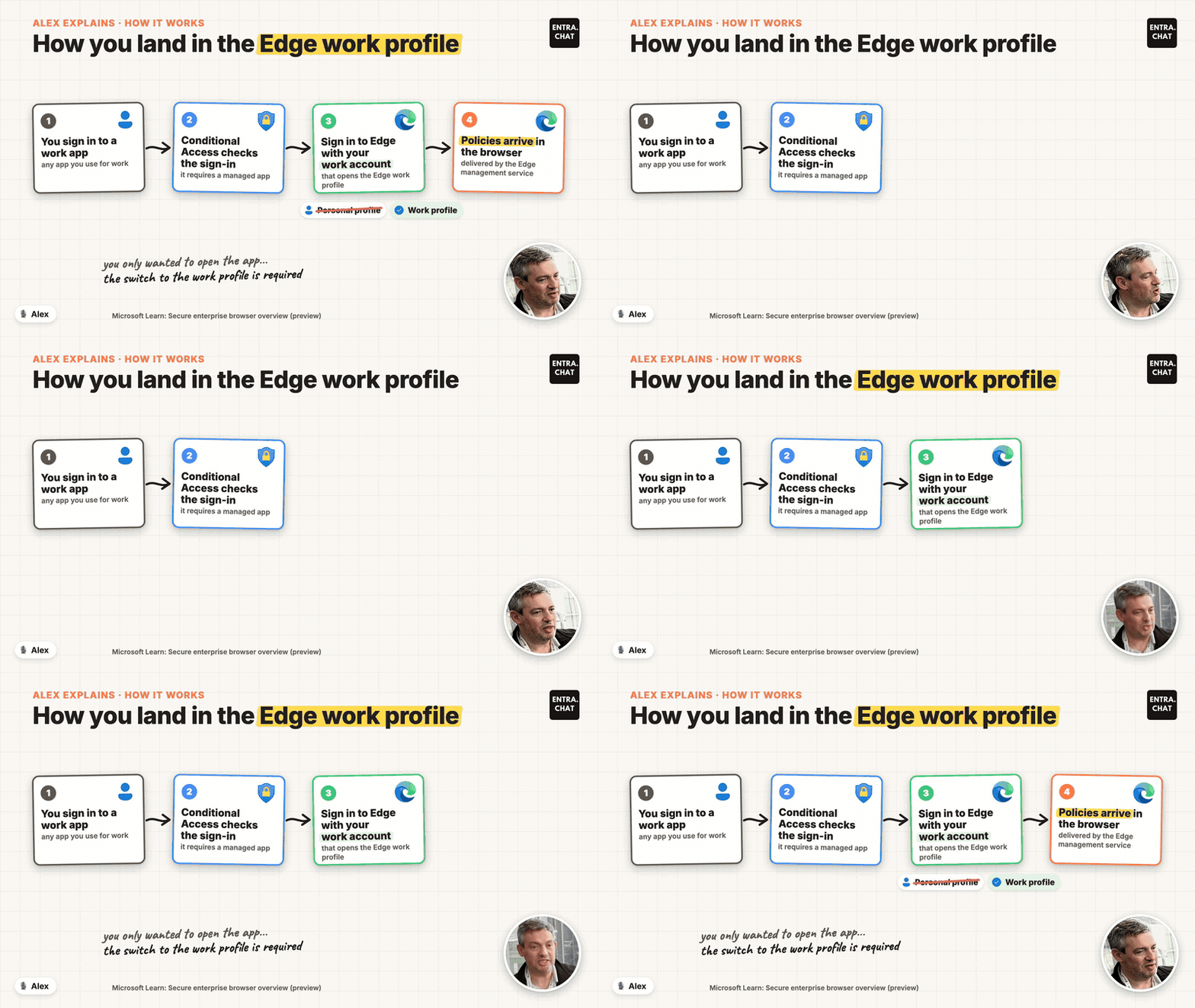
This episode was recorded in person at Microsoft Ignite. A big thank you to Increment (https://www.increment.inc/) and IDFusion (https://idfusion.io/) for sponsoring my travel to the event so I could record it there. Giving a contractor, a newly acquired team or a BYOD user access to your private web apps has meant a VPN client, a managed laptop or a virtual desktop. Microsoft now has a preview that builds Global Secure Access into Microsoft Edge for Business: the user signs in to Edge with their work account and gets your private apps and protected internet access, with nothing else to install. Recorded at Microsoft Ignite with the people who built it: Arunesh Chandra (Head of Product, Microsoft Edge for Business), Narendra Acharya (Head of Engineering), Patrizio Chiquini (Product Manager) and Alex Pavlovsky (Product Architect, Global Secure Access). This episode also starts a new monthly Global Secure Access series on Entra.Chat, co-hosted by Andres Canello (Ex-Microsoft Entra PM), w
If you’ve ever inherited a firewall ruleset built by five different people over fifteen years — with rules nobody can explain, objects named after people who left the company in 1998, and policies that everyone’s afraid to touch — you already understand the problem FireMon helps solve. On today’s sponsored episode, we talk about how... Read more » (https://packetpushers.net/podcasts/packet-protector/pp136-how-firemons-agentic-ai-helps-turn-back-the-vulnerability-deluge-sponsored/)
In today’s Tech Bytes podcast, Drew Conry-Murray sits down with Check Point’s Steve Giguere and Dave Gronner to break down how security teams can govern the use of public AI tools in the enterprise, as well as private models across data centers and “AI factories.” They discuss how semantic inspection brings intent-based monitoring to the... Read more » (https://packetpushers.net/podcasts/tech-bytes/tech-bytes-beyond-ports-and-protocols-how-to-secure-ai-models-agents-and-data-centers-sponsored/)
Take a Network Break! Virtual donuts are up, but everything else seems to be going down. This week’s show covers Red Alerts for Oracle and OpenJDK. In the news, outages were everywhere, from Microsoft to the FAA to US banks to the NSA and Apple. Palo Alto Networks acquires AI service provider Applied Compute, Arista... Read more » (https://packetpushers.net/podcasts/network-break/nb601-breakdowns-abound-amazon-leo-constellation-catastrophe/)
Neighboring communities should share responsibility for problems crossing their boundaries.
Share your view, then see how readers voted. No sign-in required. This poll is shared across stories.
Do you agree or disagree?
Common Quandary
A Common Quandary to discuss
Another conversation to explore, separate from this news story.
You are training the software that may replace your team. Do you warn them?
A manager is asked to help test software that could eliminate several jobs on their team. Leadership insists the project is uncertain and confidential, while employees are making major financial decisions.
When does loyalty to colleagues override professional confidentiality?