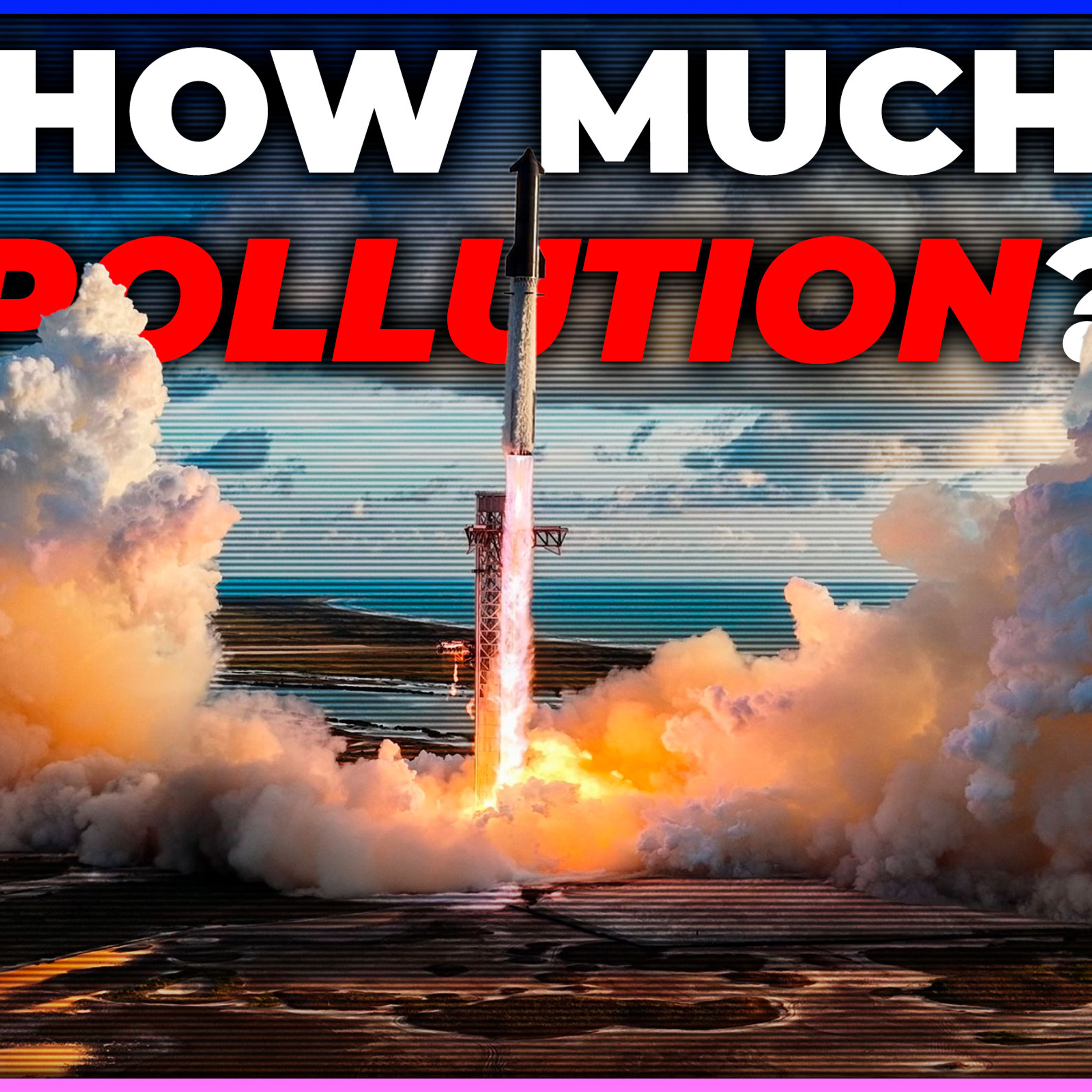
[Q&A+] How Bad Is a Rocket Launch for the Environment?
23 min
Listen through the publisher, then discuss the episode here or arrange an in-person Roundtable. Your city determines where to meet.
Roundtables are designed for groups of four, with a shared subject and room for everyone to speak. Come for discussion, with no dating expectation.
BONUS QUESTION STARTS AT 14:51 Watch the video here (with no ads) or on YouTube: How much pollution does a rocket launch produce? How does a gravitational assist really work? What new tech is being developed for space food? And in Q&A+, how will human bodies adopt to low gravity? 00:00 Intro 00:29 [@Brian Rodriguez] How polluting is a rocket launch? 03:48 [@kylemiller86] Was I surprised in how fast the Vera Rubin Observatory had already discovered it's first dwarf planet candidate in our super situation? 06:59 [@indokenmore] How does gravitational assist work? 11:16 [@HFN_Noble] Are there any interesting research being conducted on food tech for space? 14:51 [@Thuvia-i6e] How many years until humans adapt to low g or 0g? Augmented? 19:48 Final thoughts
Episode information is provided by the publisher. Listening takes place on the publisher’s service.
Viewers like you help make PBS (Thank you ) . Support your local PBS Member Station here: https://to.pbs.org/DonateSPACE Uploaded 07-03-18 Will the future of space exploration be guided by public or private entities? Which is better? Learn more about CuriosityStream at https://curiositystream.com/spacetime You can further support us on Patreon at https://www.patreon.com/pbsspacetime Get your own Space Time tshirt at http://bit.ly/1QlzoBi Tweet at us! @pbsspacetime Facebook: facebook.com/pbsspacetime Email us! pbsspacetime [at] gmail [dot] com Comment on Reddit: http://www.reddit.com/r/pbsspacetime Help translate our videos! https://www.youtube.com/timedtext_cs_panel?tab=2&c=UC7_gcs09iThXybpVgjHZ_7g (https://www.youtube.com/timedtext_cs_panel?c=UC7_gcs09iThXybpVgjHZ_7g&tab=2) Previous Episodes: The Trebuchet Challenge Death of the Sun On February 8th 2018, the eyes of the world once again fixed upon Cape Canaveral. This time, people watched with anticipation as SpaceX launched its new
When should artists get paid in a world with AI music? Artificial intelligence is changing how music gets made - and how musicians get paid. AI is letting people clone artists’ voices, create completely new songs as fake collaborations, generate lyrics in seconds, even produce full tracks just by typing in a few words. It’s all causing some to say AI will be “the death of music.” Technology causes turning points in history. And I think we’re in one right now for music. The stakes are high: If we get this wrong, we could jeopardize how human musicians make money and art. But if we get it right, we have an opportunity to leap ahead in how we as humans get to express ourselves. To really understand what’s happening with AI music, you need to understand how the music industry ALREADY works - and how it could be changing. In this video, I took a deep dive into that topic with the help of two people right in the thick of it: The artist Grimes and CEO of Spotify Daniel Ek. Chapters: 00:00 Wha
StayCurious Newsletter on Snyder’s Fiber Randomized Controlled Trial: https://staycuriousmetabolism.substack.com/p/fiber-is-good-for-you-is-lazy-science?r=40ekz2 StayCurious Newsletter on Inulin and Fructose Resistance: https://staycuriousmetabolism.substack.com/p/the-fiber-that-fights-fat-how-inulin?r=40ekz2 Snyder Interview 1, Four Types of Diabetes: https://youtu.be/mCrc4gfbK2o Snyder Interview 2, Most Viral Aging Study: https://youtu.be/kMpGkg4zMOU Snyder Interview 3, Most Beautiful Exercise Study: https://youtu.be/_9ywulQF2Ho Why does the same food spike one person’s blood sugar while barely affecting another? In this fourth conversation with Stanford’s Professor Michael Snyder, we explore new research on individualized glycemic responses, insulin resistance subtypes, and why one-size-fits-all nutrition advice keeps failing. From rice spiking glucose more than ice cream, to the power of the grape-to-potato ratio, and beyond, this discussion reveals how metabolism, microbiome, immu
Where on Earth did life begin? Explore the hydrothermal vents in Earth’s crust as simple compounds gave way to complex life. Uploaded 26-08-19 -- Billions of years ago, simple organic compounds assembled into more complex coalitions that could grow and reproduce. At the time, Earth had widespread volcanic activity and a hostile atmosphere that made it almost devoid of a suitable environment for living things. So where did life begin? Luka Wright searches for the cradle of life that gave rise to the billions of species that inhabit our planet. Lesson by Luka Seamus Wright, directed by Nick Hilditch. Sign up for our newsletter: http://bit.ly/TEDEdNewsletter Support us on Patreon: http://bit.ly/TEDEdPatreon Find us on Twitter: http://bit.ly/TEDEdTwitter Peep us on Instagram: http://bit.ly/TEDEdInstagram View full lesson: https://ed.ted.com/lessons/the-mysterious-origins-of-life-on-earth-luka-seamus-wright Thank you so much to our patrons for your support! Without you this video would not
When a family moved into an apartment in New York, they had no idea just how much history the building held. Over the years, it had reportedly served several purposes, including a city hall and a jail. But they wouldn't learn those details until after some frightening experiences had already begun. On their very first night, the mother came running into her son's room, terrified by a man who had appeared in her bedroom. He hadn't simply frightened her. According to her account, he'd made it very clear that the family wasn't welcome. And things only became stranger from there. As the family settled in, they experienced unexplained sounds, unsettling physical encounters, and incidents that made them question what was actually moving around their home. Had something remained behind from the building's long history? And was it determined to make the new occupants leave? #RealGhostStoriesOnline #TrueGhostStories #HauntedApartments #HauntedJail #HistoricHauntings #NewYorkGhostStories #Parano
☀️ HARNESSING THE POWER OF THE SUN — THE SCIENCE BEHIND C60 EVO! What happens when scientists recreate extraordinary, sun-like temperatures inside a laboratory to produce one of the most fascinating carbon molecules ever studied? Michael Jaco welcomes Patty Greer and Chris Burres back to Unleashing Intuition for a fascinating behind-the-scenes look at C60 Evo, the technology used to produce ESS60, and the science behind this unique carbon molecule. Chris takes us inside the laboratory to explain the intense temperatures, specialized production methods, and purification processes involved in creating ESS60 — C60 Evo's proprietary form of Carbon 60. The conversation explores the relationship between antioxidants, mitochondria, cellular energy, and oxidative stress, along with why C60 Evo combines ESS60 with carefully selected extra virgin olive oil. Patty and Chris also share their perspectives on wellness, personal experiences, and the growing interest in carbon-based technology. Inside
BONUS QUESTION STARTS AT 22:03 Watch the video here (with no ads) or on YouTube: https://youtu.be/rcj39PJq6ko Scott Manley’s Starship Flight 15 coverage: https://www.youtube.com/watch?v=uwGBBAv8PBI Vote for the best story here: https://www.youtube.com/@frasercain/posts SpaceX finally catches Starship, Euclid’s first big data release is out, a compelling new explanation for Little Red Dots, and a way to rule out a type of dark matter. And on Space Bites+, China is planning on sending a lander to Callisto. 00:00 Intro 00:17 Starship Catch https://www.universetoday.com/articles/baby-shes-back-spacex-catches-a-starship-from-orbit-for-first-time https://www.universetoday.com/articles/spacex-launches-starship-but-passes-up-booster-catch-for-safetys-sake 05:37 Euclid’s First Big Release https://www.universetoday.com/articles/euclids-first-data-release-a-stepping-stone-to-its-3d-map-of-the-sky 08:39 No GPS? No Problem! https://www.universetoday.com/articles/navigating-lunar-orbit-using-nothing
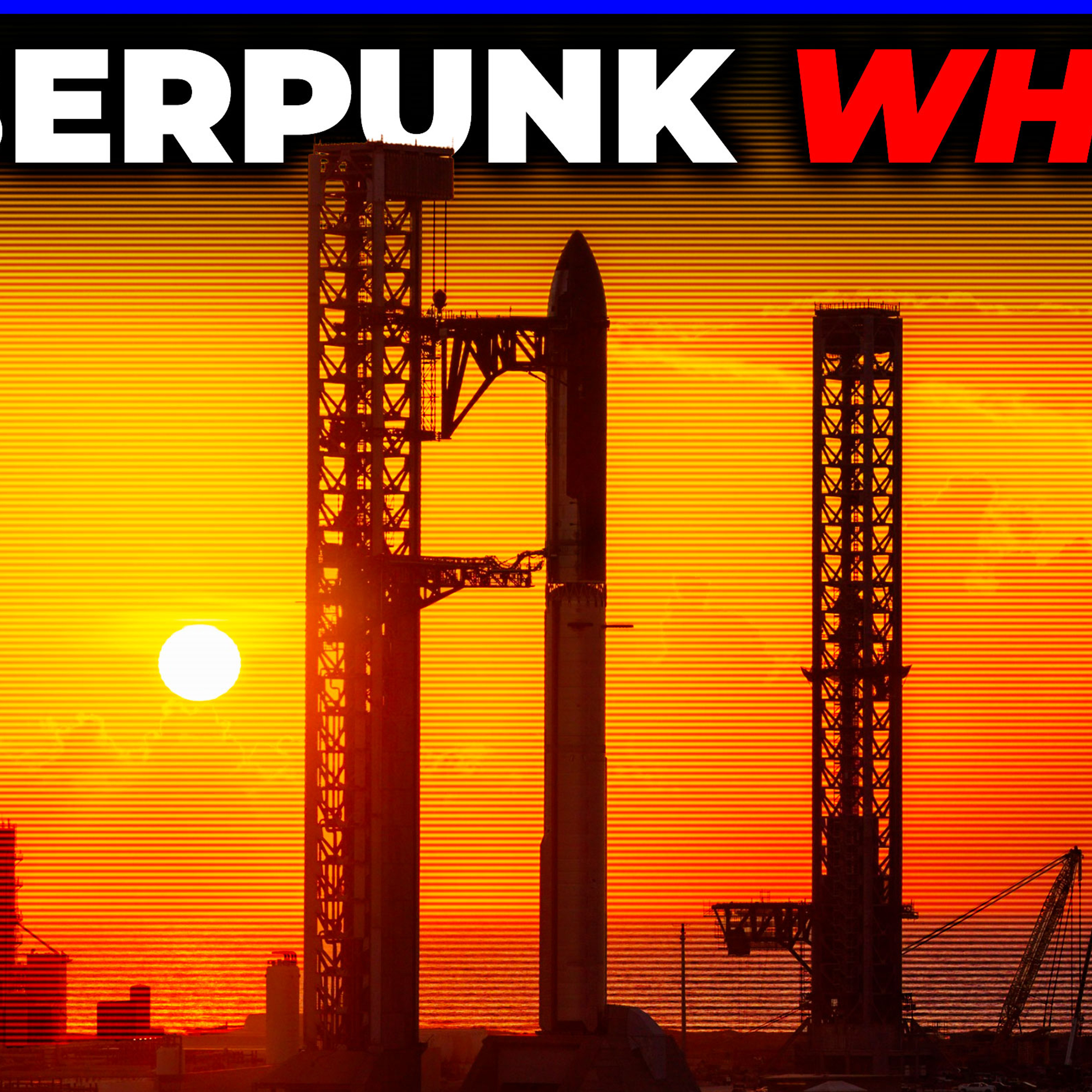
BONUS QUESTION STARTS AT 14:05 Watch the video here (with no ads) or on YouTube: https://youtu.be/29zYt-NR11k How will augmented children grow up? What's the most useful skill one can master right now? Is the cyberpunk already here? And in Q&A+, can you hack starlinks to act as GPS? 00:00 Intro 00:23 [@jeffhans1] Would children born with brainchips giving them language and math without having to learn them be more advanced or harmed by not having to learn those things? 08:33 [@TomSchultz78] what is the most usefullskill for a person at the current age? 11:20 [@HanSolo__] Are we already in cyberpunk? 14:05 [@jeffhans1] Would a Starlink reading be more accurate than GPS? 15:40 Final thoughts
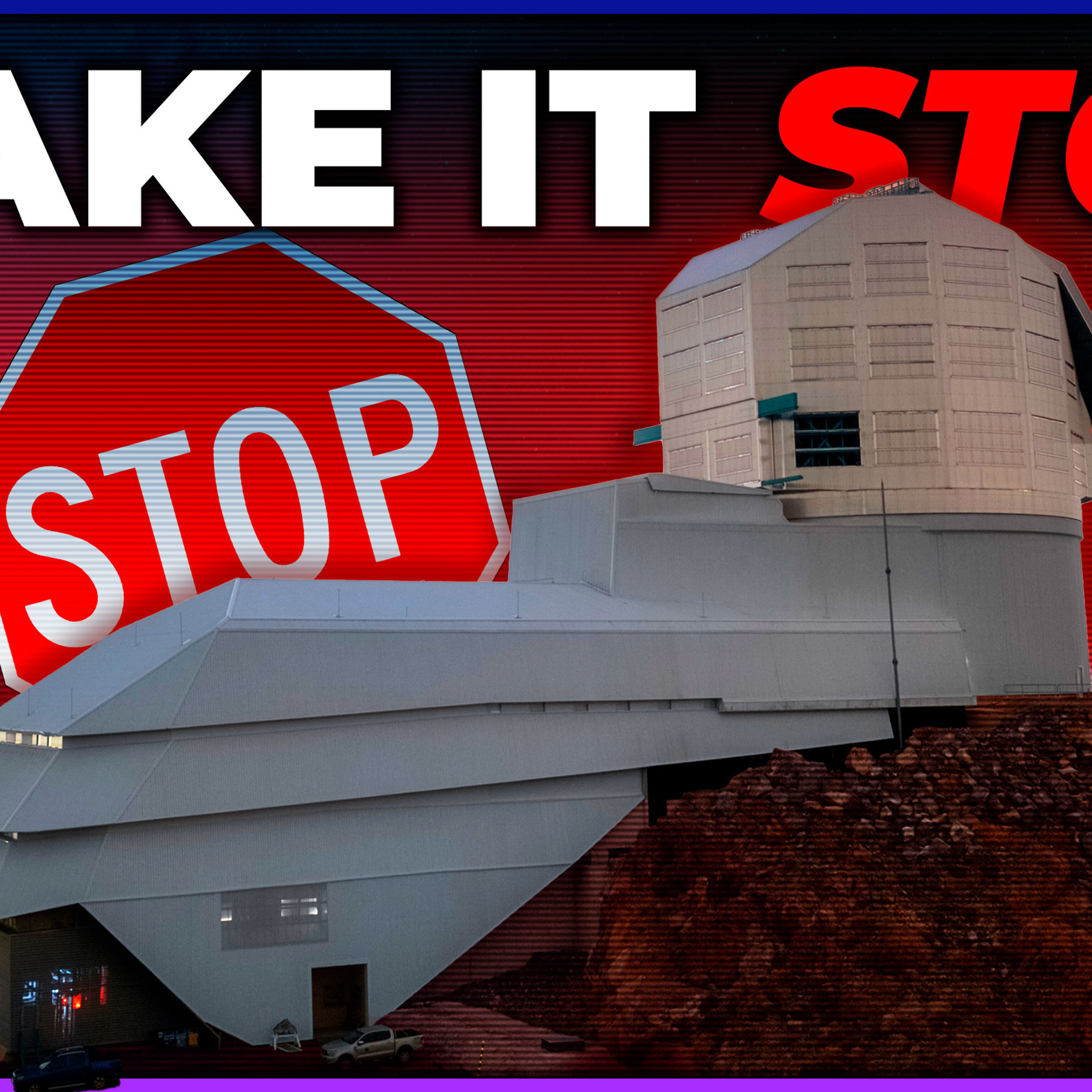
BONUS PART STARTS AT 33:07 Watch here (with no ads) or on YouTube: https://youtu.be/wKs1AUkNOX4 Rubin’s Data Pipeline Interview: https://youtu.be/VKrpJODdEM0 Rubin’s Meteorite Hunting Interview: https://youtu.be/CgAEIutaM5w Rubin’s Director Interview: https://youtu.be/HQKswmYpxKE Guest: Sean MacBride https://seanmacb.github.io/ Vera Rubin's doing the most comprehensive survey of the night sky. But there are certain events that can require it to stop whatever it's doing and go see what's happening elsewhere. These are called Target of Opportunity events. What exactly can trigger such behaviour and what's the procedure? Finding out in this interview. Rubin's Target of Opportunity Program https://rubinobservatory.org/explore/how-rubin-works/lsst/rubins-too-program 00:00 Intro 01:52 Rubin's Target of Opportunity program 10:46 Kilonova 18:04 What science does Rubin bring 25:19 Milky Way supernova 27:52 The process for Target of Opportunity 33:07 Sky pollution with satellites 41:07 Current o
Sporting rivals should be able to enjoy competition without hostility between supporters.
Share your view, then see how readers voted. No sign-in required. This poll is shared across stories.
Do you agree or disagree?
Common Quandary
A Common Quandary to discuss
Another conversation to explore, separate from this news story.
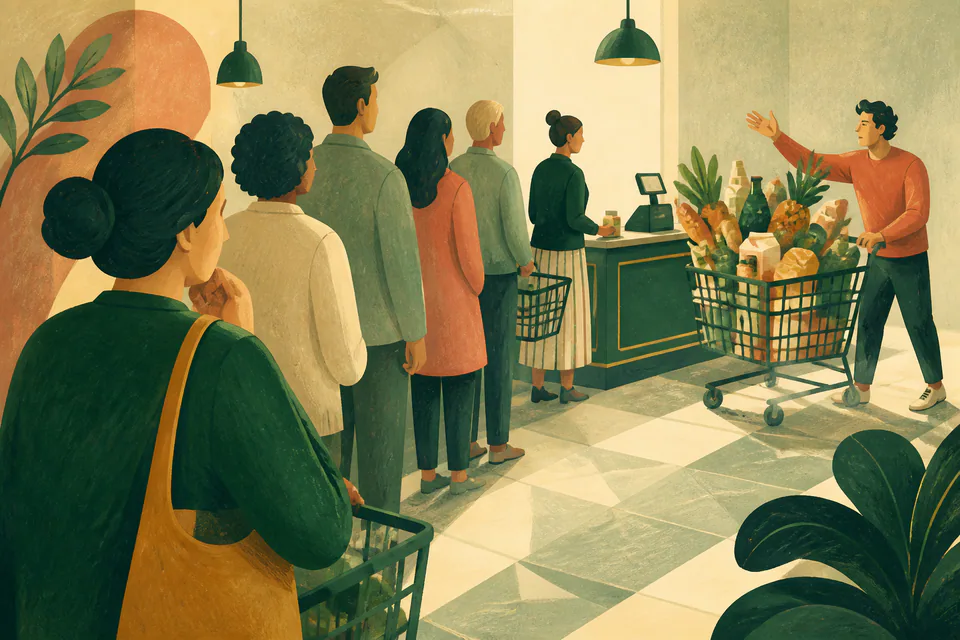
Someone holds a grocery line spot while their partner fills the cart. Is that cutting?
A shopper with one item stands ahead of you in a long checkout line. Just before reaching the register, their partner arrives with a cart packed to the top and joins them. They insist they were shopping together all along.
Can one person reserve a place in line for an unknown amount of work?