[Interview+] Events That Can STOP Vera Rubin's Survey
51 min
Listen through the publisher, then discuss the episode here or arrange an in-person Roundtable. Your city determines where to meet.
Roundtables are designed for groups of four, with a shared subject and room for everyone to speak. Come for discussion, with no dating expectation.
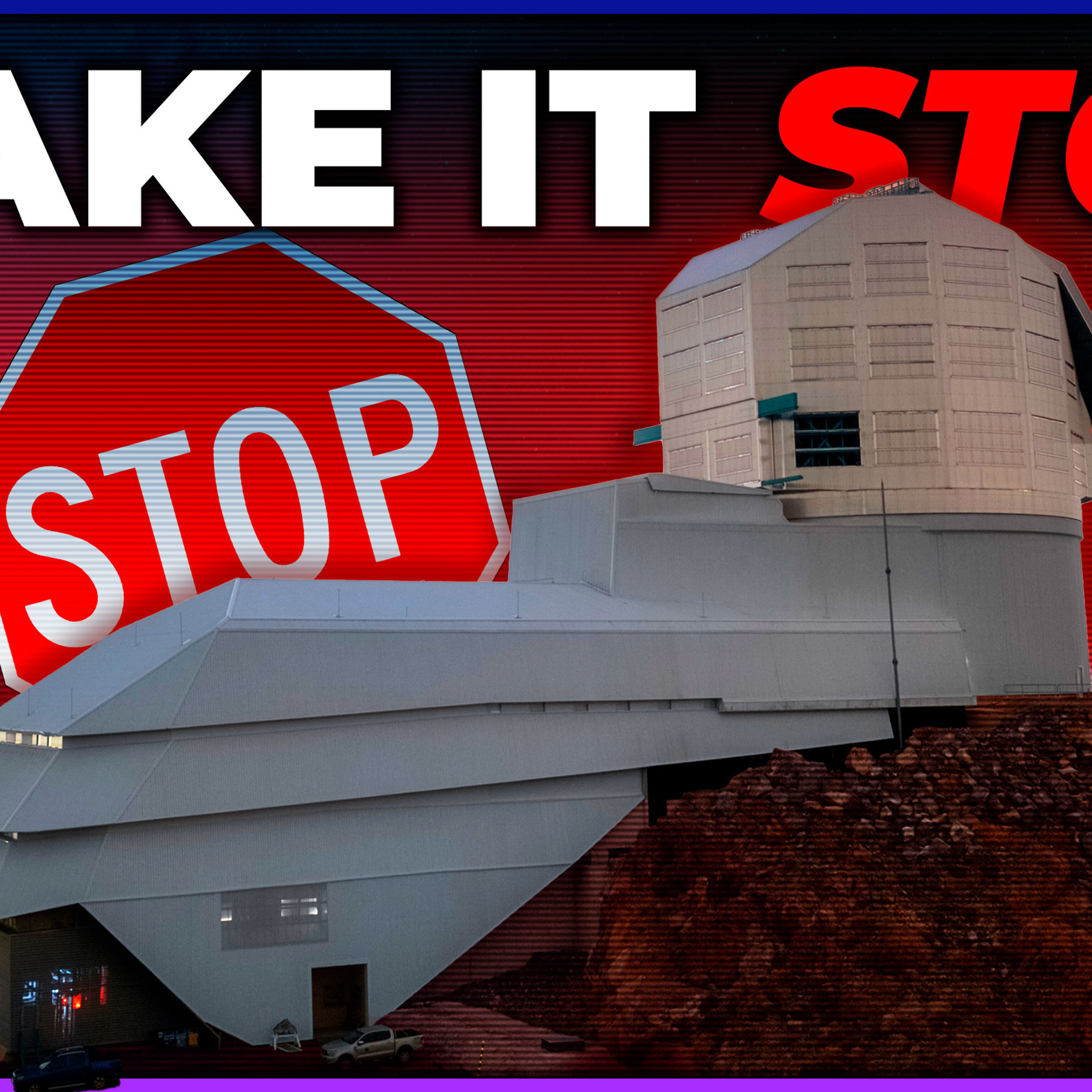
BONUS PART STARTS AT 33:07 Watch here (with no ads) or on YouTube: https://youtu.be/wKs1AUkNOX4 Rubin’s Data Pipeline Interview: https://youtu.be/VKrpJODdEM0 Rubin’s Meteorite Hunting Interview: https://youtu.be/CgAEIutaM5w Rubin’s Director Interview: https://youtu.be/HQKswmYpxKE Guest: Sean MacBride https://seanmacb.github.io/ Vera Rubin's doing the most comprehensive survey of the night sky. But there are certain events that can require it to stop whatever it's doing and go see what's happening elsewhere. These are called Target of Opportunity events. What exactly can trigger such behaviour and what's the procedure? Finding out in this interview. Rubin's Target of Opportunity Program https://rubinobservatory.org/explore/how-rubin-works/lsst/rubins-too-program 00:00 Intro 01:52 Rubin's Target of Opportunity program 10:46 Kilonova 18:04 What science does Rubin bring 25:19 Milky Way supernova 27:52 The process for Target of Opportunity 33:07 Sky pollution with satellites 41:07 Current obsessions 48:52 Final thoughts
Episode information is provided by the publisher. Listening takes place on the publisher’s service.
PBS Member Stations rely on viewers like you. To support your local station, go to:http://to.pbs.org/DonateSPACE Sign Up on Patreon to get access to the Space Time Discord! If you track the motion of individual stars in the ultra-dense star cluster at the very center of the Milky Way you’ll see that they swing in sharp orbits around some vast but invisible mass—that’s the Sagittarius A* supermassive black hole. These are perilous orbits, and sometimes a star wanders just a little too close to that lurking monster, leading to its utter destruction in the spectacular phenomenon known as a tidal disruption event. We’ve never seen a TDE in the Milky Way, but we’ve seen them in distant galaxies—and we now know how to spot stellar destructions so extreme that they reveal properties of the black hole itself. Check out the Space Time Merch Store Search the Entire Space Time Library Here: https://search.pbsspacetime.com/ Hosted by Matt O'Dowd Written by Matt Caplan, Andy Santarelli & Matt O'Dow
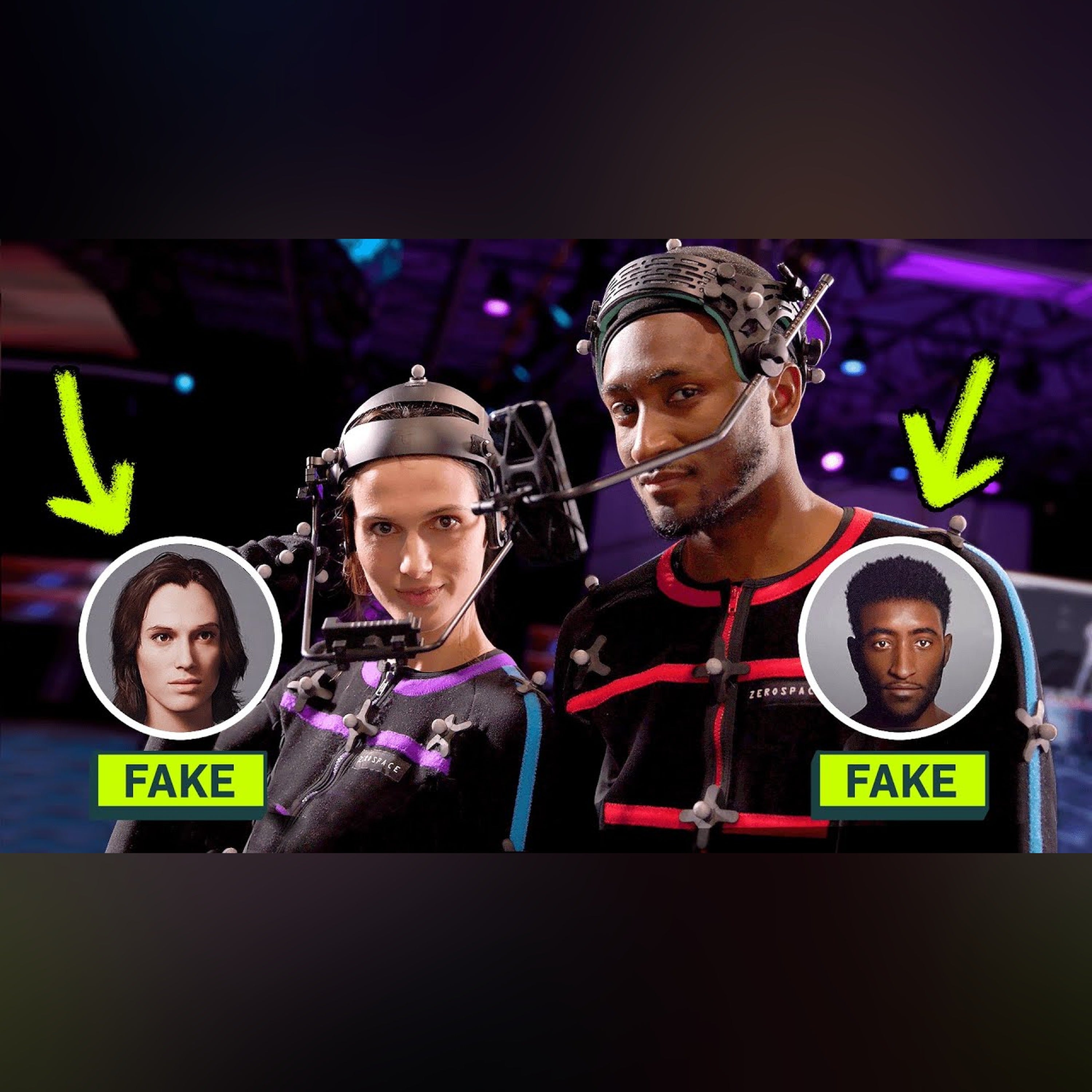
This new tech is changing how movies get made. So @mkbhd and I tested it out... Watch MKBHD's video: https://youtu.be/RM7SobH8ZO0 I’ve been obsessed with sci-fi movies since I was a kid. I love being transported to another world. But lately, I’ve been wondering: How do those worlds look so… REAL? The tech behind movies has exploded in complexity and realism, changing how stories come to life on screen. Luckily, at the same time, those tools are becoming more and more available to more people telling stories. It’s not just blockbusters like Avatar 2 or Avengers or Dune. It’s also smaller budget films like Everything Everywhere All at Once or even… YouTube creators? In this video, Marques Brownlee and I test out 3 movie-making tools that are changing how movies, shows, and maybe even YouTube videos (??) get made. We’re at ZeroSpace Studios in New York to show you how each of these crazy technologies work - and how you might be able to use them. Along the way, we hit big questions like: W
Uploaded 11-12-17 View full lesson: https://ed.ted.com/lessons/why-is-herodotus-called-the-father-of-history-mark-robinson 2,500 years ago, the writing of history as we know it didn’t exist. The past was recorded as a list of events, with little explanation for their causes beyond accepting things as the will of the gods. Herodotus wanted a deeper understanding, so he took a new approach: looking at events from both sides to understand the reasons for them. Mark Robinson explains how “history” came into being. Lesson by Mark Robinson, directed by Remus and Kiki Thank you so much to our patrons for your support! Without you this video would not be possible! Daniel Day, Nick Johnson, Bruno Pinho, Javier Aldavaz, Rodrigo Carballo, Marc Veale, Boytsov Ilya, Bozhidar Karaargirov, Darren Toh, ilya bondarik, maxi kobi einy, Runarm , Misaki Sato, Peter Koebel, Levi Cook, Alex Kongkeo, Craig Sheldon, Andrew Bosco, Catherine Sverko, Nik Maier, Robert Sukosd, Mark Morris, Tamás Drávai, Adi V, Pet
Today, I’m honored to connect with Dr. Troy Badger. He is a board-certified cardiologist and interventionalist and the founder of Cardiostrong, a concierge preventive cardiology clinic in Provo, Utah, focused on reducing cardiovascular risk, optimizing metabolic health, and improving strength and cardiorespiratory fitness for executives and athletes. In today’s conversation, we discuss Dr. Badger’s gender- and age-specific approach to heart health, including treatment differences for men and women, and diagnoses such as INOCA, SCAD, vasospastic disease, and Takotsubo. We examine emotions and their influence on heart health, coronary ischemia and cardiomyopathies, labs and diagnostics, how Dr. Badger assesses risk in his patients, and the differences between a CAC and a CCTA. Dr. Badger also shares the labs he finds essential for all patients and discusses the role of VO2 Max, cardiovascular training, and lifestyle—specifically nutrition, the use of GLP-1 drugs, and a multidisciplinary
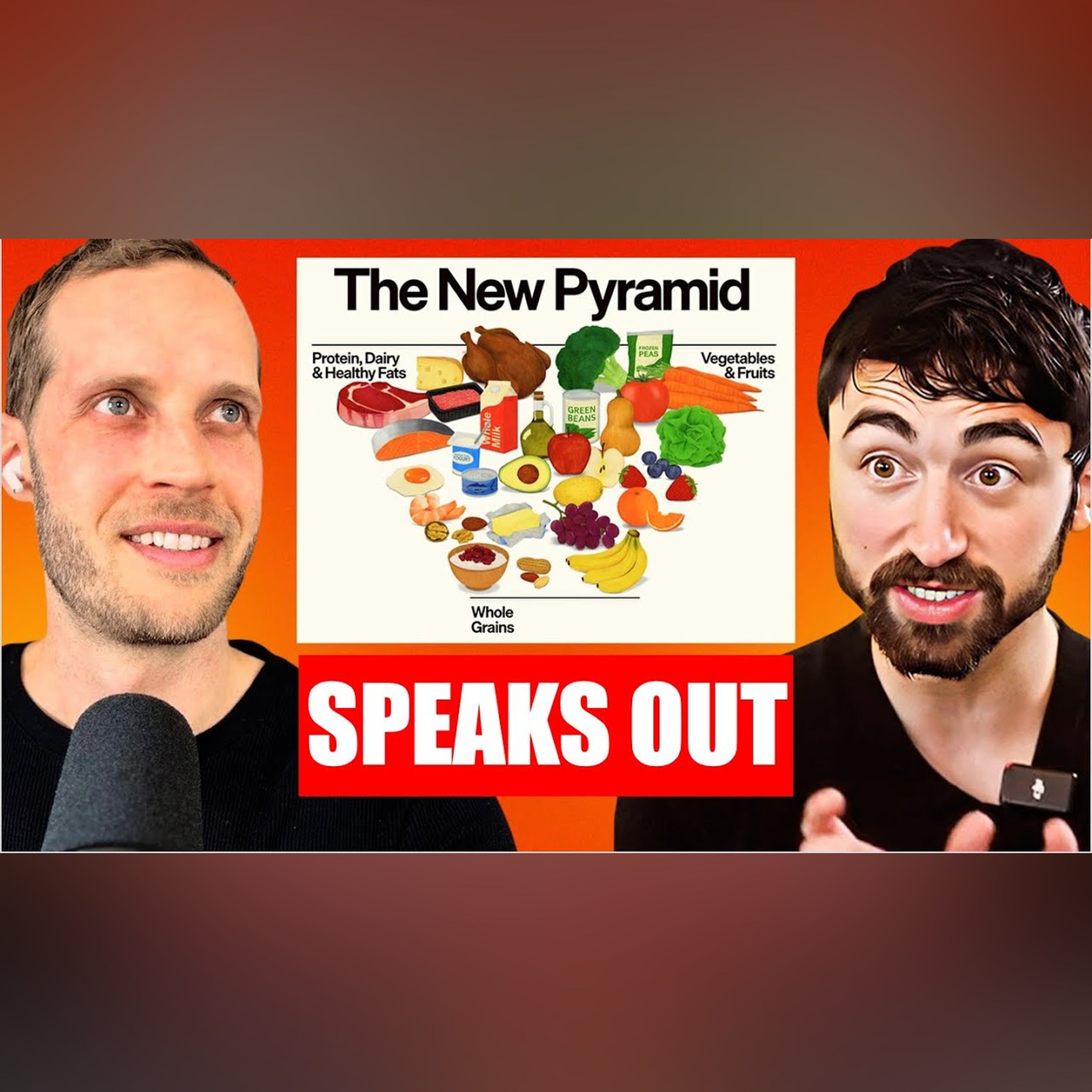
For a written digest on the guidelines, see the StayCurious Metabolism Letter: https://staycuriousmetabolism.substack.com/p/the-new-dietary-guidelines-actually?r=40ekz2 The 2025–2030 Dietary Guidelines are being marketed as a major reset with a simple message: put “real food” back at the center of the American diet. And in a lot of ways, they do represent progress. But when you actually read what’s written, some of the most important details raise real questions. For example, the document still states that saturated fat should not exceed 10% of total daily calories. To separate signal from spin, I’m joined by Dr. Ty Beal PhD, who worked on the evidence review side of the Guidelines process, to explain what the scientific background documents actually say, what happens after scientists submit reviews, and why the final public-facing document can end up with compromises, inconsistencies, or imprecise terminology. If you want a clear, good-faith breakdown—what’s genuinely better, what sti
My most dangerous ideaSpreading awareness about the works of some of the leading educators in the AI revolution."Helping humanity shepherd through this transition as we embrace the final invention of mankind: advanced artificial intelligence." David Shapiro aims to provide a pragmatic and optimistic view of the future.Core Ideas:Metamodernism: Narratives and emergence view of realityPostnihilism: The demand for meaning is false, there is only the Great MysteryHeuristic Imperatives: An ethical, moral, and decision framework.- Reduce suffering- Increase prosperity- Increase understandingPost-Labor Economics: Replace humans with machines (better, faster, cheaper, safer)mantra:EXPLORE: Delve into the unknown, driven by curiosity and a quest for discovery. Seek knowledge.ELUCIDATE: Make complex ideas clear, communicating them in an accessible and comprehensible manner.ENUMERATE: Ground insights in concrete data, providing measurable and quantitative evidence.ELABORATE: Add depth and detail
BONUS QUESTION STARTS AT 22:03 Watch the video here (with no ads) or on YouTube: https://youtu.be/rcj39PJq6ko Scott Manley’s Starship Flight 15 coverage: https://www.youtube.com/watch?v=uwGBBAv8PBI Vote for the best story here: https://www.youtube.com/@frasercain/posts SpaceX finally catches Starship, Euclid’s first big data release is out, a compelling new explanation for Little Red Dots, and a way to rule out a type of dark matter. And on Space Bites+, China is planning on sending a lander to Callisto. 00:00 Intro 00:17 Starship Catch https://www.universetoday.com/articles/baby-shes-back-spacex-catches-a-starship-from-orbit-for-first-time https://www.universetoday.com/articles/spacex-launches-starship-but-passes-up-booster-catch-for-safetys-sake 05:37 Euclid’s First Big Release https://www.universetoday.com/articles/euclids-first-data-release-a-stepping-stone-to-its-3d-map-of-the-sky 08:39 No GPS? No Problem! https://www.universetoday.com/articles/navigating-lunar-orbit-using-nothing
BONUS QUESTION STARTS AT 14:05 Watch the video here (with no ads) or on YouTube: https://youtu.be/29zYt-NR11k How will augmented children grow up? What's the most useful skill one can master right now? Is the cyberpunk already here? And in Q&A+, can you hack starlinks to act as GPS? 00:00 Intro 00:23 [@jeffhans1] Would children born with brainchips giving them language and math without having to learn them be more advanced or harmed by not having to learn those things? 08:33 [@TomSchultz78] what is the most usefullskill for a person at the current age? 11:20 [@HanSolo__] Are we already in cyberpunk? 14:05 [@jeffhans1] Would a Starlink reading be more accurate than GPS? 15:40 Final thoughts
BONUS QUESTION STARTS AT 12:02 Watch the video here (with no ads) or on YouTube: https://youtu.be/SnKwe-h9zCQ What's the current role of AI in real Astronomy research? What events this year caught me off guard? Are we living in a huge black hole? And in Q&A+, what's going on with all the AI cookiecutter science channels on YouTube? 00:00 Intro 00:25 [@rJaune] Can you point out places in Astronomy where Machine Learning has been an important part of discovery? 03:58 [@paigepotter4682] What’s a recent “this wasn’t on my bingo card” astronomical discovery or development? 05:35 [@Marko21] What’s going on with Juno mission, is it still orbiting Jupiter? 08:18 [@vistotutti6037] Is our entire Universe inside an enormous Black Hole? 12:02 [@lindsayboe4914] Am I concerned about all of the AI cookiecutter "science" channels that are popping up on YT spewing misinformation? 16:50 Final thoughts
Acting on preliminary research can be justified when the risks of waiting are high.
Share your view, then see how readers voted. No sign-in required. This poll is shared across stories.
Do you agree or disagree?
Common Quandary
A Common Quandary to discuss
Another conversation to explore, separate from this news story.
A stranger takes an emotional call in the quiet car. Do you shush them?
On a crowded train's designated quiet car, a passenger answers a call and begins discussing an apparent family emergency. They are speaking softly but continuously, and everyone nearby is listening despite trying not to.
Do public rules make room for private emergencies?