Listen through the publisher, then discuss the episode here or arrange an in-person Roundtable. Your city determines where to meet.
Roundtables are designed for groups of four, with a shared subject and room for everyone to speak. Come for discussion, with no dating expectation.
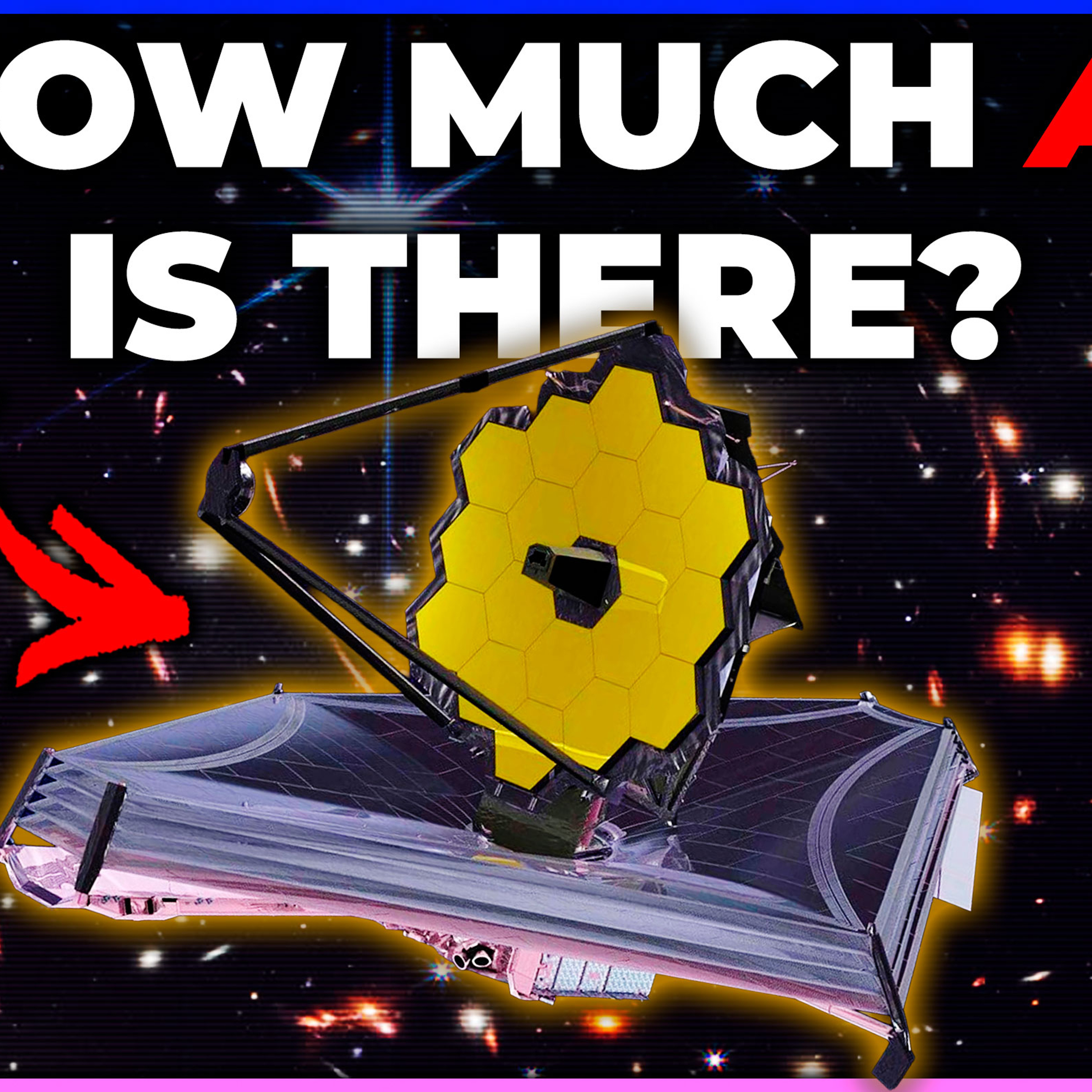
BONUS QUESTION STARTS AT 12:02 Watch the video here (with no ads) or on YouTube: https://youtu.be/SnKwe-h9zCQ What's the current role of AI in real Astronomy research? What events this year caught me off guard? Are we living in a huge black hole? And in Q&A+, what's going on with all the AI cookiecutter science channels on YouTube? 00:00 Intro 00:25 [@rJaune] Can you point out places in Astronomy where Machine Learning has been an important part of discovery? 03:58 [@paigepotter4682] What’s a recent “this wasn’t on my bingo card” astronomical discovery or development? 05:35 [@Marko21] What’s going on with Juno mission, is it still orbiting Jupiter? 08:18 [@vistotutti6037] Is our entire Universe inside an enormous Black Hole? 12:02 [@lindsayboe4914] Am I concerned about all of the AI cookiecutter "science" channels that are popping up on YT spewing misinformation? 16:50 Final thoughts
Episode information is provided by the publisher. Listening takes place on the publisher’s service.
Viewers like you help make PBS (Thank you ) . Support your local PBS Member Station here: https://to.pbs.org/DonateSPACE Uploaded 18-04-18 To find out more, visit: https://brilliant.org/SpaceTime Now that gravitational waves are definitely a thing, it’s time to think about some of the crazy things we can figure out with them. In some cases we’re going to need a gravitational wave observatory - in fact, we've already built one. You can further support us on Patreon at https://www.patreon.com/pbsspacetime Get your own Space Time t-shirt at http://bit.ly/1QlzoBi Tweet at us! @pbsspacetime Facebook: facebook.com/pbsspacetime Email us! pbsspacetime [at] gmail [dot] com Comment on Reddit: http://www.reddit.com/r/pbsspacetime Help translate our videos! https://www.youtube.com/timedtext_cs_panel?tab=2&c=UC7_gcs09iThXybpVgjHZ_7g (https://www.youtube.com/timedtext_cs_panel?c=UC7_gcs09iThXybpVgjHZ_7g&tab=2) Previous Episode: The Physics of Life (ft. It's Okay to be Smart and PBS Eons!) https://w
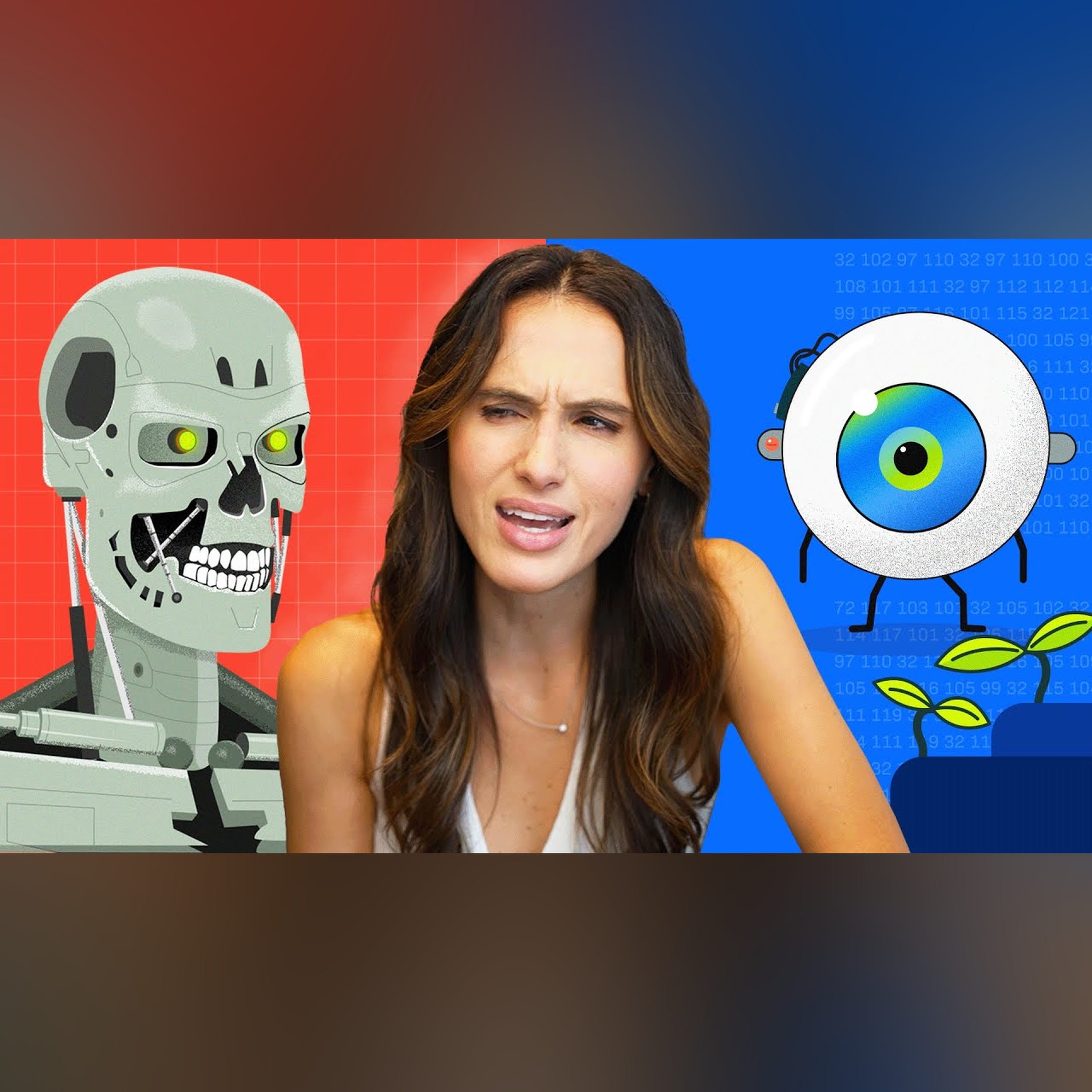
AI is here. Now what? Everyone’s talking about artificial intelligence and machine learning. There are lots of names thrown around - OpenAI’s ChatGPT and DALLE-2, Google’s Bard, Meta’s LLaMa 2, Midjourney, AlphaFold… Right now, we’re in this weird moment where lots of smart people agree we’re on the cusp of a truly world-changing technology. But some seem to be saying it's going to lead to human extinction while others are saying it’s “more profound than fire.” But it all feels so VAGUE. I want to know: How specifically would AI kill me? Or totally transform my life for the better? In this video, that’s what I’m going to try to learn. We dive into what the most extreme bad and good AI futures actually look like, so that you and I can get ready. And more importantly, so we can make sure that we get our real future RIGHT. Chapters: 00:00 Why is AI so confusing? 1:13 What is AI? 2:37 Why is everyone talking about AI now? 5:12 Why is AI dangerous? 6:22 How would AI kill me? 8:08 Should we
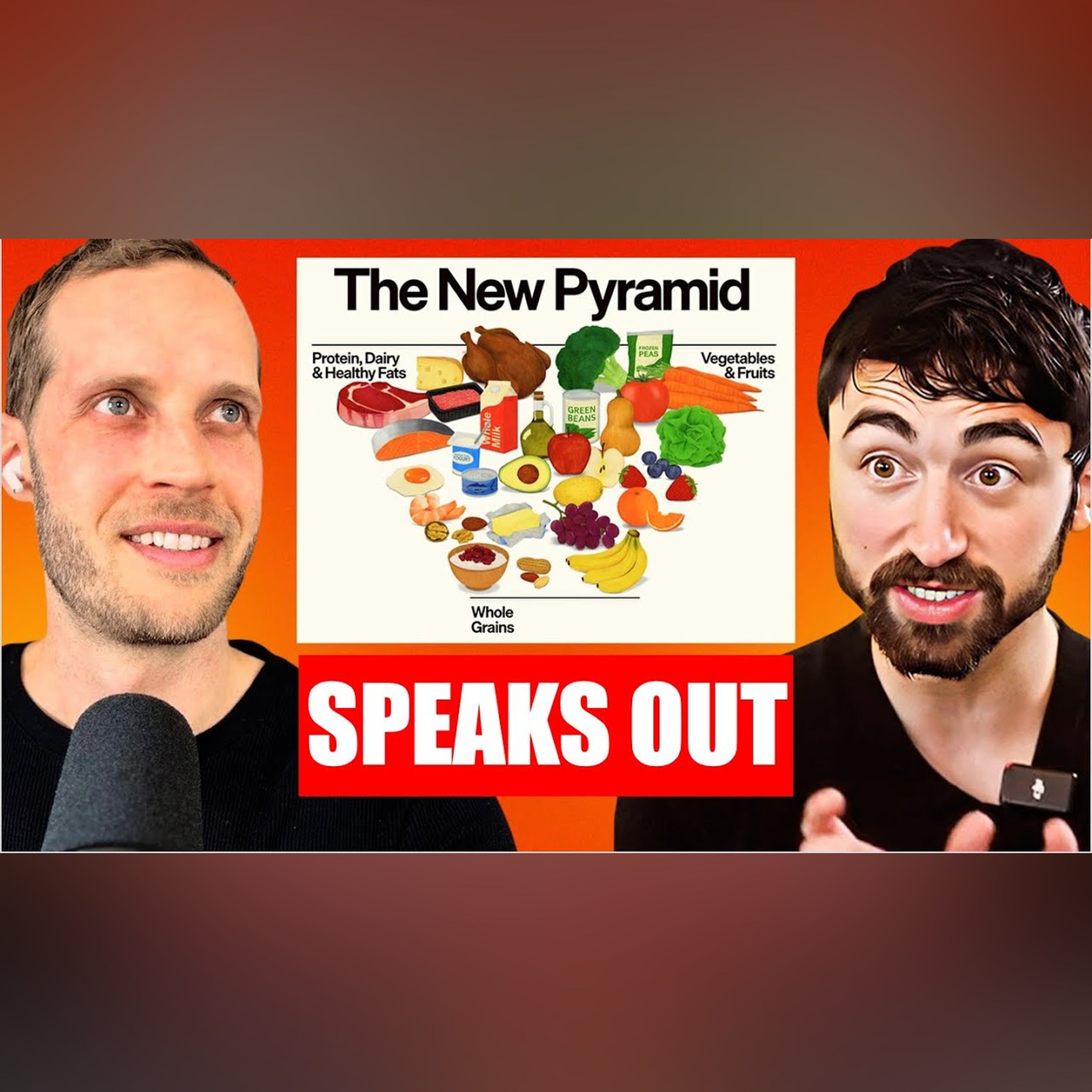
For a written digest on the guidelines, see the StayCurious Metabolism Letter: https://staycuriousmetabolism.substack.com/p/the-new-dietary-guidelines-actually?r=40ekz2 The 2025–2030 Dietary Guidelines are being marketed as a major reset with a simple message: put “real food” back at the center of the American diet. And in a lot of ways, they do represent progress. But when you actually read what’s written, some of the most important details raise real questions. For example, the document still states that saturated fat should not exceed 10% of total daily calories. To separate signal from spin, I’m joined by Dr. Ty Beal PhD, who worked on the evidence review side of the Guidelines process, to explain what the scientific background documents actually say, what happens after scientists submit reviews, and why the final public-facing document can end up with compromises, inconsistencies, or imprecise terminology. If you want a clear, good-faith breakdown—what’s genuinely better, what sti
Explore how pulling an all-nighter can impact your cognitive function, and find out what happens to your brain when you don't sleep. -- You’re just one history final away from a relaxing spring break. But you still have so much to study! You decide to follow in the footsteps of many students before you, and pull an all-nighter. So, what happens to your brain when you stay up all night? And does cramming like this actually help you prepare for a test? Anna Rothschild explores how a sleepless night impacts your cognitive function. Lesson by Anna Rothschild, directed by Biljana Labović. Animation by Noam Sussman & Ali Kellner, Homework Studio. This video made possible in collaboration with the Bezos Family Foundation Learn more about how TED-Ed partnerships work: https://bit.ly/TEDEdPartner A special thanks to Dr. Mathias Basner, Andrew Fuligni, Adriana Galván, and UCLA Center for the Developing Adolescent who provided information and insights for the development of this video. Support Ou
Explore how the Hubble Space Telescope reveals the Universe, from iconic images to major discoveries, and how it complements the James Webb Space Telescope. "ASTROMAN: the Dark Sky Guardian" is a podcast channel that aims to explore popular science in multiple disciplines and research on interdisciplinary approaches, such as sustainability, dark-sky protection, astrophotography, space exploration, astronomy innovation, inclusive science communication, and STEAM Education by integrating science and arts. Exodus Chun-Long Sit, also known as the ASTROMAN, is a transmedia astronomy educator, popular science author, STEAM educator, and science communicator in Hong Kong. He is recently the National Astronomy Education Coordinator (Chair of Hong Kong, China) of the International Astronomical Union and President of Starrix. He was also an International Committee Member of the Dark Sky International, regularly organizing public lectures at the Hong Kong Space Museum and the Hong Kong Science Mu
My most dangerous ideaSpreading awareness about the works of some of the leading educators in the AI revolution."Helping humanity shepherd through this transition as we embrace the final invention of mankind: advanced artificial intelligence." David Shapiro aims to provide a pragmatic and optimistic view of the future.Core Ideas:Metamodernism: Narratives and emergence view of realityPostnihilism: The demand for meaning is false, there is only the Great MysteryHeuristic Imperatives: An ethical, moral, and decision framework.- Reduce suffering- Increase prosperity- Increase understandingPost-Labor Economics: Replace humans with machines (better, faster, cheaper, safer)mantra:EXPLORE: Delve into the unknown, driven by curiosity and a quest for discovery. Seek knowledge.ELUCIDATE: Make complex ideas clear, communicating them in an accessible and comprehensible manner.ENUMERATE: Ground insights in concrete data, providing measurable and quantitative evidence.ELABORATE: Add depth and detail
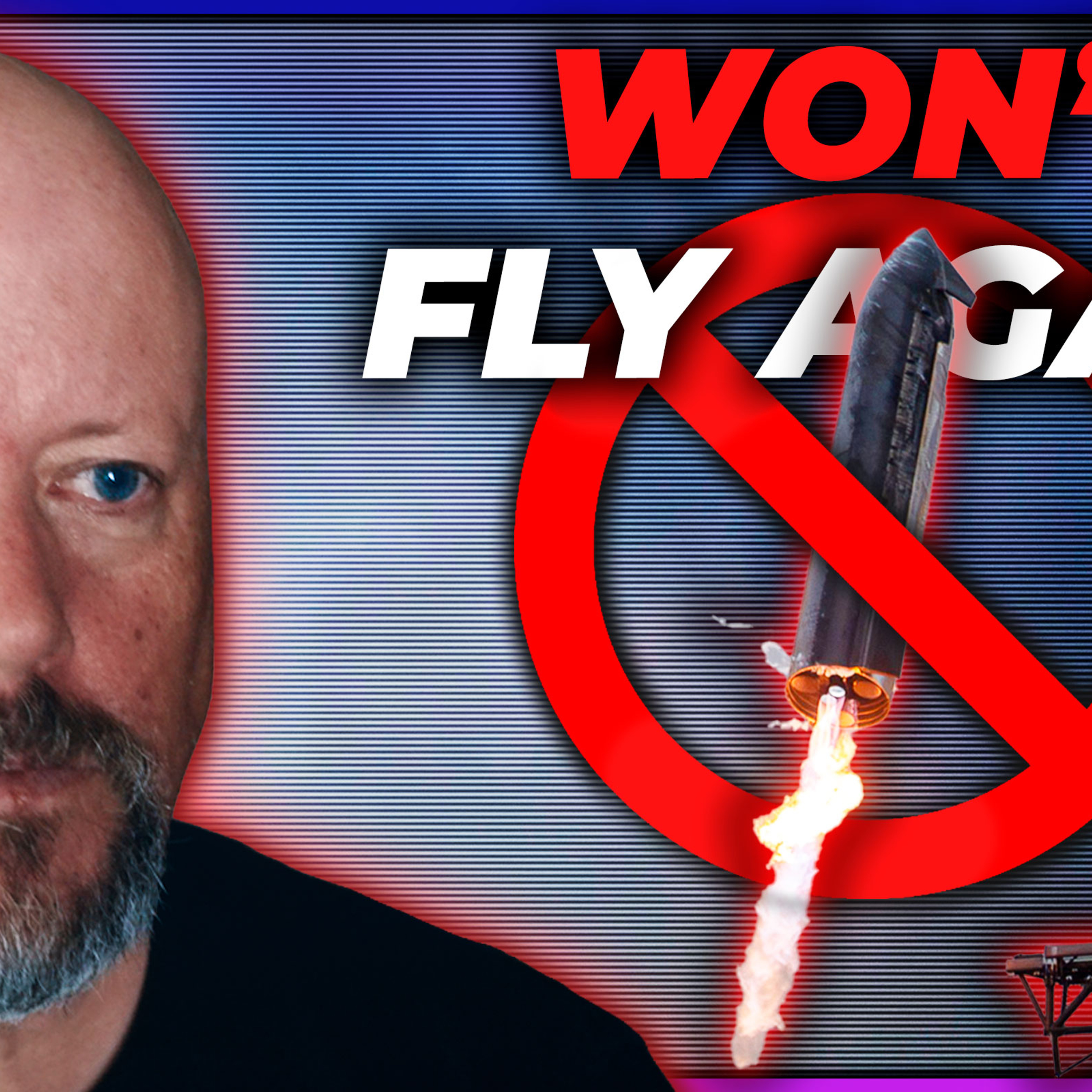
BONUS QUESTION STARTS AT 22:03 Watch the video here (with no ads) or on YouTube: https://youtu.be/rcj39PJq6ko Scott Manley’s Starship Flight 15 coverage: https://www.youtube.com/watch?v=uwGBBAv8PBI Vote for the best story here: https://www.youtube.com/@frasercain/posts SpaceX finally catches Starship, Euclid’s first big data release is out, a compelling new explanation for Little Red Dots, and a way to rule out a type of dark matter. And on Space Bites+, China is planning on sending a lander to Callisto. 00:00 Intro 00:17 Starship Catch https://www.universetoday.com/articles/baby-shes-back-spacex-catches-a-starship-from-orbit-for-first-time https://www.universetoday.com/articles/spacex-launches-starship-but-passes-up-booster-catch-for-safetys-sake 05:37 Euclid’s First Big Release https://www.universetoday.com/articles/euclids-first-data-release-a-stepping-stone-to-its-3d-map-of-the-sky 08:39 No GPS? No Problem! https://www.universetoday.com/articles/navigating-lunar-orbit-using-nothing
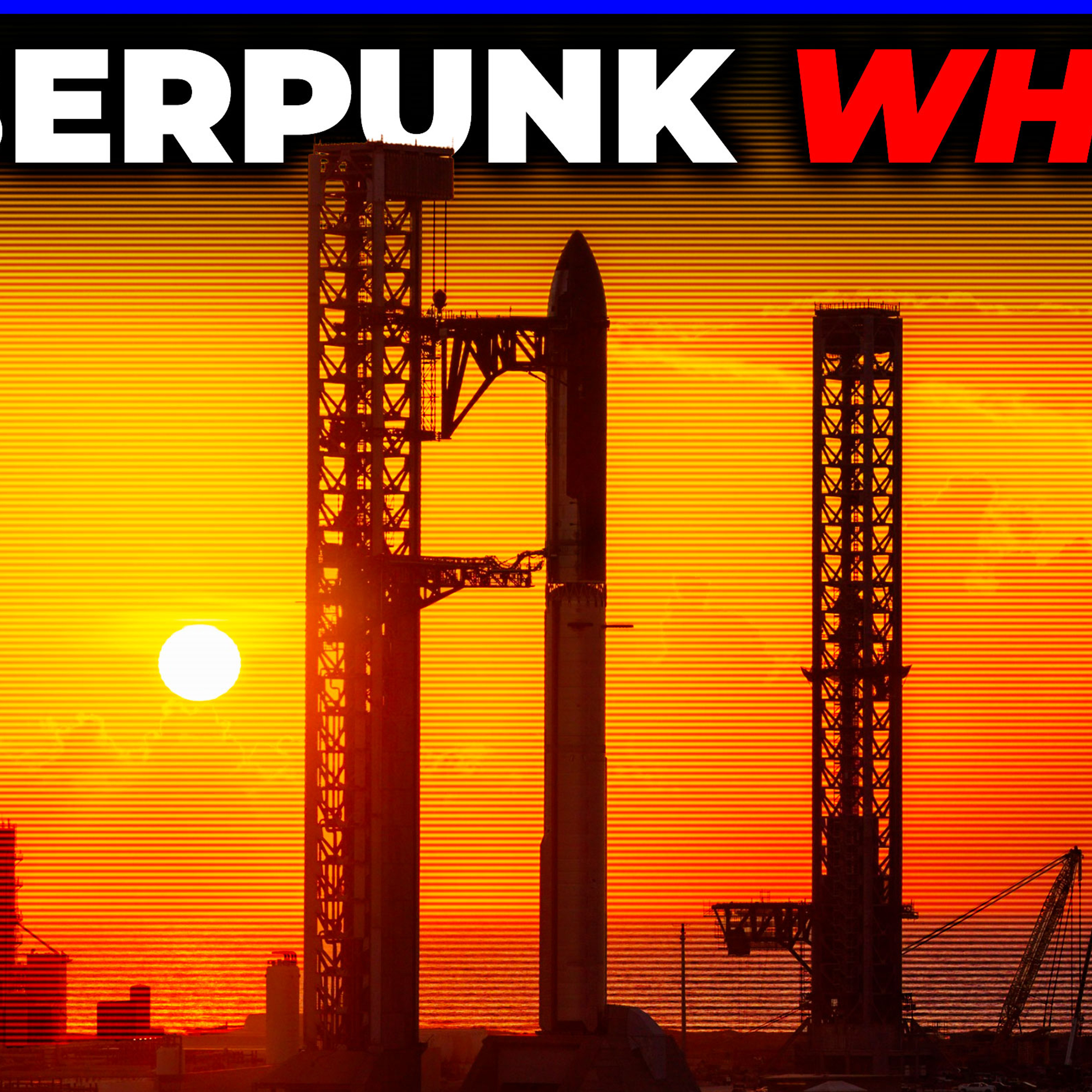
BONUS QUESTION STARTS AT 14:05 Watch the video here (with no ads) or on YouTube: https://youtu.be/29zYt-NR11k How will augmented children grow up? What's the most useful skill one can master right now? Is the cyberpunk already here? And in Q&A+, can you hack starlinks to act as GPS? 00:00 Intro 00:23 [@jeffhans1] Would children born with brainchips giving them language and math without having to learn them be more advanced or harmed by not having to learn those things? 08:33 [@TomSchultz78] what is the most usefullskill for a person at the current age? 11:20 [@HanSolo__] Are we already in cyberpunk? 14:05 [@jeffhans1] Would a Starlink reading be more accurate than GPS? 15:40 Final thoughts
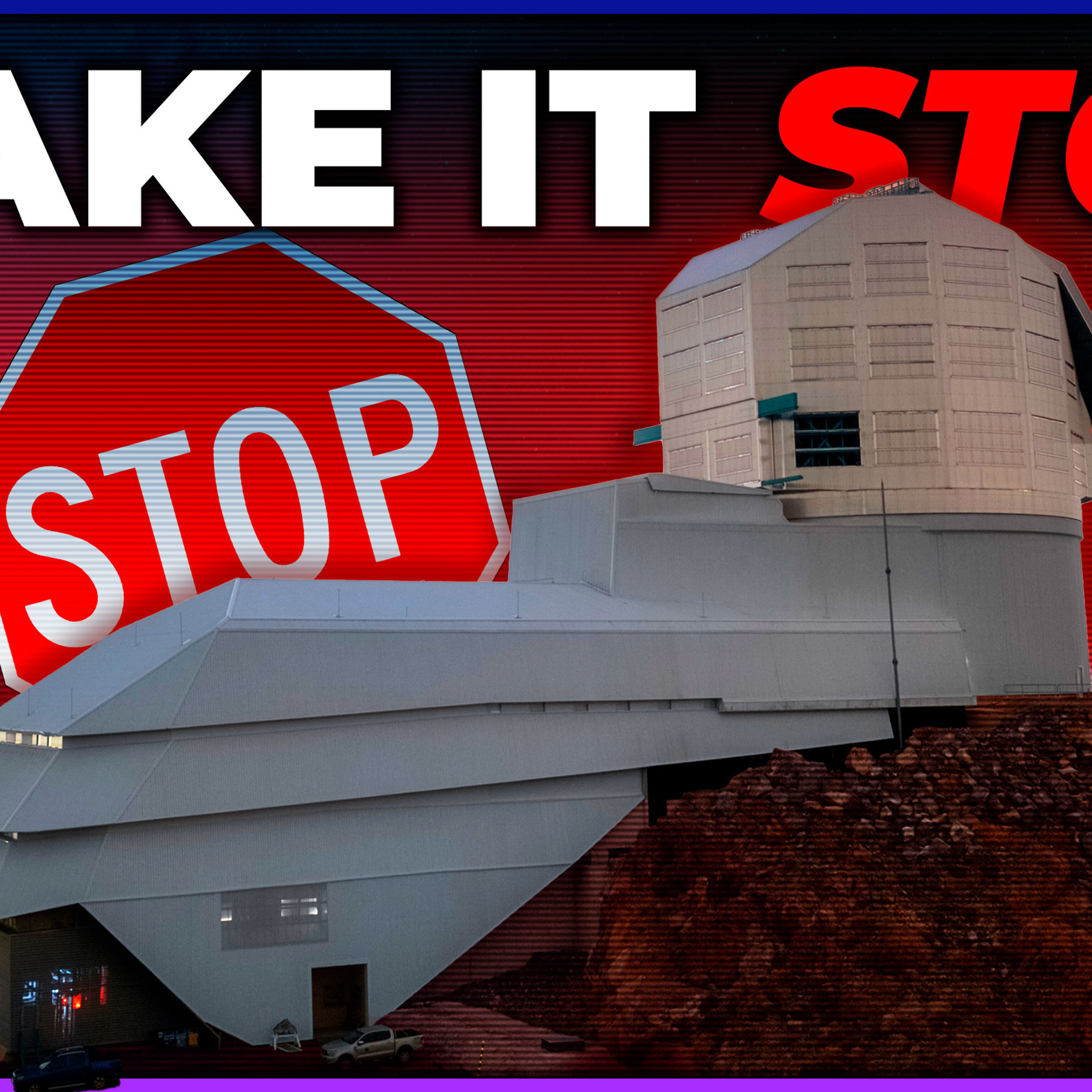
BONUS PART STARTS AT 33:07 Watch here (with no ads) or on YouTube: https://youtu.be/wKs1AUkNOX4 Rubin’s Data Pipeline Interview: https://youtu.be/VKrpJODdEM0 Rubin’s Meteorite Hunting Interview: https://youtu.be/CgAEIutaM5w Rubin’s Director Interview: https://youtu.be/HQKswmYpxKE Guest: Sean MacBride https://seanmacb.github.io/ Vera Rubin's doing the most comprehensive survey of the night sky. But there are certain events that can require it to stop whatever it's doing and go see what's happening elsewhere. These are called Target of Opportunity events. What exactly can trigger such behaviour and what's the procedure? Finding out in this interview. Rubin's Target of Opportunity Program https://rubinobservatory.org/explore/how-rubin-works/lsst/rubins-too-program 00:00 Intro 01:52 Rubin's Target of Opportunity program 10:46 Kilonova 18:04 What science does Rubin bring 25:19 Milky Way supernova 27:52 The process for Target of Opportunity 33:07 Sky pollution with satellites 41:07 Current o
Schools should explain the purpose of a rule before punishing students for breaking it.
Share your view, then see how readers voted. No sign-in required. This poll is shared across stories.
Do you agree or disagree?
Common Quandary
A Common Quandary to discuss
Another conversation to explore, separate from this news story.
Would you want a doctor to give you a fake pill if the lie might make you feel better?
A patient has persistent symptoms that have not responded to standard treatments. A harmless placebo may help, but its effect could weaken if the clinician fully explains that it contains no active medicine.
Can a beneficial deception respect the person it helps?