REPLAY: A Happy, Healthy Thanksgiving – With Guest Chef Marianne
38 min
Listen through the publisher, then discuss the episode here or arrange an in-person Roundtable. Your city determines where to meet.
Roundtables are designed for groups of four, with a shared subject and room for everyone to speak. Come for discussion, with no dating expectation.
Enjoy your Thanksgiving dinner and feel good afterward. In this episode of Dishing Up Nutrition, dietitian Leah Kleinschrodt and our resident chef Marianne walk you through how to build a delicious, real-food Thanksgiving -- from a balanced plate strategy to upgraded sides, smarter potatoes, veggie-packed salads, better-for-you desserts, and even what to do with the turkey so it actually turns out juicy and flavorful. You’ll hear practical ideas for gluten- and dairy-free guests, simple make-ahead breakfasts, and festive drinks without the sugar crash. original airdate 11.17.2025
Episode information is provided by the publisher. Listening takes place on the publisher’s service.
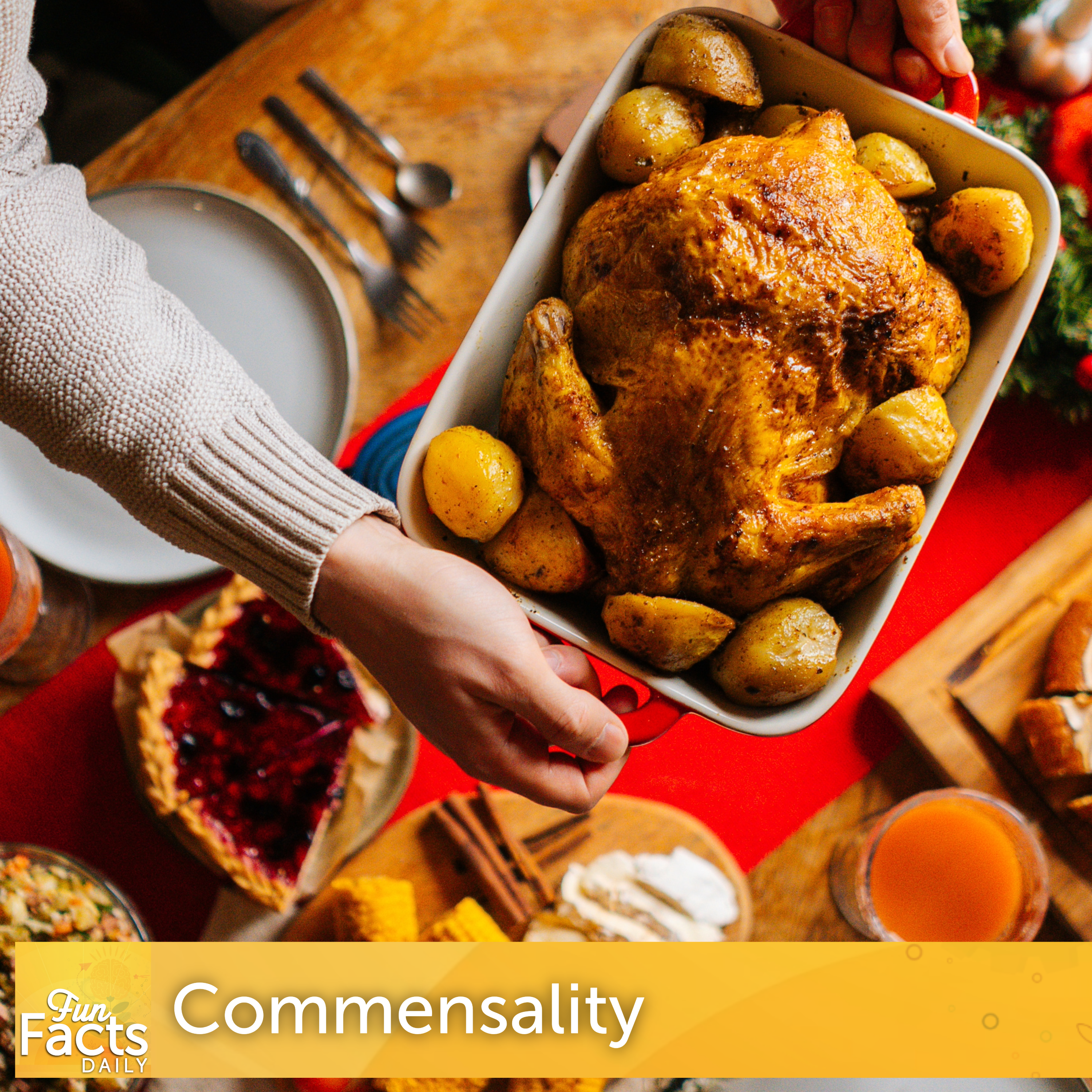
Sharing a meal at the same table, a practice known as commensality, helps families and communities build trust and connect across generations. While many people believe the 1621 harvest feast shared by the Pilgrims and the Wampanoag people started an unbroken annual tradition, American Thanksgiving history actually followed a much more uneven path. Indigenous peoples held seasonal harvest and gratitude ceremonies for generations before 1621, and the Plymouth meal was largely forgotten for about 200 years. George Washington issued the first national Thanksgiving proclamation for Thursday, November 26, 1789, and magazine editor Sarah Josepha Hale later persuaded Abraham Lincoln to set a regular November date in 1863. The holiday did not become federal law until 1941, after public confusion over a date change. When gathering for a holiday dinner, Harvard research shows that asking open-ended follow-up questions makes conversations more engaging and boosts likability. Keeping a few neutral
Originally presented as: Season 14, Episode 51 (November 25th, 2024) Our story tonight is called Thanksgiving at the Cabin, and it’s a story about a walk through the woods with a friend to start the day. It’s also about sun on your face, empty branches, and squirrels, cranberries, and apples. The sound of the shower in the other room, and a note written in the steam on the mirror. Family, as you find it, and the deep feeling of enough. → Cozy Earth | Head to https://cozyearth.com (https://cozyearth.com/) and let them know you heard about us on Nothing much happens: bedtime stories to help you sleep in the post-purchase survey. → MasterClass | MasterClass keeps adding new classes, so there’s never been a better time to get in. The first month is on us. The Village is growing! Order Kathryn’s new bookhttps://www.simonandschuster.com/books/On-the-Street-Where-You-Live/Kathryn-Nicolai/9781668158272On the Street Where You Live (https://www.simonandschuster.com/books/On-the-Street-Where-You-
Merriam-Webster's Word of the Day for November 26, 2026 is: felicitous • \fih-LISS-uh-tus\ • adjective Felicitous is an adjective most often used in formal speech and writing to describe something that is very well expressed or suited for some purpose or situation. It can also be used as a synonym for pleasant or delightful. // She had not been asked ahead of time to speak at the event, but she managed some felicitous remarks nonetheless. // That the cousins happened to be on the same flight was a felicitous coincidence—they had no idea the other would even be traveling at that time. See the entry > (https://www.merriam-webster.com/dictionary/felicitous) Examples: “It’s a felicitous coincidence that the dance world pivots on the two seasons with action-verb monikers, fall and spring. The former is accompanied by swarms of students returning to classrooms and campuses, with the dance world snapping to attention in September.” — Andrew Gilbert, The East Bay (California) Times, 8 Sept. 20
I don’t know about your love life, but let’s be honest; for most people having sex doesn’t work out as smoothly as what you see in the movies. Not only is the act itself idealised, but so is what comes after. On screen, you tend to see couples snuggling and drifting off in each other's arms, all cosy and serene. But what movies tend to skip over is the part where you have to slip out of bed with your legs pressed together, and waddle like a penguin to the bathroom to pee and wash up. OK, it might feel like a bit of a mood killer, but it’s actually very important for staying healthy. How does peeing stop bacteria from reaching the bladder? Do I really have to forget about post-sex cuddling? In under 3 minutes, we answer your questions! To listen to the last episodes, you can click here: Why do some people get a headache during sex? (https://originals.bababam.com/do-you-really-know/202410260300-why-do-some-people-get-headache-during-sex) Is sex without feelings ever a good idea? (https:/
In this episode, you’ll learn the secret to a better, happier life: connecting with the people around you. When I met my husband Chris, I was at a bar ordering a bourbon on the rocks to go. In a plastic cup (very classy, I know). Then I heard a voice behind me say, “That sounds great. Make it two.” I turned around. And here we are, celebrating 30 years of marriage. That one moment led to three children and decades of memories. All because a stranger decided to say something. I’ve been thinking about this ever since I sat down with Dr. Nicholas Epley for today’s episode of The Mel Robbins Podcast. He’s a psychologist and behavioral scientist at the University of Chicago who has spent years studying how we connect with other people, why we so often get it wrong, and what we miss out on when we don't say something in these moments: friends, lovers, colleagues, and magic. His research has found that happiness isn't just about the occasional big moment in life. It's about all the little goo
Get the 200+ Page Optimal Living Daily Workbook (PDF) - Free. Want to turn today's episode into an actionable plan? Episode 4238: Karl Staib explains microgratitude, the practice of setting up a grateful mindset before an interaction and looking back on it with appreciation afterward. He shares five small ways to feel it each day, from appreciating something about a person before greeting them to smiling at everyday things, and how a gratitude journal helps the habit stick. Read along with the original article(s) here: Quotes to ponder: "The idea of microgratitude is to set yourself up for gratitude before you even enter a situation." "If you can plant little seeds of gratitude and positivity throughout your day, you'll have a better time and get so much more out of each experience." "It's all about looking at small things in life and seeing all the amazing opportunities they offer if you are willing to appreciate them." We spend so much of our lives caught up in our thoughts... that w
Can you enjoy mashed potatoes, stuffing, and pumpkin pie while keeping your blood sugar in check? Registered dietitians Brandy Buro and Britni Vincent share practical strategies for navigating holiday meals with prediabetes, type 2 diabetes, or general blood sugar concerns. Learn how to build a balanced holiday plate, enjoy your favorite desserts, avoid the pitfalls of skipping meals, and use simple habits like walking after dinner to support steadier blood sugar. Plus, discover how stress, sleep, and holiday drinks can affect glucose levels, so you can celebrate the season without feeling deprived.
Could your teenager's eating habits be affecting their mood, energy, and ability to focus? Licensed nutritionist Kara Carper and registered dietitian Brandy Buro explore the connection between nutrition and teen mental health, including how skipped meals, blood sugar fluctuations, sugary drinks, and caffeine may influence how teens feel throughout the day. Learn practical ways to build balanced breakfasts, pack satisfying snacks, and prepare easy family meals that support growing bodies and brains. Plus, discover how to encourage healthier food choices without creating stress, guilt, or conflict around eating.
Does your heel hurt when you take your first steps in the morning? You might be experiencing plantar fasciitis, a common cause of heel pain. Registered dietitian Amy Crum explains what causes plantar fasciitis, its most recognizable symptoms, and how nutrition may support connective tissue health and recovery. Learn why balanced blood sugar, adequate protein, vitamin C, and omega-3-rich foods matter for overall tissue health, plus practical ways to reduce added sugar and build nutrient-dense meals. Discover how nutrition can complement stretching, strengthening, and supportive footwear as part of a well-rounded approach to managing plantar fasciitis.
Sporting rivals should be able to enjoy competition without hostility between supporters.
Share your view, then see how readers voted. No sign-in required. This poll is shared across stories.
Do you agree or disagree?
Common Quandary
A Common Quandary to discuss
Another conversation to explore, separate from this news story.
A parent clearly built the winning science project. Who should lose the prize?
An elementary student submits an elaborate science project far beyond their apparent ability. The parent proudly describes working together all weekend, and the child clearly learned something, but other students completed simpler projects themselves.
What is a fair response when help improves learning but distorts achievement?