Scientists Send a Message Through a Brick Wall Using Gravity
22 min
Listen through the publisher, then discuss the episode here or arrange an in-person Roundtable. Your city determines where to meet.
Roundtables are designed for groups of four, with a shared subject and room for everyone to speak. Come for discussion, with no dating expectation.
Researchers at the University of Queensland have demonstrated a surprising new form of communication using tiny fluctuations in Earth's gravitational field. By encoding information through the movement of a heavy elevator counterweight, they detected a message from another room without relying on conventional wireless signals. Though still extremely slow, the experiment could open an entirely new direction in communication technology. This episode includes AI-generated content.
Episode information is provided by the publisher. Listening takes place on the publisher’s service.
The human brain remains one of the greatest unsolved mysteries in science. We have roughly 86 billion neurons firing in a way that somehow produces intelligence, and yet the brain is still largely a black box. In the early days of AI, researchers looked to the brain for clues about how to build smarter machines. But today, that relationship has been flipped on its head. Join Professor Hannah Fry and neuroscience researchers Maria Eckstein and Kim Stachenfeld to see how scientists are using AI to better understand the human mind. Please leave us a review on Spotify or Apple Podcasts if you enjoyed this episode. We always want to hear from our audience whether that's in the form of feedback, new idea or a guest recommendation! Hosted by Simplecast, an AdsWizz company. See https://pcm.adswizz.com for information about our collection and use of personal data for advertising.
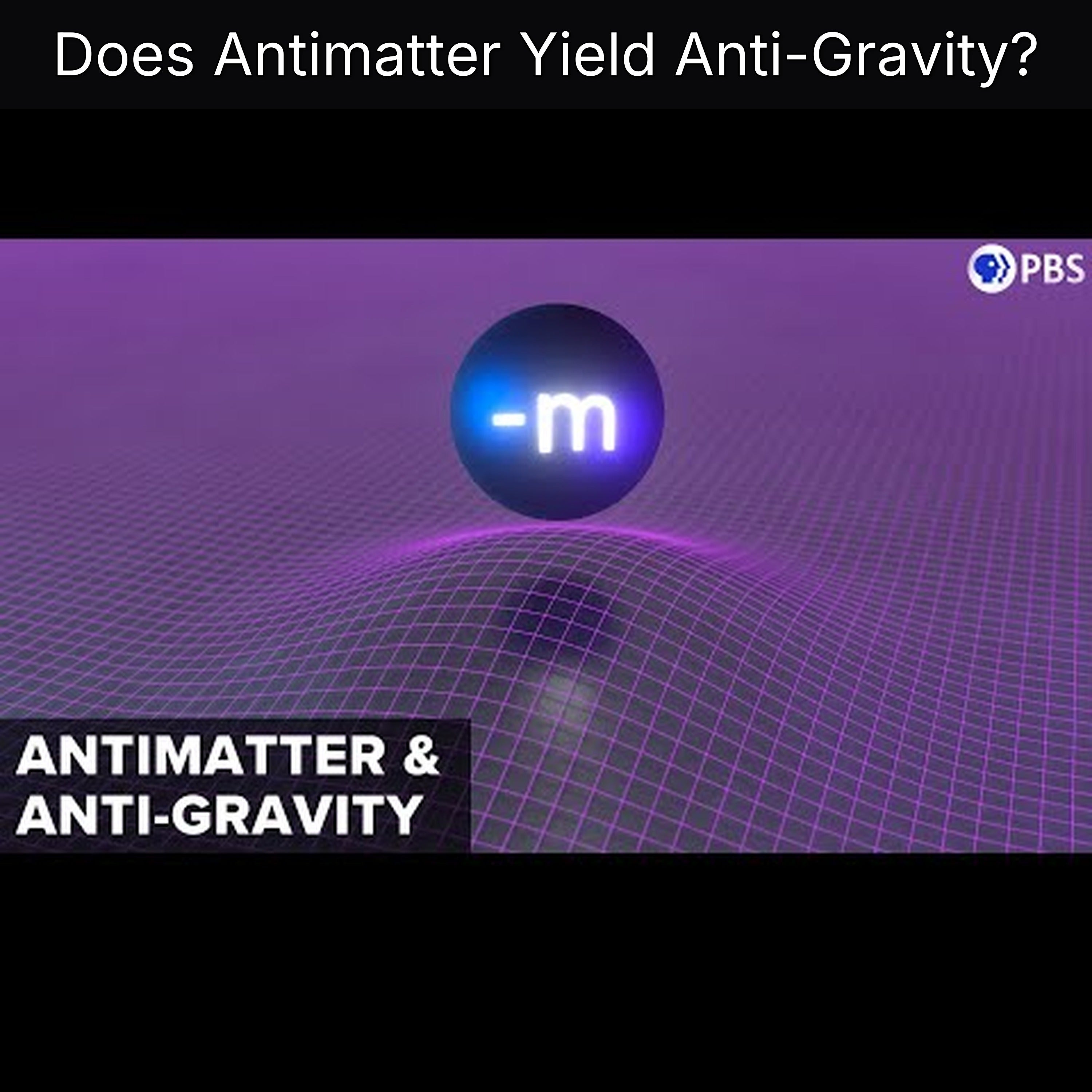
Learn More About 80,000 Hours at: https://www.80000hours.org/spacetime PBS Member Stations rely on viewers like you. To support your local station, go to:http://to.pbs.org/DonateSPACE Sign Up on Patreon to get access to the Space Time Discord! From hoverboards to flying cars to cloud cities, anti-gravity is a staple of science fiction and our dream of a less Earth-bound future. But in the real universe gravity appears to be a purely attractive force. Feels like its main MO is keeping us stuck to the surface of this lonely rock. But maybe if we science hard enough we can remove the fiction from science fiction. For the sake of our flying cars we should at least try. And for many years, physicists have wondered whether a certain well-known exotic material may experience gravitational repulsion from the Earth. That material is antimatter, and physicists at CERN have just completed a very long and very difficult experiment to answer a seemingly simple question: does antimatter fall down, o
What if your AI application could connect to databases, process refunds, manage Kubernetes clusters, and communicate with enterprise tools without requiring weeks of custom integration code? In this episode of TechDaily.ai, host David and AI expert Sophia explore Model Context Protocol (MCP), a new approach to connecting AI models with external tools, APIs, and enterprise systems. Discover why traditional API integrations create major challenges for AI developers and how MCP is changing the way intelligent applications access data, discover tools, and execute complex workflows. Imagine building an AI-powered customer support assistant that needs to retrieve orders from PostgreSQL, search thousands of products through Elasticsearch, process Stripe refunds, and send Slack notifications. Traditionally, each integration requires custom authentication, error handling, and API-specific code. Switching between AI models like Claude, GPT-4, and Gemini only adds to the complexity. MCP offers a
A cheap HDMI capture card and Claude let a blind user get into a PC's BIOS without a monitor or sighted help. Steven Scott and Shaun Preece explain how it works, announce the new Good Vibes podcast, and work through a full inbox on iOS 27, Mastodon, Envision and Gemini. Steven plugged his Dell XPS into an HDMI capture card. Claude took screenshots and told him which keys to press, tab by tab, until he was inside the BIOS. Shaun used Whisper and Claude to trim a video in about two minutes. The hosts also talk about Media Access, a new audio editor from Brian Hartgen, and about using AI to make video shorts with captions. Good Vibes is a new podcast where blind people vibe code. It has interviews and demos, and the idea behind it is simple: if they won't build it for us, we'll build it ourselves. It debuts on Double Tap Live on 27 November and arrives in podcast apps on 30 November. In the inbox, Mike in Upstate New York finally updates to iOS 27, and the hosts compare VoiceOver bugs. Go
Kraken (https://kraken.pxf.io/c/6563010/687155/10583) Ledger (https://shop.ledger.com/?r=59fe6e05c254) NordVPN (https://go.nordvpn.net/aff_c?aff_id=143753&offer_id=612&url_id=14830) Spotify (https://open.spotify.com/show/4gu4MrqbGVZeNNNbAuvSmR) Follow Crypto News Today on X: @CryptoNewsHQ (https://x.com/CryptoNewsHQ) Related Deep Dive: Bitcoin CRASHES to $55K — Is the $64K Rebound a Bull Trap? (https://cryptonewstoday.io/podcast/episodes/cb6b370b-730a-4df2-9e9f-194511ee9f35) November 24, 2026: Bitcoin’s rebound has failed its first demand test. Completed Monday Bitcoin ETF flows show $569.7 million leaving funds, while Bitcoin is below $60,000 at our recording snapshot. What would establish a durable recovery? Listening guide: understanding Bitcoin ETF flows versus the Bitcoin price (https://cryptonewstoday.io/podcast/guides/bitcoin-etf-inflows-and-price) Today’s stories: South Korea’s proposal to reopen initial coin offerings and introduce bank-controlled stablecoins; the World Gold C
View full lesson: http://ed.ted.com/lessons/cloudy-climate-change-how-clouds-affect-earth-s-temperature-jasper-kirkby Uploaded 25-09-14 As the Earth’s surface temperature gradually rises, it has become vital for us to predict the rate of this increase with as much precision as possible. In order to do that, scientists need to understand more about aerosols and clouds. Jasper Kirkby details an experiment at CERN that aims to do just that. Lesson by Jasper Kirkby, animation by Cedric Richer.
Researchers at Caltech and Stanford have developed a new type of frequency comb using quantum superradiance, eliminating the need for traditional cavity mirrors. By synchronizing ytterbium ions inside a crystal, the system produces coordinated microwave and optical signals with remarkable stability. The breakthrough could help connect quantum computers with future optical communication networks. This episode includes AI-generated content.
A new mathematical theorem reveals why quantum observers can reach different probability estimates despite sharing information and knowing each other's conclusions. The research identifies the conditions behind these disagreements and explains how classical records and certain measurement relationships can restore agreement, offering new insight into the foundations of quantum mechanics. This episode includes AI-generated content.
Researchers at ICFO have developed a quantum-gas microscope capable of distinguishing all ten spin states of strontium-87 atoms in a single experimental run. Using a specialized laser transition, the technique reveals different spin configurations through distinct fluorescence signals. This advance could open new possibilities for quantum simulation and next-generation qudit computing. This episode includes AI-generated content.
People should always be told when they are communicating with a machine.
Share your view, then see how readers voted. No sign-in required. This poll is shared across stories.
Do you agree or disagree?
Common Quandary
A Common Quandary to discuss
Another conversation to explore, separate from this news story.
You ignore a friend's message all day while posting online. Do you owe them an explanation?
A friend sends a message that deserves a thoughtful answer. You lack the energy to respond, but spend the day posting jokes and photos. They can see that you are active and eventually ask whether something is wrong.
Does being visibly online create an obligation to be available?