A New Quantum Light Source Could Transform Quantum Computing and Communication
24 min
Listen through the publisher, then discuss the episode here or arrange an in-person Roundtable. Your city determines where to meet.
Roundtables are designed for groups of four, with a shared subject and room for everyone to speak. Come for discussion, with no dating expectation.
Researchers at Caltech and Stanford have developed a new type of frequency comb using quantum superradiance, eliminating the need for traditional cavity mirrors. By synchronizing ytterbium ions inside a crystal, the system produces coordinated microwave and optical signals with remarkable stability. The breakthrough could help connect quantum computers with future optical communication networks. This episode includes AI-generated content.
Episode information is provided by the publisher. Listening takes place on the publisher’s service.
PBS Member Stations rely on viewers like you. To support your local station, go to: http://to.pbs.org/DonateSPACE ↓ More info below ↓ Uploaded 15-07-19 Check out the new Space Time Merch Store! Support Space Time on Patreon When we finally have a quantum internet you’ll be able to simultaneously like and dislike this video. But we don’t. So I hope you like it. The world is widely regarded as being well and truly into the digital age, also called the information age. No longer are economies and industries solely characterised by the physical goods they produce, and in fact some of the largest companies in the world produce no physical goods at all: digital information is a commodity in its own right. As discussed in a previous episode, this worldwide digital economy is fundamentally reliant on certain cryptographic processes. Currently these processes work in the realm of classical cryptography, but one day soon this may not be enough and so quantum cryptographic methods and algorithms
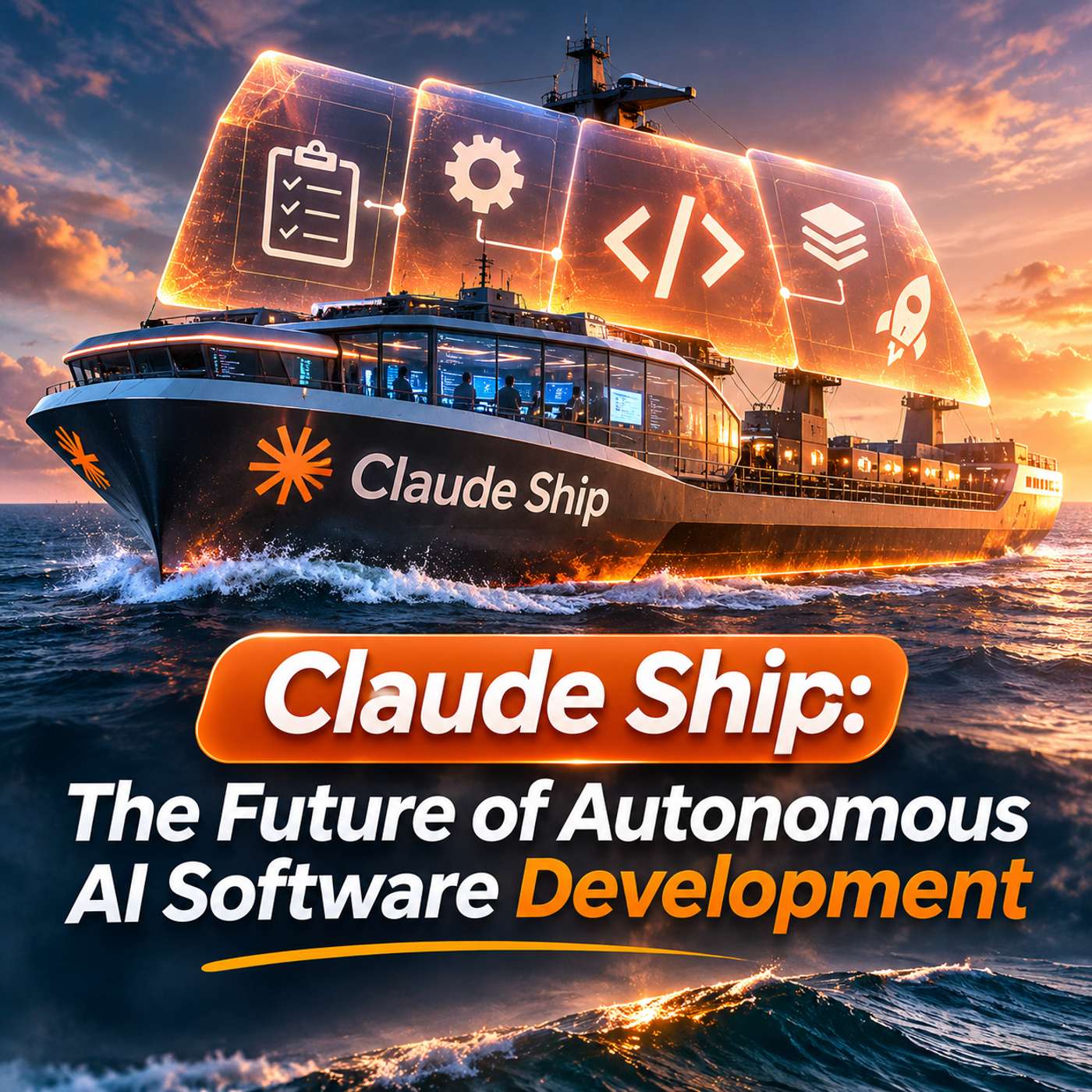
What happens when AI doesn't just write your code but also reviews it, fixes broken builds, resolves merge conflicts, and approves changes without waiting for a human developer? In this episode of TechDaily.ai, host David and AI expert Sophia explore Anthropic's Claude Ship, an AI-powered tool suite designed to automate critical stages of the software development lifecycle. From intelligent code reviews and automated pull request fixes to AI-driven approvals, this conversation examines how autonomous AI agents could transform software engineering, developer productivity, and enterprise code governance. AI coding assistants are already generating thousands of lines of code in minutes. But traditional development pipelines still depend on human reviewers to inspect pull requests, troubleshoot failed CI checks, resolve merge conflicts, and approve deployments. That creates a growing bottleneck between AI-powered code generation and production delivery. Claude Ship aims to address that cha
The Huge Conversation with Mark Zuckerberg... I interviewed Meta CEO Mark Zuckerberg before Connect. There are not many people with more power over our future. Right now, Mark Zuckerberg and his team are imagining the future billions of people might live in, soon, and building towards it. So, in this conversation, my goal is to figure out what that future looks like. To paint a picture of the future Mark Zuckerberg is trying to build, so that you can decide for yourself what you think of it. We talked about the Meta's new Orion prototype AR glasses, creating holograms and the Star Trek universal translator, generative AI changing social media, big trends in human connection, open sourced AI, Ray Ban Meta glasses and Quest 3S, the biggest genuine question on his mind right now, and more... Welcome to the first episode of our new series, Huge Conversations… Special thanks to Derek Thompson, for his generous guidance on my first long-form interview! Chapters: 0:00 What is Mark Zuckerberg
F*ck monk mode. My private network for entrepreneurs ⚜ - http://newelite.pro/no-monk-modeJoin the Icon Blueprint personal brand academy waitlist - https://t.me/+AwtcD_v7V4xiNGE1My instagram - https://www.instagram.com/jackhopfitness?igsh=aGhqMm1iNHg2eXg5&utm_source=qre Episodes created by entrepreneur and masculinity ace Jack Hopkins for his youtube channel, this podcast is dedicated to helping men rediscover their inner strength and confidence in a society that often promotes feminine values over masculine ones.Follow the podcast for valuable insights, inspiring stories, and practical advice on how to embrace your masculinity, build your confidence, and achieve your goals. Whether you're looking to improve your relationships, advance your entrepreneurial career, or simply feel more confident and capable, Jack has valuable insights that can help you achieve your goals.So, if you're ready to reclaim your masculinity and awaken the beast that lives inside you, follow the podcast & turn o
The human brain remains one of the greatest unsolved mysteries in science. We have roughly 86 billion neurons firing in a way that somehow produces intelligence, and yet the brain is still largely a black box. In the early days of AI, researchers looked to the brain for clues about how to build smarter machines. But today, that relationship has been flipped on its head. Join Professor Hannah Fry and neuroscience researchers Maria Eckstein and Kim Stachenfeld to see how scientists are using AI to better understand the human mind. Please leave us a review on Spotify or Apple Podcasts if you enjoyed this episode. We always want to hear from our audience whether that's in the form of feedback, new idea or a guest recommendation! Hosted by Simplecast, an AdsWizz company. See https://pcm.adswizz.com for information about our collection and use of personal data for advertising.
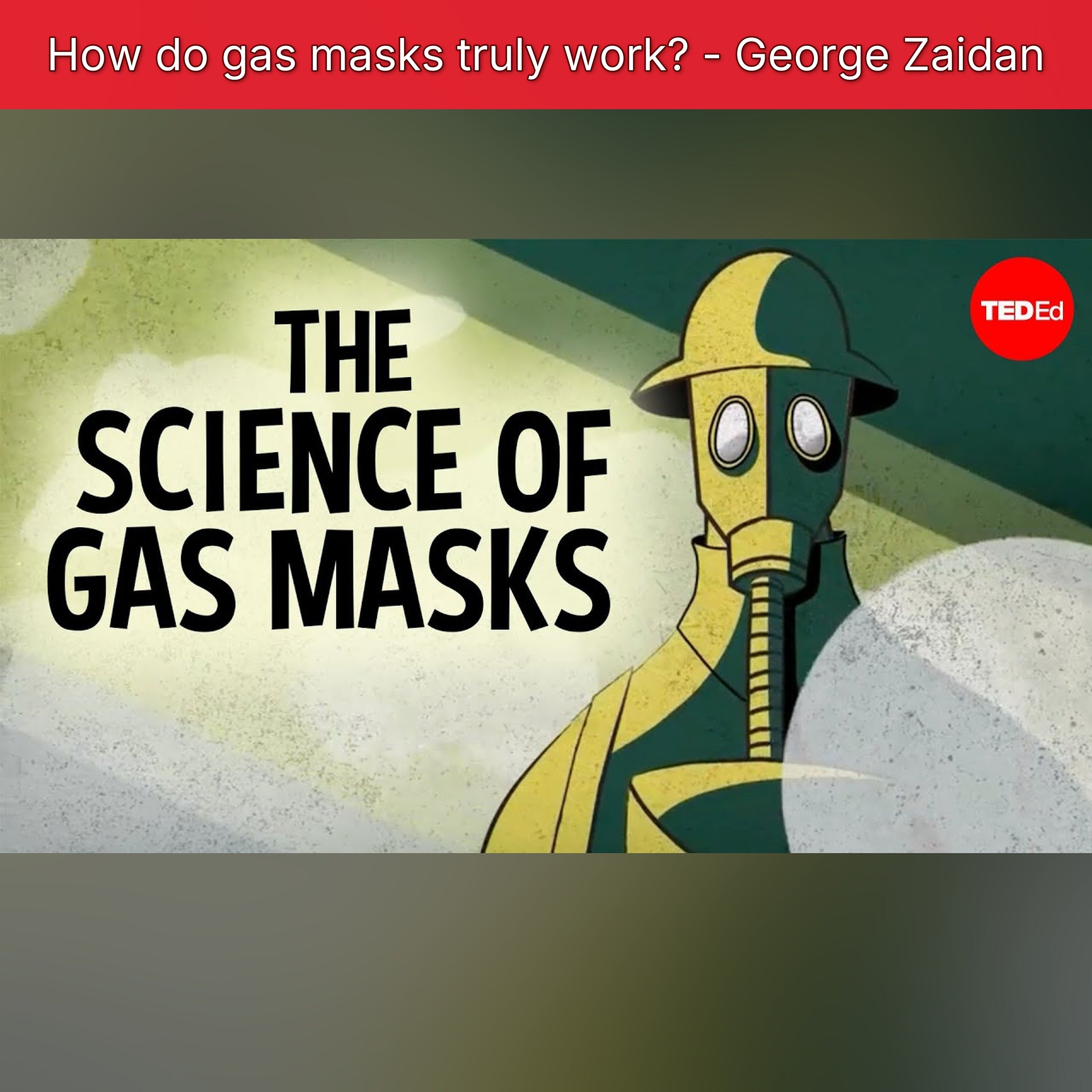
Explore the science behind how gas masks work, and how the technology protects us from airborne threats and pollutants. -- You might think of gas masks as clunky military-looking devices. But in the near future, we may need to rely on these filters as part of our everyday lives. In addition to emerging diseases, wildfire frequency has more than tripled, and climate change has increased toxic ground level ozone. So how do these masks work, and can they protect us from airborne threats? George Zaidan investigates. Lesson by George Zaidan, directed by Michael Kalopaidis, Zedem Media. This video made possible in collaboration with Speed & Scale Learn more about how TED-Ed partnerships work: https://bit.ly/TEDEdPartner Support Our Non-Profit Mission ---------------------------------------------- Support us on Patreon: http://bit.ly/TEDEdPatreon Check out our merch: http://bit.ly/TEDEDShop ---------------------------------------------- Connect With Us ----------------------------------------
Researchers at the University of Queensland have demonstrated a surprising new form of communication using tiny fluctuations in Earth's gravitational field. By encoding information through the movement of a heavy elevator counterweight, they detected a message from another room without relying on conventional wireless signals. Though still extremely slow, the experiment could open an entirely new direction in communication technology. This episode includes AI-generated content.
A new mathematical theorem reveals why quantum observers can reach different probability estimates despite sharing information and knowing each other's conclusions. The research identifies the conditions behind these disagreements and explains how classical records and certain measurement relationships can restore agreement, offering new insight into the foundations of quantum mechanics. This episode includes AI-generated content.
Researchers at ICFO have developed a quantum-gas microscope capable of distinguishing all ten spin states of strontium-87 atoms in a single experimental run. Using a specialized laser transition, the technique reveals different spin configurations through distinct fluorescence signals. This advance could open new possibilities for quantum simulation and next-generation qudit computing. This episode includes AI-generated content.
People should receive a clear explanation before consenting to personal-data use.
Share your view, then see how readers voted. No sign-in required. This poll is shared across stories.
Do you agree or disagree?
Common Quandary
A Common Quandary to discuss
Another conversation to explore, separate from this news story.
Your friend did the right thing for the wrong reason—and needs an alibi. Do you lie?
A friend skipped an important family obligation to help someone in crisis. They ask you to confirm a harmless false story because telling the truth would expose another person's private emergency and cause a lasting family rupture.
Can loyalty make participating in a lie the most caring choice?