They Tried To Kill Him 10 Times // The Michael Malloy Murder Story
9 min
Listen through the publisher, then discuss the episode here or arrange an in-person Roundtable. Your city determines where to meet.
Roundtables are designed for groups of four, with a shared subject and room for everyone to speak. Come for discussion, with no dating expectation.
In 1933, a homeless man named Michael Malloy became the target of a deadly $3,500 life insurance fraud scheme orchestrated by a five-man gang. Assuming Malloy's severe alcoholism would make him an easy victim, the conspirators repeatedly attempted to kill him for the insurance money.
Episode information is provided by the publisher. Listening takes place on the publisher’s service.
In May 2015, Eugene Scardifield’s life changed forever when his brother Michael was tragically murdered in Stoke-on-Trent. In this special interview, Eugene joins me to talk about Michael, the impact of his murder on those who loved him and what life has been like for the family in the years since. Eugene is an author, fundraiser and ambassador for SAMM National (Support After Murder and Manslaughter), an organisation supporting people whose lives have been affected by homicide. This is a conversation about loss, the experience of families bereaved by murder and the importance of ensuring that those left behind are not forgotten. 1, Buy Eugene's book: 2, SAMM National (Support After Murder & Manslaughter): I release new episodes of the UK True Crime podcast every Tuesday and Friday - please do join me for the next episode on Tuesday. Find out more about me, Adam Lloyd, & UK True Crime https://uktruecrime.com (https://uktruecrime.com/) Support me at Patreon: Buy Me a Coffee Watch my You
After an 11-1 jury, Lindsay Clancy faces life without parole again. The Lindsay Clancy second trial is coming, and I want to talk about who it's for. Her defense says postpartum psychosis had the Duxbury mother hearing a voice that told her to kill her children and then herself. Jurors say the arguing got so heated the alternates could hear it, and the holdout still wouldn't vote that she wasn't criminally responsible. Prosecutors told that jury she acted intentionally, rationally and fast, and they say she sent Patrick out for takeout so she'd be alone with the kids. Plymouth County wants to make that case again. A judge alone can't hear it, because Massachusetts sends every first-degree murder charge to a jury. A plea deal isn't coming either. Her lawyer won't take one with prison time, and the DA's campaign site says his office doesn't bargain. Lindsay is paralyzed and in a state psychiatric hospital. Patrick has publicly forgiven her. The two prosecutors who tried the case got thre
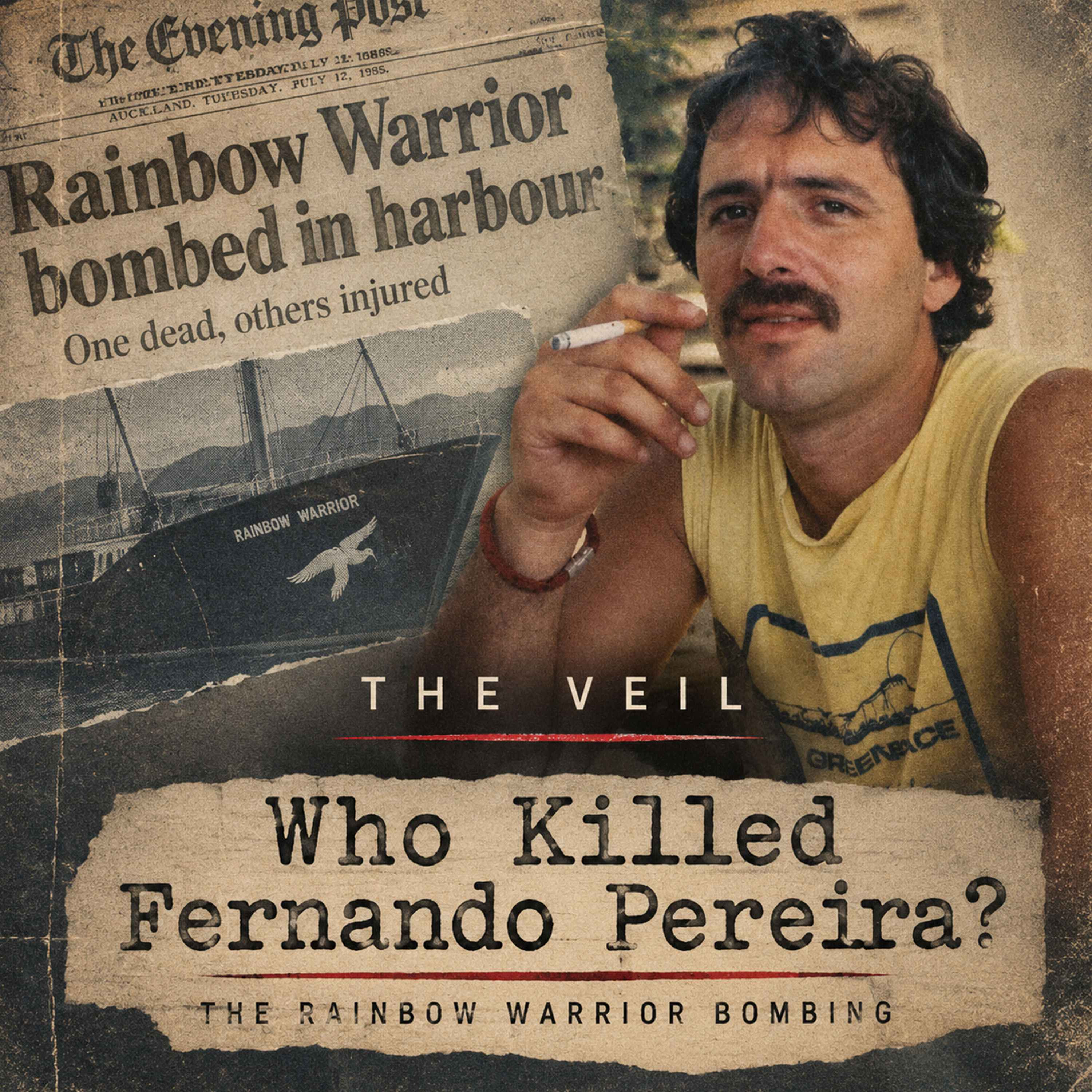
The bombing of the Rainbow Warrior, Auckland, New Zealand, 1985 Three days in the interview rooms at Auckland Central. A fisherman called Peter who never turns up, a pair of scars no surgeon made, a horoscope that reads like a police brief, and a young constable who speaks French. Then the passports come back from Switzerland as forgeries. As the Turenges are charged, the investigation chases a yacht to Norfolk Island, a doctor to Sydney, a volunteer to Israel and a pair of black pantyhose to Paris, and France's denials begin to give way. IN MEMORY Fernando Pereira, 1950 to 1985, photographer, father of Marelle and Paul. A NOTE ON SOURCING Alain Mafart and Dominique Prieur, who used the names Alain and Sophie Turenge, are named because they pleaded guilty to manslaughter and wilful damage in November 1985. Christine Cabon is named because her role has been publicly documented and she has spoken about it. The Ouvéa's crew, the yacht's doctor, the divers and their commander are described
On the afternoon of December 22, 1984, thirty-seven-year-old Bernhard Goetz boarded the Manhattan subway at the 14th Street station, bound for home. At one point during the train ride, one of a group of young Black boys approached Goetz and asked him for money, to which Goetz responded by pulling out a handgun and shooting at the group of teenagers, striking three of them. After the shooting had stopped, a witness testified that Goetz stood over one the boys and said, “You don’t look so bad. Here’s another,” then shot the boy a second time. After evading police for several days, Goetz was arrested and claimed he’d shot the teenagers in self-defense after they tried to rob him. To many residents of New York, who were fed up with the high crime rates and deteriorating landscape of the city, Goetz became a kind of folk hero who took it upon himself to do the job the New York Police Department seemed unable to do. But to many others, particularly the city’s Black community, Goetz’s actions
The murder of Julie Jensen is one of the most extraordinary cases in modern American crime. In the autumn of 1998, in Pleasant Prairie, Wisconsin, Julie Jensen, a devoted mother of two, sealed a letter and handed it to a neighbour with a chilling instruction: if anything happened to her, give it to the police. Weeks later she was dead, poisoned with antifreeze, and her letter named the person she feared would kill her, her husband, Mark Jensen. The case that followed turned on a question the law had never quite answered: can the dead give evidence? Julie's words from beyond the grave would convict her husband, then very nearly set him free, in a battle that reached the United States Supreme Court. On Crime at Bedtime, settle in, get comfortable, and let us tell you the story of the murder of Julie Jensen. All the details here Hosted on Acast.
This gripping episode examines five infamous cases where verdicts failed to end public debate. From Lizzie Borden's 1893 acquittal to Sam Sheppard's media circus trial, Michael Peterson's staircase mystery, and Adnan Syed's podcast-fuelled controversy, each case demonstrates how juries deliver answers whilst leaving fundamental questions stubbornly, maddeningly unresolved for generations.
In 2026, Nvidia co-founder and CEO Jensen Huang became embroiled in a major corporate and national security scandal after The New York Times revealed he had conducted an extramarital affair with Alice Huang (also known as Huang Le), a Chinese executive at the Singapore-based data firm Megaspeed whom U.S. intelligence officials suspected of being a Chinese spy.
José Vigoa is a Cuban-born, former Soviet-trained commando who orchestrated one of the most violent and audacious crime sprees in Las Vegas history.After arriving in Sin City in the 1980s and serving a federal prison sentence for running a cocaine ring, Vigoa recruited a tightly disciplined crew—including his two brothers-in-law—to execute military-style heists between 1998 and 2000.
In 2014, Heather Cho (Cho Hyun-ah), a vice president of Korean Air and daughter of the airline's chairman, sparked an international scandal known as the "nut rage" incident aboard a flight departing New York's JFK Airport.
Acting on preliminary research can be justified when the risks of waiting are high.
Share your view, then see how readers voted. No sign-in required. This poll is shared across stories.
Do you agree or disagree?
Common Quandary
A Common Quandary to discuss
Another conversation to explore, separate from this news story.
Your friend is forty minutes late. Can the restaurant give away their chair?
A busy restaurant seats your group only after everyone arrives. One friend is forty minutes late and keeps texting that they are almost there. A couple waiting nearby could use the empty place, and the server asks your group to order without them.
How long should one person's delay control everyone else's evening?