Toward a new understanding of mental illness - Thomas Insel
17 min
Listen through the publisher, then discuss the episode here or arrange an in-person Roundtable. Your city determines where to meet.
Roundtables are designed for groups of four, with a shared subject and room for everyone to speak. Come for discussion, with no dating expectation.
View full lesson: http://ed.ted.com/lessons/toward-a-new-understanding-of-mental-illness-thomas-insel Uploaded 07-07-13 Today, thanks to better early detection, there are 63% fewer deaths from heart disease than there were just a few decades ago. Thomas Insel, Director of the National Institute of Mental Health, wonders: Could we do the same for depression and schizophrenia? The first step in this new avenue of research, he says, is a crucial reframing. (Filmed at TEDxCaltech.) Talk by Thomas Insel.
Episode information is provided by the publisher. Listening takes place on the publisher’s service.
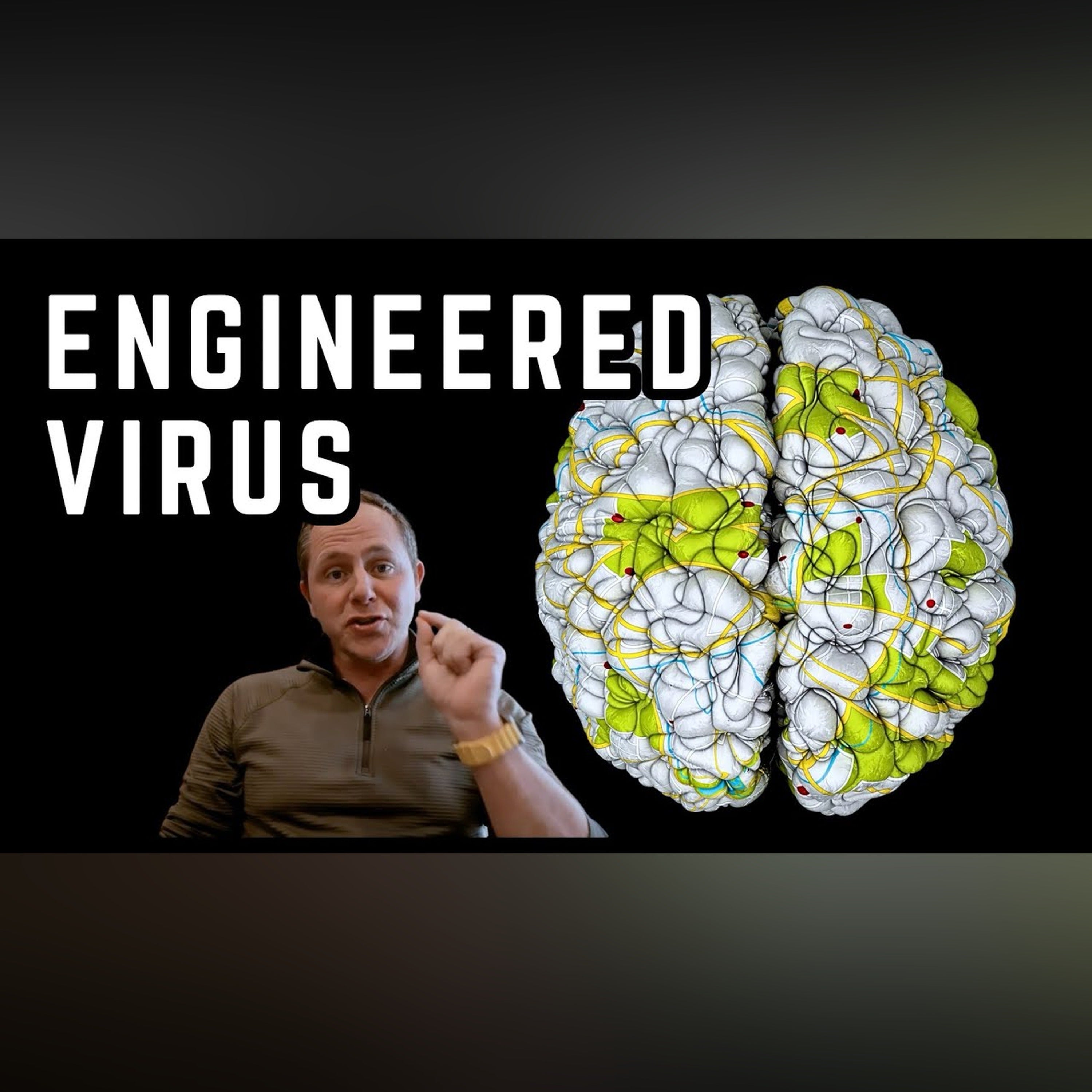
Free INTENSIVE behavior science training: https://nci.university/opt-in-page-808244 Uploaded 13-12-25 Link to original paper: https://www.cell.com/cell/fulltext/S0092-8674(25)01305-4 A neuroscience paper published in Cell just days ago answers a question researchers have been trying to solve for years: what actually changes in the brain during a psilocybin experience—and why those changes can last. Using a genetically modified rabies virus as a neural tracer, researchers were able to map—cell by cell—how psilocybin alters brain connectivity. This allowed them to see, for the first time, which brain regions gain connections, which lose them, and how those changes depend on what the brain is doing during the experience itself. The findings help explain long-standing observations discussed by neuroscientists, psychiatrists, and researchers often referenced on platforms like Huberman Lab: • Why psilocybin can reduce depression and anxiety • Why the default mode network quiets during psyche
Have you ever asked yourself, “Why did I have to go through this pain?” In this powerful message, Tony Robbins shares how life’s deepest struggles, moments of loss, fear, and trauma can become the very fuel that drives you to live with meaning and serve others. Uploaded 27-07-25 Watch more videos like this The #1 Reason You Struggle To Change (and How to FIX IT): https://youtu.be/CjrzjwKcr-I “This Is What They’ll Never Tell You About Success” - Tony Robbins: https://youtu.be/ZisIy7hsSVs Leaders Do THIS When Life Gets Stressful...: https://youtu.be/__RE9noGZFU How Tony Robbins Rewired His Mind to Achieve His Dream: https://youtu.be/-U49BdBvmI4 Join "The Edge" - Tony Robbin's FREE weekly newsletter: https://tonyr.co/3YJ0m2L Try Tony AI for just $1: https://tonyr.co/4cr742A Follow Tony Robbins: Facebook: https://www.facebook.com/TonyRobbins Instagram: https://instagram.com/tonyrobbins/ TikTok: https://www.tiktok.com/@tonyrobbins Twitter: https://twitter.com/tonyrobbins LinkedIn: https://w
View pictures and Support us at Patreonhttps://www.patreon.com/user?u=73787379Excerpt #1 As the sow approached her Jessica put her hands out in front of her as a sign of submission to the sow. She then turned her back slightly toward the bear just before being shoved by both of the sow’s paws onto her face. The difference between reality and the surreal arrived in the form of searing pain in Jessica’s body with each bite from the bear's jaws. Jessica knew she couldn’t possibly fight off this bear and had hoped that playing dead would end this confrontation before too much damage was done to her. The sow straddled her as she lay on the ground bit into her buttocks and lifted Jessica completely off the ground. While being carried, Jessica had fleeting thoughts of meeting her death and longed to see her son. She was carried about ten feet across the trail toward where the cubs were located. After dropping Jessica into the grass, the sow decided to make sure that there was no threat posed
Winners don’t just act differently — they think and speak differently. Uploaded 08-03-25 This video breaks down how mindset and communication shape outcomes long before results appear. Success begins internally and is reinforced by the language you use, the standards you hold, and the way you carry yourself day to day. Thought, word, and action must align — or progress stalls. This is about mental control and verbal precision. Inside this video: ️ Training the mind to operate at a higher standard ️ Using confident, intentional language to reinforce identity ️ Eliminating weak thoughts and self-sabotaging self-talk ️ Developing presence through clarity and conviction ️ Aligning thoughts, words, and actions for consistent results Most people speak from fear, doubt, or uncertainty — then wonder why nothing changes. High performers are deliberate with both internal dialogue and external language. They don’t rehearse limitations. They reinforce direction. Language changes first. Behavior fo
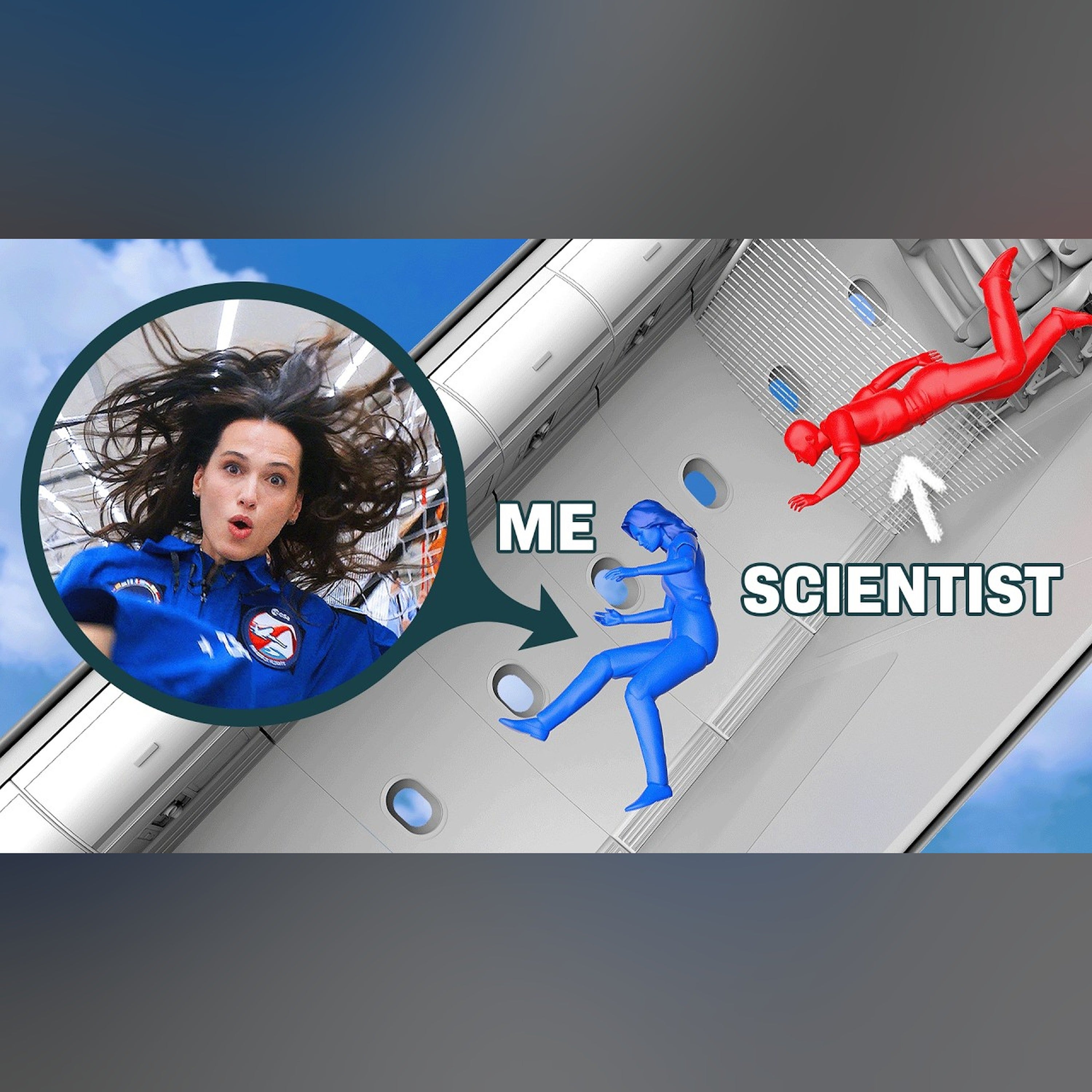
I tested 5 wild experiments in a zero gravity plane... Listen with me on Audible at https://www.audible.com/cleo I'm scanning my brain inside a plane that’s about to DIVE toward the ground… to test how weightlessness helps or hurts your brain. And it’s just one of the 5 crazy science experiments I got to test inside a Zero G plane. I recently went on this Zero G plane to explain a big debate about gravity, and while I was there, I also got exclusive access to experiments that can ONLY happen in zero gravity. I just knew you’d love to see it. So, in this extended cut, I’m going to give you a rare glimpse inside this falling laboratory and show you how the experiments they’re doing could be huge if true… Chapters: 0:00 What happens to your brain in space? 0:32 Why scientists want to fall from the sky 1:10 How do zero gravity planes work? 1:56 Experiment 1 3:58 Experiment 2 5:28 Experiment 3 7:23 Experiment 4 8:50 Experiment 5 10:27 Why these experiments are huge if true You can find me o
Thanks to Brilliant for supporting PBS. Learn more at: https://www.brilliant.org/spacetime Uploaded 02-12-19 PBS Member Stations rely on viewers like you. To support your local station, go to: http://to.pbs.org/DonateSPACE The universe is big, really, really big. Although according to a new paper, it may literally be infinitely smaller than we previously thought. Sign Up on Patreon to get access to the Space Time Discord! Check out the Space Time Merch Store Hosted by Matt O'Dowd Written by Matt O'Dowd Graphics by Leonardo Scholzer and Adriano Leal Directed by: Andrew Kornhaber Executive Producers: Eric Brown and Andrew Kornhaber End Credits Music by J.R.S. Schattenberg: https://www.youtube.com/channel/UCRl6-nb4iOnsij-vnpAjp0Q Every time you walk out the door, light from the Big Bang strikes your face, enters your eyes. This is the cosmic microwave background radiation - the left-over heat-glow from the very early universe. We can’t see this microwave light with our eyes, but we can ca
Dig into the slippery slope fallacy, which assumes that one step will lead to a series of events that lead to an extreme— often bad— scenario. Uploaded 19-08-21 -- It’s 1954. Vietnamese nationalists are on the verge of securing an independent Vietnam under communist leader Ho Chi Minh. U.S. President Eisenhower claims that by virtue of the "falling domino principle," communist control of Vietnam would lead to the global spread of authoritarian communist regimes. Can you spot the problem with this argument? Elizabeth Cox explores the slippery slope fallacy. Lesson by Elizabeth Cox, directed by TOGETHER. Support Our Non-Profit Mission ---------------------------------------------- Support us on Patreon: http://bit.ly/TEDEdPatreon Check out our merch: http://bit.ly/TEDEDShop ---------------------------------------------- Connect With Us ---------------------------------------------- Sign up for our newsletter: http://bit.ly/TEDEdNewsletter Find us on Twitter: http://bit.ly/TEDEdTwitter Pe
View full lesson: http://ed.ted.com/lessons/how-do-we-measure-distances-in-space-yuan-sen-ting Uploaded 09-10-14 When we look at the sky, we have a flat, two-dimensional view. So how do astronomers figure the distances of stars and galaxies from Earth? Yuan-Sen Ting shows us how trigonometric parallaxes, standard candles and more help us determine the distance of objects several billion light years away from Earth. Lesson by Yuan-Sen Ting, animation by TED-Ed.
As machines take on more jobs, many find themselves out of work or with raises indefinitely postponed. Is this the end of growth? No, says Erik Brynjolfsson -- it's simply the growing pains of a radically reorganized economy. A riveting case for why big innovations are ahead of us ... if we think of computers as our teammates. Be sure to watch the opposing viewpoint from Robert Gordon. Uploaded 30-08-13 Talk by Erik Brynjolfsson.
Institutions should demonstrate equal treatment through people's actual experiences, not just written policies.
Share your view, then see how readers voted. No sign-in required. This poll is shared across stories.
Do you agree or disagree?
Common Quandary
A Common Quandary to discuss
Another conversation to explore, separate from this news story.
A bot will reject your honest résumé. Is it okay to add a year of experience?
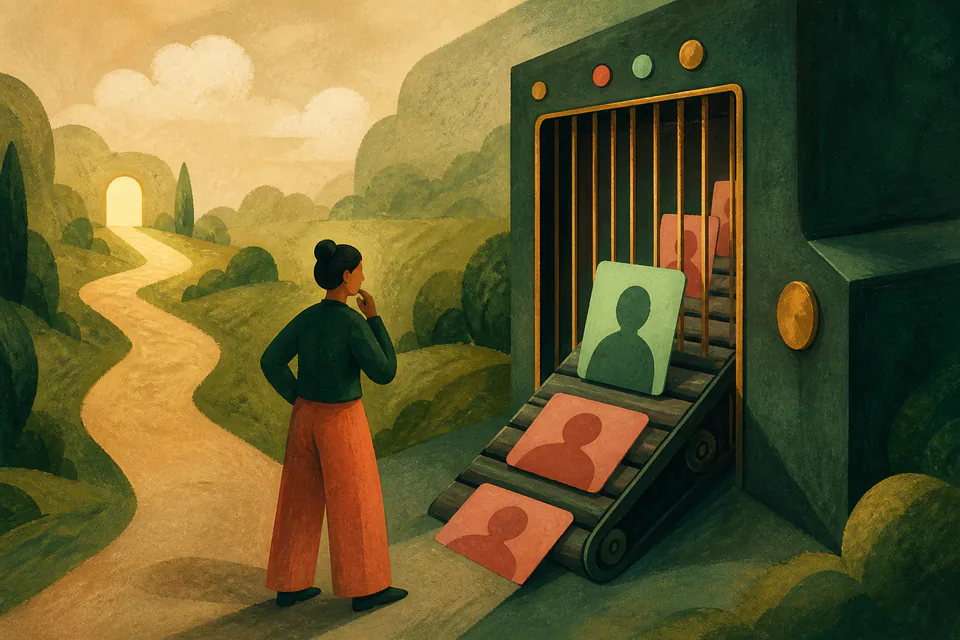
A role requires three years of experience. You have two, possess all the practical skills, and know automated screening will reject an honest application before a person sees it.
Can an unfair gatekeeping system justify misrepresentation?