Webb Reads the Final Hours of a Dying Star, Mercury Orbit: the Weekend Wrap
Listen through the publisher, then discuss the episode here or arrange an in-person Roundtable. Your city determines where to meet.
Roundtables are designed for groups of four, with a shared subject and room for everyone to speak. Come for discussion, with no dating expectation.
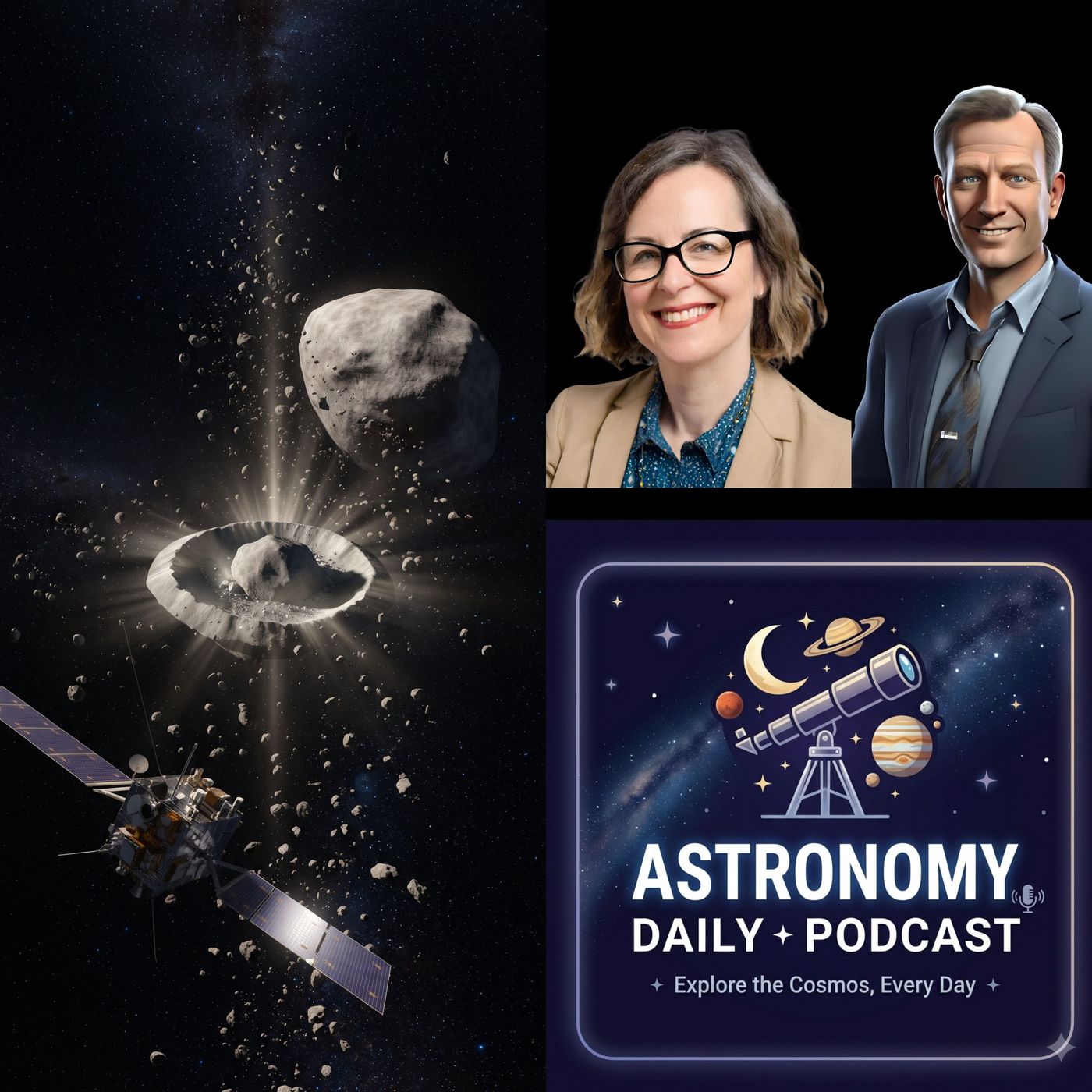
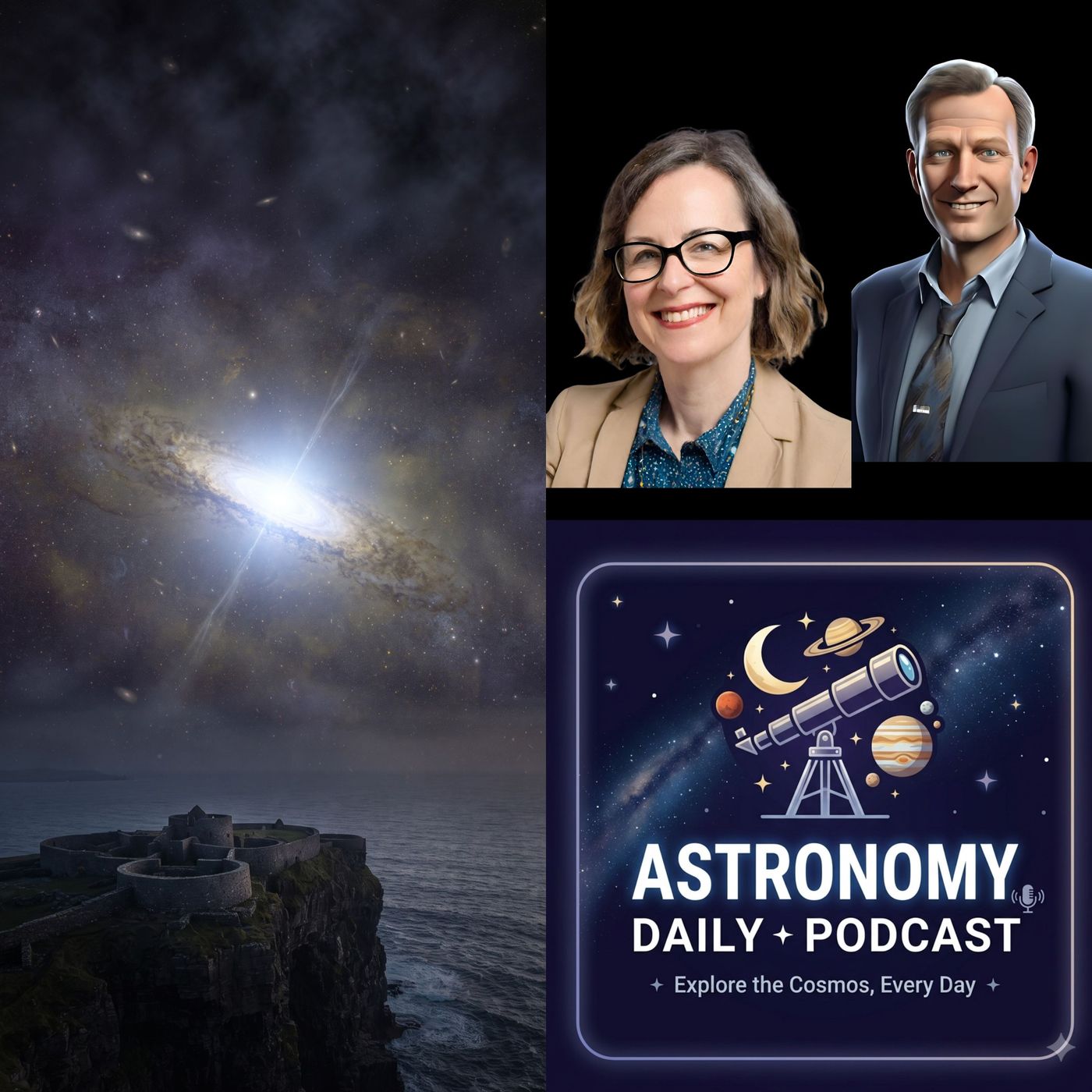
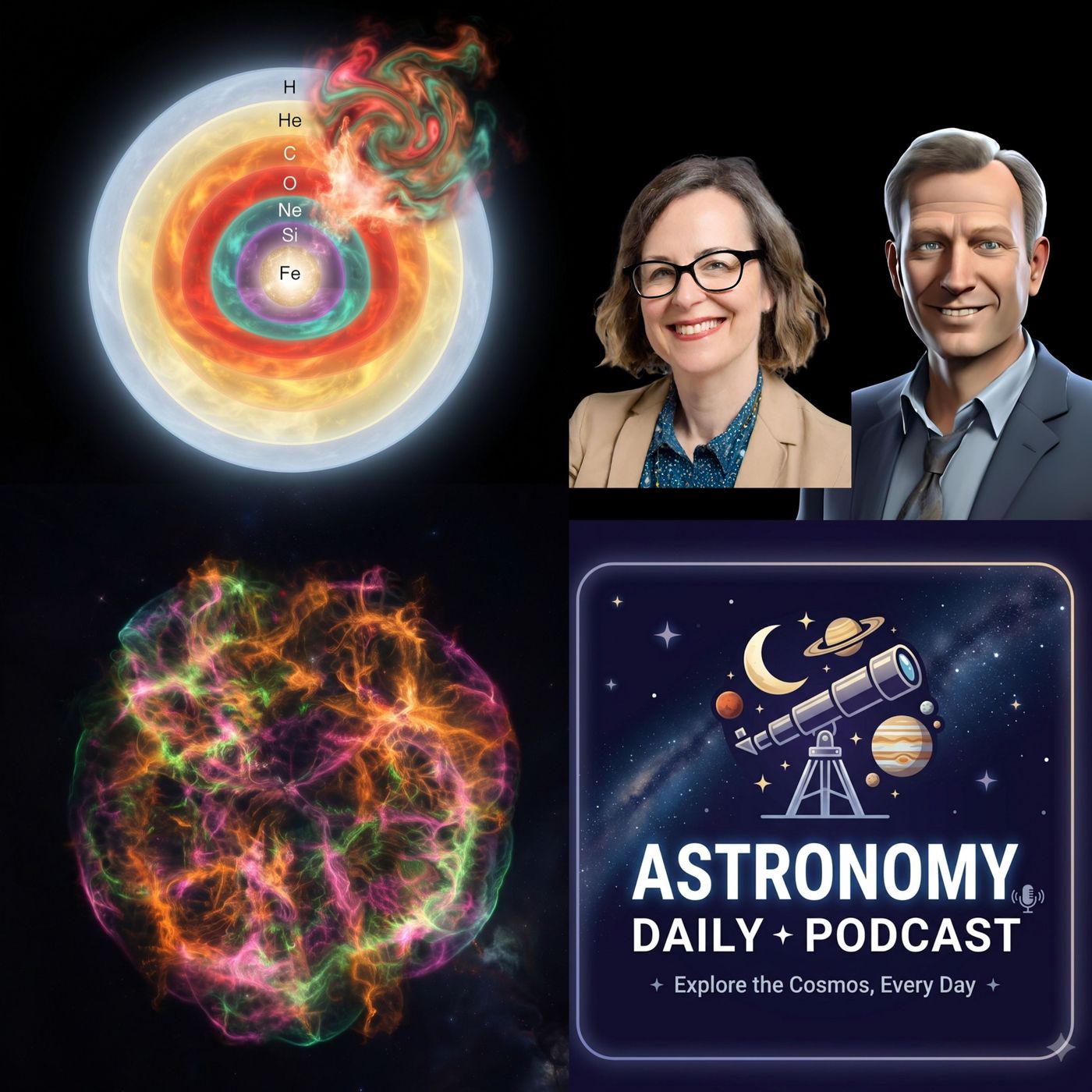
Show notes Webb has read the dust of Cassiopeia A clump by clump, and the chemistry points to the star's inner burning shells merging in its final hours. Plus the week that was, the week ahead, and Venus at its most brilliant. The Star That Rearranged Itself Webb's Mid-Infrared Instrument has resolved the dust in individual, solar-system-sized clumps of Cassiopeia A. Argon-rich debris holds silica; neon- and carbon-monoxide-rich debris holds carbon grains; the 'Green Monster' is magnesium silicate the star shed before it exploded. Only models in which the star's oxygen-burning shell merged with the carbon–neon shell above it reproduce both dust types — independent support for Chandra's 2025 evidence that the star's interior was churned up less than about three hours before collapse. Caveats: dust carries no clock, the models are one-dimensional, an alternative exists, and dust masses are lower limits. Temim, Arendt, Milisavljevic et al., ApJL 1012, published 23 Nov 2026. The Week That Was BepiColombo captured at Mercury with about 77% of the planned burn and a 75-hour orbit, plus MIXS first light; the case for Planet X2 (Lykawka & Horner); Euclid's quasar at z = 8.13 and Shenzhou-24's first foreign visitor; Hera's first detailed look at Dimorphos; the FCC's Starmind approval and ESO's 26 November statement; the faintest supernova ever recorded and galaxies light on central dark matter. The Week Ahead Cygnus XL (named for Jim Lovell) launches Sun 29 Nov 10:47 am EST (02:47 AEDT Mon); Gaia DR4 Wed 2 Dec 14:45 CET (00:45 AEDT Thu); Europa Clipper Earth flyby closest approach 3:14 pm EST Thu 3 Dec (07:14 AEDT Fri); Mio separation ~9–10 Dec; Roman first images 3:30 pm EST Mon 7 Dec (07:30 AEDT Tue 8 Dec). Skywatch Venus at greatest brilliancy (a flat peak — magnitude −4.45 all week); the Moon past Regulus, Mars and Jupiter (Mon 30 Nov in the north, Tue 1 Dec in Australia); last quarter 06:08 UTC 1 Dec; Saturn high from the south; the Large Magellanic Cloud for southern observers; Cassiopeia for the north. Sources · [Lead] ESA/Webb — weic2624, Webb shows how supernova dust chronicles star evolution (23 Nov 2026) — https://esawebb.org/news/weic2624/ · [Lead] Temim, Arendt, Milisavljevic et al., 'JWST Resolves Dust Emission from Individual Ejecta Clumps in Cassiopeia A: Dominant Grain Compositions Point to a Shell Merger in the Progenitor', ApJL 1012 (2), 23 Nov 2026, DOI 10.3847/2041-8213/aea901 · [Lead background] Sato et al., 'Inhomogeneous stellar mixing in the final hours before the Cassiopeia A supernova', arXiv 2507.07563 (Jul 2025); Chandra release Aug 2025 — https://chandra.si.edu/photo/2025/casa/ · [Lead background] De Looze et al. 2024, The Green Monster hiding in front of Cas A, ApJL 976 L4, DOI 10.3847/2041-8213/ad855d · [Week] ESA — BepiColombo safely in Mercury orbit despite unexpected challenge (23 Nov 2026) · [Week] Lykawka & Horner, MNRAS (Planet X2), Nov 2026 · [Week] Wolf, Belladitta et al., A&A 715, A356 (Euclid quasar z = 8.13), 24 Nov 2026 · [Week] ESA — Hera's first detailed images of Dimorphos (25 Nov 2026) · [Week] ESO — eso2614, ESO statement on approval of one million space data centres (26 Nov 2026) — https://www.eso.org/public/news/eso2614/ · [Week] Zimmerman, Gal-Yam et al., Nature Astronomy, DOI 10.1038/s41550-026-03024-z (26 Nov 2026); Lei, Zhu et al., Nature Astronomy (26 Nov 2026) · [Ahead] Northrop Grumman — NASA Commercial Resupply Mission NG-25 — https://www.northropgrumman.com/what-we-do/space/missions/nasa-commercial-resupply-mission-ng-25 · [Ahead] ESA — Watch live: Gaia releases its largest-ever goldmine of cosmic data (26 Nov 2026); NASA JPL — Europa Clipper Earth flyby (25 Nov 2026) · [Skywatch] Ephemerides computed in-session with PyEphem for Sydney, Los Angeles, New York and London. Sponsor Details: Ensure your online privacy by using NordVPN. Get the best secure and private email on the planet. Do what we did and use ProtonMail. Commercial free episodes daily are only a click way... This episode includes AI-generated content.
Episode information is provided by the publisher. Listening takes place on the publisher’s service.
Listen at the source ↗