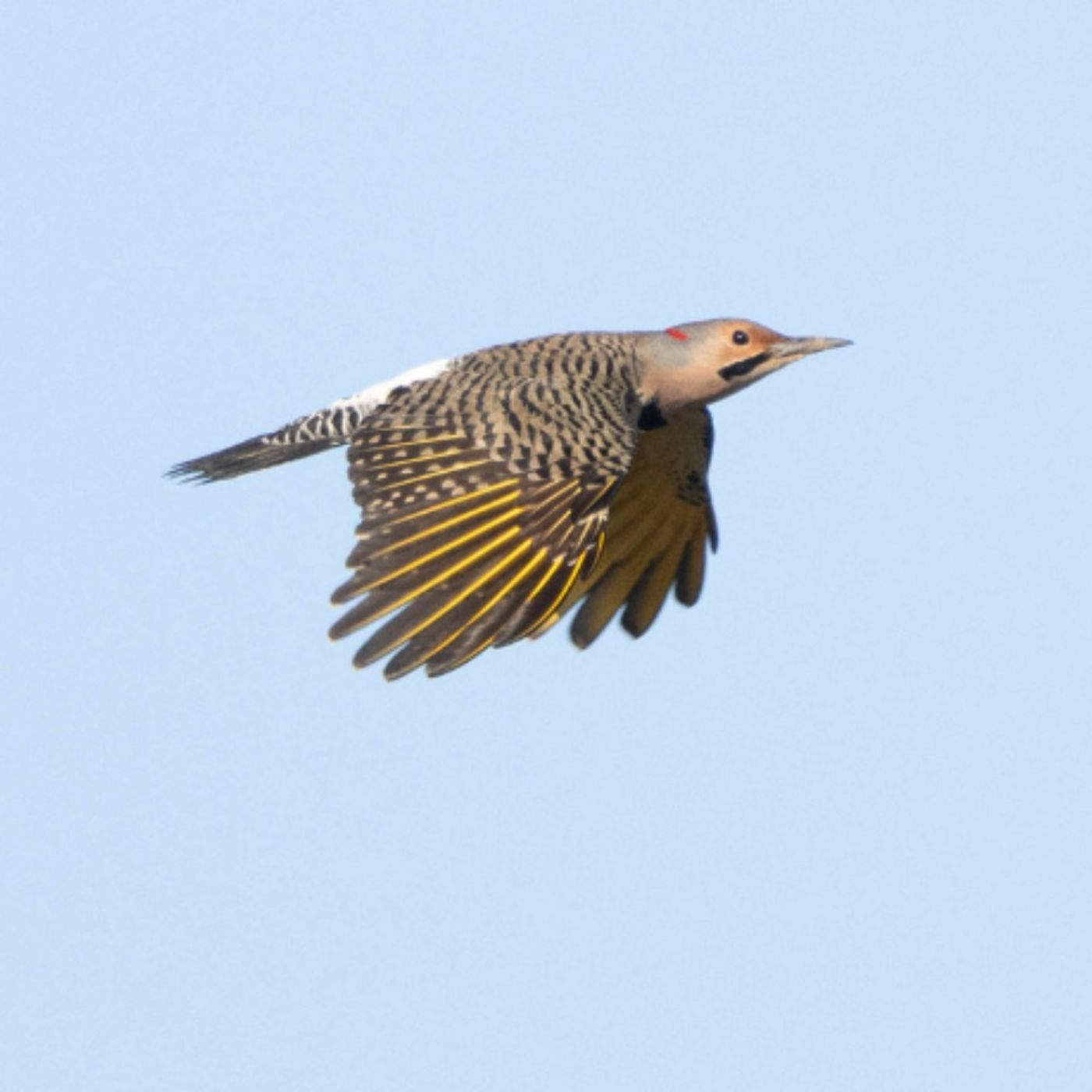
Sometimes all you need to identify a bird is a single feather. Because collecting bird feathers is prohibited in the U.S. to protect birds from poachers, start by taking a photo with a common object for scale. Then you can use online resources like the iNaturalist app or Featherbase website to help you solve the mystery. Keep your prime suspect in mind when you’re back where you found the feather and you might get to see the bird itself — feathers and all. More info and transcript at BirdNote.org (https://www.birdnote.org/podcasts/birdnote-daily/what-if-you-only-have-feather). Want more BirdNote? BirdNote is a nonprofit. Hosted by Simplecast, an AdsWizz company.
Sign up for our newsletter and never miss an animation: http://bit.ly/TEDEdNewsletter Uploaded 22-01-19 View full lesson: https://ed.ted.com/lessons/why-should-you-read-fahrenheit-451-iseult-gillespie Ray Bradbury’s novel imagines a world where books are banned- and possessing, let alone reading them, is forbidden.The protagonist, Montag, is a fireman responsible for destroying what remains. The story raises the question: how can you preserve your mind in a society where free will, self-expression and curiosity are under fire? Iseult Gillespie examines what makes the dystopian novel a classic. Lesson by Iseult Gillespie, directed by Anton Bogaty. Thank you so much to our patrons for your support! Without you this video would not be possible! Vaibhav Mirjolkar, Tony, Michelle, Katie and Josh Pedretti, Erik Biemans, Gaurav Mathur, Sameer Halai, Hans Peng, Tekin Gültekin, Hector Quintanilla, Raheem, Penelope Misquitta, Ravi S. Rāmphal, Fahad Nasser Chowdhury, Marin Kovachev, Roman Pinchuk
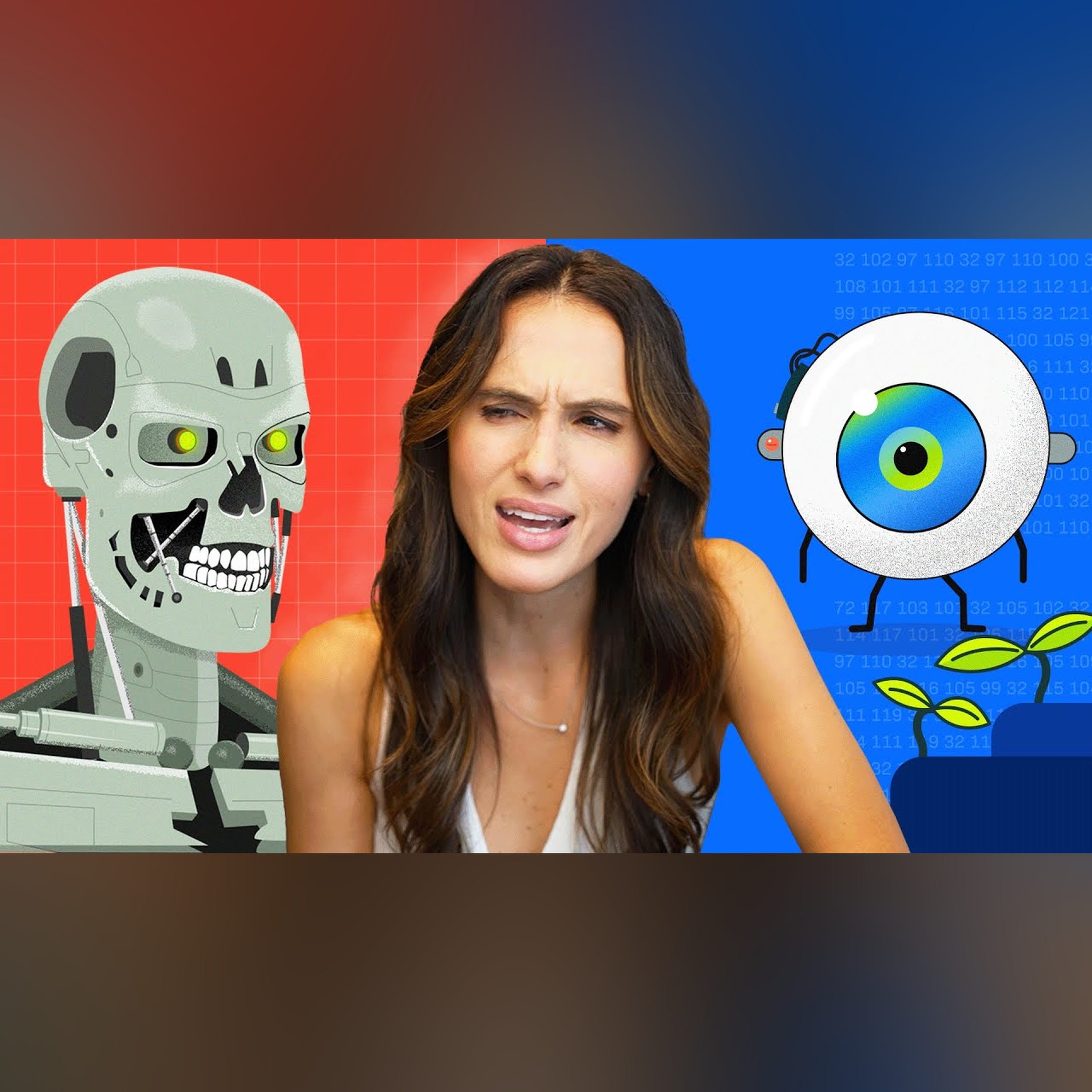
AI is here. Now what? Everyone’s talking about artificial intelligence and machine learning. There are lots of names thrown around - OpenAI’s ChatGPT and DALLE-2, Google’s Bard, Meta’s LLaMa 2, Midjourney, AlphaFold… Right now, we’re in this weird moment where lots of smart people agree we’re on the cusp of a truly world-changing technology. But some seem to be saying it's going to lead to human extinction while others are saying it’s “more profound than fire.” But it all feels so VAGUE. I want to know: How specifically would AI kill me? Or totally transform my life for the better? In this video, that’s what I’m going to try to learn. We dive into what the most extreme bad and good AI futures actually look like, so that you and I can get ready. And more importantly, so we can make sure that we get our real future RIGHT. Chapters: 00:00 Why is AI so confusing? 1:13 What is AI? 2:37 Why is everyone talking about AI now? 5:12 Why is AI dangerous? 6:22 How would AI kill me? 8:08 Should we
Viewers like you help make PBS (Thank you ) . Support your local PBS Member Station here: https://to.pbs.org/DonateSPACE Uploaded 22-02-17 Fomalhaut is a massive young star surrounded by a ring of dust debris that can tell us a great deal about the formation of our own solar system. Get your first two months of CuriosityStream free by going to http://curiositystream.com/spacetime and using the promo code “spacetime”. You can further support us on Patreon at https://www.patreon.com/pbsspacetime Get your own Space Time tshirt at http://bit.ly/1QlzoBi Tweet at us! @pbsspacetime Facebook: facebook.com/pbsspacetime Email us! pbsspacetime [at] gmail [dot] com Comment on Reddit: http://www.reddit.com/r/pbsspacetime Help translate our videos! https://www.youtube.com/timedtext_cs_panel?tab=2&c=UC7_gcs09iThXybpVgjHZ_7g (https://www.youtube.com/timedtext_cs_panel?c=UC7_gcs09iThXybpVgjHZ_7g&tab=2) Fomalhaut is an awe-inspiring star that could unlock many mysteries concerning how our own solar sys
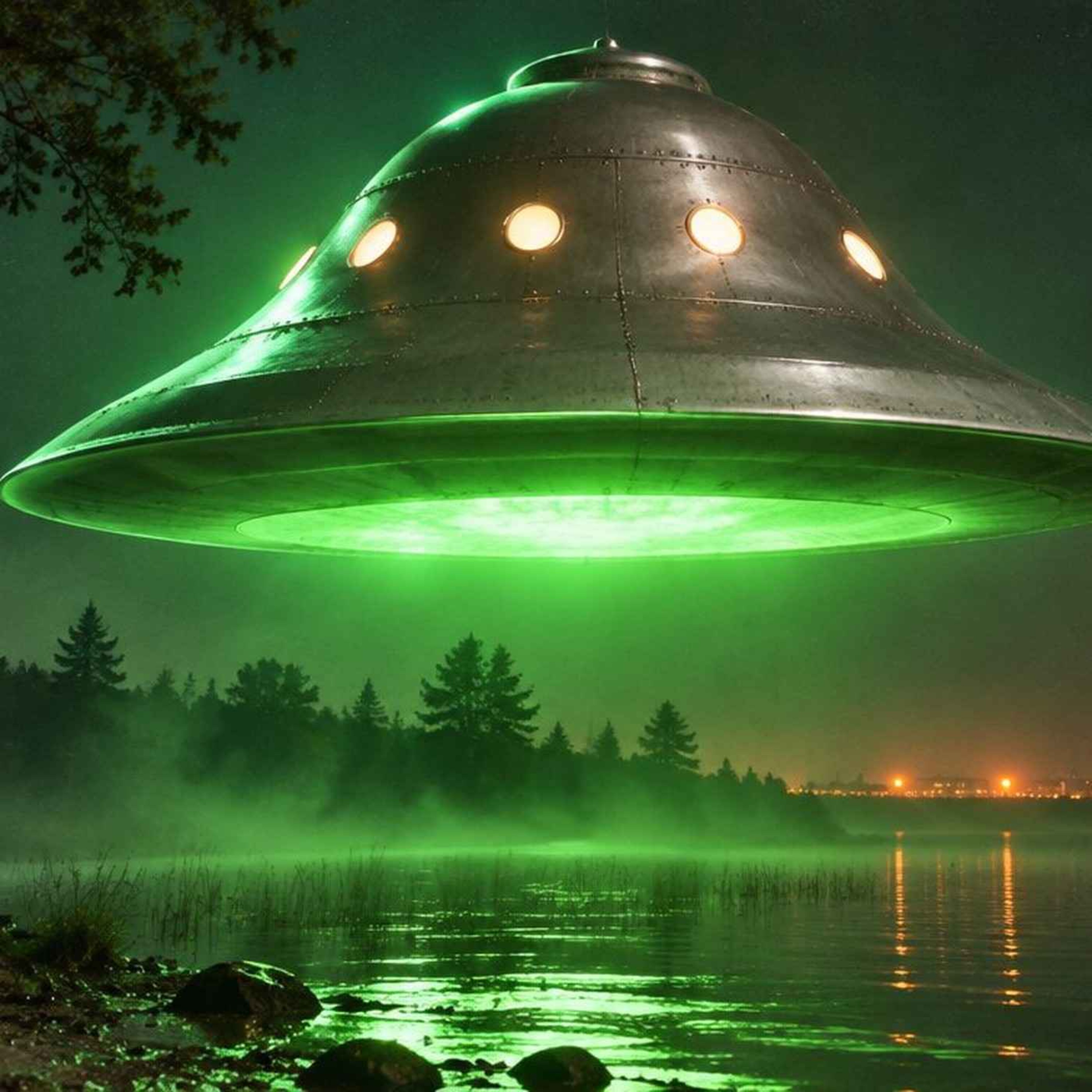
In today's brief: Lake Erie, 1957: a newly released Air Force report says two boys saw a humming, bell-shaped craft near the Enrico Fermi Atomic Plant. Skinwalker Ranch: owner Brandon Fugal calls the new files landmark and recalls a daylight saucer over the mesa. Warship footage: a 20-second 2020 infrared clip shows a light crossing a US Navy ship in the Middle East, with no Pentagon assessment. Martha's Vineyard, 1957: a spiked, nickel-coloured object that the Air Force put down to a radar-reflector balloon. Loch Ness: reported sightings jump to 15 this year, up from six in 2025. The Book of Miracles: a 16th-century manuscript of comets, blood rain and multiple suns heads to auction at Christie's. Quick hits: a 1952 file blames the saucer wave on temperature inversions; more Pentagon UFO files are on the way. Every story and source: https://believepod.com/ufo-paranormal-news-22-november-2026/ New episodes every morning. Keep your eyes on the sky. Sources: FOX 2 Detroit: https://www.fo
A kiss can be wonderful. It can create an instant connection, spark romance, or make you feel closer to someone. But a kiss can also have the opposite effect — and sometimes ruin everything. So what makes kissing so powerful, and why can one kiss make such a difference? There's some fascinating science behind it. https://www.scientificamerican.com/article/why-we-kiss/ We spend an enormous amount of time worrying about what's going to change. What's next? What's coming? How do we prepare? But what if we're paying attention to the wrong things? Some of the most important forces shaping our lives never change, and understanding them may be far more valuable than trying to predict the future — something humans are notoriously bad at. Morgan Housel, partner at The Collaborative Fund and author of Same as Ever: A Guide to What Never Changes (https://amzn.to/3SwWn6u) (https://amzn.to/3SwWn6u)), joins me to explain why the things that stay the same may be the most important things to understan
Some people just seem to be mosquito magnets; in one scientific study, 20 percent of the people ended up with 95 percent of the mosquito bites! So if you’ve ever thought mosquitoes had it out for you specifically, you might be right. And now, we know why. To learn more about this topic, start your googling with these keywords: - Carboxylic Acid: An organic compound characterized by a carboxyl group (-COOH), which consists of a carbon atom double-bonded to an oxygen atom and single-bonded to a hydroxyl group. - CO2 (Carbon Dioxide): A colorless gas made of one carbon atom bonded to two oxygen atoms (CO2). - Wavelength: The distance between two consecutive peaks (or troughs) of a wave, such as a light wave or sound wave. MinuteEarth is produced by Neptune Studios LLC https://neptunestudios.info (https://neptunestudios.info/) If you like what we do, you can help us! - Become our patron: https://patreon.com/MinuteEarth - Buy our merch: http://dftba.com/minuteearth - Buy our book: https://m
Some would say he had it coming. Others that it gives an evolutionary advantage. MinuteEarth is produced by Neptune Studios LLC https://neptunestudios.info (https://neptunestudios.info/) If you like what we do, you can help us! - Become our patron: https://patreon.com/MinuteEarth - Buy our merch: http://dftba.com/minuteearth - Buy our book: https://minuteearth.com/books - Share with your friends and family - Leave us a comment (we read them!)
Thanks to the fossil record, we know that pterosaurs had wings with elongated hand bones, just like every other flying vertebrate. But simply having wings doesn’t mean you can actually fly.. If you’re too heavy for the size of those wings – or if you can't flap them fast enough – you’ll never get anywhere. But, despite this giant pterosaur’s wingspan, scientists estimate that it was only about as heavy as a large pig. Now with the wing-to-mass ratio looking more decent, giant pterosaurs still needed to be strong enough to flap them. So it’s reasonable to believe their wing muscles were pretty brawny. On top of that, pterosaurs had mostly hollow bones that increased the volume of their respiratory system – just like modern flying birds – which allowed them to deliver tons of oxygen to all those flight muscles! All this likely helped a Quetzalcoatlus’s big body stay aloft once it was in the air. But getting into the air in the first place is the hardest and most energy-intensive part of
Experiencing art in person offers something that online viewing cannot fully replace.
Share your view, then see how readers voted. No sign-in required. This poll is shared across stories.
Do you agree or disagree?
Common Quandary
A Common Quandary to discuss
Another conversation to explore, separate from this news story.
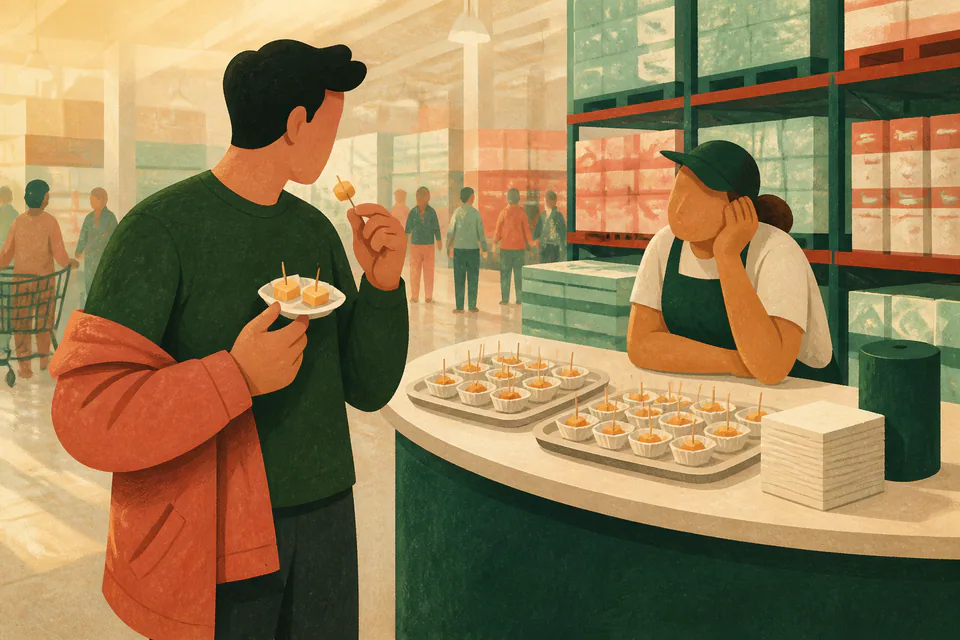
You love the free sample but will never buy it. How many times may you circle back?
A warehouse store is offering delicious samples. You have no intention of purchasing the product, but the employee seems bored and has trays to spare. After taking two, you consider removing your jacket and returning for a third.
Is exploiting generosity wrong when the giver appears not to care?