Why the Andromeda Galaxy Is Moving Toward Us | Boring Science For Sleep
326 min
Listen through the publisher, then discuss the episode here or arrange an in-person Roundtable. Your city determines where to meet.
Roundtables are designed for groups of four, with a shared subject and room for everyone to speak. Come for discussion, with no dating expectation.
Fall asleep to this quiet science story. A Boring Science For Sleep episode about Why the Andromeda Galaxy Is Moving Toward Us. Why the Andromeda Galaxy Is Moving Toward Us Settle in for a quiet exploration of Why the Andromeda Galaxy Is Moving Toward Us. This episode follows A Plate in Flagstaff; The Assistant and His Camera; Why Andromeda Falls Toward Us; The Sideways Problem; A Coin Toss in Billions. Listen closely or let the details drift past. Chapters 00:00:00 Why the Andromeda Galaxy Is Moving Toward Us 01:39:20 Woven Wire Sieves and the Sizing of the Mesh 04:16:09 What Really Powers the Brightest Quasars If you enjoy this quiet science bedtime pace, you might also like Psalms for Sleep (https://open.spotify.com/show/7zd2RN8SMTCheFA2ifYK0m) on Spotify — same quiet rhythm, different night.
Episode information is provided by the publisher. Listening takes place on the publisher’s service.
From warrior kings and ambitious conquerors to powerful queens and troubled rulers, England's monarchy has shaped centuries of history. Behind the crown lies a story of family rivalries, political intrigue, bloody civil wars, changing dynasties, and struggles for power. Meet the monarchs who ruled England, from the early Anglo-Saxon kings and William the Conqueror to Henry VIII, Elizabeth I, and the Stuart dynasty. Discover how the Norman Conquest transformed the kingdom, how the Plantagenets fought to expand royal power, and how the Tudors changed England forever. Explore the royal families, dramatic successions, famous marriages, rebellions, and unexpected endings that shaped the English throne. Discover how centuries of kings and queens transformed a medieval kingdom into a powerful nation. Boring History for Sleep — Soft stories about forgotten rulers, royal rivalries, and the people who shaped history.
Eight hours of calm, slow facts about space to help you fall asleep and stay asleep. Tonight we drift through the greatest mysteries of the universe, the planets of our solar system, black holes and the Big Bang. There is nothing to remember and nothing to follow. Just a quiet voice and the night sky. Settle in, get comfortable and let the universe carry you to sleep.
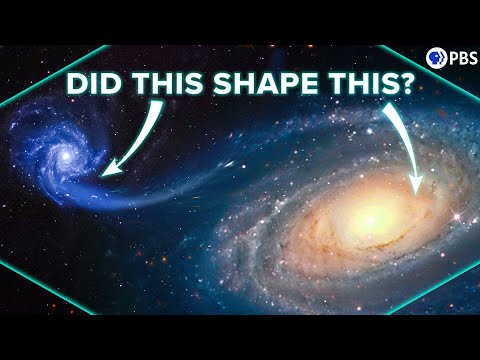
Search the Entire Space Time Library Here: https://search.pbsspacetime.com/ Uploaded 25-05-22 PBS Member Stations rely on viewers like you. To support your local station, go to :http://to.pbs.org/DonateSPACE Sign Up on Patreon to get access to the Space Time Discord! When we scan the heavens with giant telescopes we see galactic cannibalism everywhere. We see moments that appear frozen on the human timescale, but are really snapshots of the incredibly violent process of galaxy formation. This is how all galaxies are made. We can piece together a pretty good understanding of this process from countless snapshots. Looking into the distance means looking into the past, so it’s possible to stitch together a Frankenstein flip book of galaxy evolution. Check out the Space Time Merch Store Sign up for the mailing list to get episode notifications and hear special announcements! Hosted by Matt O'Dowd Written by Matt Caplan and Matt O'Dowd Post Production by Leonardo Scholzer, Yago Ballarini, P
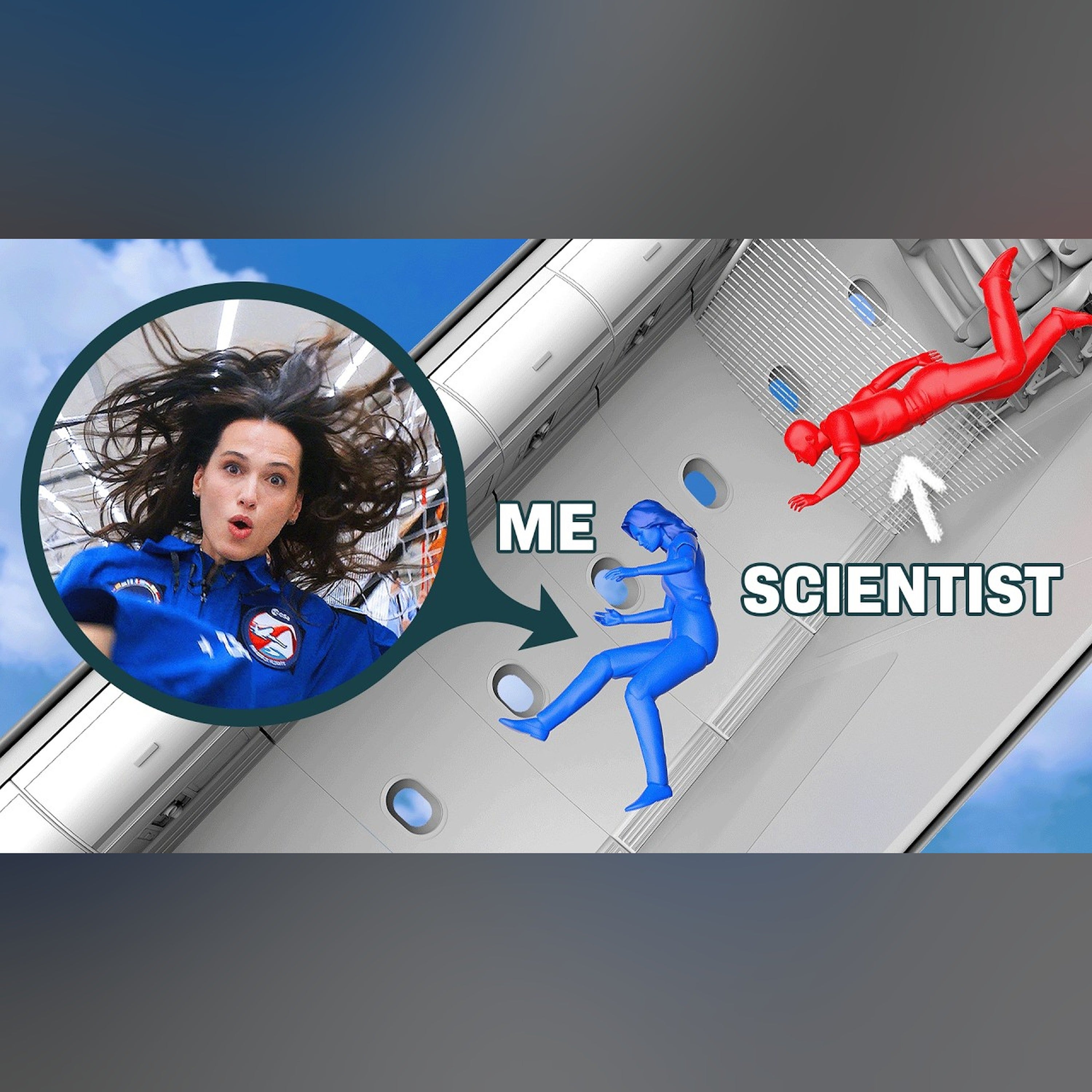
I tested 5 wild experiments in a zero gravity plane... Listen with me on Audible at https://www.audible.com/cleo I'm scanning my brain inside a plane that’s about to DIVE toward the ground… to test how weightlessness helps or hurts your brain. And it’s just one of the 5 crazy science experiments I got to test inside a Zero G plane. I recently went on this Zero G plane to explain a big debate about gravity, and while I was there, I also got exclusive access to experiments that can ONLY happen in zero gravity. I just knew you’d love to see it. So, in this extended cut, I’m going to give you a rare glimpse inside this falling laboratory and show you how the experiments they’re doing could be huge if true… Chapters: 0:00 What happens to your brain in space? 0:32 Why scientists want to fall from the sky 1:10 How do zero gravity planes work? 1:56 Experiment 1 3:58 Experiment 2 5:28 Experiment 3 7:23 Experiment 4 8:50 Experiment 5 10:27 Why these experiments are huge if true You can find me o
What’s it like to watch AI solve a problem you’ve spent years on? Researcher Ittai Abraham spent about two years working on a set of math problems. Years later, he gave one of them to an AI model. In about an hour, it made progress where he’d gotten stuck. Stanford cryptographer Dan Boneh takes that experience a step further. Suppose an AI settles P vs. NP, one of the biggest open questions in computer science. A computer can check every step, but the proof runs to a billion pages. What would we actually understand? This episode brings together researchers — Abraham, Boneh, Scott Duke Kominers, and Justin Thaler — to talk about where math goes from here, now that AI is so good at solving hard problems. Also: why a model can produce a correct proof and still skip key steps, how you develop a feel for which problems are worth pursuing, and what they’d tell a student deciding whether to spend the next five years on a math PhD. This episode is for anyone wondering what happens to human kno
Laura expected an 1860s house to come with uneven floors, old woodwork, and a few mysteries hidden beneath generations of renovations. She did not expect it to come with someone else’s memories. Soon after moving in, she began having unusually vivid dreams filled with wounded men, makeshift beds, bloodied water, and rooms that felt strangely familiar even though she had never seen them before. Then the dreams began showing her details that seemed connected to the house itself—an older staircase, a vanished doorway, and a young man whose name stayed with her after she woke. Laura finally decided to research the property. What she found made one possibility increasingly difficult to ignore. Maybe she wasn’t dreaming about the past because she knew the history of the house. Maybe she was learning the history because something in the house was showing it to her. #HauntedHouse #ParanormalDreams #CivilWarGhosts #GhostStories #PsychicDreams #HauntedHistory #Paranormal #SpiritCommunication #Un
Fall asleep to this quiet science story. A Boring Science For Sleep episode about Why Our Milky Way Is a Thin Spinning Disc of Stars. Why Our Milky Way Is a Thin Spinning Disc of Stars Settle in for a quiet exploration of Why Our Milky Way Is a Thin Spinning Disc of Stars. This episode follows A Disc Seen From Inside; Counting Stars Field by Field; How the Disc Turns; Dust, War and Radio; How the Disc Settled. Listen closely or let the details drift past. Chapters 00:00:00 Why Our Milky Way Is a Thin Spinning Disc of Stars 01:39:17 Gramophone Records and the Pressing of Grooves 04:12:08 Graphite Pencils and the Clay Inside the Core If you enjoy this quiet science bedtime pace, you might also like Psalms for Sleep (https://open.spotify.com/show/7zd2RN8SMTCheFA2ifYK0m) on Spotify — same quiet rhythm, different night.
Fall asleep to this quiet science story. A Boring Science For Sleep episode about Why Auroras Glow Green and Red Above the Poles. Why Auroras Glow Green and Red Above the Poles Settle in for a quiet exploration of Why Auroras Glow Green and Red Above the Poles. This episode follows Green Light Over the Pole; Spectroscopes, Terrellas and Cameras; Why Oxygen Waits to Glow; Frozen Nitrogen and a Toronto Tube; Red Skies Far From Home. Listen closely or let the details drift past. Chapters 00:00:00 Why Auroras Glow Green and Red Above the Poles 01:31:54 Why Dark Matter Holds Galaxies Together 02:48:42 Why Supernovae Can Outshine Entire Galaxies 04:01:33 Why Rainbows Separate Sunlight Into Colours If you enjoy this quiet science bedtime pace, you might also like True Crime for Sleep (https://open.spotify.com/show/05dzYD65s7sflbCdBiKBty) on Spotify — same quiet rhythm, different night.
Fall asleep to this quiet science story. A Boring Science For Sleep episode about How Photosynthesis Turns Sunlight Into Sugar. How Photosynthesis Turns Sunlight Into Sugar Settle in for a quiet exploration of How Photosynthesis Turns Sunlight Into Sugar. This episode follows The Willow in the Pot; Mint, Candles and Sunshine; Inside the Green Leaf; Following Carbon at Berkeley; Crystals, Cane and Old Seas. Listen closely or let the details drift past. Chapters 00:00:00 How Photosynthesis Turns Sunlight Into Sugar 01:35:09 Why the Speed of Light Is a Cosmic Speed Limit 02:41:42 Tennis Balls and the Stitching of Felt Covers If you enjoy this quiet science bedtime pace, you might also like Psalms for Sleep (https://open.spotify.com/show/7zd2RN8SMTCheFA2ifYK0m) on Spotify — same quiet rhythm, different night.
Communities should test major changes on a small scale before making them permanent.
Share your view, then see how readers voted. No sign-in required. This poll is shared across stories.
Do you agree or disagree?
Common Quandary
A Common Quandary to discuss
Another conversation to explore, separate from this news story.
A DNA test reveals a family time bomb. Do you tell relatives who would rather not know?
A genetic test reveals that you carry a serious inherited condition. Your siblings and adult cousins may carry it too, but one has previously said they would rather live without predictions about illnesses that cannot yet be prevented.
Can someone's wish not to know outweigh your responsibility to warn them?