View full lesson: http://ed.ted.com/lessons/what-s-the-difference-between-accuracy-and-precision-matt-anticole Uploaded 14-04-15 When we measure things, most people are only worried about how accurate, or how close to the actual value, they are. Looking at the process of measurement more carefully, you will see that there is another important consideration: precision. Matt Anticole explains what exactly precision is and how can help us to measure things better. Lesson by Matt Anticole, animation by Anton Bogaty.
Explore how marijuana’s two main active compounds, THC and CBD, affect your brain and body, and what risk factors to watch out for. Uploaded 02-12-19 -- In 1970, marijuana was classified as a schedule 1 drug in the United States: the strictest designation possible, meaning it was completely illegal and had no recognized medical uses. Today, marijuana’s therapeutic benefits are widely acknowledged, but a growing recognition for its medical value doesn’t answer the question: is recreational marijuana use bad for your brain? Anees Bahji investigates. Lesson by Anees Bahji, directed by Anton Bogaty. Animator's website: https://www.antonbogaty.com (https://www.antonbogaty.com/) Sign up for our newsletter: http://bit.ly/TEDEdNewsletter Support us on Patreon: http://bit.ly/TEDEdPatreon Find us on Twitter: http://bit.ly/TEDEdTwitter Peep us on Instagram: http://bit.ly/TEDEdInstagram View full lesson: https://ed.ted.com/lessons/is-marijuana-bad-for-your-brain-anees-bahji Thank you so much to ou
Take a tour of the vast, underground network of the Paris Catacombs, and find out how this 18th century cemetery came to be. -- For centuries, Parisians had buried their dead in the Cemetery of the Innocents. By the 18th century, the grounds had become overcrowded — spewing foul odors across the city. Residents worried that it posed a public health threat, and petitioned the government for a solution. But where could they move millions of remains? Stephanie H. Smith explores the vast, underground network of the Catacombs. Lesson by Stephanie H. Smith, directed by Laura Jayne Hodkin. Support Our Non-Profit Mission ---------------------------------------------- Support us on Patreon: http://bit.ly/TEDEdPatreon Check out our merch: http://bit.ly/TEDEDShop ---------------------------------------------- Connect With Us ---------------------------------------------- Sign up for our newsletter: http://bit.ly/TEDEdNewsletter Find us on Twitter: http://bit.ly/TEDEdTwitter Peep us on Instagram:
Wael Ghonim is the Google executive who helped jumpstart Egypt's democratic revolution ... with a Facebook page memorializing a victim of the regime's violence. Speaking at TEDxCairo, he tells the inside story of the past two months, when everyday Egyptians showed that "the power of the people is stronger than the people in power." Uploaded 25-07-13 Talk by Wael Ghonim.
View full lesson: http://ed.ted.com/lessons/how-the-heart-actually-pumps-blood-edmond-hui Uploaded 20-05-14 For most of history, scientists weren't quite sure why our hearts were beating or even what purpose they served. Eventually, we realized that these thumping organs serve the vital task of pumping clean blood throughout the body. But how? Edmond Hui investigates how it all works by taking a closer look at the heart's highly efficient ventricle system. Lesson by Edmond Hui, animation by Anton Bogaty.
Uploaded 26-04-18 View full lesson: https://ed.ted.com/lessons/how-do-we-study-living-brains-john-borghi-and-elizabeth-waters As far as we know, there’s only one thing in our solar system sophisticated enough to study itself: the human brain. But this self-investigation is challenging because a living brain is shielded by skull, swaddled in tissue, and made up of billions of tiny cells. How do we study living brains without harming their owners? Elizabeth Waters and John Brorghi explain how EEGs, fMRIs, and PETs work. Lesson by Elizabeth Waters and John Borghi, animation by Joash Berkeley. Thank you so much to our patrons for your support! Without you this video would not be possible! Mayra Urbano, Kostadin Mandulov, Alex Schenkman, Sdiep Sriram, Ivan Todorović, Antero Semi, Yanuar Ashari, Mrinalini , Anthony Kudolo, Querida Owens, Hazel Lam, Manav parmar, Dwight Tevuk, Stephen A. Wilson, Siamak H, Dominik Kugelmann, Katie Winchester, David Rosario, Samuel Doerle, Be Owusu, Susan Herde
Practice more problem-solving at https://brilliant.org/TedEd/ Uploaded 11-08-20 -- You’re the chief advisor to an eccentric king who needs to declare his successor. He wants his heir to be good at arithmetic, lucky, and above all else, honest. So he’s devised a competition to test his children, and ordered you to choose the winner. The future of the kingdom is in your hands. Can you find the worthiest successor? Dan Katz shows how. Lesson by Dan Katz, directed by Artrake Studio. Animator's website: https://www.artrake.com (https://www.artrake.com/) Sign up for our newsletter: http://bit.ly/TEDEdNewsletter Support us on Patreon: http://bit.ly/TEDEdPatreon Find us on Twitter: http://bit.ly/TEDEdTwitter Peep us on Instagram: http://bit.ly/TEDEdInstagram View full lesson: https://ed.ted.com/lessons/can-you-solve-the-cheating-royal-riddle-dan-katz Thank you so much to our patrons for your support! Without you this video would not be possible! Clement, Hadi Salahshour, FAWWAZ GHUWAIDI, Dino
Discover the engineering innovations that made building Burj Khalifa, the world’s tallest skyscraper, possible. Uploaded 20-04-21 -- In 2004, construction began on a new building in Dubai, promising a revolutionary design that would dwarf the rest of the world’s skyscrapers. Five years later, the 828-meter Burj Khalifa was complete, surpassing the previous record-holder by over 60%. What innovations allowed for such a huge leap in height? Alex Gendler digs into the architecture of this unprecedented project. Lesson by Alex Gendler, directed by WOW-HOW Studio. Support Our Non-Profit Mission ---------------------------------------------- Support us on Patreon: http://bit.ly/TEDEdPatreon Check out our merch: http://bit.ly/TEDEDShop ---------------------------------------------- Connect With Us ---------------------------------------------- Sign up for our newsletter: http://bit.ly/TEDEdNewsletter Find us on Twitter: http://bit.ly/TEDEdTwitter Peep us on Instagram: http://bit.ly/TEDEdInsta
Dig into the history of pandemics to learn how viruses and disease spreads and what we can do to stop future outbreaks. -- In our increasingly globalized world, a single infected person can board a plane and spread a virus across continents. Mark Honigsbaum describes the history of pandemics and how that knowledge can help halt future outbreaks. Lesson by Mark Honigsbaum, directed by Patrick Blower. Animator's website: http://www.patrickblower.com (http://www.patrickblower.com/) Educator's website: http://www.markhonigsbaum.co.uk (http://www.markhonigsbaum.co.uk/) Sign up for our newsletter: http://bit.ly/TEDEdNewsletter Support us on Patreon: http://bit.ly/TEDEdPatreon Find us on Twitter: http://bit.ly/TEDEdTwitter Peep us on Instagram: http://bit.ly/TEDEdInstagram View full lesson: http://ed.ted.com/lessons/how-pandemics-spread
Why aren’t commercial flights getting faster? Dig into the technological and environmental problems facing supersonic flight. Uploaded 15-04-21 -- In 1996, a British Airways plane flew from New York to London in a record-breaking two hours and fifty-three minutes. Today, however, passengers flying the same route can expect to spend no less than six hours in the air — twice as long. So why, in a world where everything seems to be getting faster, have commercial flights lagged behind? Alex Gendler details the problems facing supersonic flight. Lesson by Alex Gendler, directed by Zedem Media. Support Our Non-Profit Mission ---------------------------------------------- Support us on Patreon: http://bit.ly/TEDEdPatreon Check out our merch: http://bit.ly/TEDEDShop ---------------------------------------------- Connect With Us ---------------------------------------------- Sign up for our newsletter: http://bit.ly/TEDEdNewsletter Find us on Twitter: http://bit.ly/TEDEdTwitter Peep us on Inst
View full lesson: http://ed.ted.com/lessons/why-are-manhole-covers-round-marc-chamberland Uploaded 13-04-15 Why are most manhole covers round? Sure it makes them easy to roll, and slide into place in any alignment. But there’s another, more compelling reason, involving a peculiar geometric property of circles and other shapes. Marc Chamberland explains curves of constant width and Barbier’s theorem. Lesson by Marc Chamberland, animation by Pew36 Animation Studios.
View full lesson: http://ed.ted.com/lessons/what-s-below-the-tip-of-the-iceberg-camille-seaman Uploaded 24-07-13 It's a well-known fact that the majority of an iceberg lies below the surface -- but just as stealthily hidden are their fascinating qualities. Traveling the seas, teeming with life, and sometimes even making a noise called "bergie seltzer," there's so much more than meets the eye. Camille Seaman gives homage to these icy isles. Lesson by Camille Seaman, animation by Bottomless Well Films.
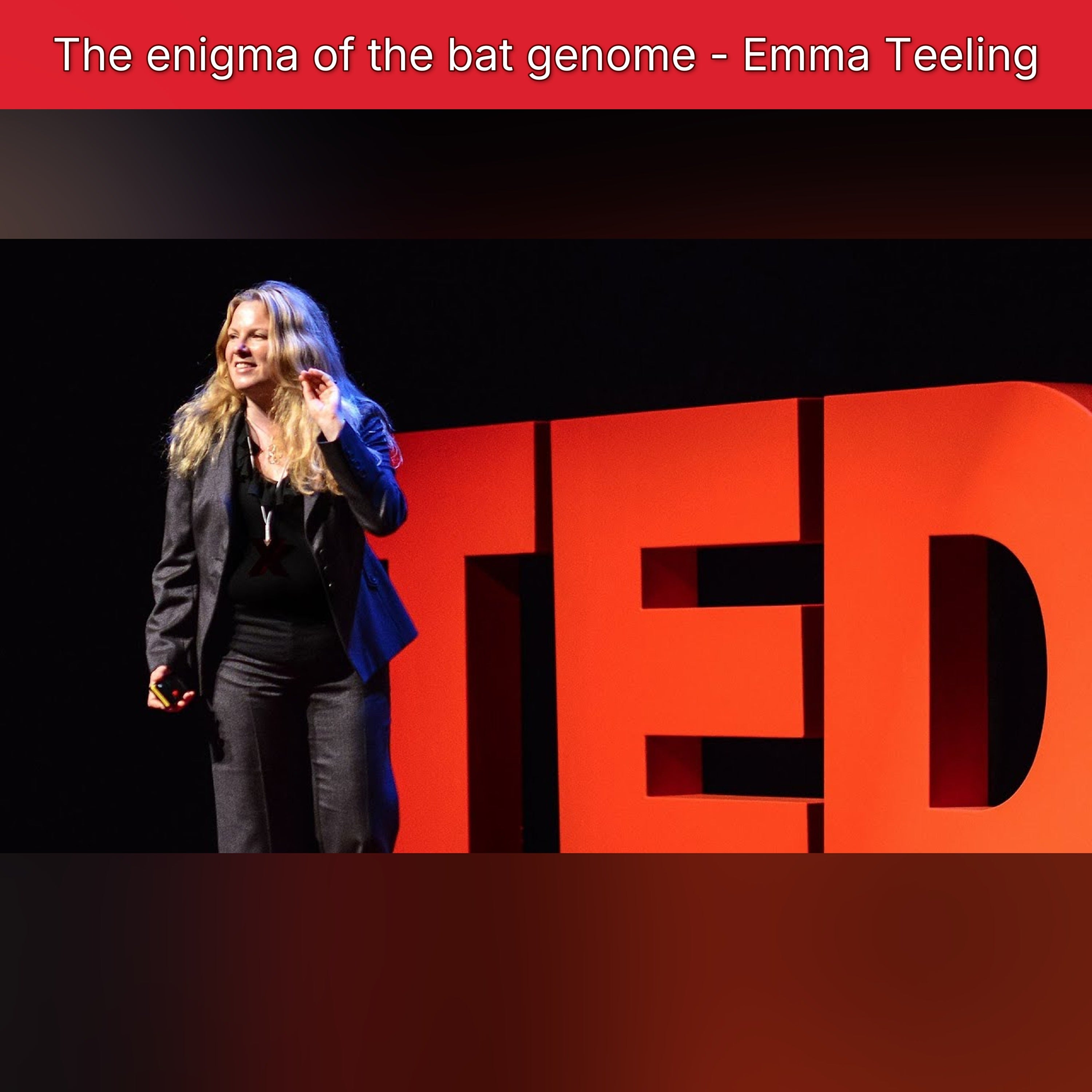
In Western society, bats are often characterized as creepy, even evil. Zoologist Emma Teeling encourages us to rethink our attitude toward bats, whose unique and fascinating biology gives us insight into our own genetic makeup. (Filmed at TEDxDublin.) Talk by Emma Teeling.
In her talk, longtime English teacher Patricia Ryan asks a provocative question: Is the world's focus on English preventing the spread of great ideas in other languages? (For instance: what if Einstein had to pass the TOEFL?) It's a passionate defense of translating and sharing ideas. (Filmed at TEDxDubai.) Uploaded 25-07-13 Talk by Patricia Ryan.
Take a look at the theories behind why earthquakes occur, what makes them so hard to predict and the warning system technologies we rely on today. Uploaded 08-04-19 -- In 132 CE, Zhang Heng presented his latest invention: a large vase he claimed could tell them whenever an earthquake occurred for hundreds of miles. Today, we no longer rely on pots as warning systems, but earthquakes still offer challenges to those trying to track them. Why are earthquakes so hard to anticipate, and how could we get better at predicting them? Jean-Baptiste P. Koehl investigates. Lesson by Jean-Baptiste P. Koehl, directed by Cabong Studios. Sign up for our newsletter: http://bit.ly/TEDEdNewsletter Support us on Patreon: http://bit.ly/TEDEdPatreon Find us on Twitter: http://bit.ly/TEDEdTwitter Peep us on Instagram: http://bit.ly/TEDEdInstagram View full lesson: https://ed.ted.com/lessons/why-are-earthquakes-so-hard-to-predict-jean-baptiste-p-koehl Thank you so much to our patrons for your support! Without
Uploaded 30-04-18 View full lesson: https://ed.ted.com/lessons/which-is-stronger-glue-or-tape-elizabeth-cox The oldest glue in the world is over 8,000 years old and comes from a cave near the Dead Sea. Today, we have enough types of tape and glue to build and repair almost anything. But what gives glue and tape their stickiness? And is one stronger than the other? Elizabeth Cox explores the world of adhesives. Lesson by Elizabeth Cox, animation by Sinbad Richardson. Thank you so much to our patrons for your support! Without you this video would not be possible! maxi kobi einy, Runarm, Misaki Sato, Levi Cook, Catherine Sverko, Robert Sukosd, Mark Morris, Tamás Drávai, Peter Liu, Leora Allen, Michal Salman, Julie Cummings-Debrot, Gilly, Ka-Hei Law, Aleksandar Srbinovski, Renhe Ji, Andrés Melo Gámez, Tim Leistikow, Moonlight , Megan Douglas, Barbara Smalley, Filip Dabrowski, Joe Giamartino, Clair Chen, Karen Goepen-Wee, Bryan Blankenburg, Bah Becerra, Stephanie Perozo, Marc Bilodeau, Ruby
View full lesson: http://ed.ted.com/lessons/mysteries-of-vernacular-dynamite-jessica-oreck-and-rachael-teel With an explosive meaning, the word dynamite's past is as historical as it is etymological. Jessica Oreck and Rachael Teel describe how Alfred Nobel invented dynamite. Lesson by Jessica Oreck and Rachael Teel, animation by Jessica Oreck.
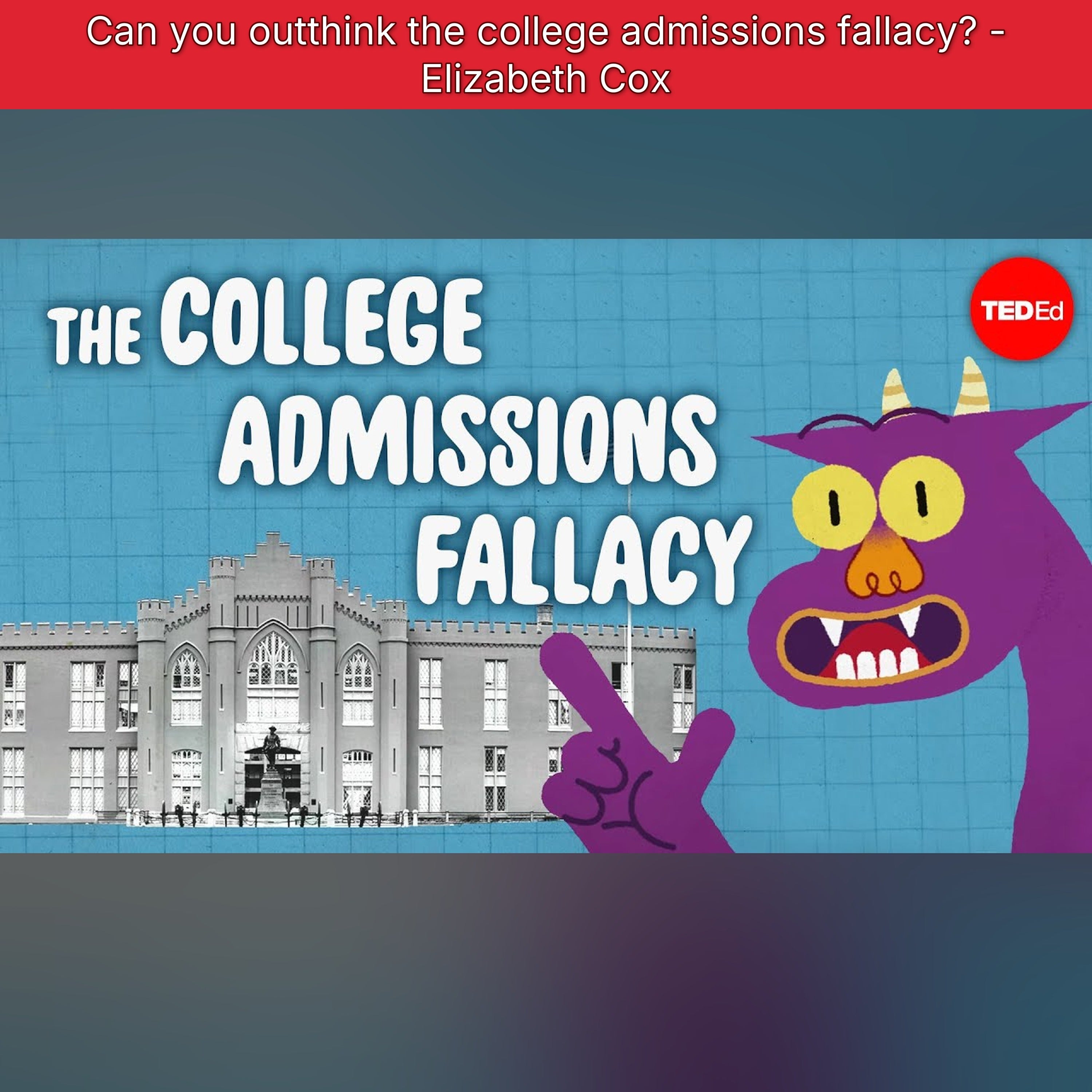
Explore the circular reasoning fallacy, which occurs when the end of an argument comes back to the start without having proven itself. -- It’s 1990. A prospective student has filed a complaint about Virginia Military institute’s admissions policy that excludes women. The state argues that VMI’s single sex education is an “important governmental objective” and that the exclusion of women from VMI is essential to that objective. Can you spot the problem with this argument? Elizabeth Cox explores the circular reasoning fallacy. Lesson by Elizabeth Cox, directed by TOGETHER. Support Our Non-Profit Mission ---------------------------------------------- Support us on Patreon: http://bit.ly/TEDEdPatreon Check out our merch: http://bit.ly/TEDEDShop ---------------------------------------------- Connect With Us ---------------------------------------------- Sign up for our newsletter: http://bit.ly/TEDEdNewsletter Find us on Twitter: http://bit.ly/TEDEdTwitter Peep us on Instagram: http://bit.l
View full lesson: http://ed.ted.com/lessons/the-emergence-of-drama-as-a-literary-art-mindy-ploeckelmann When presented with the problem of hoards of illiterate commoners, English clergymen in the 11th century created plays to spread word about the Bible. Eventually, the plays moved out of the church and into the streets. Mindy Ploeckelmann tracks the development of drama from mystery plays to morality plays and, eventually, to Shakespeare. Lesson by Mindy Ploeckelmann, animation by Johnny Chew.
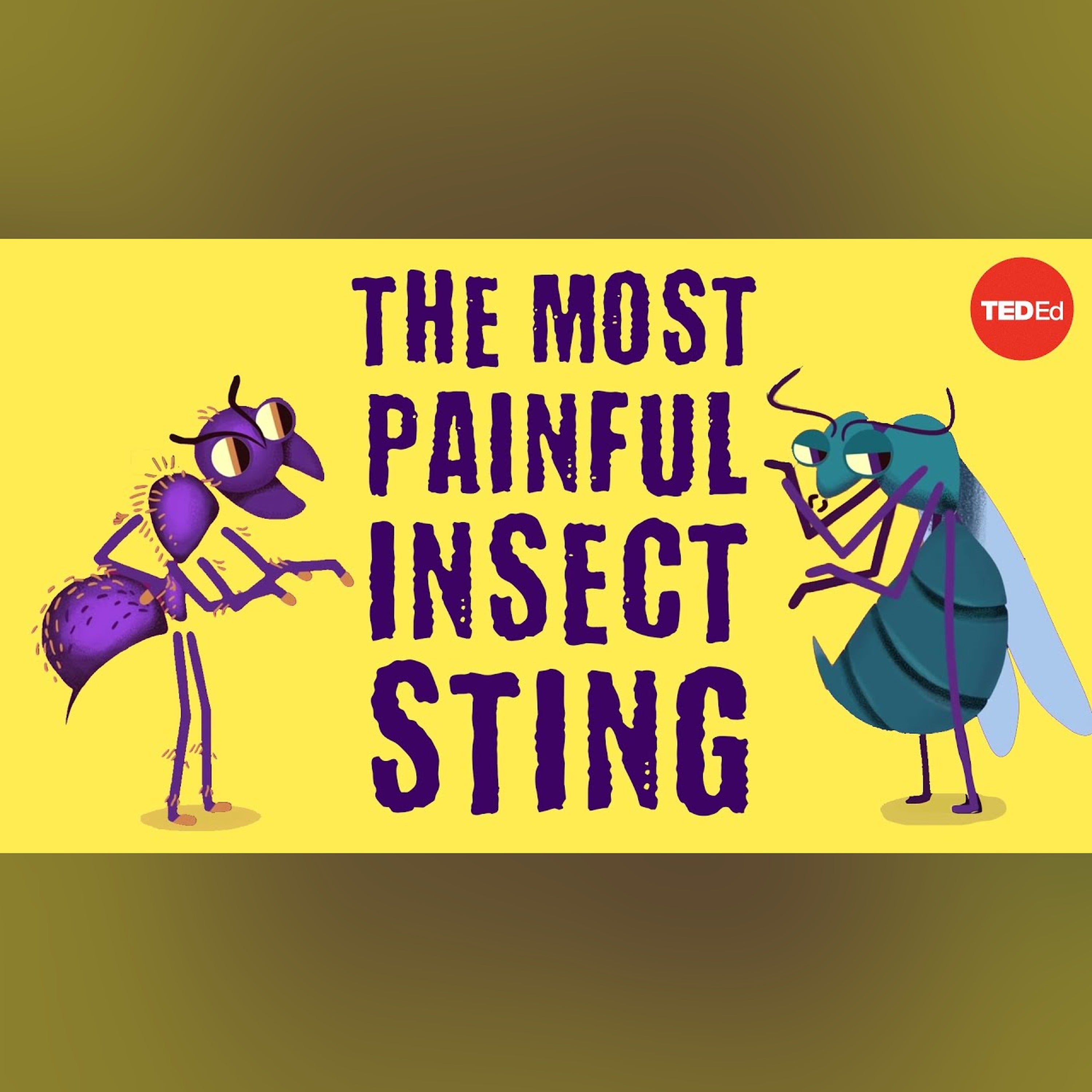
Find out whether a honeybee, a tarantula hawk wasp, or a bullet ant has the most painful insect sting, and what each of their stings feel like. Uploaded 19-04-21 -- One of these three creatures is thought to possess the world’s most painful insect sting: there’s an ant that forages in rainforest canopies, a bee that protects a hive of delectable honey, and a wasp that paralyzes tarantulas. So which has the nastiest sting? Justin Schmidt describes and ranks the pain inflicted by each insect. Lesson by Justin Schmidt, directed by Nicholas Paim, Alopra Studio. Support Our Non-Profit Mission ---------------------------------------------- Support us on Patreon: http://bit.ly/TEDEdPatreon Check out our merch: http://bit.ly/TEDEDShop ---------------------------------------------- Connect With Us ---------------------------------------------- Sign up for our newsletter: http://bit.ly/TEDEdNewsletter Find us on Twitter: http://bit.ly/TEDEdTwitter Peep us on Instagram: http://bit.ly/TEDEdInstagr
View full lesson: http://ed.ted.com/lessons/the-science-of-static-electricity-anuradha-bhagwat Uploaded 09-04-15 We’ve all had the experience: you’re walking across a soft carpet, you reach for the doorknob and … ZAP. But what causes this trademark jolt of static electricity? Anuradha Bhagwat sheds light on the phenomenon by examining the nature of matter. Lesson by Anuradha Bhagwat, animation by Artrake Studio.
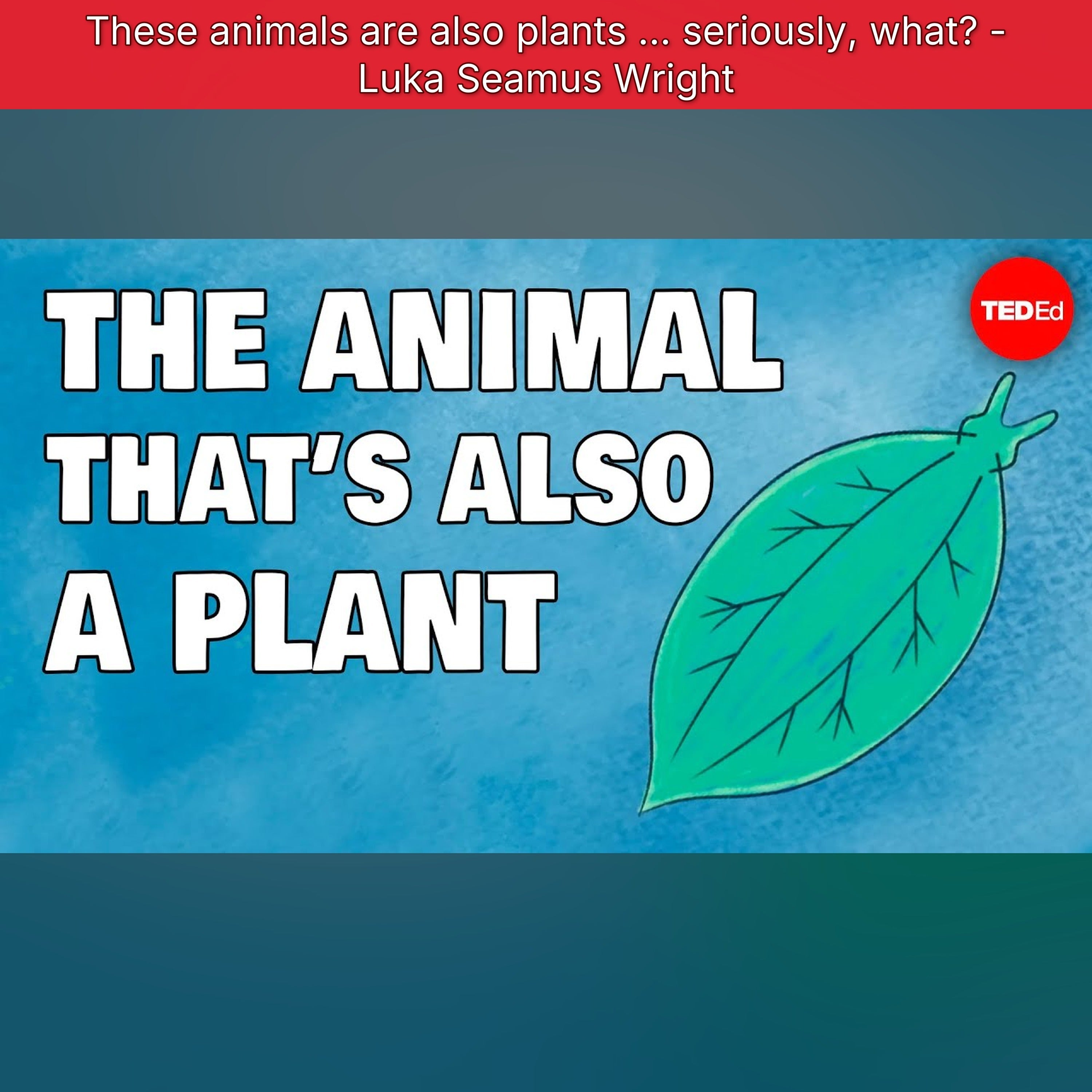
Explore the incredible adaptations of Elysia chlorotica, a species of sea slug that can photosynthesize food. -- The species of slug known as Elysia chlorotica may not look like much— it resembles a bright green leaf— but it’s one of the most extraordinary creatures on our planet. Living in marshes along the coast of North America, it can go about a year without eating. During that time, it lives like a plant. How is this possible? Luka Seamus Wright digs into the incredible adaptations of these mixotrophs. Lesson by Luka Seamus Wright, directed by Denis Chapon. Support Our Non-Profit Mission ---------------------------------------------- Support us on Patreon: http://bit.ly/TEDEdPatreon Check out our merch: http://bit.ly/TEDEDShop ---------------------------------------------- Connect With Us ---------------------------------------------- Sign up for our newsletter: http://bit.ly/TEDEdNewsletter Find us on Twitter: http://bit.ly/TEDEdTwitter Peep us on Instagram: http://bit.ly/TEDEdIn
Dig into how scientists are attempting to revive the functionally extinct northern white rhino through artificial reproduction. Uploaded 13-08-20 -- In the savannahs of Kenya, two female northern white rhinos, Nájin and Fatu, munch contentedly on grass. They are the last two known northern white rhinos left on Earth. Their species is functionally extinct— without a male, they can’t reproduce. And yet, there’s still hope to revive the northern white rhino. How can that be? Jan Stejskal dives into the science of reviving a dying species. Lesson by Jan Stejskal, directed by Denis Chapon. Animator's website: http://denischapon.com/ Producer's website: https://animationworkshop.via.dk/ Sign up for our newsletter: http://bit.ly/TEDEdNewsletter Support us on Patreon: http://bit.ly/TEDEdPatreon Find us on Twitter: http://bit.ly/TEDEdTwitter Peep us on Instagram: http://bit.ly/TEDEdInstagram View full lesson: https://ed.ted.com/lessons/the-last-living-members-of-an-extinct-species-jan-stejskal
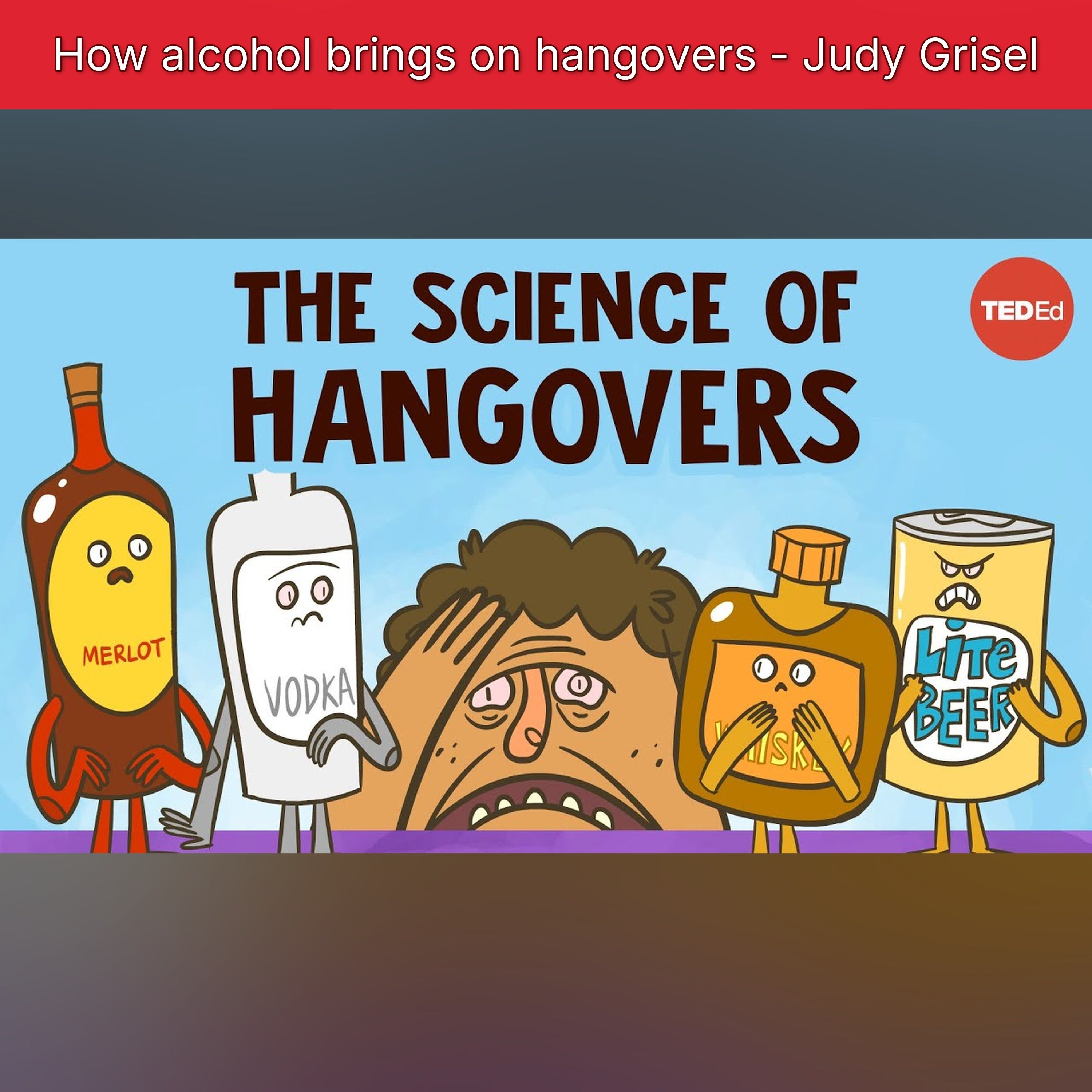
Discover how alcohol impacts your body’s processes and causes hangovers, and find out what causes the most common hangover symptoms. -- The molecule responsible for hangovers is ethanol, which we colloquially refer to as alcohol. Ethanol is present in all alcoholic beverages, and generally speaking, the more ethanol, the greater the potential for a hangover. So, how exactly does alcohol cause a hangover— and is there any way to prevent one? Judy Grisel explores the surprising ways that alcohol affects the body. Lesson by Judy Grisel, directed by Anton Bogaty. Support Our Non-Profit Mission ---------------------------------------------- Support us on Patreon: http://bit.ly/TEDEdPatreon Check out our merch: http://bit.ly/TEDEDShop ---------------------------------------------- Connect With Us ---------------------------------------------- Sign up for our newsletter: http://bit.ly/TEDEdNewsletter Find us on Twitter: http://bit.ly/TEDEdTwitter Peep us on Instagram: http://bit.ly/TEDEdInsta