Uploaded 01-02-18 View full lesson: https://ed.ted.com/lessons/what-happens-during-a-stroke-vaibhav-goswami Every two seconds, someone in the world has a stroke. One out of every six people will have a stroke at some point in their lives. Strokes deprive brain cells of oxygen and are one of the most common causes of death, and a leading cause of preventable disability. But what causes strokes in the first place? And what can doctors do to treat them? Vaibhav Goswami takes us into the body to find out. Lesson by Vaibhav Goswami, animation by Artrake Studio. Thank you so much to our patrons for your support! Without you this video would not be possible! John Saveland, Nicolle Fieldsend-Roxborough, Mridul Goswami, Venkat Venkatakrishnan, Sandy Nasser, CG Nobles, QIUJING L BU, Yoga Trapeze Wanderlust, Jaron Blackburn, Alejandro Cachoua, Thomas Mungavan, Elena Crescia, Edla Paniguel, Sarah Lundegaard, Charlsey, Anna-Pitschna Kunz, Tim Armstrong, Alessandro, Erika Blanquez, Ricki Daniel Marb
Explore the science of solar storms, and find out why they occur and just how prepared we are for a major event. -- In September 1859, miners following the Colorado gold rush woke up to another sunny day. Or so they thought. To their surprise, they soon discovered it was actually 1am and the sky wasn’t lit by the sun, but rather by brilliant drapes of light. The blazing glow was a solar storm— the largest in recorded history. So what exactly is a solar storm? Fabio Paccuci explains this astrophysical phenomena. Lesson by Fabio Pacucci, directed by Nick Hilditch. Support Our Non-Profit Mission ---------------------------------------------- Support us on Patreon: http://bit.ly/TEDEdPatreon Check out our merch: http://bit.ly/TEDEDShop ---------------------------------------------- Connect With Us ---------------------------------------------- Sign up for our newsletter: http://bit.ly/TEDEdNewsletter Find us on Twitter: http://bit.ly/TEDEdTwitter Peep us on Instagram: http://bit.ly/TEDEdIn
What are the origins of the Rorschach test and how does it work? Explore the inkblot tool psychologists use to test a subject’s perceptions and mental health. Uploaded 05-03-19 -- For nearly a century, ten inkblots have been used as an almost mystical personality test. Long kept confidential for psychologists and their patients, the mysterious images were said to draw out the workings of a person’s mind. But what can inkblots really tell us, and how does this test work? Damion Searls details how the Rorschach Test can help us understand the patterns of our perceptions. Lesson by Damion Searls, directed by Kozmonot Animation Studio. Sign up for our newsletter: http://bit.ly/TEDEdNewsletter Support us on Patreon: http://bit.ly/TEDEdPatreon Find us on Twitter: http://bit.ly/TEDEdTwitter Peep us on Instagram: http://bit.ly/TEDEdInstagram View full lesson: https://ed.ted.com/lessons/how-does-the-rorschach-inkblot-test-work-damion-searls Thank you so much to our patrons for your support! Wit
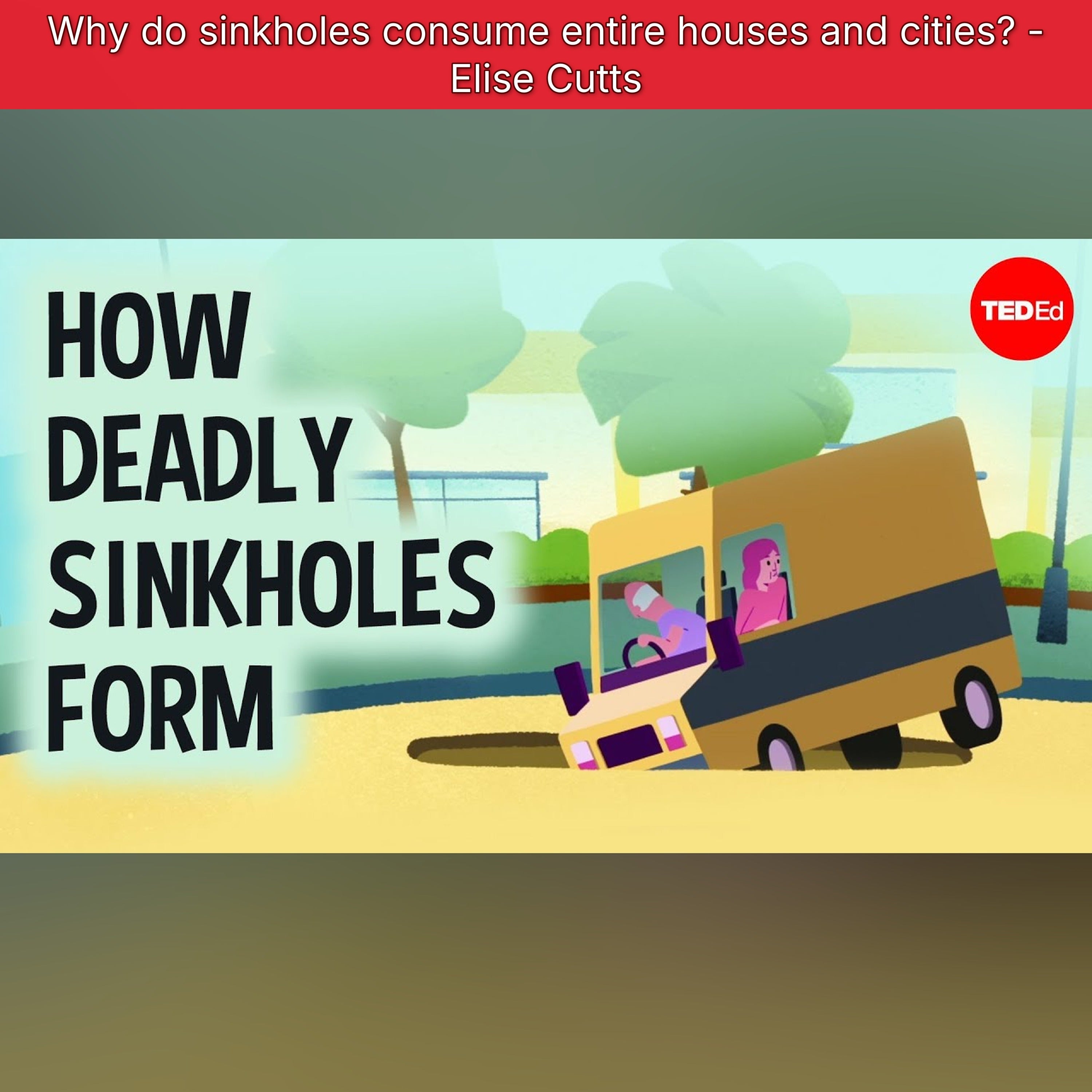
Explore the science of sinkholes, how they commonly form, and what human activities can also trigger them. -- It was a rainy December morning in San Francisco when the Earth opened up. The ground suddenly fell away into a 12-meter-deep sinkhole that engulfed a garage, part of a street, and a multi-million-dollar mansion. Sinkholes can seem to strike out of nowhere, but they’re more common than people often think. So, how do they form? Elise Cutts details what’s happening just below your feet. Lesson by Elise Cutts, directed by Evandro D'Hipolito. Support Our Non-Profit Mission ---------------------------------------------- Support us on Patreon: http://bit.ly/TEDEdPatreon Check out our merch: http://bit.ly/TEDEDShop ---------------------------------------------- Connect With Us ---------------------------------------------- Sign up for our newsletter: http://bit.ly/TEDEdNewsletter Find us on Twitter: http://bit.ly/TEDEdTwitter Peep us on Instagram: http://bit.ly/TEDEdInstagram --------
Most people instinctively avoid conflict, but as Margaret Heffernan shows us, good disagreement is central to progress. She illustrates (sometimes counterintuitively) how the best partners aren't echo chambers -- and how great research teams, relationships and businesses allow people to deeply disagree. Talk by Margaret Heffernan.
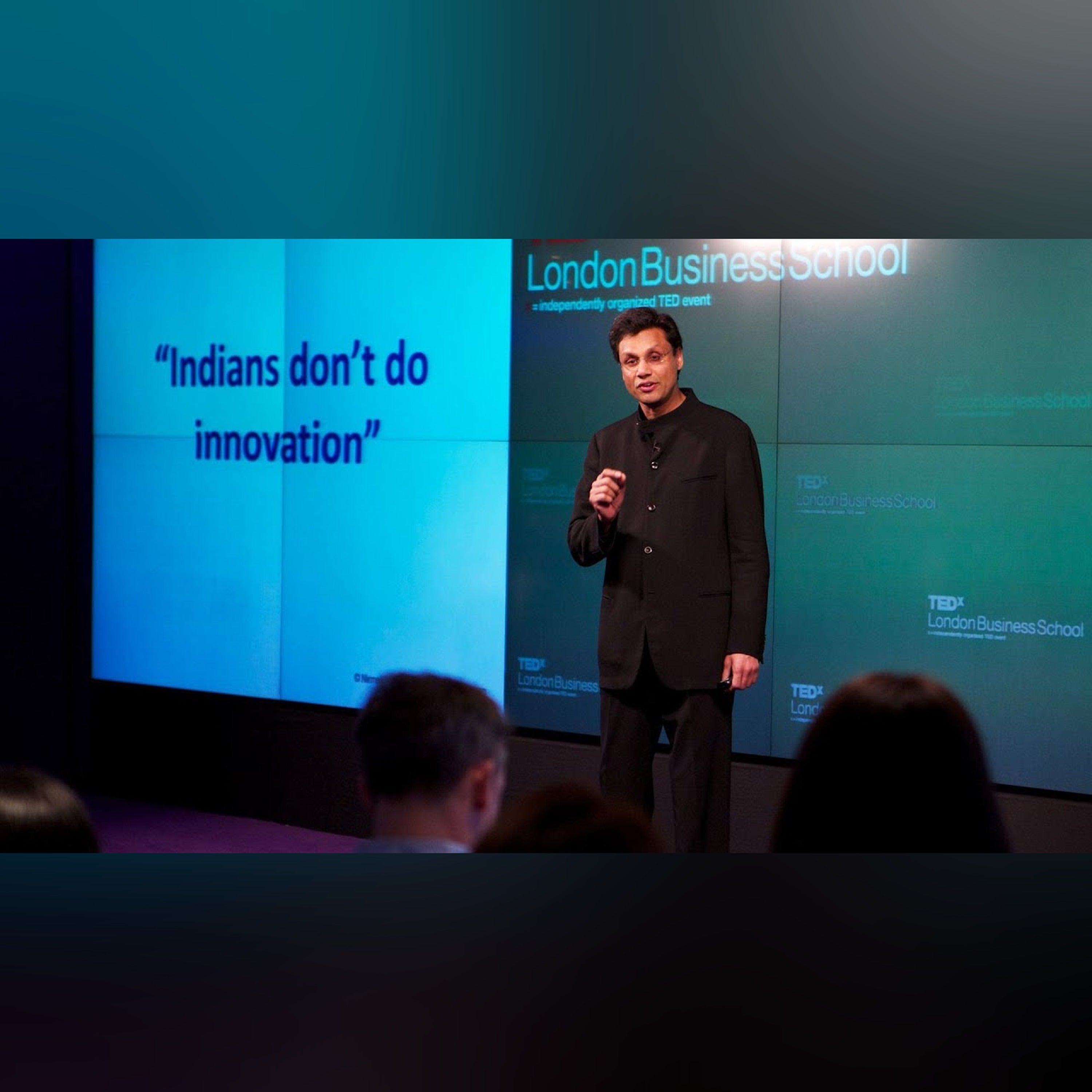
Can India become a global hub for innovation? Nirmalya Kumar thinks it already has. He details four types of "invisible innovation" currently coming out of India and explains why companies that used to just outsource manufacturing jobs are starting to move top management positions overseas, too. (Filmed at TEDxLondonBusinessSchool.) Uploaded 21-08-13 Talk by Nirmalya Kumar.
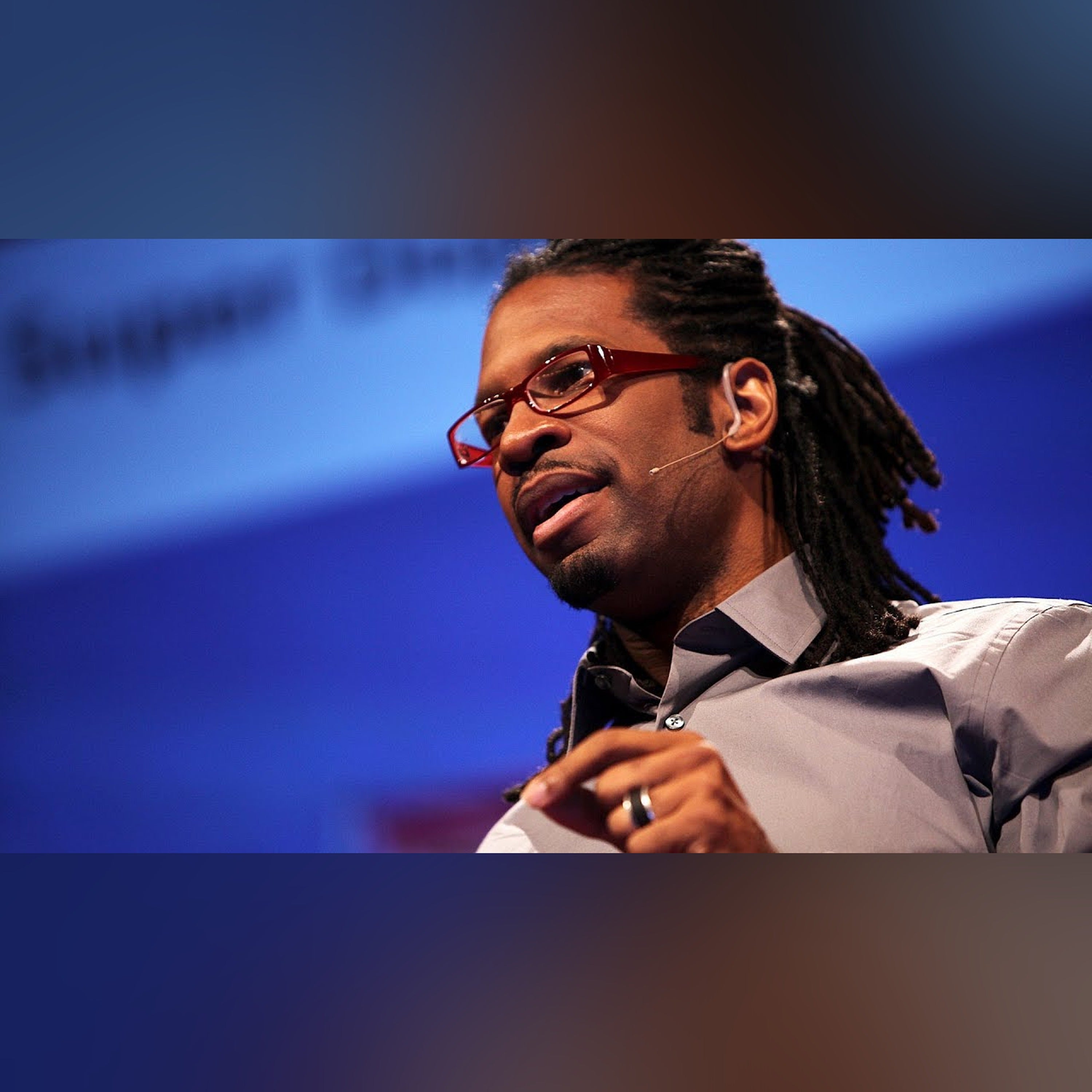
In a humorous talk with an urgent message, LZ Granderson points out the absurdity in the idea that there's a "gay lifestyle," much less a "gay agenda." (Filmed at TEDxGrandRapids.) Uploaded 21-08-13 Talk by LZ Granderson.
View full lesson: http://ed.ted.com/lessons/the-science-of-macaroni-salad-what-s-in-a-mixture-josh-kurz Uploaded 31-07-13 What's in macaroni salad? Break down the pasta, mayonnaise, vinegar, mustard, vegetables, etc., and you're left with a bunch of molecules. Josh Kurz uses a delicious recipe to exemplify three types of mixtures (solution, colloid and suspension), while reminding us that we're all made of the same stuff. Lesson and animation by Josh Kurz.
View full lesson: http://ed.ted.com/lessons/mysteries-of-vernacular-zero-jessica-oreck-and-rachael-teel Uploaded 01-08-13 Though the first written number system can be dated back to 2500 years ago in Mesopotamia, a zero-like symbol did not appear until 7th century CE India. Jessica Oreck and Rachael Teel track the evolution of zero from a dot to the symbol we use today, as well as the Arabic, Italian and French roots of the word. Lesson by Jessica Oreck and Rachael Teel, animation by Jessica Oreck.
Investigate the possibility of scanning the human brain and uploading our minds and consciousness to a digital world. Uploaded 28-10-19 -- Imagine a future where nobody dies— instead, our minds are uploaded to a digital world. There they could live on in a realistic, simulated environment with avatar bodies, calling in and contributing to the biological world. Mind-uploading has powerful appeal— but what would it actually take to scan a person’s brain and upload their mind? Michael S. A. Graziano explores the challenges. Lesson by Michael S. A. Graziano, directed by Lobster Studio. Animator's website: https://www.lobsterstudio.tv (https://www.lobsterstudio.tv/) Sign up for our newsletter: http://bit.ly/TEDEdNewsletter Support us on Patreon: http://bit.ly/TEDEdPatreon Find us on Twitter: http://bit.ly/TEDEdTwitter Peep us on Instagram: http://bit.ly/TEDEdInstagram View full lesson: https://ed.ted.com/lessons/how-close-are-we-to-uploading-our-minds-michael-s-a-graziano Thank you so much
View full lesson: http://ed.ted.com/lessons/making-sense-of-spelling-gina-cooke What can spelling tell us about relationships between words? While spelling may sometimes seem random or unexpected, this lesson illuminates how peeling back the layers of spelling helps us understand the complex history and meaningful structure of words. Lesson by Gina Cooke, animation by The Leading Sheep (http://www.theleadingsheep.com). (http://www.theleadingsheep.com)./)
View full lesson: http://ed.ted.com/lessons/what-gives-a-dollar-bill-its-value-doug-levinson Uploaded 23-06-14 The value of money is determined by how much (or how little) of it is in circulation. But who makes that decision, and how does their choice affect the economy at large? Doug Levinson takes a trip into the United States Federal Reserve, examining how the people who work there aim to balance the value of the dollar to prevent inflation or deflation. Lesson by Doug Levinson, animation by Qa'ed Mai.
View full lesson: http://ed.ted.com/lessons/how-to-make-a-mummy-len-bloch Uploaded 18-06-15 As anyone who’s seen a mummy knows, ancient Egyptian priests went to a lot of trouble to evade decomposition. But how successful were they? Len Bloch details the mummification process and examines its results thousands of years later. Lesson by Len Bloch, animation by The Moving Company Animation Studio.
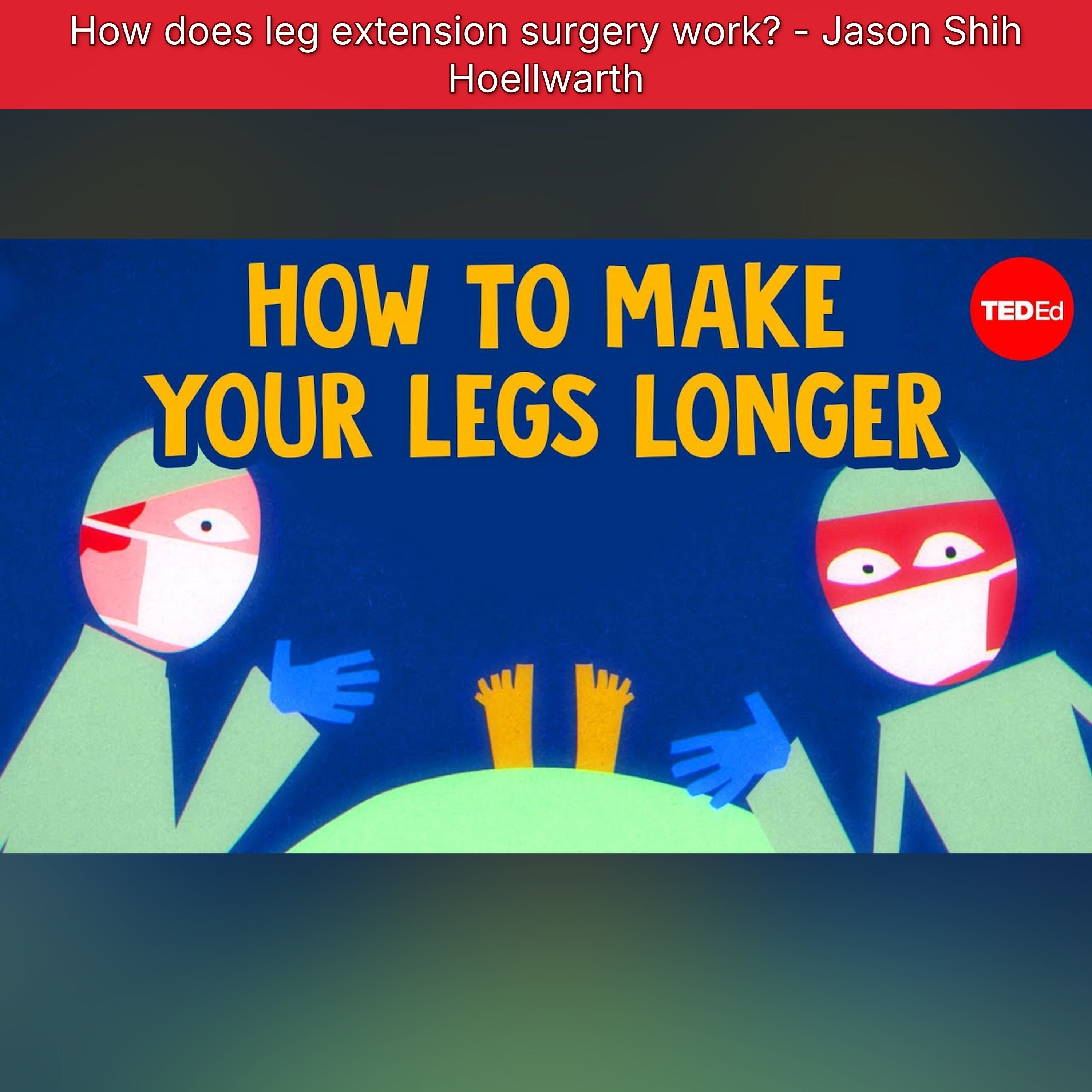
Explore the science of bone lengthening surgery, and discover the benefits and limitations of this still-developing technology. -- Differences in leg length can emerge for various reasons, from genetic and hormonal conditions to injuries that impact bone growth. But while we still don’t know exactly what degree of difference causes health issues, doctors have made great strides in figuring out how to even out these mismatched limbs. Jason Shih Hoellwarth digs into the benefits and limitations of bone lengthening surgery. Lesson by Jason Shih Hoellwarth, directed by Igor Ćorić, Artrake Studio. Support Our Non-Profit Mission ---------------------------------------------- Support us on Patreon: http://bit.ly/TEDEdPatreon Check out our merch: http://bit.ly/TEDEDShop ---------------------------------------------- Connect With Us ---------------------------------------------- Sign up for our newsletter: http://bit.ly/TEDEdNewsletter Find us on Twitter: http://bit.ly/TEDEdTwitter Peep us on I
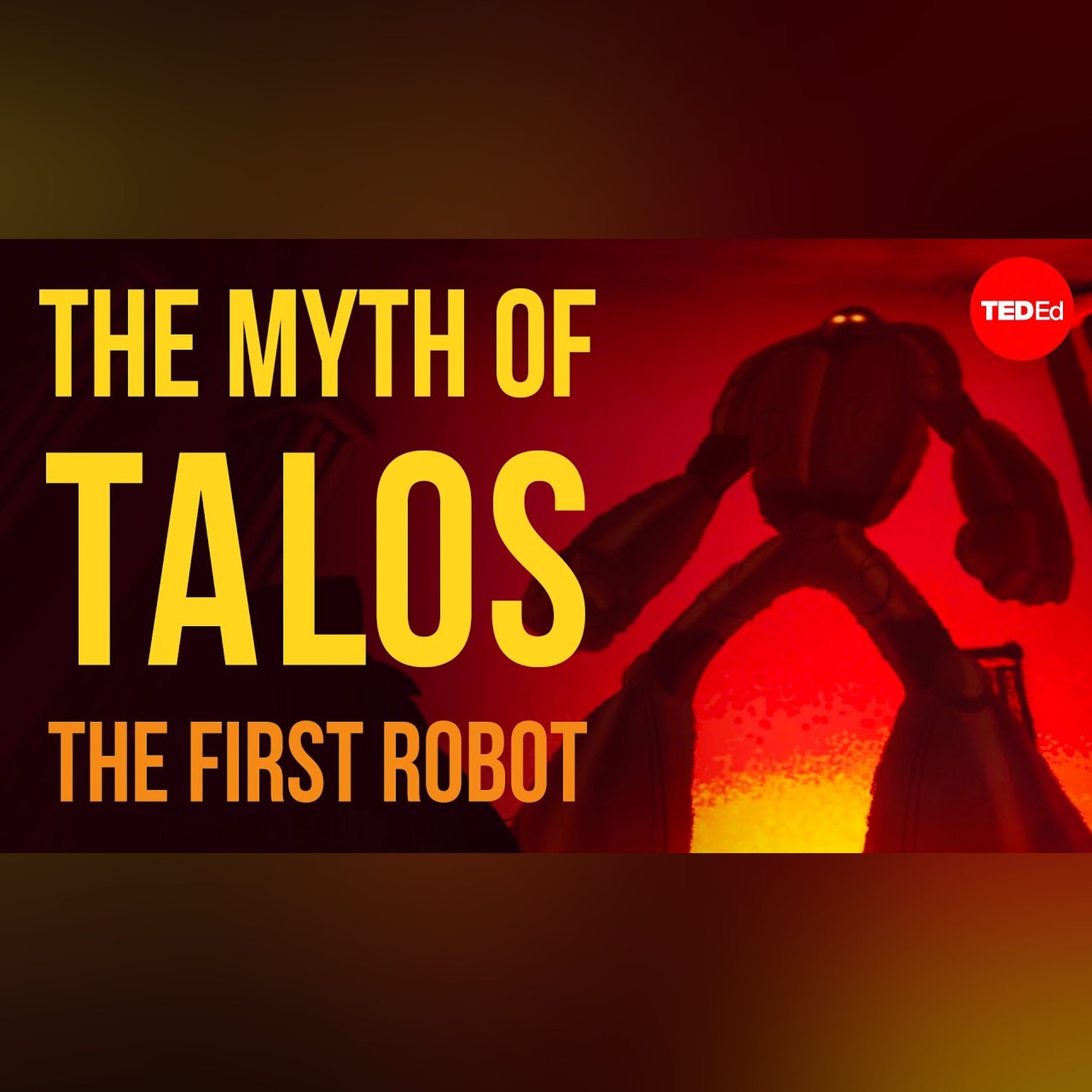
Get to know the myth of Talos, a robot powered by ichor and created by Hephaestus to defend the island kingdom of Crete from intruders. Uploaded 24-10-19 -- Hephaestus, god of technology, was hard at work on his most ingenious invention yet. He was creating a new defense system for King Minos, who wanted fewer intruders on his island kingdom of Crete. But mortal guards and ordinary weapons wouldn’t suffice, so the visionary god devised an indomitable new defender. Adrienna Mayor dives into the myth of Talos: the first robot. Lesson by Adrienne Mayor, directed by Cabong Studios. Animator's website: https://www.cabongstudios.com.br (https://www.cabongstudios.com.br/) Sign up for our newsletter: http://bit.ly/TEDEdNewsletter Support us on Patreon: http://bit.ly/TEDEdPatreon Find us on Twitter: http://bit.ly/TEDEdTwitter Peep us on Instagram: http://bit.ly/TEDEdInstagram View full lesson: https://ed.ted.com/lessons/the-greek-myth-of-talos-the-first-robot-adrienne-mayor Thank you so much to
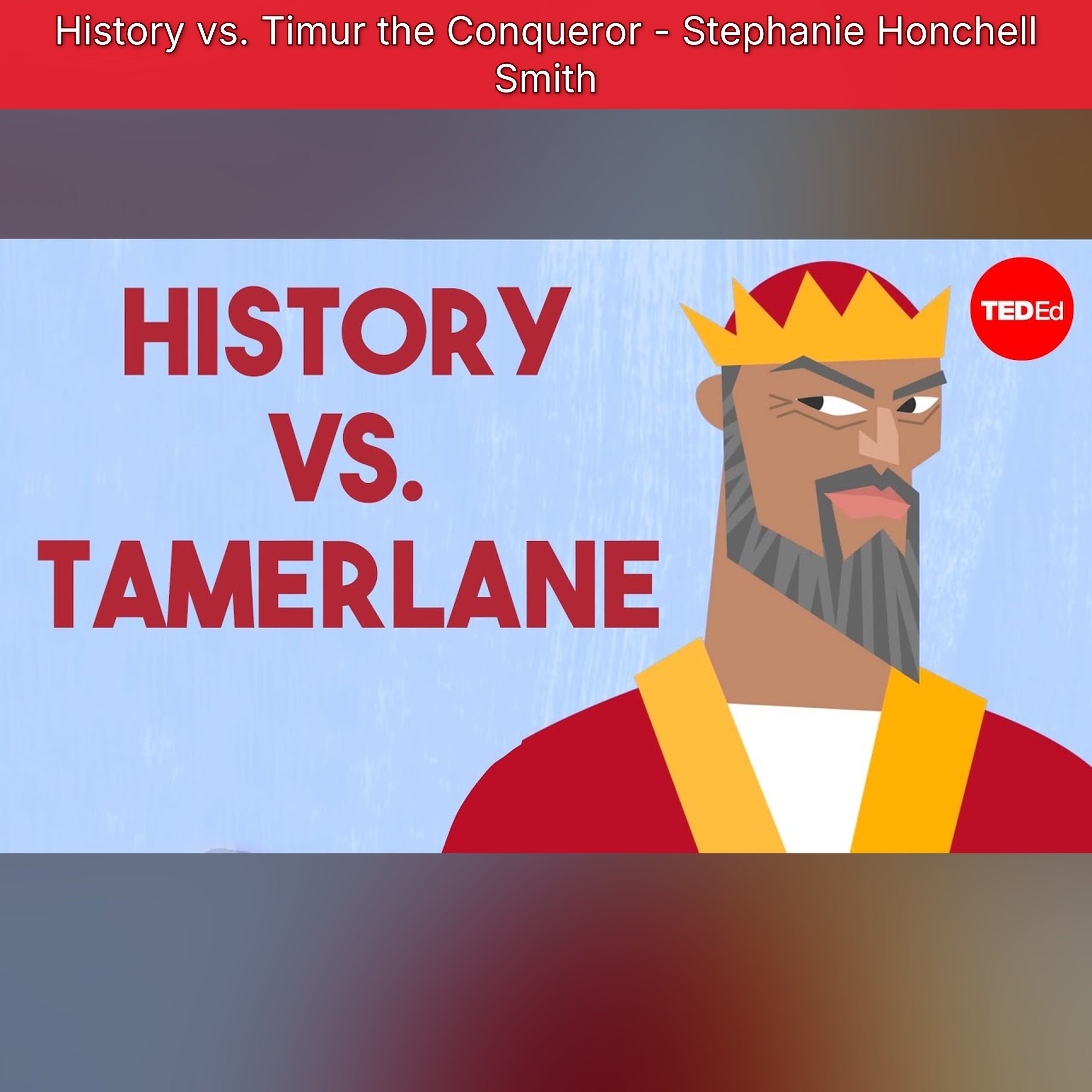
Tamerlane was one of history’s greatest conquerors— but was he a great state builder or a bloodthirsty tyrant? You decide. -- He was born in the 1330s in the Chaghatayid Khanate, formerly the Mongol Empire. On the steppe, he rose from a lowly sheep thief to become one of history’s greatest conquerors, uniting nearly all of Central Asia, Afghanistan, and Iran under his rule. But was he a great state builder or a bloodthirsty tyrant? Stephanie Honchell Smith puts this controversial figure on trial in History vs. Tamerlane. Lesson by Stephanie Honchell Smith, directed by Brett Underhill, PorkchopBob Studio. Support Our Non-Profit Mission ---------------------------------------------- Support us on Patreon: http://bit.ly/TEDEdPatreon Check out our merch: http://bit.ly/TEDEDShop ---------------------------------------------- Connect With Us ---------------------------------------------- Sign up for our newsletter: http://bit.ly/TEDEdNewsletter Find us on Twitter: http://bit.ly/TEDEdTwitter
How do you tell women's stories? Ask women to tell them. At TEDxABQ, Megan Kamerick shows how the news media underrepresents women as reporters and news sources, and because of that tells an incomplete story. (Filmed at TEDxABQ.) Uploaded 21-08-13 Talk by Megan Kamerick.
View the full lesson here: http://ed.ted.com/lessons/michael-mitchell-a-clever-way-to-estimate-enormous-numbers Have you ever tried to guess how many pieces of candy there are in a jar? Or tackled a mindbender like: "How many piano tuners are there in Chicago?" Physicist Enrico Fermi was very good at problems like these -- learn how he used the power of 10 to make amazingly fast estimations of big numbers. Lesson by Michael Mitchell, animation by Mark Phillips.
Get to know the Japanese legend of Hōichi the earless, a monk summoned by a mysterious samurai to perform songs of past battles. -- Long ago, a temple was built near the site of a naval battle that concluded the long and gruesome conflict known as the Genpei Wars. For centuries after, performers throughout the country honored this tragic past in beautiful, haunting performances. But the most skilled storyteller of all was a monk from this very temple. Jeffrey Angles digs into the Japanese legend of Hōichi the earless. Lesson by Jeffrey Angles, directed by Masayoshi Nakamura, Good General. Music and sound design by Zak Engel. Support Our Non-Profit Mission ---------------------------------------------- Support us on Patreon: http://bit.ly/TEDEdPatreon Check out our merch: http://bit.ly/TEDEDShop ---------------------------------------------- Connect With Us ---------------------------------------------- Sign up for our newsletter: http://bit.ly/TEDEdNewsletter Find us on Twitter: http:/
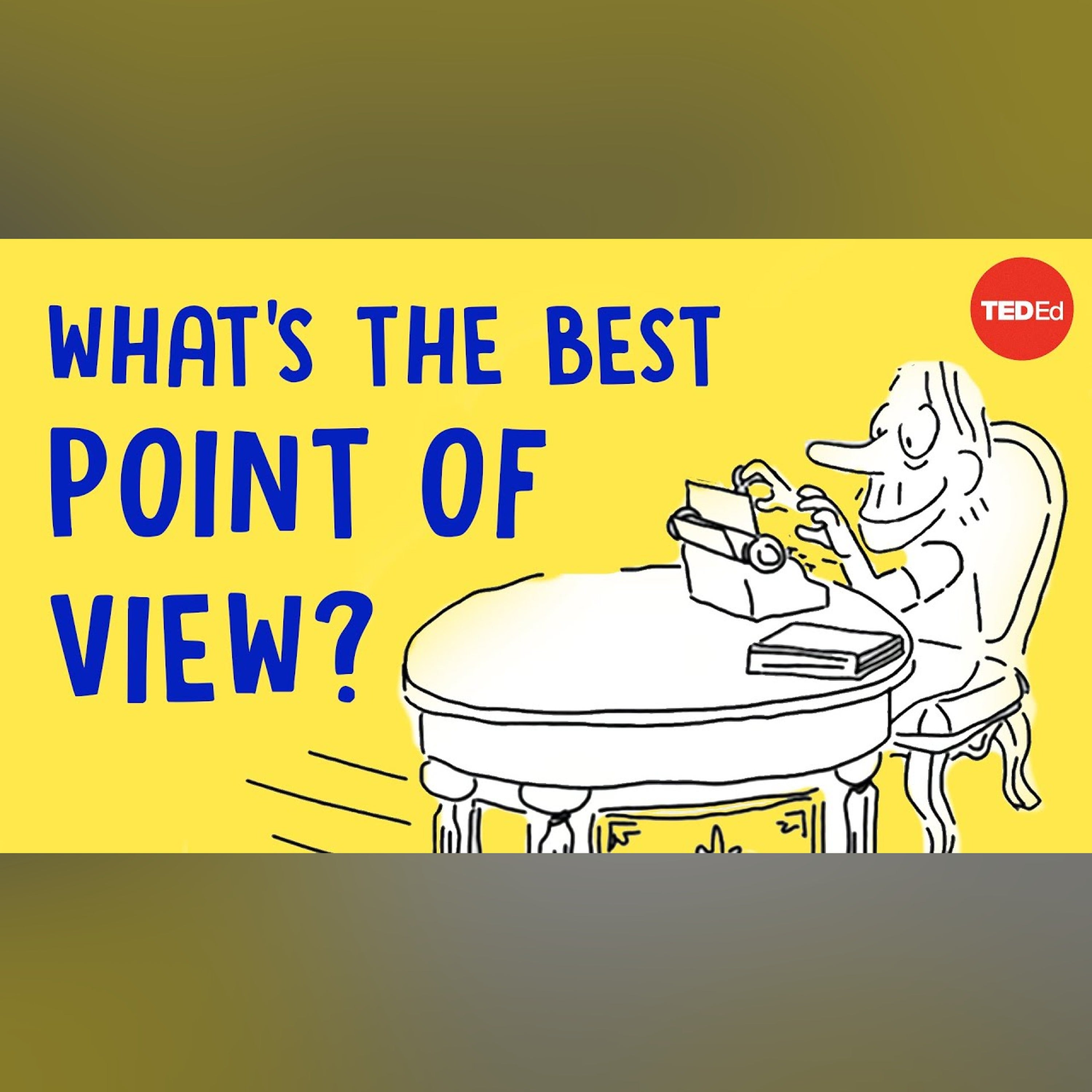
Discover how point of view can transform a story, and find out how to choose between first, second, and third person in your writing. Uploaded 25-06-20 -- Who is telling a story, and from what perspective, are some of the most important choices an author makes. Told from a different point of view, a story can transform completely. Third person, first person, and second person perspectives each have unique possibilities and constraints. So how do you choose a point of view for your story? Rebekah Bergman explores the different ways to focus a story. Lesson by Rebekah Bergman, directed by Gibbons Studio. Animator's website: http://www.gibbonsstudio.net/ Sign up for our newsletter: http://bit.ly/TEDEdNewsletter Support us on Patreon: http://bit.ly/TEDEdPatreon Find us on Twitter: http://bit.ly/TEDEdTwitter Peep us on Instagram: http://bit.ly/TEDEdInstagram View full lesson: https://ed.ted.com/lessons/first-person-vs-second-person-vs-third-person-rebekah-bergman Thank you so much to our pa
Explore the haunting and intimate works of poet Sylvia Plath, who digs into issues of mental health, trauma and sexuality in works like “The Bell Jar.” Uploaded 07-03-19 -- Under her shrewd eye and pen, Sylvia Plath turned everyday objects into haunting images: a “new statue in a drafty museum,” a shadow in a mirror, a slab of soap. Her breathtaking perspectives and unflinching language made her a touchstone for readers seeking to break the silence around issues of trauma, frustration and sexuality. Iseult Gillespie shares why Plath's writing continues to captivate. Lesson by Iseult Gillespie, directed by Sarah Saidan. Sign up for our newsletter: http://bit.ly/TEDEdNewsletter Support us on Patreon: http://bit.ly/TEDEdPatreon Find us on Twitter: http://bit.ly/TEDEdTwitter Peep us on Instagram: http://bit.ly/TEDEdInstagram View full lesson: https://ed.ted.com/lessons/why-should-you-read-sylvia-plath-iseult-gillespie Thank you so much to our patrons for your support! Without you this vide
Discover the incredible ways elephants use their trunks to sense and communicate information and emotion. Uploaded 15-03-21 -- As a breeze blows through the savannah, a snake-shaped tube stretches into the air and scans the horizon like a periscope. But it’s not seeing— it’s sniffing. Containing no bones and an estimated 40,000 muscles, an elephant trunk is one of the most versatile tools in the animal kingdom. Chase LaDue and Bruce Schulte detail the incredible capabilities of these agile appendages. Lesson by Chase LaDue and Bruce A. Schulte, directed by Petya Zlateva. Support Our Non-Profit Mission ---------------------------------------------- Support us on Patreon: http://bit.ly/TEDEdPatreon Check out our merch: http://bit.ly/TEDEDShop ---------------------------------------------- Connect With Us ---------------------------------------------- Sign up for our newsletter: http://bit.ly/TEDEdNewsletter Find us on Twitter: http://bit.ly/TEDEdTwitter Peep us on Instagram: http://bit.l
Uploaded 05-02-18 View full lesson: https://ed.ted.com/lessons/how-did-teeth-evolve-peter-s-ungar You may take them for granted, but your teeth are a marvel. They break up all your food over the course of your life, while being strong enough to withstand breakage themselves. How do they do it? Peter S. Ungar traces the evolution of mammalian molars from primitive cone-like structures to the myriad forms of today’s species, from lions to cows to people. Lesson by Peter S. Ungar, animation by Cabong Studios. Thank you so much to our patrons for your support! Without you this video would not be possible! Jordan Tang, Christopher Jimenez, Juan, Tracey Tobkin, Sid, emily lam, Kathryn J Hammond, Elliot Poulin, Noel Situ, Oyuntsengel Tseyen-Oidov, Latora Slydell, Sydney Evans, Victor E Karhel, Bernardo Paulo, Eysteinn Guðnason, Olivier Brunel, Andrea Feliz, Natalia Rico, Josh Engel, Bárbara Nazaré, Gustavo Mendoza, Zhexi Shan, Hugo Legorreta, Steph, PnDAA , Marcel Trompeter-Petrovic, Sandra T
Get to know the myth of the weaver and the cowherd, a pair of star-crossed lovers banished to opposite sides of the Milky Way. -- In the court of the Jade Emperor, a young princess had a special skill: she could pluck clouds from the sky and spin them into the softest robes. But her craft was the same day after day, and she longed for new inspiration. So the Queen Mother granted her permission to visit Earth. The weaver soon fell in love with the land— and a cowherd. Shannon Zhao details the myth of the star-crossed lovers. Lesson by Shannon Zhao, directed by brume. Support Our Non-Profit Mission ---------------------------------------------- Support us on Patreon: http://bit.ly/TEDEdPatreon Check out our merch: http://bit.ly/TEDEDShop ---------------------------------------------- Connect With Us ---------------------------------------------- Sign up for our newsletter: http://bit.ly/TEDEdNewsletter Find us on Twitter: http://bit.ly/TEDEdTwitter Peep us on Instagram: http://bit.ly/TED