Liberty and the rights of individuals form the backbone of American politics. But what is “liberty” anyway? In this episode of Crash Course Political Theory, we learn the fundamentals of Classical Liberalism and how 17th-century philosophers impact politics today. Crash Course Political Theory #2 Introduction: Is Democracy Broken? 00:00 Classical Liberalism 00:37 Modern Liberalism 04:03 Negative & Positive Liberty 07:02 Liberalism & Identity 09:53 Review & Credits 11:28 Sources: https://docs.google.com/document/d/1u5zJCbVA0xCurLbQwWzcxXEdlqXAPpAyYVS1quwKIis/edit?usp=sharing *** Support us for $5/month on Patreon to keep Crash Course free for everyone forever! https://www.patreon.com/crashcourse Or support us directly: https://complexly.com/support Join our Crash Course email list to get the latest news and highlights: https://mailchi.mp/crashcourse/email Get our special Crash Course Educators newsletter: http://eepurl.com/iBgMhY Thanks to the following patrons for their generous monthl
This challenges the difference between looking good and actually becoming good. It is possible to build a reputation around kindness, honesty, generosity or spirituality while privately behaving in ways that contradict those values. Social media makes this even easier. People can carefully manage what others see, displaying generosity without compassion, religious knowledge without humility, and public kindness without private integrity. But character is not what people applaud you for. It is who you are when there is no audience, no recognition and no reward. Every contribution counts. Thank you for being part of our journey!
The real test of our prayer isn't how extraordinary the experience feels, but whether it bears good fruit in our lives and helps us faithfully live out our responsibilities. Sr. Katie Flanagan reminds us that God meets us not only in the chapel, but in the ordinary moments of everyday life. Today, we read The Fourth Dwelling Places: Chapter 3.
Have you ever criticised someone for doing something, only to find yourself doing exactly the same thing years later? Sometimes, the behaviour we judge most harshly in others is the very weakness we fail to recognise in ourselves. In Romans 2:1–3, Paul challenges people who condemn others while practising the same things themselves. Similarly, in Matthew 7:1–5, Jesus uses the illustration of a person trying to remove a speck from another person's eye while having a plank in their own. Both passages expose the danger of self-righteousness. It is easy to recognise dishonesty, pride, irresponsibility or hypocrisy in someone else, but much harder to acknowledge those same tendencies in ourselves. Sometimes, life changes our circumstances, and we discover that the things we once judged are more complicated than we understood. Every contribution counts. Thank you for being part of our journey!
Horses (Equus caballus) are classified as odd-toed ungulates; modern equines support their body weight on a single enlarged middle toe encased in a tough keratin hoof wall, an evolutionary trait tracing back roughly 50 million years to the small, multi-toed Eohippus of North America. Although horses vanished from the Americas between 10,000 and 8,000 years ago due to climate shifts and prehistoric hunting, surviving Eurasian populations flourished and were domesticated before Spanish explorers reintroduced them to the Western Hemisphere in the late 15th and early 16th centuries. Historically central to agriculture and early transportation, horses inspired James Watt's standard definition of horsepower—the capacity to lift 33,000 foot-pounds of work per minute—even though a single draft horse can generate peak outputs approaching 15 horsepower during brief, explosive efforts. Equine physiology features unique sensory and biomechanical systems optimized for vigilance and survival as open
Learn how to weigh dental, vision, life and disability coverage, and what a cheaper home far from loved ones could cost. Is supplemental insurance worth paying for? Hosts Sean Pyles, CFP®, and Elizabeth Ayoola, in the second of our episodes about Open Enrollment season, talk with Victoria Collar, director of knowledge, community and operations at SHRM (the Society for Human Resource Management), about the benefits that often get overlooked: dental, vision, life and disability coverage. They discuss how dental PPOs, DHMOs, indemnity plans and discount plans differ, when bundling dental and vision could save you money, and why waiting periods and annual maximums matter. You’ll also hear why employer-provided life insurance may fall short, how short-term and long-term disability coverage work together, and what hospital indemnity, critical illness and cancer insurance actually pay for. Then we ask: what does it really cost to live far from your people? Senior news writer Anna Helhoski and
Everyone knows that practice makes perfect. Or does it? Practicing is certainly important when you're trying to master something new, but research suggests there's another ingredient that can make practice far more effective. And the surprising part is that it involves not practicing. It turns out that what you do between practice sessions may be just as important as the practice itself. https://www.health.harvard.edu/mind-and-mood/take-short-breaks-to-maximize-memory-and-learning We tend to think great innovations happen when brilliant people have brilliant ideas. But the real stories are often much stranger. Accidents, spectacular failures, and discoveries that almost never happened have changed the world in remarkable ways. So what really drives innovation, and where might the next big breakthrough come from? Andrew Leigh, former economics professor at the Australian National University and Australia's Assistant Minister for Productivity, Competition, Charities and Treasury, joins m
Jillionaire Dylan is 23, lives at home, works two jobs, and has managed to save $100,000. So, what should he do with it? Jill and Mark weigh in on whether he should buy property, invest his cash, or keep saving, and why buying real estate just for the sake of owning it might not be the smartest move. Have a money question? Email us here. (https://www.jillonmoney.com/contact)
A case goes wrong. There is a complication, maybe a lawsuit, and suddenly the question is not just what happened in the room. It is what got recorded, who owns it, what a plaintiff's attorney can pull into discovery, and whether that same pile of data is a target for people who want to steal it. Join Drs. Scott Steele, Mason Pearce, and Teodor Grantcharov, the surgeon who built the OR Black Box, as they walk through what an instrumented operating room actually captures, why peer review privilege protects the review and not the facts, how AI outputs create a new evidentiary layer, and why cybersecurity is a patient safety issue. The surprising part: governed recording more often protects surgeons than exposes them. Hosts: Scott Steele, MD, MBA, Colon and Rectal Surgeon; President, Cleveland Clinic Main Campus Mason Pearce, MD, General Surgery Resident and Clinical Informatics Fellow, University of South Florida; Behind the Knife Education Fellow Teodor Grantcharov, MD, PhD, Professor of
Rev. Ike (https://www.revikelegacy.com/) shares a bold lesson on taking charge of what goes into your mind. In this spirited sermon, he explains why the only person you need to convince is yourself, how he launched a multi-million dollar ministry while collecting $30 a week in unemployment, and the one thing your conscious mind should never be used for. This episode will challenge you to decide what you want and let go of how. Source: Who Really Controls Your Subconscious Mind? Rev. Ike's Control Your Life Teaching (https://youtu.be/Duhdl8Q2FHI?si=-fYc9_VLcLYUxscQ) Hosted by Sean Croxton (https://seancroxton.com/) Follow me on Instagram (https://www.instagram.com/seancroxton/)
Get the 200+ Page Optimal Living Daily Workbook (PDF) - Free. Want to turn today's episode into an actionable plan? Episode 3759: A Purple Life explains why she stopped chasing fleeting bursts of happiness and made lasting contentment her life goal instead, drawing on ideas from Morgan Housel's book The Art of Spending. She shares how the expensive milestones she once expected to make her happy never did, and how pursuing financial independence and early retirement let her focus her money and time on the people and simple moments that bring enduring joy. Read along with the original article(s) here: https://apurplelife.com/2026/04/21/contentment-not-happiness/ Quotes to ponder: "I've tried chasing happiness and it was a fool's errand." "I was chasing a high when I should have been chasing contentment." "Contentment is a constant underlying warmth that's always with me."
Download a free audiobook version of “The Lord of the Rings: The Fellowship of the Ring“ and support TED-Ed's nonprofit mission: https://www.audible.com/ted-ed -- More than 2,000 years ago, the Greek philosopher Plato recounted the legend of the Ring of Gyges in “Republic.” The story of the ring surfaces as the philosopher, Socrates, and his student discuss why people act justly: is it because it’s what’s right? Or because it’s a convention that’s enforced through punishment and reward? Alex Gendler shares the allegory of the ill-gotten, magical ring. Lesson by Alex Gendler, directed by Vitalii Nebelskyi. Learn more about how TED-Ed partnerships work: https://bit.ly/TEDEdPartners Support Our Non-Profit Mission ---------------------------------------------- Support us on Patreon: http://bit.ly/TEDEdPatreon Check out our merch: http://bit.ly/TEDEDShop ---------------------------------------------- Connect With Us ---------------------------------------------- Sign up for our newsletter:
What if the hardest moments of your life aren't happening to you, but happening for you? In this episode, I want to show you how to shift from a victim mindset to a student mindset, find the lessons hidden in life's biggest challenges, and use adversity to build resilience and personal growth. I'll help you ask better questions, rewire your thinking, and turn even your most painful experiences into the breakthroughs that move your life forward. think about money and build a plan to earn more in 2027. Save your free spot: https://2026workshop.com direction, and focus in life. Rich Roll, and Dr. Steven Gundry. Hosted by Simplecast, an AdsWizz company. See https://pcm.adswizz.com advertising.
This week, Vee and Elle welcome back Priestess Francesca (https://priestessfrancesca.com/) for her fourth appearance on Girls Gone Deep, making her the show’s first-ever four-time guest!! ...and somehow, she still finds new ways to shock them. Francesca spills on returning to submission after four years, the deep throat training regimen that earned her “throat goat” status, and a gag reflex breathing hack that genuinely changes the game in real time as Vee tries deep throating a vibrator on-air. They also get into hiring sex workers to learn sexual skills, “good girl” praise vs. being called an impressive filthy whore, the dating rule Francesca swears by, and her framework for the sociology of relationships and the culture of everyday life. Plus: why sex is a creative art, assgasms, secret lingerie, fucking siblings, airplane hookups, and a very revealing round of Whoreible Life (https://www.whoreiblelife.com/). Daddy-whore dynamics: Priestess Francesca subs for the first time in four
In the opening lines of Moby Dick, the narrator, Ishmael, confesses to "a damp, drizzly November in my soul." One sure way to brighten November's damp and drizzly mood is to welcome birds into your yard with birdfeeders. Black-oil sunflower seed is especially popular. Hang suet in a wire cage to attract a Northern Flicker like this one. Then, just add water, and you're all set. BirdNote is supported by The Cornell Lab of Ornithology (https://allaboutbirds.org/), dedicated to conserving Earth’s biodiversity through education and science. More info and transcript at BirdNote.org (https://www.birdnote.org/podcasts/birdnote-daily/bird-feeders-and-whaling-ships). Want more BirdNote? BirdNote is a nonprofit. Hosted by Simplecast, an AdsWizz company.
A recent pitch reminded Liz and Sarah that there are many ways to win at work. Maybe they’ll sell their project, maybe they won’t. But either way it’s meaningful to connect with executives — both ones they’ve known for years and ones they’ve never met before. In Take A Hike, they talk about Purge November! What are the questions Sarah is asking herself when deciding what to do with an item? This week’s Hollywood Hack is courtesy of grief counselor and career strategist Laverne McKinnon: Remind yourself, “Pleasure doesn’t have to be earned by solving all my problems first.” Finally, Liz recommends the new hit documentary You Can See Everything about Elizabeth Holmes. Sign up for Liz & Sarah’s free weekly Substack newsletter at https://happierinhollywoodpod.substack.com (https://happierinhollywoodpod.substack.com/). It’ll come right to your inbox! Sign up for Sarah’s free weekly Substack newsletter Chickening Out at https://happierinhollywood.substack.com (https://happierinhollywood.subs
In this latest installment of our series exploring famous Christians, Erin and Evan dive into the life, faith, and literary legacy of the man behind works like The Chronicles of Narnia and Mere Christianity. From his unlikely journey from atheism to Christianity to his complicated love story with Joy Davidman, we’re exploring the man behind the books and answering listener questions about his theology, his influence, and whether he’d actually be rolling in his grave over the upcoming Narnia adaptation. MENTIONS The Magician’s Nephew: Watch the trailer here (https://www.youtube.com/watch?v=gDJ-ini7fF0) Books Mentioned: Mere Christianity (https://link.amazon/B09kNbBY9) | The Weight of Glory (https://link.amazon/B09kNbBY9) | The Great Divorce (https://link.amazon/B09kNbBY9) | The Screwtape Letters (https://link.amazon/B0eYJqrvt) | Till We Have Faces (https://link.amazon/B0eYJqrvt) | The Chronicles of Narnia (https://link.amazon/B0eYJqrvt) Relevant Past Episode: Sacred Cinema: The Lion, Th
This week on a brand new episode of The Big Fib we find out if our child contestant can spot which adult expert is fibbing about WORMS How long have worms existed? Fact or Fib: worms are both male and female at the same time. How many hearts do worms have? Play along and see if you can guess who is telling the truth on The Big Fib gameshow. Play along and see if you can guess who’s telling the truth and who’s telling fibs on The Big Fib gameshow. For more great shows for kids and families visit GZMshows.com (http://gzmshows.com/) and to hear all episodes of The Big Fib ad-free and a week early, subscribe now at GZMshows.com/subscribe (http://gzmshows.com/subscribe) ... SPONSOR SHOUTOUT: also... Additional support for The Big Fib Comes from Quince. It’s the best way to support the show. ...
The what, where, and who of native plants! The wonderful ethnobotanist Leigh Joseph shares how she includes her Squamish First Nation community in her research and how we relate to plants – both native and invasive. She’ll chat about how to identify plants, how knowledge is passed down or silenced, the chilling history that inspired some of her work, uses for barks and berries and saps and teas, pharmaceuticals derived from Indigenous knowledge, the dos and do-nots of harvesting, skin remedies, and so much more. Visit Leigh Joseph’s website (https://www.leighjoseph.com/) and follow her on Instagram (https://www.instagram.com/leighjenny/) Buy her book Held by the Land: A Guide to Indigenous Plants for Wellness (https://bookshop.org/p/books/held-by-the-land-a-guide-to-indigenous-plants-for-wellness-leigh-joseph/18055789) Shop Leigh’s plant-based beauty brand: Skwálwen Botanicals (https://skwalwen.com/) Donations went to Indigenous Climate Action (https://www.indigenousclimateaction.com/)
Join David Bayer's FREE Mindset Month: Something can begin to change in your brain before it ever happens in your life. Teachers like Neville Goddard and Florence Scovel Shinn pointed to it for generations. Now neuroscience shows that imagining an experience engages many of the same brain systems as actually living it. So why do so many people visualize the life they want and still keep living the same one? In this episode, I share three distinctions that change how visualization works. First, your vision isn’t something you’re making up. It’s a possibility you’re tuning into. Second, you are visualizing all day long, whether it’s the dream in your morning practice or the argument you replay on the drive to work. Third, when you mentally rehearse a future, your brain builds a memory of it. That memory starts to shape what you notice, the decisions you make, and who you become. Discover why most people’s lives feel like a repetition of the past, and how to start becoming the person who
To lift a grandchild at 80, you need to be in the top 1% for health right now. Check out the full episode: https://greatness.lnk.to/1529DM Bill Perkins, the investor and gambler famous for planning to spend his money down to zero, told Lewis about the day his doctor, Peter Attia, asked what he wanted from the last decade of his life. Bill said he wanted to carry his grandkids around. Attia told him that meant being in the top 1% for health today. Bill thought he was already in great shape. He admits he was delusional, the same way he was in his late 20s when he bought half a Lamborghini at a charity auction without even liking cars. He puts it bluntly: $300 million at 70 is useless. So build a plan to spend it on what fulfills you while your body can still enjoy it. You will finish this one thinking about your next workout and the trip you keep putting off. Sign up for the Greatness newsletter! (https://info.lewishowes.com/newsletter?source=podcast-post-roll) Hosted by Simplecast, an A
“ I think we're stumbling towards a rediscovery of depth and meaning that has drained out of the contemporary world,” says storyteller Michael Meade. I’ve been reading Michael Meade’s books for a long time now, and I loved his latest, The Heart of Transformation. I was thrilled to have him back on Pulling the Thread to talk about: What gives rise to our own transformations, renewals, and rebirths. A different (and more helpful) way to think about our resistance to change. Where to look for our genius and our gifts. And how to go about fulfilling our inner dreams, and responding to the call to live our own unique lives. For the show notes, go to eliseloehnen.com (http://eliseloehnen.com/).
We are lucky to get to do these things. Let’s think and act like it. We have a collection of items in the Daily Stoic storehttps://store.dailystoic.com/collections/memento-morito help you in your own memento mori practice (https://store.dailystoic.com/collections/memento-mori), check them out here:https://store.dailystoic.com/collections/memento-morihttps://store.dailystoic.com/ Hosted on Acast.
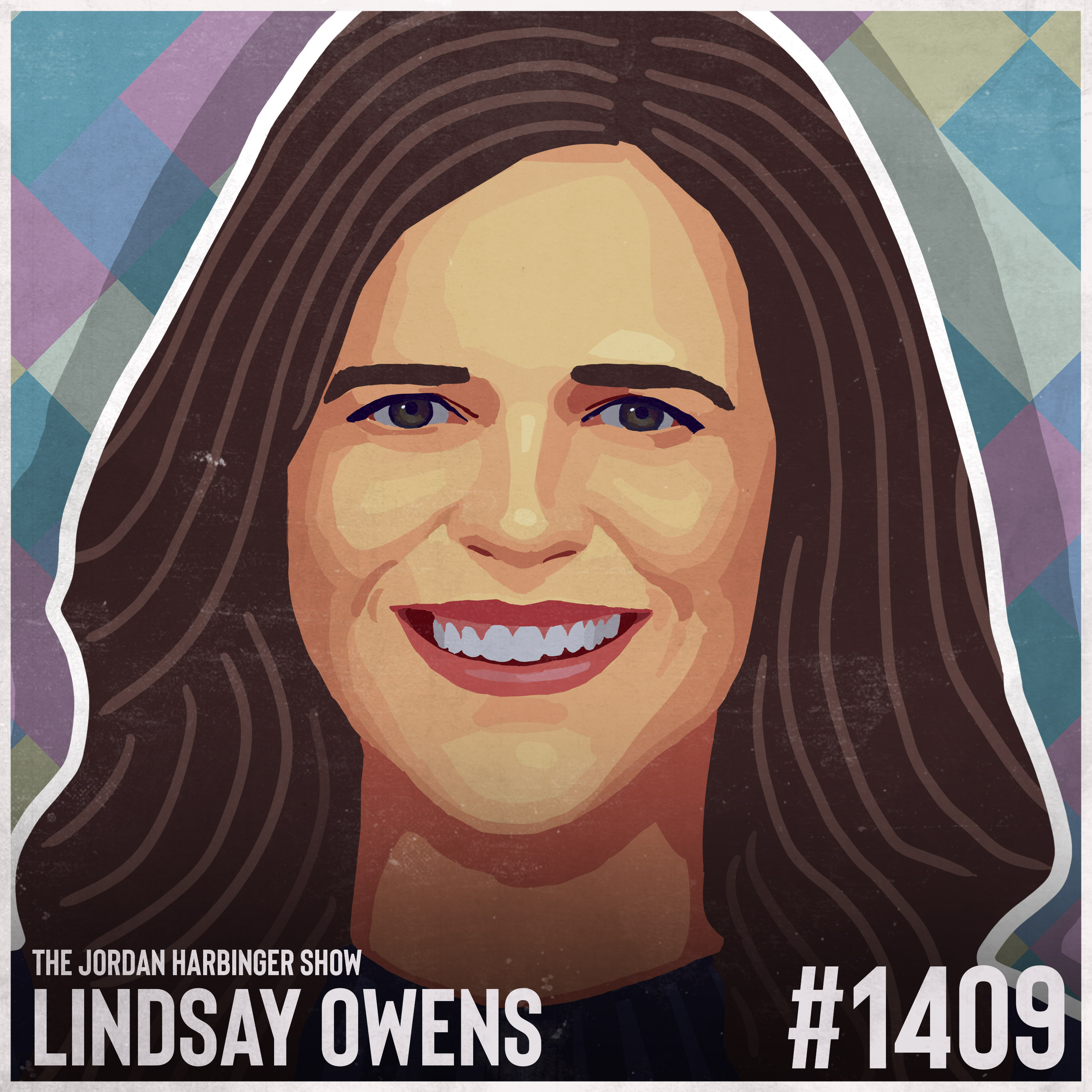
Gouged (https://www.amazon.com/dp/B0GFD4X7RJ/?tag=jordanharbing-20) author Lindsay Owens explains how corporate America reinvented the ripoff with algorithms and surveillance pricing, and how shoppers can fight back. Full show notes and resources can be found here: jordanharbinger.com/1409 (https://jordanharbinger.com/1409) What We Discuss with Lindsay Owens: How price-fixing went digital. RealPage software allegedly let landlords share sensitive data and follow the same rent recommendations, complete with a hard price floor, a soft ceiling, and advice to leave units empty rather than offer discounts. What happened when 400+ shoppers filled identical 23-item Instacart carts at the same stores. 75% of items varied in price from person to person, by as much as 23%, and the average 7% gap costs a family of four roughly $1,200 a year. Why surveillance pricing, which taps your location, device, purchase history, clicks, and even what you confess to AI shopping agents, doesn’t just soak the