Jensen Huang has resigned as chief executive of Nvidia after admitting to one extramarital affair and facing allegations of a second. One of the women involved, Alice Huang, has been accused of being a Chinese spy. Nvidia has been leading the AI boom and so the damage to this one company has huge implications for the US economy, and beyond: Jensen Huang is a close ally of President Trump. Andrew Neil joins Gerard Baker to discuss the economic, political, geopolitical and technological implications. And the Republican losses in the midterms keep coming: Scott Colom has won his race, making him the first Democrat elected to the Senate from Mississippi since 1982. Where do the Republicans go from here, and what will the Democrats do next? Does either party really know what it stands for? Andrew Neil, presenter of The Andrew Neil Report (https://podfollow.com/1896865845/links) Producers: Euan Dawtrey, Harry Kitson Executive producer: Molly Guinness Picture: Getty Images Audio: Reuters Host
President Trump is putting Vice President JD Vance on a new mission: rooting out what he calls "Massive Corruption and Crime taking place in Democrat run Cities and States" (e.g., California, Illinois, and Minnesota). In a Truth Social post, the President also declared, "We don't need a deal with Iran," just one day after reports that Vance could lead renewed talks with Tehran. The Sekulow team discusses Vance's expanded role as the Trump Administration's "fraud czar," the latest breaking news out of Washington, the ACLJ's legal work – and much more.
Michael Carrick has been sacked as Manchester United manager. But how did his final 48 hours turn into such a mess? As Carrick continued to take training, United’s bosses were in Monaco deciding his future, while negotiating with his likely successor Mauricio Pochettino in the US. Mark Chapman is joined by The Athletic’s Adam Crafton for the inside story of another chaotic Manchester United managerial change. TikTok - https://www.tiktok.com/@thesportsagents (https://protect.checkpoint.com/v2/r02/___https://www.tiktok.com/_@thesportsagents___.YzJlOmdsb2JhbGhvc3Rpbmc6YzpvOjJlN2JhMjQ5NTA4MmIyYzI1MmQ5MGM3NjI1ZGMwYzU3Ojc6ZmIwOTowYjVhYmI1N2ExNGRmOTk4MDFhZGY3ZjhiMjIxOGIyNzBjMTNhZmU3MTAwYWQxMzFiM2VjZjg0M2E3OGQ4OWM5Omg6VDpO) Instagram - https://www.instagram.com/thesportsagents/ (https://protect.checkpoint.com/v2/r02/___https://www.instagram.com/thesportsagents/___.YzJlOmdsb2JhbGhvc3Rpbmc6YzpvOjJlN2JhMjQ5NTA4MmIyYzI1MmQ5MGM3NjI1ZGMwYzU3Ojc6MTA0Nzo0MmFhNDVhYzMzNmYzMzIyNjJhYzE4ZTYwZjBkYTZiZWM1MDI
Kori Schake, Director of Foreign Policy Studies at the American Enterprise Institute and contributing writer at The Atlantic, joins Clearer Than Truth to examine the foundations of American civil-military relations and the challenges facing US foreign policy. Drawing on her book The State and the Soldier, Schake explains how the Founding Fathers established civilian control over the military, why that tradition remains essential to American democracy, and how political leaders can contribute to the politicization of the armed forces. The conversation also explores America's dependence on foreign supply chains, the growing coordination among China, Russia, Iran, and North Korea, the future of NATO and America's alliances, and how economic interdependence can become a weapon in geopolitical competition. Schake makes the case for a conservative internationalism built on military strength, strong alliances, and cooperation with like-minded countries. 00:00 Introduction: Kori Schake 00:57 W
Paul and Mick discuss the jailing of Hasan Ali Gori over the murder of pensioner Josephine Ray in Nenagh. Paul discusses confronting Gori before he was convicted and how his demeanour was cold. They also discuss the wave of bomb threats across Ireland amid the EU summit and the suspected kidnapping and murder of Darren Hoolahan by the Kinahan cartel in Spain.
On the DSR Daily for Thursday, we discuss the resignation of Jensen Huang amid a growing scandal, Scott Colom becoming Mississippi's first black senator in 146 years, Trump backtracking on peace efforts with Iran, and more.
On the DSR Daily for Thursday, we discuss the resignation of Jensen Huang amid a growing scandal, Scott Colom becoming Mississippi's first black senator in 146 years, Trump backtracking on peace efforts with Iran, and more.
On this episode of The Daniel Mael Show, an open-minded, in-depth conversation about how Jewish and Israel-related philanthropy actually works, Daniel Mael sits down with Arnie Draiman of Draiman Consulting. Draiman is a philanthropic consultant who, for the past 30 years, has helped donors, philanthropists, and foundations give to nonprofits, mostly in Israel, doing on-the-ground due diligence as a financial consultant in the nonprofit world. He argues that about 99 percent of nonprofits do good work, but that is not enough; they also have to be run like a business. He is skeptical of GuideStar/Candid and Charity Navigator star ratings, warns that some Israeli certification schemes are paid for by the groups being rated, and says professional fundraisers are not supposed to work on commission. When a telemarketer calls, he says the first question should be whether you are speaking to a call center, because those operations can keep 50, 60, even 80 percent of the gift. He grounds that
How should you actually train for Air Force Special Warfare before you ship? On this Veterans Day live episode, Aaron, Trent, and Peaches go straight at one of the biggest preparation mistakes they continue to see: candidates are not running enough. Trent explains why aerobic fitness has repeatedly correlated with better pipeline outcomes and why being roughly a minute faster than the minimum running standard has historically been such a useful readiness indicator. Building that engine takes time, which means you cannot wait until the last few weeks before shipping and expect strength training, motivation, or a few hard intervals to make up the difference. The guys break down why candidates often prioritize strength too early, how Zone 2 work builds the aerobic foundation required for long training days, why your easy days actually need to stay easy, and how increasing mileage too aggressively creates injuries instead of fitness. The same principle carries into the pool: if you want to
End bits are exactly that -- stories that didn't quite make it on air but nevertheless are interesting on their own. Today we look at new research into life after death; apps that fight loneliness; what is the Gen-Z stare, and more. Hosted by Simplecast, an AdsWizz company.
How do so-called honey traps really work? Did China actually plant a spy in a tech firm to get close to Nvidia's former boss Jensen Huang? And what does this story tell us about the stakes in the global AI race? Christiane and Jamie explain why this scarcely believable tale matters so much, and Jamie reveals his own personal experiences of Russian and Chinese espionage. They also continue to react to the midterms, analysing what the results mean for the far right around the world, and whether we are now closer to the AI bubble bursting. Plus Christiane responds to Trump admitting he's been 'too tough' on immigration and she and Jamie discuss whether James Talarico has finally taught his fellow Democrats how to use religion to their advantage. This episode was recorded on Monday 9th November 2026. Make sure you subscribe so you never miss an episode. For more content, please follow us: Watch us: https://www.youtube.com/@AmanpourPod Instagram: https://www.instagram.com/amanpourpod X: htt
In this week’s episode of Acquisition Talk, hosts discuss a packed slate of defense tech and acquisition headlines with Matt McGregor of the Defense Tech and Acquisition Substack. Topics include the delivery of more than 25,000 autonomous and counter-unmanned systems to CENTCOM, a new world speed record for a small jet-powered drone, Shield AI’s ExBat VTOL concept and its $5.3 billion acquisition of Echodyne, General Atomics’ hybrid-electric stealth drone, SOCOM’s low-cost Zeus shoulder-fired missile, and Lockheed’s Lamprey undersea vehicle that recharges from host ships. The conversation also covers subterranean and fiber-optic drone experiments, the role of super-intelligence in military decision-making, challenges unifying the fragmented S&T enterprise, expeditionary robotic factories for Lucas drones, private equity versus venture capital in the AI era, the potential I-81 defense industrial corridor, an Office of Strategic Capital loan to a drone company, and the implications of De
The Tuesday night fever dream of the Democrats taking Mississippi came real last night when the state was finally called for Scott Colom. What does this outstanding victory tell us about the changes the Democrats have undergone as a party? We discuss how the history of this state and its segregationist past make this such an extraordinary moment. Later, the sorry tale of the Nvidia boss and his Chinese spy lover. What’s the fall out for Trump and America?
The UK economy has grown faster than expected, but many households are still feeling the strain. Why has productivity growth slowed, and what might it take for living standards to improve? Helen Miller is joined by Jonathan Haskel, Chair of the Office for Budget Responsibility, and Jack Meaning, UK Chief Economist at Barclays. They discuss inflation, wages, unemployment, household finances and investment, as well as the outlook for UK growth and the uncertainties around AI. The episode explores how stronger headline growth can sit alongside continued pressure on household incomes, and what the evidence suggests about the years ahead. Become a member: https://ifs.org.uk/individual-membership Find out more: https://ifs.org.uk/podcasts-explainers-and-calculators/podcasts Hosted on Acast. See acast.com/privacy (https://acast.com/privacy) for more information.
Welche Rolle spielt Übersetzung dabei, die Erkenntnisse der OECD über Länder- und Kulturgrenzen hinweg zugänglich zu machen? Wie verändert künstliche Intelligenz die Arbeit von Sprachexpert*innen? In dieser Folge von Why Languages Matter at the OECD spricht Daniela Herzog-Hébert, Leiterin des Deutschen Übersetzungsdiensts der OECD, mit Silvia Rathnau-Prenzel, Leiterin der OECD Translation Division, darüber, warum mehrsprachige Kommunikation entscheidend dazu beiträgt, Wissen in die Praxis umzusetzen. Gemeinsam beleuchten sie, wie Übersetzungen politischen Entscheidungsträger*innen, Forschenden und der breiten Öffentlichkeit helfen, komplexe Themen in ihrer eigenen Sprache besser zu verstehen. Am Beispiel der OECD-Arbeit zu BEPS, den internationalen Maßnahmen gegen Gewinnverkürzung und Gewinnverlagerung multinationaler Unternehmen, zeigt Silvia, welchen Unterschied es gemacht hat, dass wichtige Fachdokumente auch auf Deutsch verfügbar waren. Außerdem geht es um die wachsende Bedeutung k
In this week's episode,Jordan Wellington hosts Jerrico Perez of Vicente LLP to explore the legal, regulatory, and operational ramifications of the DEA registration process for state-licensed medical marijuana operators. They discuss the potential implications of registering a cannabis company with the DEA, the incompatibility of the federal system with today’s state-regulated market, and why the DEA’s choices during this process could be “preposterously disruptive” for the cannabis industry. Hosted on Ausha. See ausha.co/privacy-policy (https://ausha.co/privacy-policy) for more information.
On this WPN Call #582, Dr. Jim Garlow is joined by Attorney Phillip Jauregui, who previously worked with Well Versed to lead weekly Bible studies for Members of Congress in Washington D.C. and other Bible Studies in federal agencies. He is the Founder and President of Judicial Action Group and Judicial Action Group Foundation. Phillip gives a brief history of the U.S. Supreme Court and then explains its proper role and function to interpret the Constitution regarding cases and controversies. Additionally, he mentions the book he authored this year, The Parable of the Prodigal Court: Your Invitation to Shift a Nation Back to God. Website: https://www.amazon.com/dp/B0FPLFVKKV?lv=shuf&bestFormat=true&social_share=cm_sw_r_ffobk_cp_ud_dp_111FBEBPMVBZASX2MK3R&channelId=704&ref_=cm_sw_r_ffobk_cp_ud_dp_111FBEBPMVBZASX2MK3R&plpRedirect=mhFallback&th=1 (https://www.amazon.com/dp/B0FPLFVKKV?bestFormat=true&channelId=704&lv=shuf&plpRedirect=mhFallback&ref_=cm_sw_r_ffobk_cp_ud_dp_111FBEBPMVBZASX2MK
Perché le lingue contano all'OCSE Perché il multilinguismo è fondamentale per avvicinare le Organizzazioni Internazionali ai cittadini? E quale ruolo svolge la lingua italiana nel favorire il dialogo e la cooperazione internazionale? In questo episodio di Perché le lingue contano all'OCSE, Giancarlo Ruggiero, responsabile della Sezione linguistica italiana dell'OCSE, incontra Antonio Petrarulo, Consigliere presso la Rappresentanza Permanente d'Italia presso le Organizzazioni Internazionali a Parigi, per parlare del valore del multilinguismo nella diplomazia e nella diffusione della conoscenza. Insieme esplorano come la comunicazione multilingue possa rendere le analisi e le raccomandazioni dell'OCSE più accessibili, aiutando i cittadini a comprendere le questioni politiche e a partecipare al dibattito pubblico. Antonio sottolinea l'importanza di potersi esprimere nella propria lingua nei forum internazionali e il ruolo della Sezione linguistica italiana dell'OCSE, istituita nel 1961, n
Pourquoi l’interprétation est-elle essentielle au dialogue entre les pays ? Et comment permet-elle à chacun de s’exprimer avec précision et confiance dans les réunions internationales ? Dans cet épisode de Why Languages Matter at the OECD, Caterina Cherubini, responsable des flux de traduction et de la gestion de la qualité à l’OCDE, échange avec Olivier Péan, Chef interprète de l’OCDE, sur le rôle de l’interprétation dans la communication multilingue et la coopération internationale. Ensemble, ils explorent comment l’interprétation favorise la participation des délégations, préserve la diversité linguistique et culturelle et permet à chacun de s’exprimer dans une langue qu’il maîtrise. Olivier explique pourquoi cette possibilité contribue à des échanges plus inclusifs et à une meilleure compréhension mutuelle. La conversation aborde également l’impact de l’intelligence artificielle sur le métier d’interprète, les nouvelles possibilités qu’elle offre pour préparer les conférences et le
Do the hard thing first — and the rest of the day gets better from there. Spartan Raches founder Joe De Sena returns to Better Every Shift this week (turning down Joe Rogan’s podcast to be with us, we might add) to talk all things motivation and the creature comforts that have clouded our view of accomplishment. He shares his daily routine, explains what separates quitters from finishers, and offers his best tip for getting unstuck. De Sena also breaks down what keeps people moving forward: friends who hold you accountable and having an event on the calendar, like a Spartan Race or DEKA event. Email [email protected] for information about how to get a complimentary entry for first-time Spartan racers. This episode of the Better Every Shift Podcast is sponsored by TheFireStore (https://go.lexipol.com/?target=lnk_gJwUyLzy5fzELcZZ). Learn more about getting the gear you need at prices you can afford by visiting TheFireStore (https://go.lexipol.com/?target=lnk_gJwUyLzy5fzELc
Today’s Digest covers flu-shot VAERS reports, record debt and car prices, Nvidia’s CEO, Anthropic’s oversubscribed IPO, AI propaganda, the Epstein House report, Texas border politics, United flight threat, DSA gains, and Ukraine-Russia talks. Click Here for Peak Prosperity (https://peakprosperity.com/modernas-mrnsa-flu-shot-generates-vaers-spike-credit-card-debt-hits-record-19-1-trillion/)
<p><strong>Episode 110: Geographic Information Systems</strong></p> <p>This month on Calendar Call, Matt Berardino talks with Attorney’s Caleb Hamel and Eliza Heins from the Department of Energy and Environmental Protection about Geographic Information Systems.Matt, Caleb, and Eliza discuss what GIS is, how it is used, and how different agencies work together.Additional topics include relevance, practical advice, and resources for attorneys.</p> <p><a href="https://portal.ct.gov/deep/environmental-justice/environmental-justice-law-regulations-development">Environmental Justice Law Regulations</a></p> <p><a href="https://caselaw.findlaw.com/court/ct-supreme-court/1445320.html">Director Department of Information Technology of the Town of Greenwich v. Freedom of Information Commission</a></p> <p><a href="https://portal.ct.gov/datapolicy/knowledge-base/articles/gis-statutes?language=en_US">CT GIS Statutes</a></p> <a href="https://deepmaps.ct.gov/">DEEPmaps</a><br>
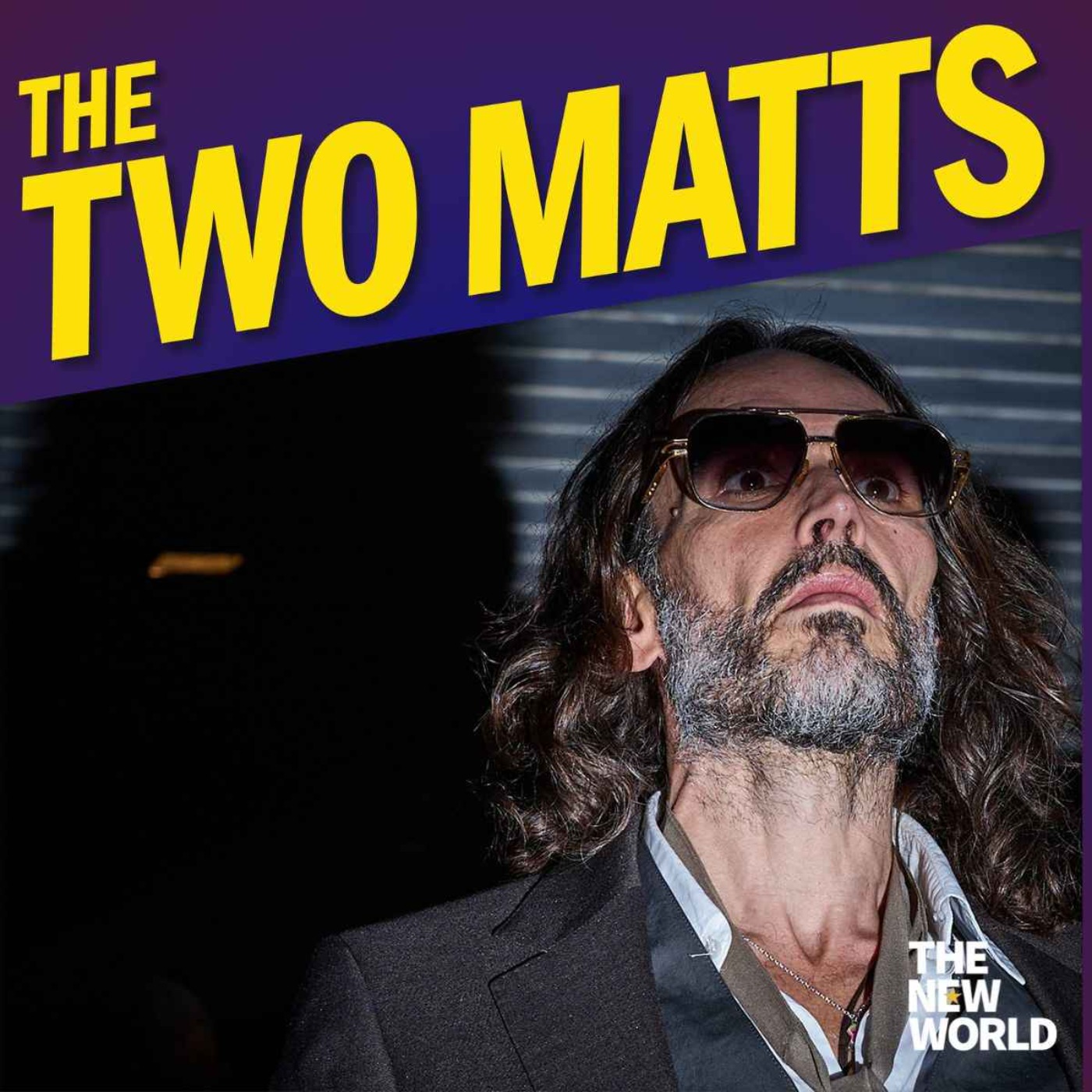
The Matts are joined by Lucy Reade, who watched the Russell Brand trial unfold at Southwark Crown Court. Lucy describes the day-to-day reality of the trial, her encounter with Brand’s father and what she believes the guilty verdict signifies. We also discuss modern-day misogyny and ask: could another Russell Brand carry out his appalling attacks on women today? You can read Lucy’s brilliant report on the trial and its outcome (https://www.thenewworld.co.uk/lucy-reade-the-reckoning-i-thought-russell-brand-would-never-face/) at The New World - for FREE! - today. Also - in part two - as Andy Burnham prepares for next week’s EU-UK summit we discuss the shape of a successful campaign to put Britain back at the heart of Europe. Enjoy! Produced by Matt Withers Go to https://www.thenewworld.co.uk/subscribe/ Hosted on Acast.
Stanford’s Joe Grundfest discusses the reach of prediction markets, the risks of trading on inside information, and the legal battle over whether states or the federal government get to regulate them. ---- Prediction markets allow people to wager on almost anything, including a game’s winner, a player’s stat line, an election, and the timing of a military operation. Some participants may have inside information, while others may be in a position to influence the very outcomes they are betting on. Stanford Law professor emeritus Joe Grundfest, JD ’78, a senior faculty member with the Rock Center for Corporate Governance and a former commissioner of the Securities and Exchange Commission, joins Pam Karlan to discuss how prediction markets work and where they go wrong. Grundfest explains when using information to place a bet becomes illegal, and why bettors on platforms like Kalshi and Polymarket who assume they can stay hidden may be easier to identify than they think. At the center of t