The UK Health Security Agency has launched a major study to find out what level of forever chemicals the average person in the UK has in their bodies. With results not expected until 2027, we speak to the UKHSA’s Dr Edward Wynne-Evans and Professor Tony Fletcher from the London School of Hygiene and Tropical Medicine about what is and is not known about per- and polyfluoroalkyl substances (PFAS) and their potential impacts on our health. And, with the help of Damian Bailey, professor of physiology and biochemistry at the University of South Wales, Laura hits the gym to work out if more of us are ditching cardio and aerobic exercise in favour of strength training, what that could mean for our health decades down the line. Then with fines set to be introduced on buses for people playing music and videos out loud on their phones, we look at whether spending more of our lives wearing headphones and earphones is changing not just what we hear, but how we hear. Presenter: Laura Foster Produc
Today's Scripture: John 8:2–11 What happens when our certainty that we're right causes us to lose sight of another person's humanity? In a powerful encounter with a woman publicly humiliated by religious leaders, Jesus demonstrates a remarkable kind of strength. His response challenges the cruelty we sometimes justify in the name of righteousness—and offers a different way to confront wrongdoing. We explore: Why moral certainty can sometimes lead to cruelty How Jesus confronts public humiliation without becoming cruel The subtle ways we justify dehumanizing people we disagree with What it means to stand for truth without losing compassion Go Deeper: Episode 176 (https://www.dralisoncook.com/podcasts/my-reflections-on-love-in-an-age-of-violence-plus-dr-stephen-macchia-on-intimacy-with-god-in-a-noisy-world): Love in the Age of Violence (https://www.dralisoncook.com/podcasts/i-shouldnt-feel-angry--exploring-the-violence-that-shapes-our-family-stories-how-to-heal-with-lisa-jo-baker) Episod
Get Dr. Vonda's insights Want to understand what's happening in your body — and what to do next? Each week, Dr. Vonda shares science-backed guidance on strength, bone health, muscle, and longevity — the same way she speaks to her patients. Clear. Practical. No noise. Your body can't heal faster than biology allows. But it can be ready. And the years you spend training may be quietly preparing you for the hardest season of your life. Juliet "JStar" Starrett, world champion whitewater athlete, co-founder and CEO of The Ready State, and co-author of Built to Move. We talked about why durability beats longevity and how the muscle she built in her 30s carried her through cancer. She explains why pain is a request for change, not a reason to stop. Because the goal isn't just living longer. It's having a body that can say yes to adventure. What we explore: - How decades of training build resilience for surgery and illness. - Why durability matters more than longevity. - Why your 30s are prime
On the Dry Land by Lord Dunsany — A Gentle Short Fable of Love & Old Age for Sleep & Insomnia | Books at Bedtime Drift off with On the Dry Land by Lord Dunsany, a short, tender and beautifully written fable about love and a long life, read aloud by Martin Hewlett on Books at Bedtime, the sleep story series from Calming Anxiety. The gorgeous night hangs over the marshes, with all its wandering bands of nomad stars, and the first pale light of dawn is rising in the east. For many years, Love has led a man up and down through those perilous marshes. Now, as they reach the safety of dry land at last, Love looks at his companion and sees in the dawn light that his hair has turned white. The old man sits down wearily on the grass, and Love tells him, "I will leave you now." The old man makes no answer, and only weeps softly. So Love, grieved in his careless little heart, tries to comfort him the only way he knows, by telling him that he was never worth missing at all. He is foolish, he says,
Hello Beautiful, I'm so grateful you're here with me Self-doubt can whisper so convincingly that you forget it's only a voice—not the truth of who you are. This empowering meditation helps quiet anxious thinking, release limiting beliefs, and reconnect you with confidence and self-trust. You are far more capable than fear would have you believe. Love, Katie TAKE THE FREE QUIZ! ♀️What kind of meditator are you? Take the free quiz & discover your meditation style now! Want an ad-free meditation experience?
What if the reason you don't feel like yourself isn't only your thyroid or your hormones? In this episode, I'm joined by Luke Storey, host of The Life Stylist podcast and author of the new book, A Horse Named Lonesome, to unpack what happens when pain shapes us, and what we reach for so we don't have to feel what's underneath. For Luke, that was drugs, alcohol, and relationships. For many of us, it's the nightly glass of wine, overworking, controlling everything, or chasing the next diet or supplement. We also get into the loneliness at the heart of Luke's book, and why he believes it's less about a shortage of people and more about disconnection from ourselves. Luke shares why some of the most powerful health tools are free, why he calls it bioharmonizing instead of biohacking, and how he found gratitude for the hardest parts of his past without pretending they were good. And I share why I believe you're not successful despite what you've been through, but because of it. What you'll l
Sometimes the strangest things on Earth...Are happening just below its surface. From tunnels carved by giant sloths to desperate attempts to stop the dead from rising again - these are the weird and wonderous tales of the sea beasts, hidden cities and impossible creatures that lurk beneath us. Thank you to our experts who contributed to this episode: Austin Rogers, Sabina Magliocco, Greg Jackson, Brandy Shillace, Mitch Horowitz, Kathleen Tracy, Cord Whitaker, Don Wildman, Joseph Dituri, Rebecca Lieb, Hakeen Oluseyi, David Mizejewski, Sami Jarroush, Jason Horton, Ramy Romany, and Kavitha Davidson.
This week's program is an encore presentation featuring a C-SPAN interview with Eric Sevareid that was recorded in his Georgetown home 37 years ago in 1989. Sevareid was a war correspondent with CBS Radio starting in 1939. He spent a total of 38 years with the network. When CBS News with Walter Cronkite went to 30 minutes in 1963, Eric Sevaride would end each newscast with a two-minute analysis and commentary. Some refer to him as "The Grey Eminence." The Cronkite evening news audience in those days was close to 30 million viewers a night. Today the program is watched by around 4 million people. The American population has increased by 100 million people since 1989.
Are you getting enough sleep but still waking up exhausted? Do you struggle to fall asleep, wake up throughout the night, or find yourself fighting to stay awake during the day? You're certainly not alone. Millions of Americans struggle with sleep disorders, and many don't realize there's an underlying condition affecting their rest. In this episode of Off the Couch Psychology Podcast, Dr. Jerry Cunningham explores the fascinating world of sleep disorders, including insomnia, sleep apnea, narcolepsy, restless legs syndrome, nightmares, and more. You'll discover how these conditions can affect your mood, memory, relationships, and everyday performance. We'll also explore how sleep disorders are diagnosed and what treatments, including Cognitive Behavioral Therapy for Insomnia (CBT-I), can help you reclaim your nights and improve your days. Could your exhaustion be telling you something you've been overlooking? And what if the solution involves more than simply going to bed earlier? Befo
From the brothels of Cologne to the beach clubs of Turkey, Necati “Neco” Arabaci built a criminal empire on sex trafficking, extortion, drugs, and spectacular brutality. Starting out as a nightclub bouncer, the Turkish-German gangster rose to become the godfather of Cologne’s red-light district, commanding an army of enforcers and making millions from prostitution. But even a nine-year prison sentence and deportation to Turkey couldn't stop him. Instead, Arabaci joined the Hells Angels, built an international network, and launched a bloody power struggle for control of Europe's most notorious motorcycle club, all while supposedly banned from setting foot in Germany. Now, after decades of dodging authorities across Europe, the gangster once dubbed the “Godfather of Cologne” has finally been sentenced to 15 years in a Turkish prison. Danny and Sean trace the extraordinary rise and possible fall of one of Europe's most feared, and strangest, crime bosses.
Today we explain one of the most controversial Supreme Court decisions in modern history; the case that defined campaign donations as speech and therefore protected under the First Amendment, regardless of who made them. This episode (first produced in 2022) explains the history of the case, PACs, Super PACs, the ruling, the effect of the decision on our campaign system, as well as some common misconceptions. Our guides through the case are Professor Jeff Bone from Saint Joseph's University, Maggie Severns from Grid, and Professor Hye Young You from New York University.
Today, I’m joined by Dr. Tony Nader (https://drtonynader.com/), a physician and neuroscientist who leads the global Transcendental Meditation (TM) organization. Dr. Nader’s story is remarkable—what started as a short sabbatical from his MIT neuroscience research turned into decades at the forefront of exploring consciousness and the mind-body connection. Episode Timestamps: Introduction of guest and episode theme: caring, carrying, and aging ... 00:00:00 Mind, happiness, fulfillment, and physiological longevity ... 00:04:23 Biohacking’s recognition of nervous system and stress ... 00:07:34 Caring as an evolutionary trait and its biological effects ... 00:11:02 Carrying vs. caring: burnout and learning conscious care ... 00:14:39 Empathy, chronic stress, and physiological costs of over-carrying ... 00:17:44 Practical approaches: conscious caring, holding space, and self-care ... 00:21:19 Small acts of kindness, connection, and behavioral contagion ... 00:35:36 Digital connections, overs
She was one of MGM's biggest stars, a celebrated actress widely regarded as one of the most beautiful women in the world. But Ava Gardner was never entirely comfortable with the image that made her famous. From a tobacco farm in North Carolina to the heights of Hollywood stardom, Gardner's rise began almost by accident, after a photograph of her caught the attention of MGM. With The Killers, Mogambo, and The Night of the Iguana, she proved herself a formidable actress, even as her extraordinary beauty threatened to overshadow her talent. Her turbulent marriages to Mickey Rooney, Artie Shaw, and Frank Sinatra kept her in the headlines, while her struggles with alcohol and growing frustrations with the studio system complicated both her career and her personal life. This week, we're exploring the extraordinary life of Ava Gardner — from her unlikely discovery and MGM superstardom to her eventual departure from Hollywood for a new life in Spain and, later, London. Along the way, we'll exp
What happens in the gap between your last baby and your first hot flash? Dr. Mary Claire Haver sits down with Dr. Fran Haydanek — board-certified OB/GYN and the science communicator behind Paging Dr. Fran — to connect the dots most women are never shown. They unpack “reproductive hormone sensitivity”: why women whose brains react to hormone fluctuations with PMS, PMDD, or postpartum depression face a dramatically higher risk of depression in perimenopause — in the largest study to date, almost 13-fold — and why that history sits unread in your own chart. They also get practical about diagnosis: why there’s no blood test for perimenopause, the conditions that mimic it — iron deficiency (and the new ferritin guidelines), thyroid disease, sleep apnea, diabetes — and what your pregnancy history predicts about your future health, from gestational diabetes to preeclampsia and heart disease. Because knowing your own history means you never have to be blindsided by symptoms that were completel
What would change in your life if you genuinely believed the future you desire was possible? In today's episode, I break down the power of conviction, identity and embodying your future self before the external evidence arrives. We explore why so many people wait for their circumstances to change before giving themselves permission to feel confident, successful and abundant, and how shifting the way you think, make decisions and take action can completely change the trajectory of your life. Remember, your past is evidence of who you've been, not a limitation on who you can become. Including: custom macros, easy meal plans + shopping lists, my self-talk and limiting beliefs mindset software, one click store for supps, internal calorie tracker (with the ability to track meals by simply taking a photo of your food) + much more.Click here to start your 7-day free trial (https://dannykennedyfitness.us12.list-manage.com/track/click?e=a1f82ded2a&id=269ba14c90&u=5282aad1afb52512010cc93ad) @djk
Can We REALLY Communicate With the Dead? Suzanne Giesemann Reveals Shocking Evidence, Afterlife Secrets & the Science of Intuition Is the afterlife closer than you think? What if the difference between an ordinary thought and a message from Spirit comes down to something you can actually learn to recognize? In this episode of Mayim Bialik's Breakdown, spiritual teacher and evidential medium Suzanne Giesemann shares extraordinary experiences, groundbreaking insights, and compelling examples of information she believes came from beyond the veil, including a chilling case involving a boy who knew he was going to be struck and killed by lightning. She also breaks down her experience channeling Kirk and Anne Douglas during a reading, raising a profound question: How do we distinguish vague intuition from genuinely evidential information? From the mysteries of consciousness after death to the role of the nervous system in mediumship, Suzanne explores what might be happening beneath our consc
Ibogaine is back in the national spotlight, but what does it actually do inside the body? Licensed psychologist Jonathan Dickinson, co-founder of Ambio Life Sciences, joins Gary Brecka to break down the Stanford research on veterans with traumatic brain injury, what brain scans showed after treatment, how ibogaine affects opioid withdrawal, and why the heart is the real risk. Plus what 4,000+ treatments have taught his team about screening, magnesium, and safety. Don’t guess, test. Get Jonathan Dickinson’s book, “Ibogaine and the Bicameral Mind”: https://bit.ly/4AnHCWt To learn more about ibogaine treatment, visit Ambio Life Sciences: https://bit.ly/4k7B1e2 Connect with Jonathan Dickinson Website: https://bit.ly/4zAf2B0 Instagram: https://bit.ly/4iHzzwf Facebook: https://bit.ly/4iye9TL TikTok:https://bit.ly/4iKVUZW LinkedIn: https://bit.ly/48a39Wx Thank you to our partners BREW: THE ULTIMATE COFFEE: https://bit.ly/4elHM82 COLD LIFE: THE ULTIMATE HUMAN PLUNGE: https://bit.ly/4eULUKp GEN
Chris and Xand van Tulleken continue their conversation with Katherine Whitcroft, ear, nose, and throat surgeon at Sheffield Children's Hospital and co-director of the Sheffield Chemosensory Research Lab. Together, they hear what drew her to the nose, and further explore nasal polyps. They look at nose reshaping procedures, and the medical and aesthetic reasons behind them. If you'd like to share your thoughts on this or any other topic covered on the podcast, you can email us at [email protected] Presenters: Drs Chris and Xand van Tulleken Guest: Katherine Whitcroft Producer: Maia Miller-Lewis Researcher: Grace Revill Executive Producer: Rami Tzabar Visual Producer: Leon Gower Technical Lead: Reuben Huxtable Digital Lead: Richard Berry Composer: Phoebe McFarlane Sound Design: Melvin Rickarby At the BBC: Assistant Commissioner: Greg Smith Commissioning Editor: Rhian Roberts A Loftus Media production for BBC Radio 4.
Fr. Mike elaborates on the significance of the Baptism of Jesus in the Jordan River. He points out that the location of the Jordan River is particularly noteworthy because it's the same river that Joshua crossed over to lead the Israelites into the Promised Land, signifying that Jesus will bring about a new exodus. Additionally, it's the lowest spot on the planet, symbolizing Jesus' humility. Finally, Fr. Mike emphasizes that when we are baptized, we are adopted as beloved sons and daughters of God because what belongs to Jesus by his nature is given to us by God’s grace. Today we read Luke 3-5 and Proverbs 25:27-28. Support The Bible in a Year (with Fr.
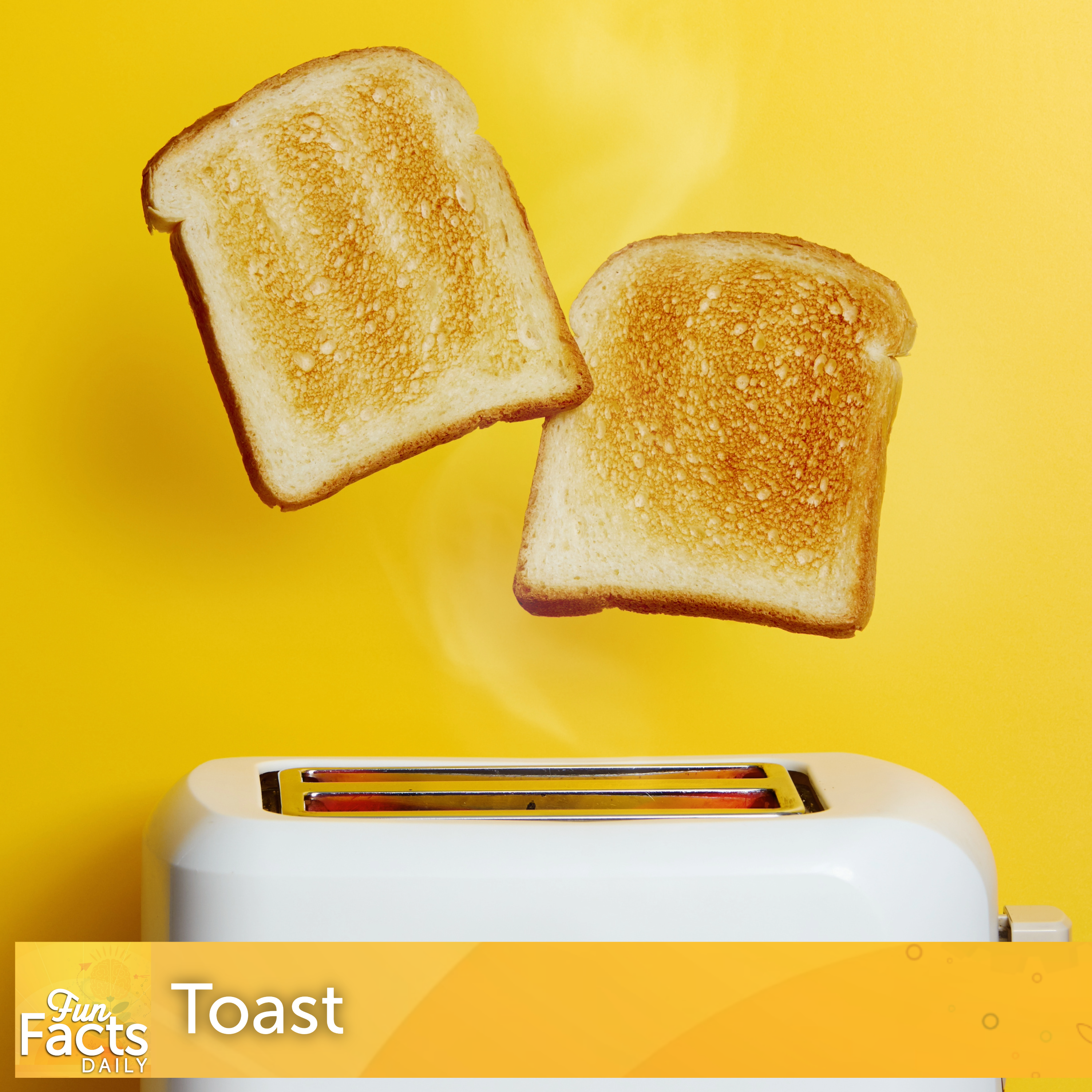
Toasting bread transforms ordinary slices through a complex chemical process known as the Maillard reaction, which occurs when amino acids and simple sugars are exposed to heat between 280 and 330 degrees Fahrenheit. Discovered by French physician Louis-Camille Maillard in 1912, this reaction creates distinct aromas, browning, and flavor compounds by rearranging molecular structures into Amadori compounds and chain-like polymers. Beyond culinary enhancement, historical techniques for toasting bread originated as practical preservation methods in ancient Egypt and Rome to remove excess moisture, prevent mold growth, and salvage stale loaves during long journeys. Over centuries, this culinary staple evolved significantly, transitioning from open-fire cooking and spiced wine additions in medieval Europe to the invention of the automatic pop-up toaster by Charles Strite in 1919 and Otto Rohwedder's bread-slicing innovations in 1928. The physics behind the common observation that dropped to
Robert Greene, author of The 48 Laws of Power, Mastery, and The Laws of Human Nature, nearly died of a stroke in 2018. It left him unable to type, so he spent the next seven years writing his new book, The Law of the Sublime, by hand. Michael speaks with Robert about what coming close to death did to his mind, why he believes humans need transcendent experiences as much as food and shelter, how comfort and old grudges keep our world small, and the everyday rituals he uses to wake back up to it. They discuss: (00:00) Cold open (00:59) The stroke (04:56) What nearly dying does to you (07:12) The book he waited 20 years to write (12:16) What is the sublime? (15:31) Finding amazement in his backyard (24:26) A need as deep as food (28:26) The lost rites of passage (33:18) How to make your own rituals (36:49) 40 minutes of meditation a day (45:37) What boredom is good for (50:31) How adults can slow down (53:36) Why nature matters (58:58) Choose discomfort (1:02:48) Death and the afterlife (
Welcome to What's Up Docs?, the podcast where doctors and identical twins Chris and Xand van Tulleken explore the ideas shaping our health and wellbeing. In this episode, they turn their attention to the nose, an organ we use with every breath but rarely stop to think about. Joined by Miss Katherine Whitcroft, ear, nose, and throat surgeon at Sheffield Children's Hospital and co-director of the Sheffield Chemosensory Research Lab, Chris and Xand explore how the nose is built and what it does for us, why we produce so much mucus and where it goes, and why our noses run when we cry or eat spicy food. The conversation also covers how our sense of smell changes across our lives, the most common things that go wrong with the nose, and what the evidence says about treatments such as nasal sprays. If you want to get in touch, you can email us at [email protected]. Presenters: Drs Chris and Xand van Tulleken Guest: Miss Katherine Whitcroft Producer: Maia Miller-Lewis Researcher: Grace Revi
Alumni of the British Secret intelligence Service are notoriously tight-lipped. John Bryan Wood was no exception. Fortunately, his son, Alistair, has spent years piecing together the details of his secret life. The result is a fascinating portrait of a man who was one part mystic, one part spy, and various other parts unknown. From SPYSCAPE, the home of secrets. A Cup And Nuzzle production. Series producer: Joe Foley. Produced by Joe Foley. Alistair Wood is the author of My Family and Other Spies.