Hello Beautiful, I'm so grateful you're here with me Self-doubt can whisper so convincingly that you forget it's only a voice—not the truth of who you are. This empowering meditation helps quiet anxious thinking, release limiting beliefs, and reconnect you with confidence and self-trust. You are far more capable than fear would have you believe. Love, Katie TAKE THE FREE QUIZ! ♀️What kind of meditator are you? Take the free quiz & discover your meditation style now! Want an ad-free meditation experience?
What if the reason you don't feel like yourself isn't only your thyroid or your hormones? In this episode, I'm joined by Luke Storey, host of The Life Stylist podcast and author of the new book, A Horse Named Lonesome, to unpack what happens when pain shapes us, and what we reach for so we don't have to feel what's underneath. For Luke, that was drugs, alcohol, and relationships. For many of us, it's the nightly glass of wine, overworking, controlling everything, or chasing the next diet or supplement. We also get into the loneliness at the heart of Luke's book, and why he believes it's less about a shortage of people and more about disconnection from ourselves. Luke shares why some of the most powerful health tools are free, why he calls it bioharmonizing instead of biohacking, and how he found gratitude for the hardest parts of his past without pretending they were good. And I share why I believe you're not successful despite what you've been through, but because of it. What you'll l
Sometimes the strangest things on Earth...Are happening just below its surface. From tunnels carved by giant sloths to desperate attempts to stop the dead from rising again - these are the weird and wonderous tales of the sea beasts, hidden cities and impossible creatures that lurk beneath us. Thank you to our experts who contributed to this episode: Austin Rogers, Sabina Magliocco, Greg Jackson, Brandy Shillace, Mitch Horowitz, Kathleen Tracy, Cord Whitaker, Don Wildman, Joseph Dituri, Rebecca Lieb, Hakeen Oluseyi, David Mizejewski, Sami Jarroush, Jason Horton, Ramy Romany, and Kavitha Davidson.
This week's program is an encore presentation featuring a C-SPAN interview with Eric Sevareid that was recorded in his Georgetown home 37 years ago in 1989. Sevareid was a war correspondent with CBS Radio starting in 1939. He spent a total of 38 years with the network. When CBS News with Walter Cronkite went to 30 minutes in 1963, Eric Sevaride would end each newscast with a two-minute analysis and commentary. Some refer to him as "The Grey Eminence." The Cronkite evening news audience in those days was close to 30 million viewers a night. Today the program is watched by around 4 million people. The American population has increased by 100 million people since 1989.
Are you getting enough sleep but still waking up exhausted? Do you struggle to fall asleep, wake up throughout the night, or find yourself fighting to stay awake during the day? You're certainly not alone. Millions of Americans struggle with sleep disorders, and many don't realize there's an underlying condition affecting their rest. In this episode of Off the Couch Psychology Podcast, Dr. Jerry Cunningham explores the fascinating world of sleep disorders, including insomnia, sleep apnea, narcolepsy, restless legs syndrome, nightmares, and more. You'll discover how these conditions can affect your mood, memory, relationships, and everyday performance. We'll also explore how sleep disorders are diagnosed and what treatments, including Cognitive Behavioral Therapy for Insomnia (CBT-I), can help you reclaim your nights and improve your days. Could your exhaustion be telling you something you've been overlooking? And what if the solution involves more than simply going to bed earlier? Befo
From the brothels of Cologne to the beach clubs of Turkey, Necati “Neco” Arabaci built a criminal empire on sex trafficking, extortion, drugs, and spectacular brutality. Starting out as a nightclub bouncer, the Turkish-German gangster rose to become the godfather of Cologne’s red-light district, commanding an army of enforcers and making millions from prostitution. But even a nine-year prison sentence and deportation to Turkey couldn't stop him. Instead, Arabaci joined the Hells Angels, built an international network, and launched a bloody power struggle for control of Europe's most notorious motorcycle club, all while supposedly banned from setting foot in Germany. Now, after decades of dodging authorities across Europe, the gangster once dubbed the “Godfather of Cologne” has finally been sentenced to 15 years in a Turkish prison. Danny and Sean trace the extraordinary rise and possible fall of one of Europe's most feared, and strangest, crime bosses.
Today we explain one of the most controversial Supreme Court decisions in modern history; the case that defined campaign donations as speech and therefore protected under the First Amendment, regardless of who made them. This episode (first produced in 2022) explains the history of the case, PACs, Super PACs, the ruling, the effect of the decision on our campaign system, as well as some common misconceptions. Our guides through the case are Professor Jeff Bone from Saint Joseph's University, Maggie Severns from Grid, and Professor Hye Young You from New York University.
Today, I’m joined by Dr. Tony Nader (https://drtonynader.com/), a physician and neuroscientist who leads the global Transcendental Meditation (TM) organization. Dr. Nader’s story is remarkable—what started as a short sabbatical from his MIT neuroscience research turned into decades at the forefront of exploring consciousness and the mind-body connection. Episode Timestamps: Introduction of guest and episode theme: caring, carrying, and aging ... 00:00:00 Mind, happiness, fulfillment, and physiological longevity ... 00:04:23 Biohacking’s recognition of nervous system and stress ... 00:07:34 Caring as an evolutionary trait and its biological effects ... 00:11:02 Carrying vs. caring: burnout and learning conscious care ... 00:14:39 Empathy, chronic stress, and physiological costs of over-carrying ... 00:17:44 Practical approaches: conscious caring, holding space, and self-care ... 00:21:19 Small acts of kindness, connection, and behavioral contagion ... 00:35:36 Digital connections, overs
She was one of MGM's biggest stars, a celebrated actress widely regarded as one of the most beautiful women in the world. But Ava Gardner was never entirely comfortable with the image that made her famous. From a tobacco farm in North Carolina to the heights of Hollywood stardom, Gardner's rise began almost by accident, after a photograph of her caught the attention of MGM. With The Killers, Mogambo, and The Night of the Iguana, she proved herself a formidable actress, even as her extraordinary beauty threatened to overshadow her talent. Her turbulent marriages to Mickey Rooney, Artie Shaw, and Frank Sinatra kept her in the headlines, while her struggles with alcohol and growing frustrations with the studio system complicated both her career and her personal life. This week, we're exploring the extraordinary life of Ava Gardner — from her unlikely discovery and MGM superstardom to her eventual departure from Hollywood for a new life in Spain and, later, London. Along the way, we'll exp
What happens in the gap between your last baby and your first hot flash? Dr. Mary Claire Haver sits down with Dr. Fran Haydanek — board-certified OB/GYN and the science communicator behind Paging Dr. Fran — to connect the dots most women are never shown. They unpack “reproductive hormone sensitivity”: why women whose brains react to hormone fluctuations with PMS, PMDD, or postpartum depression face a dramatically higher risk of depression in perimenopause — in the largest study to date, almost 13-fold — and why that history sits unread in your own chart. They also get practical about diagnosis: why there’s no blood test for perimenopause, the conditions that mimic it — iron deficiency (and the new ferritin guidelines), thyroid disease, sleep apnea, diabetes — and what your pregnancy history predicts about your future health, from gestational diabetes to preeclampsia and heart disease. Because knowing your own history means you never have to be blindsided by symptoms that were completel
What would change in your life if you genuinely believed the future you desire was possible? In today's episode, I break down the power of conviction, identity and embodying your future self before the external evidence arrives. We explore why so many people wait for their circumstances to change before giving themselves permission to feel confident, successful and abundant, and how shifting the way you think, make decisions and take action can completely change the trajectory of your life. Remember, your past is evidence of who you've been, not a limitation on who you can become. Including: custom macros, easy meal plans + shopping lists, my self-talk and limiting beliefs mindset software, one click store for supps, internal calorie tracker (with the ability to track meals by simply taking a photo of your food) + much more.Click here to start your 7-day free trial (https://dannykennedyfitness.us12.list-manage.com/track/click?e=a1f82ded2a&id=269ba14c90&u=5282aad1afb52512010cc93ad) @djk
Can We REALLY Communicate With the Dead? Suzanne Giesemann Reveals Shocking Evidence, Afterlife Secrets & the Science of Intuition Is the afterlife closer than you think? What if the difference between an ordinary thought and a message from Spirit comes down to something you can actually learn to recognize? In this episode of Mayim Bialik's Breakdown, spiritual teacher and evidential medium Suzanne Giesemann shares extraordinary experiences, groundbreaking insights, and compelling examples of information she believes came from beyond the veil, including a chilling case involving a boy who knew he was going to be struck and killed by lightning. She also breaks down her experience channeling Kirk and Anne Douglas during a reading, raising a profound question: How do we distinguish vague intuition from genuinely evidential information? From the mysteries of consciousness after death to the role of the nervous system in mediumship, Suzanne explores what might be happening beneath our consc
Ibogaine is back in the national spotlight, but what does it actually do inside the body? Licensed psychologist Jonathan Dickinson, co-founder of Ambio Life Sciences, joins Gary Brecka to break down the Stanford research on veterans with traumatic brain injury, what brain scans showed after treatment, how ibogaine affects opioid withdrawal, and why the heart is the real risk. Plus what 4,000+ treatments have taught his team about screening, magnesium, and safety. Don’t guess, test. Get Jonathan Dickinson’s book, “Ibogaine and the Bicameral Mind”: https://bit.ly/4AnHCWt To learn more about ibogaine treatment, visit Ambio Life Sciences: https://bit.ly/4k7B1e2 Connect with Jonathan Dickinson Website: https://bit.ly/4zAf2B0 Instagram: https://bit.ly/4iHzzwf Facebook: https://bit.ly/4iye9TL TikTok:https://bit.ly/4iKVUZW LinkedIn: https://bit.ly/48a39Wx Thank you to our partners BREW: THE ULTIMATE COFFEE: https://bit.ly/4elHM82 COLD LIFE: THE ULTIMATE HUMAN PLUNGE: https://bit.ly/4eULUKp GEN
Chris and Xand van Tulleken continue their conversation with Katherine Whitcroft, ear, nose, and throat surgeon at Sheffield Children's Hospital and co-director of the Sheffield Chemosensory Research Lab. Together, they hear what drew her to the nose, and further explore nasal polyps. They look at nose reshaping procedures, and the medical and aesthetic reasons behind them. If you'd like to share your thoughts on this or any other topic covered on the podcast, you can email us at [email protected] Presenters: Drs Chris and Xand van Tulleken Guest: Katherine Whitcroft Producer: Maia Miller-Lewis Researcher: Grace Revill Executive Producer: Rami Tzabar Visual Producer: Leon Gower Technical Lead: Reuben Huxtable Digital Lead: Richard Berry Composer: Phoebe McFarlane Sound Design: Melvin Rickarby At the BBC: Assistant Commissioner: Greg Smith Commissioning Editor: Rhian Roberts A Loftus Media production for BBC Radio 4.
Fr. Mike elaborates on the significance of the Baptism of Jesus in the Jordan River. He points out that the location of the Jordan River is particularly noteworthy because it's the same river that Joshua crossed over to lead the Israelites into the Promised Land, signifying that Jesus will bring about a new exodus. Additionally, it's the lowest spot on the planet, symbolizing Jesus' humility. Finally, Fr. Mike emphasizes that when we are baptized, we are adopted as beloved sons and daughters of God because what belongs to Jesus by his nature is given to us by God’s grace. Today we read Luke 3-5 and Proverbs 25:27-28. Support The Bible in a Year (with Fr.
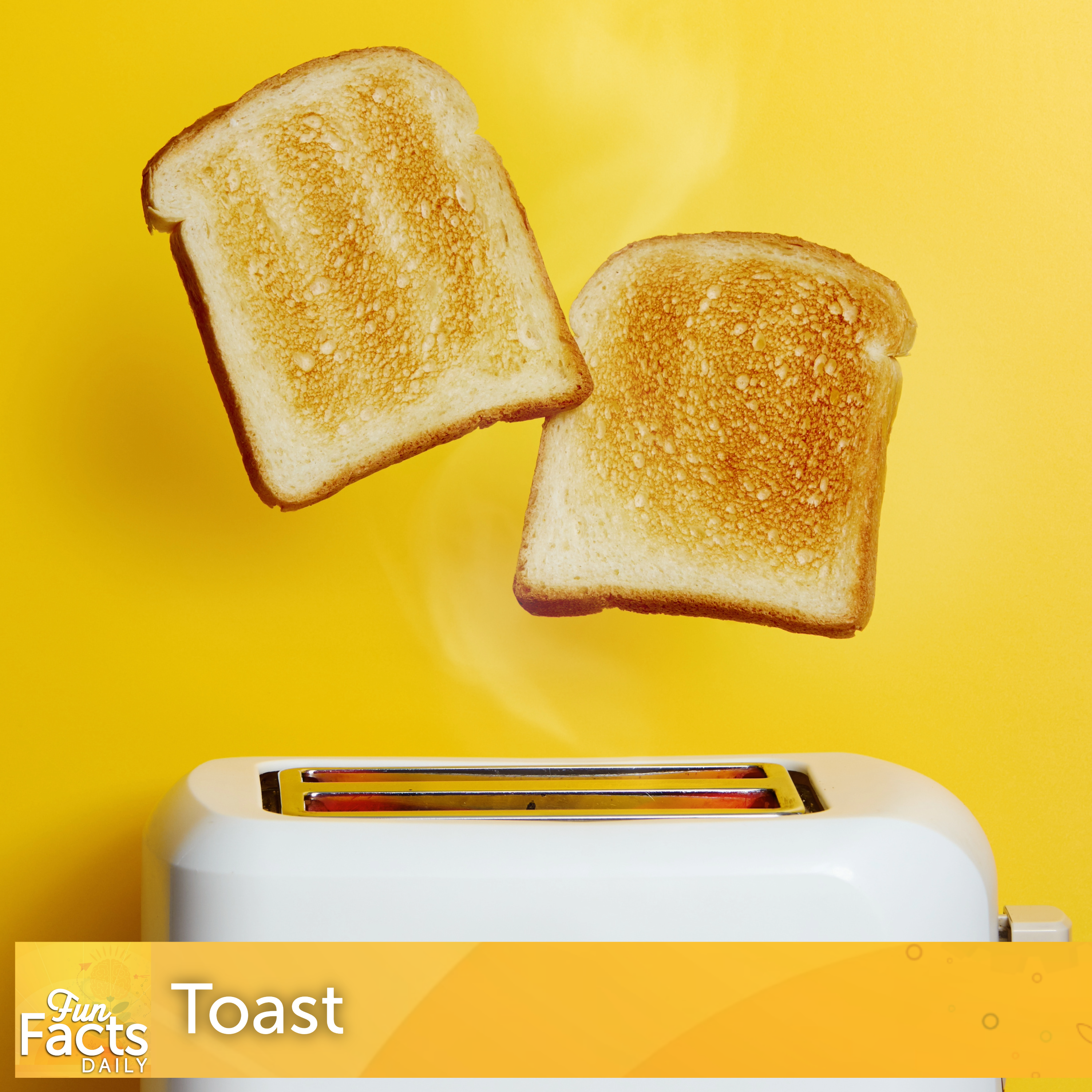
Toasting bread transforms ordinary slices through a complex chemical process known as the Maillard reaction, which occurs when amino acids and simple sugars are exposed to heat between 280 and 330 degrees Fahrenheit. Discovered by French physician Louis-Camille Maillard in 1912, this reaction creates distinct aromas, browning, and flavor compounds by rearranging molecular structures into Amadori compounds and chain-like polymers. Beyond culinary enhancement, historical techniques for toasting bread originated as practical preservation methods in ancient Egypt and Rome to remove excess moisture, prevent mold growth, and salvage stale loaves during long journeys. Over centuries, this culinary staple evolved significantly, transitioning from open-fire cooking and spiced wine additions in medieval Europe to the invention of the automatic pop-up toaster by Charles Strite in 1919 and Otto Rohwedder's bread-slicing innovations in 1928. The physics behind the common observation that dropped to
Robert Greene, author of The 48 Laws of Power, Mastery, and The Laws of Human Nature, nearly died of a stroke in 2018. It left him unable to type, so he spent the next seven years writing his new book, The Law of the Sublime, by hand. Michael speaks with Robert about what coming close to death did to his mind, why he believes humans need transcendent experiences as much as food and shelter, how comfort and old grudges keep our world small, and the everyday rituals he uses to wake back up to it. They discuss: (00:00) Cold open (00:59) The stroke (04:56) What nearly dying does to you (07:12) The book he waited 20 years to write (12:16) What is the sublime? (15:31) Finding amazement in his backyard (24:26) A need as deep as food (28:26) The lost rites of passage (33:18) How to make your own rituals (36:49) 40 minutes of meditation a day (45:37) What boredom is good for (50:31) How adults can slow down (53:36) Why nature matters (58:58) Choose discomfort (1:02:48) Death and the afterlife (
Welcome to What's Up Docs?, the podcast where doctors and identical twins Chris and Xand van Tulleken explore the ideas shaping our health and wellbeing. In this episode, they turn their attention to the nose, an organ we use with every breath but rarely stop to think about. Joined by Miss Katherine Whitcroft, ear, nose, and throat surgeon at Sheffield Children's Hospital and co-director of the Sheffield Chemosensory Research Lab, Chris and Xand explore how the nose is built and what it does for us, why we produce so much mucus and where it goes, and why our noses run when we cry or eat spicy food. The conversation also covers how our sense of smell changes across our lives, the most common things that go wrong with the nose, and what the evidence says about treatments such as nasal sprays. If you want to get in touch, you can email us at [email protected]. Presenters: Drs Chris and Xand van Tulleken Guest: Miss Katherine Whitcroft Producer: Maia Miller-Lewis Researcher: Grace Revi
Alumni of the British Secret intelligence Service are notoriously tight-lipped. John Bryan Wood was no exception. Fortunately, his son, Alistair, has spent years piecing together the details of his secret life. The result is a fascinating portrait of a man who was one part mystic, one part spy, and various other parts unknown. From SPYSCAPE, the home of secrets. A Cup And Nuzzle production. Series producer: Joe Foley. Produced by Joe Foley. Alistair Wood is the author of My Family and Other Spies.
Get the 200+ Page Optimal Living Daily Workbook (PDF) - Free. Want to turn today's episode into an actionable plan? Episode 3601: Mark Fisher explains why so many people stay on track with fitness Monday through Thursday, only to lose the thread once the weekend arrives. He offers three fixes: picking up hobbies that support your goals, stocking the kitchen so the easy choice is the healthy one, and planning indulgences ahead so they feel chosen rather than accidental. The point is not perfection but building healthy habits that leave room for fun. Read along with the original article(s) here: https://markfisherfitness.com/how-to-prevent-your-weekends-from-derailing-your-fitness-2/ Quotes to ponder: "It's 100% ok to enjoy yourself on your fitness journey." "Placing a little friction between you and what you wish to avoid can be super helpful." "Each human has to decide for themselves when self-care means getting a massage and when it means lasagna."
Can eating more plants give your skin a glow—and change how attractive you are? Dr. Matt Nagra joins Chuck Carroll to unpack the research behind the "vegans are sexier" headlines. Nagra, a Vancouver-based naturopathic doctor and co-author of research on vegan attractiveness, explains three connections between diet and perceived attractiveness: skin coloration, body odor, and body composition. Find out why carrots, sweet potatoes, tomatoes, and peppers enter the conversation; garlic's surprising effects; and why carbohydrate quality matters more than simply fearing carbs. You will learn: Carotenoids and the science behind the "glow" How researchers test whether diet changes body odor Meat intake, sweat, and the limits of the evidence The surprising garlic findings Plant-forward eating versus a vegan label Body composition without assuming thinner always means better Why beans, fruit, and whole grains belong in the carbohydrate conversation How quickly some changes may appear Matt's rese
On July 17th, 1956 the luxury Oceanliner Andrea Doria set sail from Italy, bound for New York City. But one day before her arrival, the Andrea Doria entered a thick bank of fog near Nantucket Island. Another ocean liner, the Stockholm, was steaming the other direction. They tried to maneuver around each other, but something went horribly wrong, and the ships collided endangering the lives of thousands of passengers and crewmembers. Join Audible today by downloading the Audible app.
Every day, we're faced with countless decisions, from what to buy at the grocery store to major life choices about work, money, and family. This week, economist Daniel Altman explains how economic thinking can help us cut through decision fatigue, avoid getting stuck in a sea of options, and make choices that lead to greater well-being. Drawing from his new book, The Best Decisions You'll Ever Make, Dan shares practical strategies for simplifying everyday decisions, valuing your time, and making choices that your future self will thank you for. In this episode, you’ll learn: Why having more choices doesn’t always make us happier. How to use simple decision rules to reduce stress and avoid overload. How economic thinking can help you make choices that align with long-term well-being.