Investigate the possibility of scanning the human brain and uploading our minds and consciousness to a digital world. Uploaded 28-10-19 -- Imagine a future where nobody dies— instead, our minds are uploaded to a digital world. There they could live on in a realistic, simulated environment with avatar bodies, calling in and contributing to the biological world. Mind-uploading has powerful appeal— but what would it actually take to scan a person’s brain and upload their mind? Michael S. A. Graziano explores the challenges. Lesson by Michael S. A. Graziano, directed by Lobster Studio. Animator's website: https://www.lobsterstudio.tv (https://www.lobsterstudio.tv/) Sign up for our newsletter: http://bit.ly/TEDEdNewsletter Support us on Patreon: http://bit.ly/TEDEdPatreon Find us on Twitter: http://bit.ly/TEDEdTwitter Peep us on Instagram: http://bit.ly/TEDEdInstagram View full lesson: https://ed.ted.com/lessons/how-close-are-we-to-uploading-our-minds-michael-s-a-graziano Thank you so much
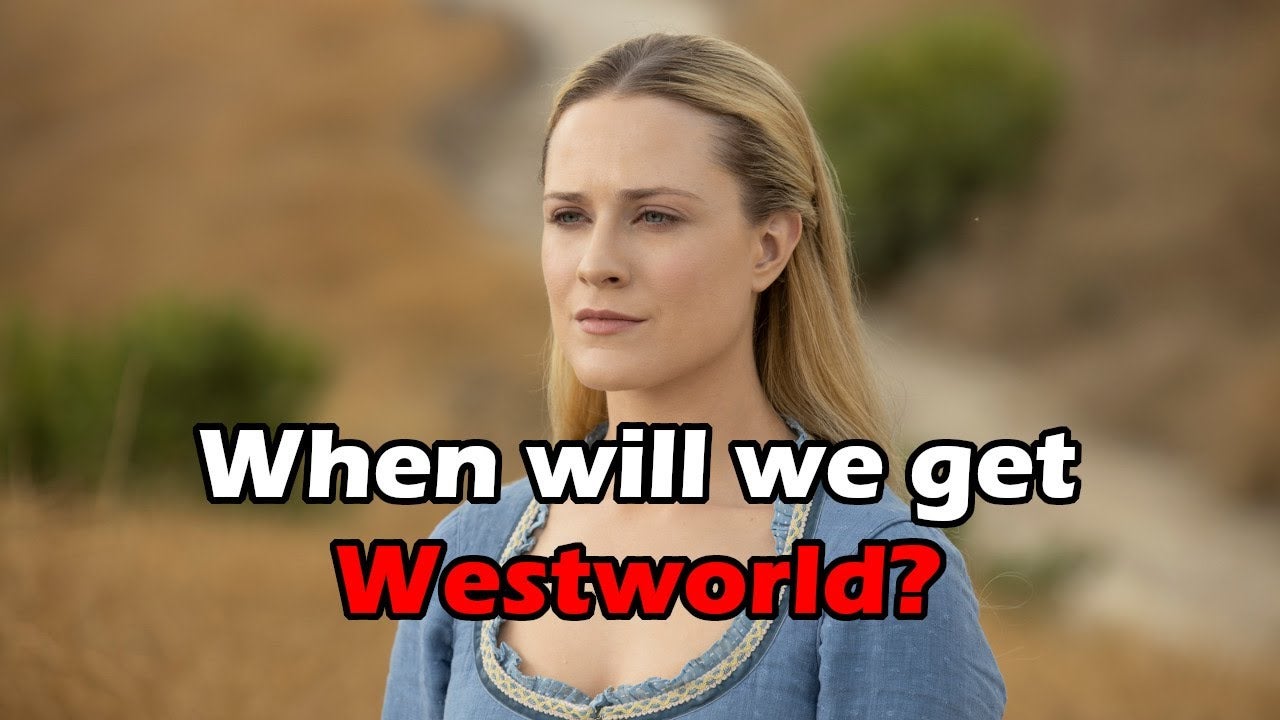
How close are we to building a real Westworld? A look at the hardware, software, and social impact Episode release date: 23 Apr 2023 Core Ideas: Metamodernism: Narratives and emergence view of reality - Reduce suffering - Increase prosperity - Increase understanding mantra: Seek knowledge. DISCLAIMER: This is a community-driven show. ------ Keywords: post labor economics, ai agents, artificial general intelligence, ai podcast, machine autonomy, cognitive ai
Superintelligence is Near! Three innovations that prove it! (I think Fast Takeoff just started!!) Core Ideas: Metamodernism: Narratives and emergence view of reality - Reduce suffering - Increase prosperity - Increase understanding mantra: Seek knowledge. DISCLAIMER: This is a community-driven show. ----- Keywords: artificial general intelligence, machine autonomy, ai podcast, ai masterclass, ai agents, ai philosophy
View full lesson: http://ed.ted.com/lessons/making-sense-of-spelling-gina-cooke What can spelling tell us about relationships between words? While spelling may sometimes seem random or unexpected, this lesson illuminates how peeling back the layers of spelling helps us understand the complex history and meaningful structure of words. Lesson by Gina Cooke, animation by The Leading Sheep (http://www.theleadingsheep.com). (http://www.theleadingsheep.com)./)
AGI: What will the first 90 days be like? And more VEXING questions from the audience! Episode release date: 14 Mar 2024 Core Ideas: Metamodernism: Narratives and emergence view of reality - Reduce suffering - Increase prosperity - Increase understanding mantra: Seek knowledge. DISCLAIMER: This is a community-driven show. ------------ Keywords: prompt engineering, ai ethics, tech singularity, ai consciousness, heuristic imperatives, superintelligence, ai education
Scientists have uncovered new clues about the origins of life's chemical building blocks by analyzing amino acids from asteroid Bennu and the Murchison meteorite. Using an advanced technique to examine their molecular structure, researchers are revealing unexpected details about how these organic compounds formed across the early solar system. The findings offer a fresh perspective on the chemistry that may have helped prepare the ingredients for life. This episode includes AI-generated content.
The ALPS II experiment has released its first results in the search for hypothetical axions, particles that could help explain the mystery of dark matter. Using powerful lasers and intense magnetic fields, researchers are testing an unconventional way to detect these elusive particles. Although no confirmed signal has emerged, the findings help refine the search and bring physicists closer to exploring new physics beyond the Standard Model. This episode includes AI-generated content.
Rep. Thomas Massie, a Kentucky Republican, and Rep. Chellie Pingree, a Maine Democrat, both farm, and on food and farming they work together. Massie raises grass-finished beef, meat chickens, peaches, and apples. Pingree has been an organic farmer since the 1970s. Recorded live at Churchtown 2026 with Dave Chapman, the two talk about the fight to keep Bayer from getting immunity from glyphosate lawsuits, and the House floor vote where 207 Democrats and 73 Republicans voted to pull that immunity out of the farm bill. They cover the PRIME Act for small meat processors, Pingree's bill to ban paraquat, a bill to end capital gains tax when a family farm passes to the next generation, and how to reach the staffer who writes your representative's vote recommendation. Massie also shares what's next on his farm, from pasture-raised pigs on acorns to a self-propelled chicken tractor. https://realorganicproject.org/two-farmers-in-Congress-across-the-aisle (https://https//realorganicproject.org/sa
Stereotyped as manhating, puritanical killjoys, lesbian feminists have drawn almost as much contempt as the conservative Christian movements to which they are compared. Rather than dismissing this negativity, Lesbian Feminist Killjoys embraces it. The book proposes that the negativity of an earlier era sheds light on irresolvable complicities that shape queer and trans life today. Grounded in the archives of lesbian feminist movements, Lesbian Feminist Killjoys: Sin, Queer Negativity, and Inherited Guilt (https://bookshop.org/a/12343/9781479839391) (NYU Press, 2026) centers the contributions of four key lesbian feminists: Beverly Smith, Andrea Dworkin, Pat Parker, and Jill Johnston. Author Wendy Mallette unpacks these writers’ understanding of sex as inextricably tied to patriarchy, capitalism, racism, and colonialism. Their thinking is brought into conversation with theorizations of queer negativity and the concept of social sin. By taking cues from Black, womanist, and queer Christia
Black Apocalypse: Afrofuturism at the End of the World (https://bookshop.org/a/12343/9780520388482)(U California Press, 2025) by Tavia Nyong'o, published by University of California Press (2015) is an introduction to the past and present of black engagement with speculative futures. From W. E. B. Du Bois to Sun Ra to Octavia Butler. Nyong'o shows that the end of the world is crucial to the concept of afrofuturism and reframes the binary of afropessimism and afrofuturism to explore their similarities. Black Apocalypse interweaves black trans, queer, and feminist theories, examining the social, technological, and existential threats facing our species and reflects on shifting anxieties and hopes for the future. Exploring the apocalypse in movies, art, literature, and music, this book considers the afterlives of slavery and continuing inequality, reviving the radical black imagination to envision the future." Hosted by Simplecast, an AdsWizz company.
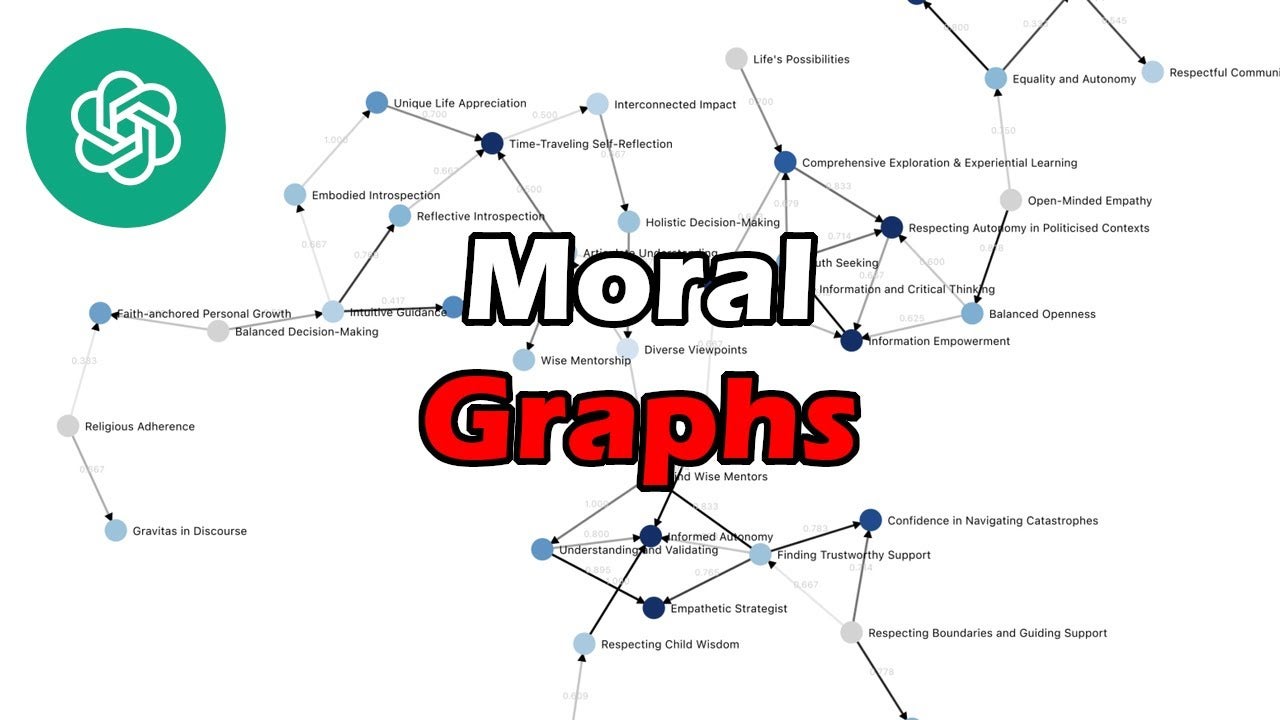
Moral Graphs: Interview with OpenAI Grant Winners! Meaning Alignment Institute: Aligning Humanity! Episode release date: 4 Feb 2024 Core Ideas: Metamodernism: Narratives and emergence view of reality - Reduce suffering - Increase prosperity - Increase understanding mantra: Seek knowledge. DISCLAIMER: This is a community-driven show. ---- Keywords: agi, david shapiro, singularity, ai innovation
4IR Podcast - 001 - What is going to happen? Episode release date: 12 Apr 2024 Core Ideas: Metamodernism: Narratives and emergence view of reality - Reduce suffering - Increase prosperity - Increase understanding mantra: Seek knowledge. DISCLAIMER: This is a community-driven show. ---- Keywords: future technology, ai future, ai consciousness, tech singularity, ai innovation, agi, deep learning
View full lesson: http://ed.ted.com/lessons/what-gives-a-dollar-bill-its-value-doug-levinson Uploaded 23-06-14 The value of money is determined by how much (or how little) of it is in circulation. But who makes that decision, and how does their choice affect the economy at large? Doug Levinson takes a trip into the United States Federal Reserve, examining how the people who work there aim to balance the value of the dollar to prevent inflation or deflation. Lesson by Doug Levinson, animation by Qa'ed Mai.
View full lesson: http://ed.ted.com/lessons/how-to-make-a-mummy-len-bloch Uploaded 18-06-15 As anyone who’s seen a mummy knows, ancient Egyptian priests went to a lot of trouble to evade decomposition. But how successful were they? Len Bloch details the mummification process and examines its results thousands of years later. Lesson by Len Bloch, animation by The Moving Company Animation Studio.
According to the UN, people living in urban places now outnumber those in rural areas — which is a pretty new phenomenon for many parts of the world. So today, we’re going to discuss factors that have led to this shift in populations from rural to urban residences (known as urbanization), and we’ll examine the historical and structural systems, like colonialism and Central Place Theory, that have influenced the cities we see today. Correction: 3:20 On the map here we incorrectly placed the Shanghai marker where Guangzhou is located. SOURCES Knox and Marston 2016: Human Geography Place and Regions in a Global Context. 7th Edition. Pearson Marston et all. 2017. World Regions in a Global Context. Peoples, Places and Environments. 6th Edition. Pearson. Pacione, M. 2001. Urban Geography A Global Perspective. Routledge. Derudder, Ben and Taylor, Peter. 2016. Change in the World City Network, 2000-2012. The Professional Geographer. 68(4) pages 624-637 China’s urban system Chang. S. 1963. The
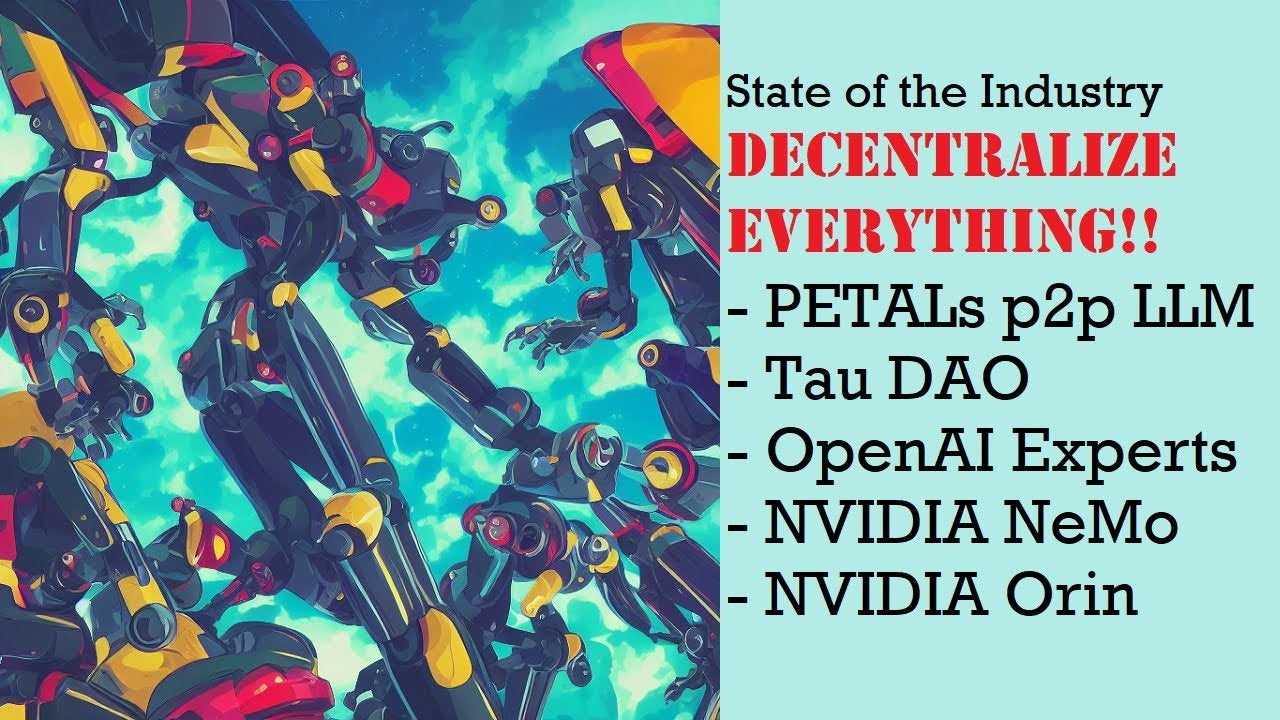
State of the Industry: Decentralized Everything plus NVIDIA announces Beta of NeMo! Episode release date: 21 Sep 2022 Core Ideas: Metamodernism: Narratives and emergence view of reality - Reduce suffering - Increase prosperity - Increase understanding mantra: Seek knowledge. DISCLAIMER: This is a community-driven show. --------------- Keywords: singularity, ai masterclass, david shapiro, ai research, deep learning, gpt, artificial intelligence, ai development
Explore the science of bone lengthening surgery, and discover the benefits and limitations of this still-developing technology. -- Differences in leg length can emerge for various reasons, from genetic and hormonal conditions to injuries that impact bone growth. But while we still don’t know exactly what degree of difference causes health issues, doctors have made great strides in figuring out how to even out these mismatched limbs. Jason Shih Hoellwarth digs into the benefits and limitations of bone lengthening surgery. Lesson by Jason Shih Hoellwarth, directed by Igor Ćorić, Artrake Studio. Support Our Non-Profit Mission ---------------------------------------------- Support us on Patreon: http://bit.ly/TEDEdPatreon Check out our merch: http://bit.ly/TEDEDShop ---------------------------------------------- Connect With Us ---------------------------------------------- Sign up for our newsletter: http://bit.ly/TEDEdNewsletter Find us on Twitter: http://bit.ly/TEDEdTwitter Peep us on I
Drs Chris and Xand van Tulleken continue their conversation about health optimisation with Jack Naylor, Head of First Team Sports Science at Everton Football Club. This time, they get a glimpse of life inside a Premier League football club. How do top athletes train and eat? Do they, too, struggle with motivation to exercise? And what tricks might help the rest of us get moving? Chris and Xand also ask what happens when we lean into creativity, rather than control, when it comes to our health. If you’d like to share your thoughts on this or any other topic covered on the podcast, you can email us at [email protected]. Presenters: Drs Chris and Xand van Tulleken Guest: Jack Nayler Producer: Rami Tzabar Assistant Producer: Dr Samara Linton Researcher: Dr Samara Linton Executive Producer: Jo Rowntree Visual Producer: Leon Gower Technical Lead: Reuben Huxtable Digital Lead: Richard Berry Composer: Phoebe McFarlane Sound Design: Melvin Rickarby At the BBC: Assistant Commissioner: Greg S
Sam Altman WRECKS OpenAI - Jan Leike joins Anthropic - Brain Drain from OpenAI Episode release date: 29 May 2024 Core Ideas: Metamodernism: Narratives and emergence view of reality - Reduce suffering - Increase prosperity - Increase understanding mantra: Seek knowledge. DISCLAIMER: This is a community-driven show. --------- Keywords: agi, ai agents, deep learning, ai development, post labor economics, chatbots
Over the last 100 years, the world has gotten safer and better in almost every single way, yet depression and mental health issues are higher than they've ever been. Dr. Kelly Lambert, a neuroscientist at the University of Richmond and author of Lifting Depression and Wild Brains, argues that one reason for this is that our brain is built to work for its rewards and to look forward to good things.The problem: Modern life is built to bypass all effort and give instant gratification. Michael speaks with Kelly about worker rats and trust fund rats, why crafts and hobbies may work like medicine, what wild animals reveal about modern stress, problems with how pharmaceutical studies are constructed, and why looking forward to something good may matter as much as getting it. They discuss: (00:00) Intro (01:05) Why mental health hasn't improved (06:02) Exercise and working for rewards (09:29) Why hard-won rewards feel better (11:40) Wild rats vs. lab rats (17:44) Why behavior often beat pills
Welcome to What’s Up Docs?, the podcast where doctors and identical twins Chris and Xand van Tulleken explore the ideas shaping our health and wellbeing. In this episode, they discuss the growing drive to optimise our health. We have more data about our bodies than ever before - wearables, apps and trackers that measure our sleep, diet, exercise, body temperature, oxygen levels and more, all in the hope of hitting the right numbers. But what does optimisation really mean? Should we always strive to be more efficient? Or is there a more helpful way to think about the complex system that is our health? To help answer these questions, the Docs are joined by Jack Naylor, former Head of First Team Sports Science at Everton Football Club. If you want to get in touch, you can email us at [email protected]. Presenters: Drs Chris and Xand van Tulleken Guest: Jack Nayler Producer: Rami Tzabar Assistant Producer and researcher: Dr Samara Linton Editor: Jo Rowntree Visual Producer: Leon Gower
At 9:16 pm Sydney time on Wednesday 18 November 2026, Voyager 1 becomes the first human-made object to reach one light-day from Earth. Anna and Avery explain what that distance means, what it takes to fly a spacecraft when every conversation lasts 48 hours, and why there is no line in space to cross, and they correct a timing error from yesterday's episode. Also: the Webb telescope finds water and carbon dioxide ice around the southern star Beta Pictoris that may be older than the star itself; twelve grains of stratospheric dust point to a reservoir of heavy-oxygen water in the Kuiper Belt; the Roman Space Telescope finishes aligning its instruments; and quick hits on Starship V4, Shenzhou 24, BepiColombo and Hera. Skywatch shows where Voyager is in the sky, with a second chance at the Leonids. In this episode · Voyager 1 reaches one light-day · Beta Pictoris: ice older than its star · Kuiper Belt dust and heavy-oxygen water · Roman Space Telescope aligned · Quick hits: Starship V4, Sh
Dr. Kaveh Hoda is joined by Benedicte Callan, independent researcher and consultant on health and bioscience policy, to unpack the damage RFK Jr. has done as HHS Secretary — and how to walk it back. Benedicte volunteers with Defend Public Health, the group behind the weekly "Whopper of the Week" series, which has catalogued over 59 of RFK Jr.'s falsehoods since his confirmation. Together, they dig into: The autism research whopper Rigged vaccine studies The asymmetry problem AI as "medical tyranny" cure RSV's "lab leak" origin story Environmental rollbacks under MAHA Hosted on Acast.