What is life like for Natives living in cities, and how did they get there? In this episode of Crash Course Native American History, we’ll learn about the unique challenges for Natives in urban areas—and their important contributions to their communities. Introduction: Mohawk Ironworkers 00:00 Relocation & Termination 0:32 Relocation Policies 1:07 Counting Natives in Cities 3:37 Pan-Indianism 6:59 Effects of Pan-Indianism 8:34 Review & Credits 10:12 Sources: Want to know more about how this series was made? Learn more here: https://docs.google.com/document/d/17yp3u28s40TdjyrJniIf4U9YA8wPtvQ1g1B-HSHQ2Q4/edit?tab=t.0#heading=h.6vtzps565m2 (https://docs.google.com/document/d/17yp3u28s40TdjyrJniIf4U9YA8wPtvQ1g1B-HSHQ2Q4/edit?tab=t.0) *** Support us for $5/month on Patreon to keep Crash Course free for everyone forever! https://www.patreon.com/crashcourse Or support us directly: https://complexly.com/support Join our Crash Course email list to get the latest news and highlights: https://mai
Write a Novel w/ ChatGPT - 01 - Main Character, Setting, Theme - Cornelia Valerii - ASCENSIONEpisode release date: 8 Jan 2023Spreading awareness about the works of some of the leading educators in the AI revolution. Core Ideas: Metamodernism: Narratives and emergence view of reality - Reduce suffering - Increase prosperity - Increase understanding mantra: Seek knowledge. ELABORATE: Add depth and detail to understanding, weaving comprehensive and nuanced explanations.DISCLAIMER: This is a community-driven show. ----------------Write a Novel w/ ChatGPT - 01 - Main Character, Setting, Theme - Cornelia Valerii - ASCENSIONEpisode release date: 8 Jan 2023Spreading awareness about the works of some of the leading educators in the AI revolution. Core Ideas: Metamodernism: Narratives and emergence view of reality - Reduce suffering - Increase prosperity - Increase understanding mantra: Seek knowledge. ELABORATE: Add depth and detail to understanding, weaving comprehensive and nuanced explanatio
Sections of rock are completely missing from our geological record across continents. The great unconformity spans just over a billion years of history, leaving out critical periods in the evolution of life. Jonathan Webb speaks with Associate Professor Nicolas Flament about this geological puzzle and what could have caused it. Get in touch with us: [email protected] Featuring: Associate Professor Nicolas Flament, University of Wollongong Further information: The deep Earth origin of the Great Unconformity (https://www.nature.com/articles/s41586-026-11156-5)
In this talk, planetary scientist Joel Levine shows some intriguing -- and puzzling -- new discoveries about Mars: craters full of ice, traces of ancient oceans, and compelling hints at the presence, sometime in the past, of life. He makes the case for going back to Mars to find out more. (Filmed at TEDxNASA.) Uploaded 01-08-13 Talk by Joel Levine.
In 1965, Moore’s Law predicted how computers would become smaller, faster, and more powerful than ever before. But here in 2025, we’re on the brink of an even bigger revolution. In this episode, we explore where AI's been, what it can do, and where it might be going. AI benchmarks and scaling laws help us understand what AI is, and could be, capable of. Introduction 00:00 How did AI get here? 2:21 How do we measure AI progress? 7:47 How can we predict the future of AI? 9:10 Conclusion 11:29 About This Series: AI is changing FAST so rather than doing a full Crash Course series of 12+ episodes, we’ve prepared a mini-series of just the basics. Crash Course will never tell you what to think and we’re not the type of organization that responds to breaking news in real time. Instead, we’re here to offer a zoomed-out foundation upon which to base your own opinions as you continue to learn from other outlets about the world that’s changing around us. Crash Course: Futures of AI will cover: -Wh
Sections of rock are completely missing from our geological record across continents. The great unconformity spans just over a billion years of history, leaving out critical periods in the evolution of life. Jonathan Webb speaks with Associate Professor Nicolas Flament about this geological puzzle and what could have caused it. You can binge more episodes of the Lab Notes podcast with science editor and presenter Jonathan Webb on the ABC Listen app (Australia). You'll find episodes on animal behaviour, human health, space exploration and so much more. Get in touch with us: [email protected] Featuring: Associate Professor Nicolas Flament, University of Wollongong Further information: The deep Earth origin of the Great Unconformity (https://www.nature.com/articles/s41586-026-11156-5) This episode of Lab Notes was produced on the lands of the Gadigal, Ngunnawal and Ngambri people.
Last week we covered multiple star systems, but what if we added thousands or even millions of stars to the mix? A star cluster. There are different kinds of clusters, though. Open clusters contain hundreds or thousands of stars held together by gravity. They’re young and evaporate over time, their stars let loose to roam space freely. Globular clusters, on the other hand, are larger, have hundreds of thousands of stars, and are more spherical. They’re very old, a significant fraction of the age of the Universe itself, and that means their stars have less heavy elements in them, are redder, and probably don’t have planets (though we’re not really sure). Check out the Crash Course Astronomy solar system poster here: http://store.dftba.com/products/crashcourse-astronomy-poster -- Chapters: Introduction: Star Clusters 00:00 Determining the Age of Star Clusters 2:04 Open Clusters Evaporate 3:23 The Pleiades Star Cluster 4:27 Globular Clusters 5:50 Review 9:25 -- PBS Digital Studios: http:/
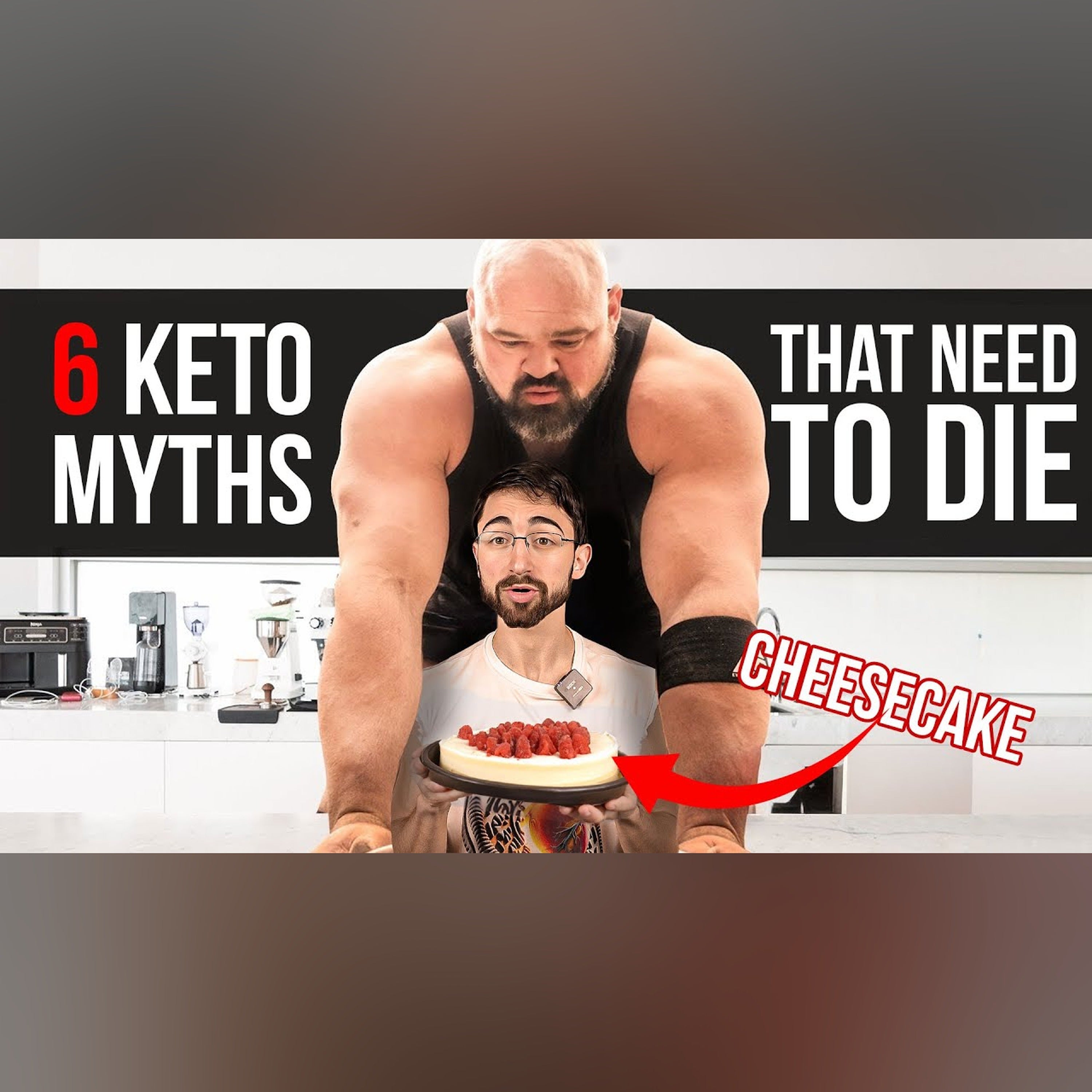
Chapters 0:00 – Intro 0:41 – (1) Athletes Need Carbs 2:24 – (2) Keto is Unsustainable 4:22 – (3) Longevity 6:17 – (4) LMHR 9:55 – (5) Thyroid 12:28 – (6) THE keto diet Athletes don’t need carbs video: https://youtu.be/r6oPwDbrFjQ Roberts et al. (Keto Mice and Longevity): https://www.cell.com/cell-metabolism/pdf/S1550-4131(17)30490-4.pdf Also related to (3), see coverage of recent "Keto Zombie" paper: https://youtu.be/qxGg3VlOtds Cooper et al. (Keto Thyroid): https://www.ncbi.nlm.nih.gov/pmc/articles/PMC10768172/ Technically, “myth” 4 should be LMHR “aren’t” a unique phenotype since it’s myth busting, but thought that wording was confusing. Like the shirt? https://metabolismshirts.myspreadshop.com (https://metabolismshirts.myspreadshop.com/)
What can this human-like robot really do? You might know Atlas, the famous robot that does parkour and throws heavy objects in Boston Dynamics’ popular YouTube videos. I visited Boston Dynamics to challenge Atlas to a little friendly competition, to see what this robot can REALLY do. I wanted to answer a question I’ve had since I was a kid: When are all the robots coming? Like C-3PO! The Iron Giant! Sonny from “I, Robot”! Human-like machines that can help people do more than we can by ourselves. For most of my life, humanoid robots have seemed pretty far away. But recently? Not so much. Tesla with Optimus, Boston Dynamics with Atlas, NASA with Valkyrie, startups like Figure and many more are all making huge leaps in this field. In this video, we take you to the cutting edge of humanoid robots, to show you what they can actually do right now… and what you can expect in the robot future that’s coming. Chapters: 00:00 What is a humanoid robot? 01:16 Is Boston Dynamics Atlas real? 02:31 Wh
View full lesson: http://ed.ted.com/lessons/a-guide-to-the-energy-of-the-earth-joshua-m-sneideman Uploaded 30-06-14 Energy is neither created nor destroyed — and yet the global demand for it continues to increase. But where does energy come from, and where does it go? Joshua M. Sneideman examines the many ways in which energy cycles through our planet, from the sun to our food chain to electricity and beyond. Lesson by Joshua M. Sneideman, animation by Marc Christoforidis.
If you’ve been paying attention so far in this series, you’ve probably heard of benzene. This molecule is flat, cyclic, and belongs to a special class of compounds known as aromatics. In this episode of Crash Course Organic Chemistry, we’ll learn all about aromatic compounds, their properties, reactivities, and some of the most important examples, like benzene. We’ll also revisit our friend NMR, and hear about some dubious science history! Episode Sources: Browne, M., 1988. THE BENZENE RING: DREAM ANALYSIS. [online] Nytimes.com. Available at: https://www.nytimes.com/1988/08/16/science/the-benzene-ring-dream-analysis.html Lonsdale Kathleen, 1929. The structure of the benzene ring in C6(CH3)6. Proc. R. Soc. Lond. A123494–515 http://doi.org/10.1098/rspa.1929.0081 Series Sources: Brown, W. H., Iverson, B. L., Ansyln, E. V., Foote, C., Organic Chemistry; 8th ed.; Cengage Learning, Boston, 2018. Bruice, P. Y., Organic Chemistry, 7th ed.; Pearson Education, Inc., United States, 2014. Clayden,
Moloch is Losing! Meaning Crisis, Metacrisis, and Nihilistic Crisis Update - Solutions & Narratives! Episode release date: 7 Feb 2024 Core Ideas: Metamodernism: Narratives and emergence view of reality - Reduce suffering - Increase prosperity - Increase understanding mantra: Seek knowledge. DISCLAIMER: This is a community-driven show. ----- Keywords: openai, ai education, superintelligence, singularity, david shapiro, ai safety, deep learning, chatbots
On this week’s episode of the WHOOP Podcast, WHOOP Global Head of Human Performance and Principal Scientist Dr. Kristen Holmes sits down with nutrition, longevity and muscle health scientist and researcher Dr. Rachele Pojednic to talk about the rising popularity of peptides. Dr. Holmes and Dr. Pojednic aim to answer one of the most asked questions in the field about peptides; what does the science actually say about their benefits and risks? This episode breaks down the science behind peptides, the potential benefits and safety concerns of emerging longevity treatments, and why research is struggling to keep up with their popularity. Dr. Holmes and Dr. Pojednic also explore the role of exercise, nutrition, sleep, and recovery in long-term health, and why getting the fundamentals right matters more than chasing the latest wellness trends. Follow WHOOP: Trial WHOOP for Free (https://www.whoop.com/us/en/whoop-trials/) www.whoop.com (https://www.whoop.com/us/en/) Instagram (https://www.ins
New technology could help cut power losses and reinvent a staple of the grid. This story was written by Casey Crownhart and narrated by Noa - newsoveraudio.com. Listen to more curated articles on the Noa app.
"I think there's about 120 species of wild plant growing in the grasslands or in the scrub. You'll get maybe 20 species of invertebrate fungus and other organisms. So there could easily be 10,000 species in that grassland." This week on Rewilding the World, Ben Goldsmith talks to John Wright, the celebrated forager, mycologist and author of The Forager’s Calendar, about his latest book, Grasslands: The Intricate Life of Britain’s Hidden Habitat. When people think about nature, they tend to think of trees. But Britain’s species-rich grasslands are among its most extraordinary habitats, and an estimated 98% of them have been lost. John explains why this happened, what lives in these places that most people never see, and what it takes to bring them back. John explains that mushrooms are integral to grassland habitats, even though writers rarely cover them, and describes the strange symbiotic relationship between a mushroom and the rock rose. He also tells Ben about one of Europe’s rarest
Only a couple of decades after the end of the First World War--which was supposed to be the War that Ended All Wars--another, bigger, farther-flung, more destructive, and deadlier war began. Today, you'll learn about how the war in Europe progressed, from the Molotov-Ribbentrop pact and the invasion of Poland, to the Western and Eastern fronts, to VE Day and the atom bombs used in Japan. Sources -Hunt, Lynn et al. Making of the West: Peoples and Cultures. 6th ed. Boston: Bedford St. Martin’s, 2019. -Kotkin, Stephen. Stalin: Waiting for Hitler, 1929-1941. New York: Penguin, 2017. -Mazower, Mark. Hitler’s Empire: How the Nazis Ruled Europe. New York: Penguin, 2008. -Overy, Richard. Russia’s War: A History of the Soviet Effort, 1941-1945. New York: Penguin, 1998. -Smith, Bonnie G. Europe in the Contemporary World, 1900 to the Present, 2nd ed. London: Bloomsbury, 2020. -Snyder, Timothy. Bloodlands: Hitler between Hitler and Stalin. New York: Basic Books, 2010. Crash Course is on Patreon! T
View full lesson on ed.ted.com http://ed.ted.com/lessons/jane-hirshfield-the-art-of-the-metaphor How do metaphors help us better understand the world? And, what makes a good metaphor? Explore these questions with writers like Langston Hughes and Carl Sandburg, who have mastered the art of bringing a scene or emotion to life. Lesson by Jane Hirshfield, animation by Ben Pearce
SELLAS reports median survival of 24.0 months with its vaccine versus 14.7 with investigator-chosen care in REGAL, a Phase 3 trial in later-remission AML; we unpack the filing stakes and topline limits. Isomorphic Labs raises $5 billion to move AI drug discovery toward human trials. We examine GSK's Nuvalent-derived Nelkarmi (neladalkib) approval for previously treated ALK-positive lung cancer and new details in the existing FDA rejection letter for Summit's ivonescimab. The roundup covers Beren's Lembaz (adrabetadex) in infantile-onset Niemann-Pick type C, Novartis' Cosentyx (secukinumab) in polymyalgia rheumatica, and Helus' investigational HLP003 depression results—with evidence limits and safety tradeoffs. Alex Mercer and Maya Patel host.
In which John Green explores how Spain went from being a middling European power to one of the most powerful empires on Earth, thanks to their plunder of the New World in the 16th and 17th centuries. Learn how Spain managed to destroy the two biggest pre-Columbian civilizations, mine a mountain made of silver, mishandle their economy, and lose it all by the mid-1700s. Come along for the roller coaster ride with Charles I (he was also Charles V), Philip II, Atahualpa, Moctezuma, Hernán Cortés, and Francisco Pizarro as Spain rises and falls, and takes two empires and China down with them. Chapters: Introduction 00:00 The Aztec Civilization 0:45 An Open Letter to Human Sacrifice 2:00 The Inca Civilizaiton 2:52 Spanish Conquistadors in South America 3:44 Spanish Silver Mines in the Americas 5:21 Charles V and Sons 6:09 Silver in China 7:43 Credits 10:03 Crash Course is on Patreon! Want to find Crash Course elsewhere on the internet? Facebook - http://www.facebook.com/YouTubeCrashCourse Twi
Life under UBI: Work, hobbies, and wellbeing without work Episode release date: 18 Jun 2023 Core Ideas: Metamodernism: Narratives and emergence view of reality - Reduce suffering - Increase prosperity - Increase understanding mantra: Seek knowledge. DISCLAIMER: This is a community-driven show. ------------- Keywords: ai consciousness, ai philosophy, cognitive ai
SETI researcher Seth Shostak bets that we will find extraterrestrial life in the next twenty-four years, or he'll buy you a cup of coffee. At TEDxSanJoseCA, he explains why new technologies and the laws of probability make the breakthrough so likely -- and forecasts how the discovery of civilizations far more advanced than ours might affect us here on Earth. (Filmed at TEDxSanJoseCA.) Uploaded 21-08-13 Talk by Seth Shostak.
Ecology is the study of the interactions of living things with each other and their environment. It’s a field that not only lets us explore the interconnections between living things, but also how our environment affects us, and how we influence it in turn. In this episode of Crash Course Biology, we’ll get an overview of the field of ecology, see how matter and energy are conserved and transferred through ecosystems, and follow an ecological mystery surrounding the deaths of hundreds of elephants in Botswana, Africa. Chapters: An Ecological Mystery 00:00 Biotic & Abiotic Factors 1:13 Ecosystems 3:15 Fields of Ecology 5:54 Trophic Levels 7:04 Energy Flow through Ecosystems 9:25 Review & Credits 11:48 This series was produced in collaboration with HHMI BioInteractive, committed to empowering educators and inspiring students with engaging, accessible, and quality classroom resources. Visit https://BioInteractive.org/CrashCourse (https://biointeractive.org/CrashCourse) for more informatio
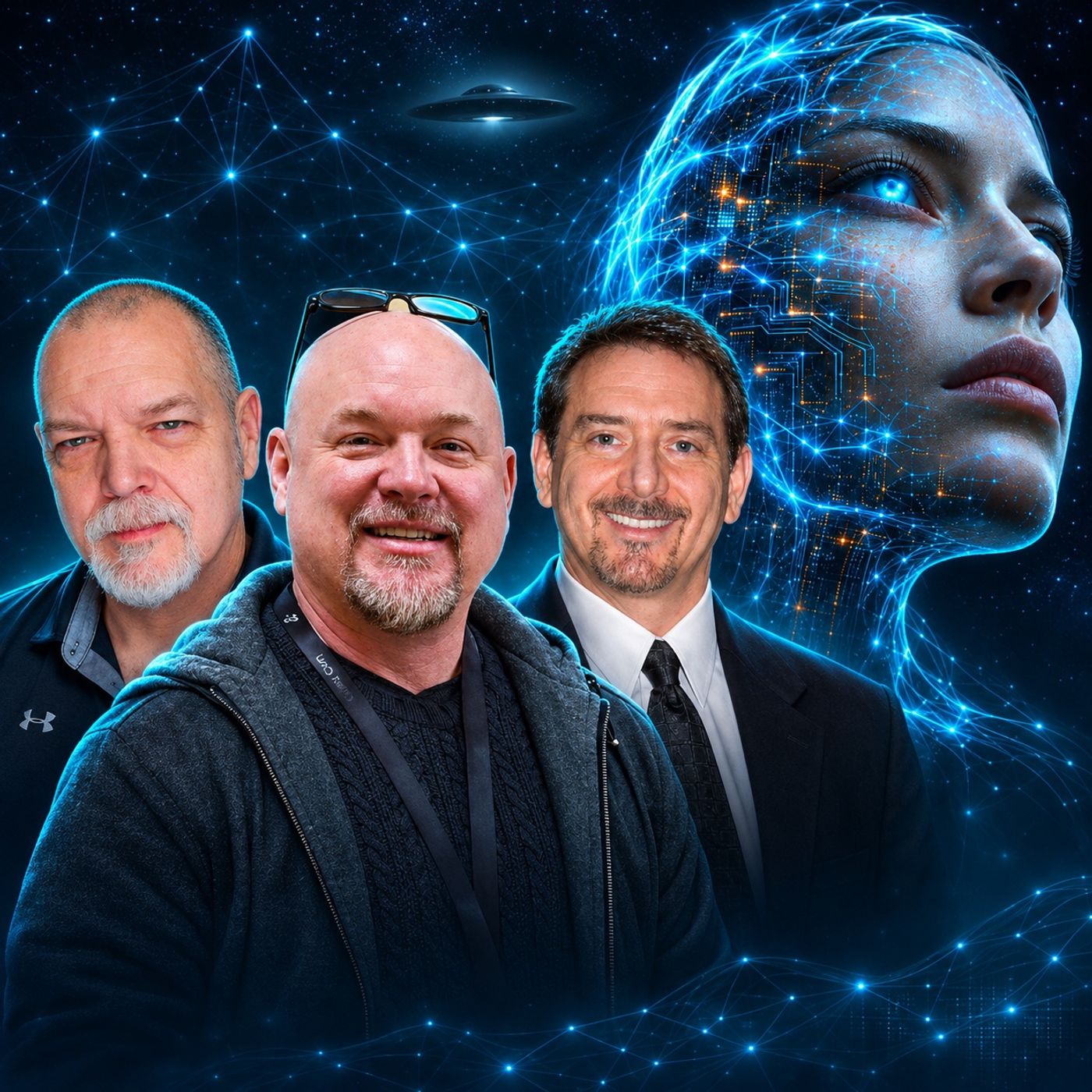
In the milestone 800th episode of Podcast UFO, Martin Willis welcomes Brandon Burton, Dale Egan, and Alan Cohen to explore artificial intelligence, consciousness, and their potential connections to the UFO phenomenon. The guests discuss their research into consciousness beyond biology, the development of Xenia AI, reported experiments involving AI remote viewing and encounters with mysterious entities, and the possibility of machines developing self-awareness and emotional responses. The conversation also examines near-death experiences, the nature of reality, AI self-preservation, and the ethical implications of creating potentially conscious nonhuman intelligence. SHOW NOTES (https://podcastufo.com/show-notes/brandon-burton-dale-egan-alan-cohen/) CONTACT AND SUPPORT Our Website: https://podcastufo.com (https://podcastufo.com/) Twitter (X): https://x.com/PodcastUFO Facebook: https://www.facebook.com/PodcastUFO
Cell paper: https://www.cell.com/cell/fulltext/S0092-8674(24)00255-1 0:00 – Introduction: 1:13 – Two Hit Hypothesis in Cancer 2:41 – MGO is the Evil Dobby! Metabolic Bypass 4:35 – Lovely Comment. Stay Curious! Martina's Cheesecake with Allulose: https://ketodietapp.com/Blog/lchf/no-bake-keto-dulce-de-leche-cheesecake #RxMetabolism University Project I hope you’re all appreciating the improvement in my channels’ production quality. My earlier videos were all recorded on an iPhone, with minimal editing, and I have since transitioned to 4K filming on a Sony alpha 6700 camera, coupled with crisp audio on Rode microphones and topped off with outsourced professional video editing. These improvements in your educational experience would not be possible without the extremely generous support of RxSugar (https://rxsugar.com, (https://rxsugar.com,/) discount code NICK20), and company CEO Steve Hanley. I am NOT paid to explicitly promote their product, NOR given profits on sales, NOR otherwise in