View full lesson: http://ed.ted.com/lessons/let-s-talk-about-dying-peter-saul We can't control if we'll die, but we can "occupy death," in the words of Dr. Peter Saul. He calls on us to make clear our preferences for end of life care -- and suggests two questions for starting the conversation. (Filmed at TEDxNewy.) Talk by Peter Saul.
Sickeningly Sweet: Protecting Your Child from High-Sugar, Ultra Processed Foods, and the Rise in Pediatric Chronic Disease Meryl Fury, MS, RN, examines how high-sugar and ultra-processed foods may contribute to the rise in pediatric chronic disease. Learn how parents can better protect children’s health through food awareness, nutrition choices, and prevention-focused daily habits. #ChildrensHealth #Sugar #ProcessedFoods
Some scientists believe we are in the middle of Earth’s sixth mass extinction: a big, precarious game of Jenga that involves every ecosystem on the planet. In this episode of Crash Course Biology, we’ll see how conservation biology aims to restore habitat and preserve biodiversity. Along the way, we’ll see how environmental damage impacts human communities, and learn about wolves’ return to Yellowstone National Park. Chapters: Introduction to Conservation Biology 00:00 Human Impact 3:10 Environmental Injustices 5:32 Restoration Ecology 6:53 Conservation 9:21 Review & Credits 12:19 Special thanks to Linus Obenhaus for additional video editing support on this episode! This series was produced in collaboration with HHMI BioInteractive, committed to empowering educators and inspiring students with engaging, accessible, and quality classroom resources. Visit https://BioInteractive.org/CrashCourse (https://biointeractive.org/CrashCourse) for more information. Are you an educator looking for
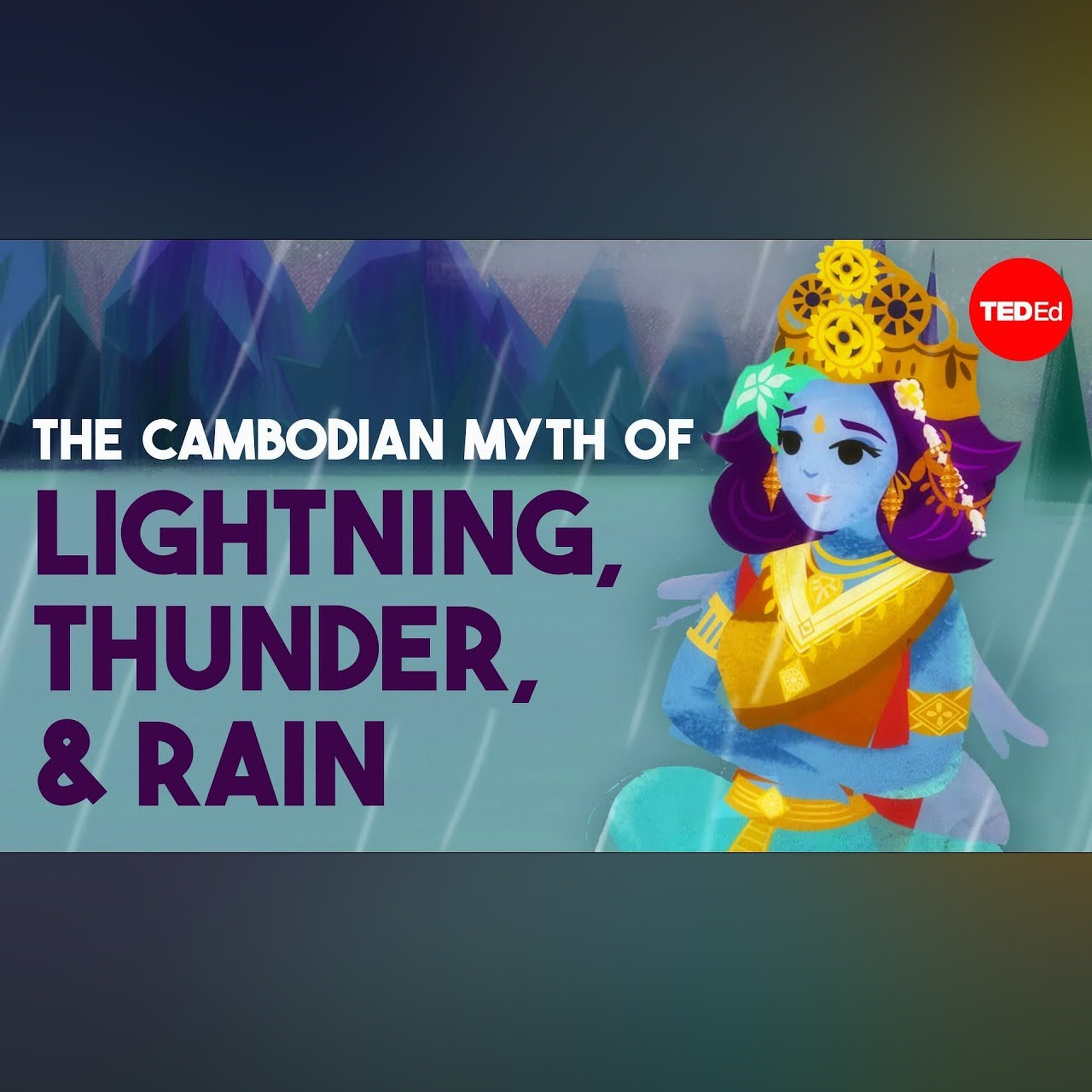
Uploaded 10-04-18 View full lesson: https://ed.ted.com/lessons/the-cambodian-myth-of-lightning-thunder-and-rain-prumsodum-ok "Moni Mekhala Ream Eyso" is the most sacred dance drama in Cambodia. It is performed every year in the buong suong ceremony, and explains the origins of lightning, thunder and rain according to the Khmer people. Prumsodun Ok tells this empowering tale that still enlightens our world today. Lesson by Prumsodun Ok, animation by Silvia Prietov. Thank you so much to our patrons for your support! Without you this video would not be possible! Michelle Stevens-Stanford, Phyllis Dubrow, Eunsun Kim, Philippe Spoden, Samantha Chow, Armando Ello, Ayala Ron, Manognya Chakrapani, Simon Holst Ravn, Doreen Reynolds-Consolati, Rakshit Kothari, Melissa Sorrells, Antony Lee, Husain Mohammad, Côme Vincent, Astia Rizki Safitri, alessandra tasso, Gerald Onyango, Katrina Harding, Ezgi Yersu, Katie Dean, Kin Lon Ma, Carsten Tobehn, Boris Langvand, Jeremy Fryd, Charlene You, Carolyn Cor
Organic reactions are kind of like carefully choreographed fight scenes, and nucleophilic attack is a key move. This episode of Crash Course Organic Chemistry is all about nucleophiles and electrophiles, or what happens at those molecular hot spots we’ve been talking about. We’ll also learn about what IR spectra can tell us about reactions, and how cyanide is more than just a poison from mystery stories. Let’s get to it organophiles! Series Sources: Brown, W. H., Iverson, B. L., Ansyln, E. V., Foote, C., Organic Chemistry; 8th ed.; Cengage Learning, Boston, 2018. Bruice, P. Y., Organic Chemistry, 7th ed.; Pearson Education, Inc., United States, 2014. Clayden, J., Greeves, N., Warren., S., Organic Chemistry, 2nd ed.; Oxford University Press, New York, 2012. Jones Jr., M.; Fleming, S. A., Organic Chemistry, 5th ed.; W. W. Norton & Company, New York, 2014. Klein., D., Organic Chemistry; 1st ed.; John Wiley & Sons, United States, 2012. Louden M., Organic Chemistry; 5th ed.; Roberts and Com
Ever feel like there's an international team of bad guys changing all of the easily remembered chemical names and turning them into test-failing, number-infused, pain-in-the-neck names? Well... you're not wrong. IUPAC exists, but try to keep in mind that they're doing it for the greater good. In this episode, Hank talks about IUPAC, prefixes, suffixes, ranking, numbers for carbon chains, and cis or trans double bonds. Pssst... we made flashcards to help you review the content in this episode! Find them on the free Crash Course App! Download it here for Apple Devices: https://apple.co/3d4eyZo Download it here for Android Devices: https://bit.ly/2SrDulJ Common Functional Groups: http://en.wikipedia.org/wiki/Functional_group#Table_of_common_functional_groups (http://en.wikipedia.org/wiki/Functional_group) -- Table of Contents IUPAC 0:00 Every Organic Compound Has Only One Name 1:02 Prefixes 2:16 Suffixes 2:47 Ranking Functional Groups 4:18 Lowest Possible Numbers for Carbon Chains 1:54 Ci
Kayla Barnes-Lentz follows an intensive, highly structured daily protocol designed by a team of scientists to optimise every aspect of her health. She believes this carefully curated lifestyle could help her live to 150 years or more. While her routine may not be realistic for everyone, the insights behind it could benefit us all. Today, Kayla joins Dr Federica Amati to break longevity down into five fundamental pillars. Together, they explore the science behind each one, how Kayla puts them into practice, and how you can start strengthening your own pillars today. Get our brand-new app and Gut Health Test designed by world-leading gut health and nutrition scientists to build healthy eating habits Join ZOE (https://zoe.com/buymembership) Follow ZOE onInstagram (https://www.instagram.com/zoe/). Books by our ZOE Scientists The Food For Life Cookbook (https://amzn.to/4amfIMX) Food For Life by Prof. Tim Spector (https://amzn.to/4amZinu) Ferment by Prof. Tim Spector (https://amzn.to/4hU1Df5
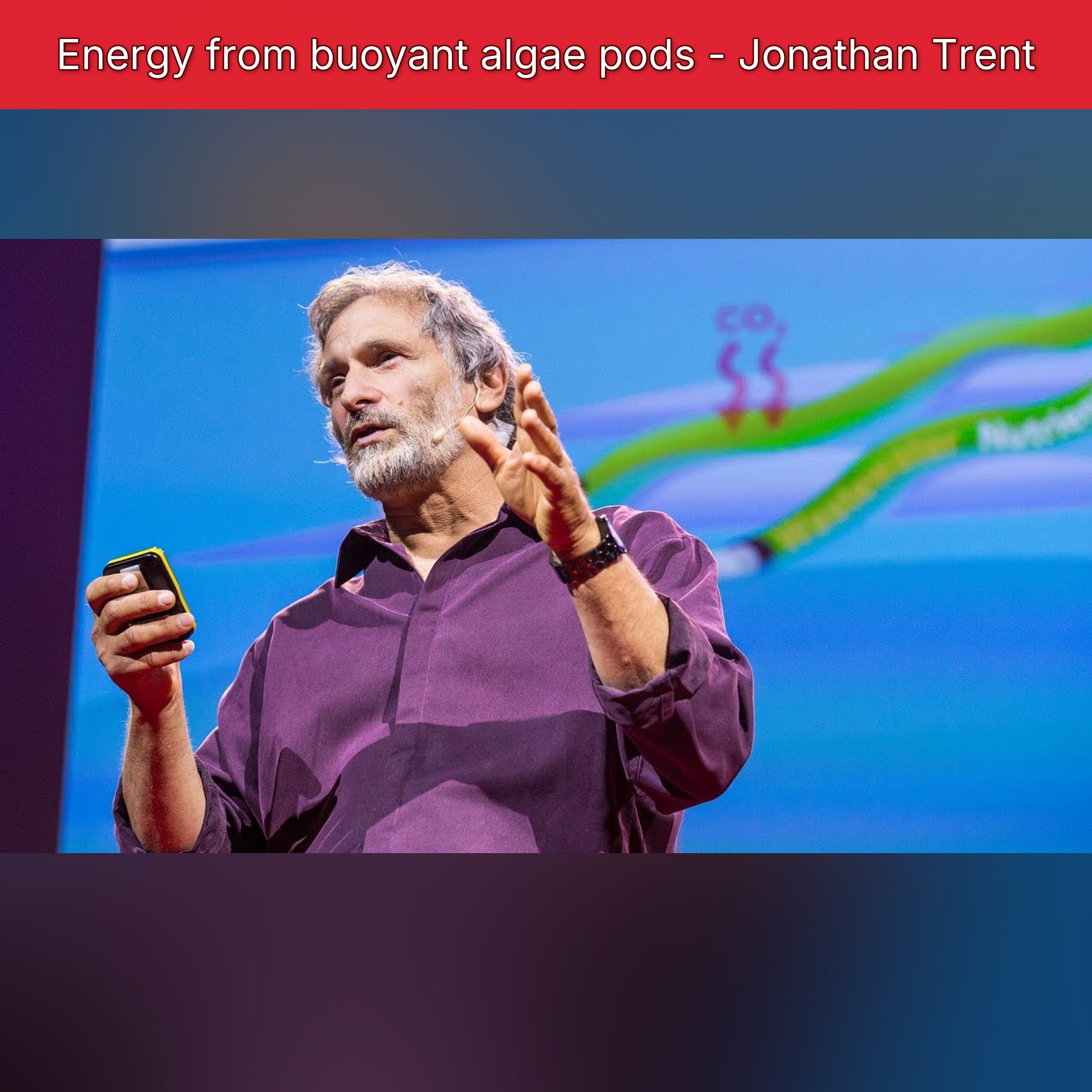
Call it "fuel without fossils": Jonathan Trent is working on a plan to grow new biofuel by farming micro-algae in floating offshore pods that eat wastewater from cities. Hear his team's bold vision for Project OMEGA (Offshore Membrane Enclosures for Growing Algae) and how it might power the future. Talk by Jonathan Trent.
What if some children arrive in this world carrying memories of a life that ended before they were born? For decades, researchers at the University of Virginia have investigated children who describe people, places, and events they seemingly shouldn't know anything about. In some cases, their accounts have been linked to actual people who died years earlier. But new research raises an even more intriguing question. Could the circumstances of someone's death have something to do with how quickly they return? By examining hundreds of reported past-life cases, researchers identified a curious pattern involving sudden or unexpected deaths and the time between one person's death and another child's birth. The findings don't prove reincarnation, but they add another question to an already mysterious subject. Could these children genuinely remember another lifetime? And if so, what happens between one life and the next? #RealGhostStoriesOnline #Reincarnation #PastLifeMemories #PastLives #Life
This is a Grave Talks CLASSIC EPISODE! PART TWO Award-winning filmmaker, author, and historian Larry Eissler III joins The Grave Talks to discuss his latest documentary projects centered on one of the most famous and controversial paranormal cases in American history—the Watseka Wonder. Larry shares insight into The Séance and The Séance: Bloodlines, both filmed on location at the historic Roff House, where the original events took place. Working with paranormal investigators and psychic mediums, the films combine historical documentation with modern séance work in an effort to better understand what happened there. The Watseka Wonder dates back to the late 1870s, when teenage girl Lurancy Vennum fell ill and claimed the spirit of a deceased girl, Mary Roff, had taken control of her body. She spoke as Mary, recognized her family, and lived for weeks as someone else entirely. No clear explanation has ever emerged—and nearly 150 years later, the case continues to raise unsettling questio
Sand is everywhere. Beaches. Rivers. Deserts full of powdery dunes. How could we possibly run out? Journalist Vince Beiser has dug deep into the past century — and more — of human construction and found one tiny grain at its foundation: sand. In apartments and eyeglasses, in computer chips and cleaning equipment. The hunt for sand has reshaped coastlines, spawned black markets, and launched beach “heists.” And, some of them, possibly, could have been avoided, if the Romans had bothered to write down their own lost recipe for concrete. Guest: Vince Beiser, journalist and author of The World in a Grain: The Story of Sand and How It Transformed Civilization Support Are We Doomed?, get bonus episodes, and more: https://doompod.com/support/ (https://doompod.com/support/%20) Watch animated episodes on Youtube! https://www.youtube.com/@arewedoomedpod Also mentioned this episode: Are We Going the Way of the Roman Empire? (https://pod.link/1893359212/episode/cHJ4XzE2ODU3X2EyNjAzYmNmLTcxZDYtNGM1
Paul Hill, Ralph Wilkins and Dr. Jenifer "Dr. Dust" Millard host. Damien Phillips, John Wildridge and Dustin Ruoff produce. Recorded in 2018. Paul, Ralph & Jeni interview Libby Jackson OBE FRAeS, former manager of human exploration program and microgravity of the UK Space Agency. She's currently Head of Space for the London Science Museum. We talk to Libby about being weightless, the value of space research and the most inspiring tales of following your dreams as we chat about her first book "A Galaxy of Her Own: Amazing Stories of Women in Space"! From small steps to giant leaps, A Galaxy of Her Own tells fifty stories of inspirational women who have been fundamental to the story of humans in space, from scientists to astronauts to some surprising roles in between. From Ada Lovelace in the nineteenth century, to the women behind the Apollo missions, from the astronauts breaking records on the International Space Station to those blazing the way in the race to get to Mars, A Galaxy of
In Episode #1043, Dr. Guru Banavar (Founding CTO of Viome) joins Jon Krohn for a technical masterclass on the biology inside your gut. Viome has assembled what Guru calls the largest dataset on human biology ever collected, roughly 100 quadrillion nucleotides of RNA from people in more than 150 countries, and uses it to tell individuals which foods help them and which harm them. Before Viome, Guru was the first VP to lead IBM's Watson AI team, and he holds a PhD in computer science from the University of Utah. In this episode, he explains why RNA rather than DNA holds the key to chronic disease, how a continuous-glucose study of 1,100 people became a predictive model for your blood sugar, why keto dieters come out biologically older than vegetarians, and what makes computational biology such a rare skill. Additional materials: www.superdatascience.com/1043 (https://www.superdatascience.com/1043) Interested in sponsoring a SuperDataScience Podcast episode? In this episode you will learn
SHEEP BREEDING, SOLAR PANELS AND FEDERAL OVERREACH WITH HANK VOGLER Nevada sheep rancher Hank Vogler joins Trent Loos on Rural Route for a hard-hitting look at sheep breeding, federal overreach, and the future of American ranching. Hank breaks down artificial insemination techniques, including PMS
In which John Green teaches you about the end of the Cold War and the presidency of George H.W. Bush. It was neither the best of times nor the worst of times. On the domestic front, the first president Bush inherited the relative prosperity of the later Reagan years and watched that prosperity evaporate. That was about all the interest Bush 41 had, domestically, so let's move to foreign policy, which was a bigger deal at this time. The biggie was the end of the Cold War, which is the title of the video, so you know it's important. The collapse of the Soviet Union was the biggest deal of Bush's term, and history has assigned the credit to Ronald Reagan. We give the guy a break and say that he helped. He was certainly an expert in foreign policy, having been an envoy to China, ambassador to the United Nations, and head of the CIA. Bush also oversaw the first Gulf War, which was something of a success, in that the primary mission was accomplished, and the vast majority of the troops were
Today we’re going to talk about the forces that affect a country’s stability. We’ll take a closer look at Costa Rica, Venezuela, Cuba, and Brazil and examine how the cohesiveness of these Latin American countries varies dramatically even though they are in a region with similar characteristics. As you’ll see, a country is like a figure skater, and maintaining peace and stability is much like a pair performing a “death spiral” balancing the forces attempting to pull a country apart and keep it together. Sources General CIA Factbook: https://www.cia.gov/library/publications/resources/the-world-factbook/docs/one_page_summaries.html Getis, Bjelland, and Getis. Introduction to Geography, 15 ed. McGraw-Hill Education. 2017. ISBN: 978-1-259-57000-1 Gregory, Derek, Ron Johnston, Geraldine Pratt, Michael Watts, and Sarah Whatmore, eds. 2009. The Dictionary of Human Geography. 5th ed. Willey-Blackwell. ISBN: 978-1-4051-3288-6 For a free and open source option for Intro to Human Geography: For a
We continue our look at your bones and skeletal system, skipping over the silly kid's song in favor of a more detailed look at your axial and appendicular skeleton. This episode also talks about the structural and functional classifications of your joints and the major types of body movement that they facilitate. Pssst... we made flashcards to help you review the content in this episode! Find them on the free Crash Course App! Download it here for Apple Devices: https://apple.co/3d4eyZo Download it here for Android Devices: https://bit.ly/2SrDulJ Chapters: Introduction: Joints 00:00 Axial Bones: Cranial, Facial, Vertebrae, & Thoracic Cage 2:02 Appendicular Bones: Limbs & Pelvis 3:05 Types of Joints 3:33 Functional Classification of Joints: Synarthroses, Amphirthroses, Diarthroses 3:59 Structural Classification of Joints: Fibrous, Cartilaginous, Synovial 4:32 Types of Synovial Joints 5:37 Plane Joints - Gliding Movements 6:02 Hinge Joints - Angular Movements: Flexion, Extension, & Hyper
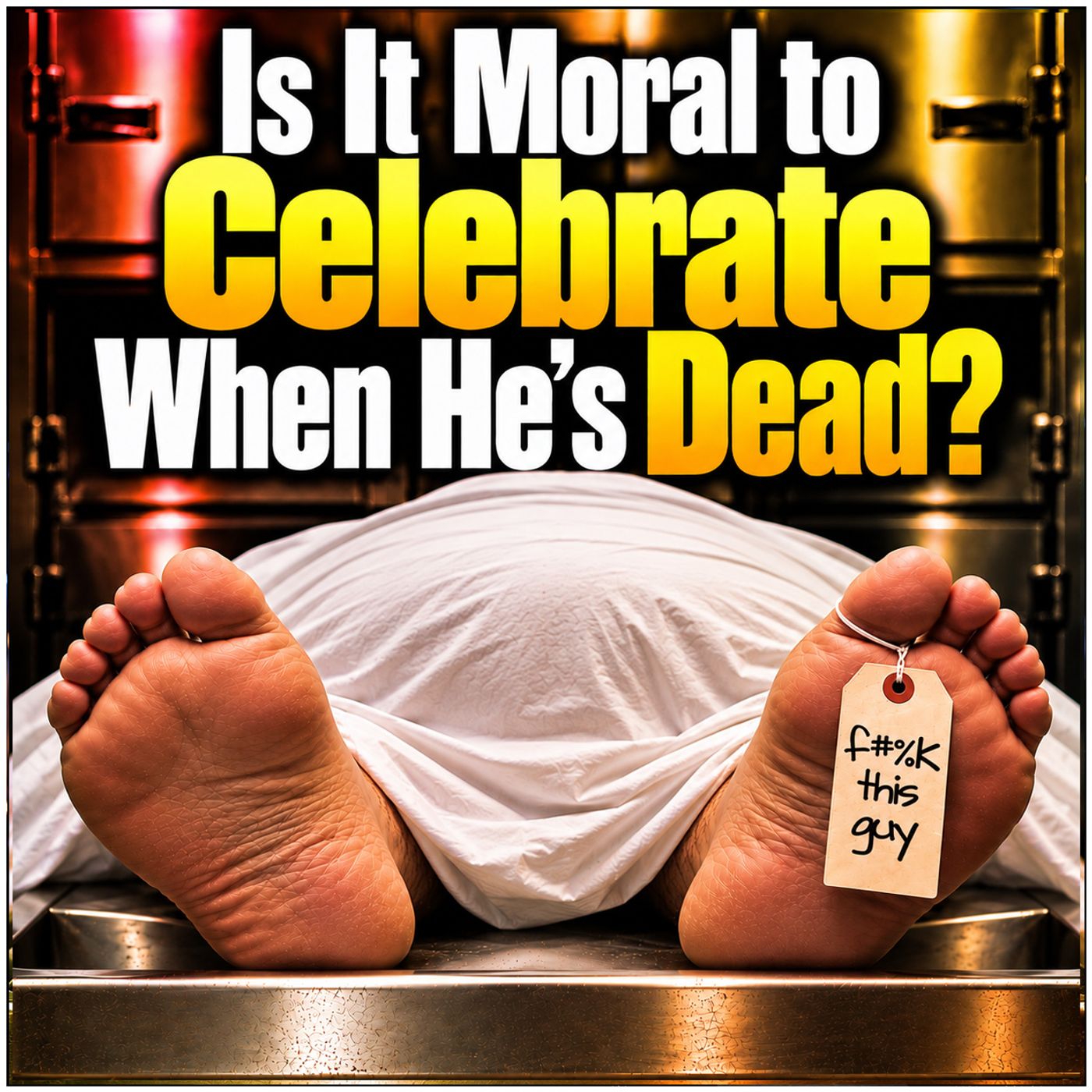
Many people worldwide are at-the-ready with their champagne bottles and party plans. When the Dictator Tot finally succumbs to the blood clot (or whatever), is celebrating anyone's death a moral thing? We discuss on the show.
Listen ad-free (https://www.patreon.com/c/conspirituality) Matthew speaks with Maria Bernardes, a volunteer in Lula's digital army, about how Nossa Senhora Aparecida, Brazil's Black Marian patron, became a flashpoint in the 2026 presidential runoff. The conflict pit Catholic, multiracial universalism against the racist neo-Pentecostal church to which the Bolsonaro father and son have given themselves, in the hope that Christofascism would lead them to power. In our segment last Thursday we discussed how Worker’s Party propaganda director Andre Janones staged an assault to capture the green-and-yellow colours back from the right wing. This is a deeper version of that story, in which the Bolsonaro gang attempted to defame the Black Virgin of Brazil as transgressive, subhuman, corrupt, and disgusting. It did not work. Maria Bernardes is a Brazilian voice actress, improv performer and anti-fascism activist, now based in Barcelona. Show Notes Maria Bernardes (https://www.mariabernardes.com/
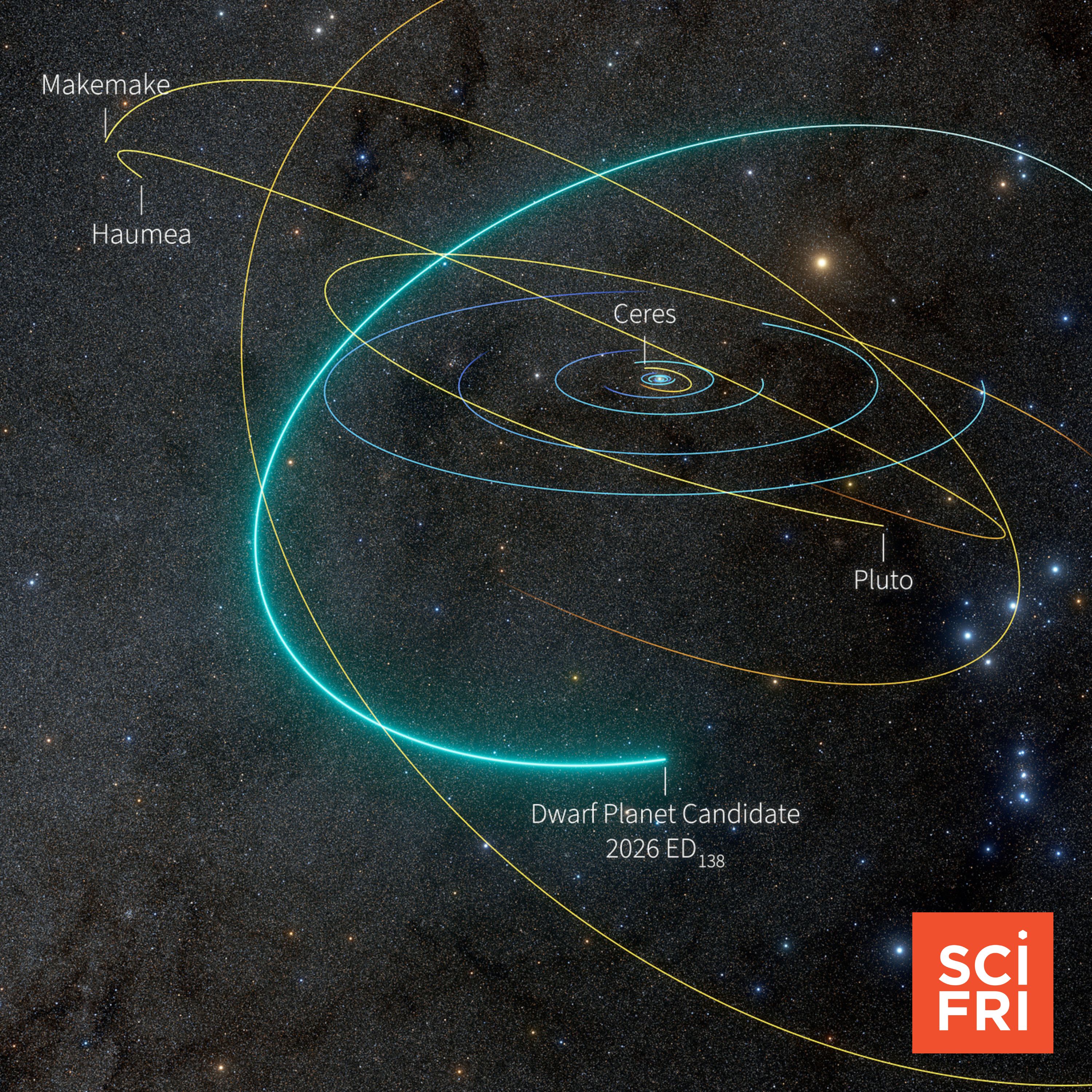
Move over Pluto, a new dwarf planet just dropped. Scientists announced that they’ve likely discovered a tiny new planet (https://rubinobservatory.org/news/rubin-first-dwarf-planet-candidate) beyond Neptune, in the far-out ring of icy and rocky bits called the Kuiper Belt. The possible dwarf planet (https://www.sciencefriday.com/segments/new-dwarf-planet-needs-a-name/) was spotted by the Vera C. Rubin Observatory. Flora talks with Matthew Holman, the astrophysicist who made the discovery. One more thing: The new dwarf planet is currently called 2026 ED138. We think the name needs a little work. What would you call it? Give us a ring at 877-472-4374. Guest: Dr. Matthew Holman is a senior astrophysicist at the Center for Astrophysics | Harvard & Smithsonian. Transcripts for each episode are available within 1-3 days at sciencefriday.com (https://www.sciencefriday.com/segments/new-dwarf-planet-needs-a-name/). Got a science question that’s keeping you up at night? Call us: 877-472-4374 Host
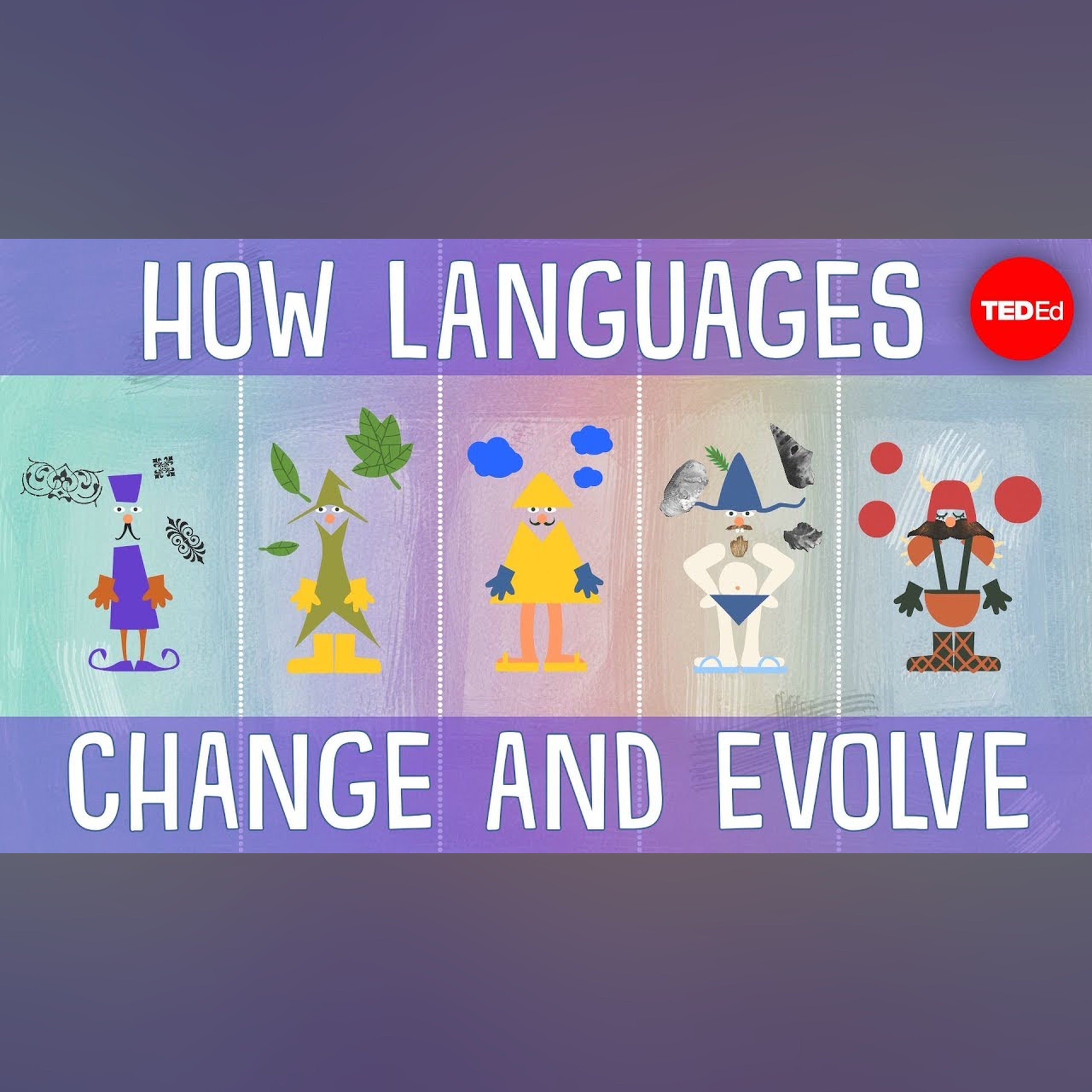
View full lesson: http://ed.ted.com/lessons/how-languages-evolve-alex-gendler Uploaded 27-05-14 Over the course of human history, thousands of languages have developed from what was once a much smaller number. How did we end up with so many? And how do we keep track of them all? Alex Gendler explains how linguists group languages into language families, demonstrating how these linguistic trees give us crucial insights into the past. Lesson by Alex Gendler, animation by Igor Coric.
After over a century of studying introspection in humans and animals, researchers are beginning to explore the phenomenon in unlikely new subjects: large language models. These systems, which are based on mathematical structures called neural networks, excel at cognitive tasks that until recently seemed exclusive to humans. Can they introspect as well? On this episode of The Quanta Podcast, host Samir Patel speaks with staff writer Ben Brubaker about “injecting” thoughts into LLM neural networks — and what researchers are doing to map out AI’s capacity for introspection. This topic was covered in a recent story (https://www.quantamagazine.org/new-research-tests-whether-ai-models-know-their-own-thoughts-20261104/) for Quanta Magazine.
FIFA wants teams to use "AI coaches," colleges are incorporating LLMs into student sports journalism, and that's just the beginning of the ways AI boosters are infiltrating athletics. Sports journalist and professor Shireen Ahmed joins Alex and Emily for a closer look at what's lost when we cede sports knowledge to genAI. Shireen Ahmed (https://www.shireenahmed.com/) is an award-winning, multiplatform sports journalist who works at the intersections of race, gender, culture and politics. She's a co-host of the Burn It All Down podcast (https://www.burnitalldownpod.com/), and teaches journalism and sport media at Toronto Metropolitan University. References: "This Will Be The First World Cup Ever With AI Coaches On The Sidelines" (https://www.forbes.com/sites/johnkoetsier/2026/06/04/this-will-be-the-first-world-cup-ever-with-ai-coaches-on-the-sidelines/) "WSU turns to artificial intelligence to assist sports communications" (https://www.spokesman.com/stories/2026/oct/07/wsu-turns-to-arti
NBC News correspondent Chloe Melas joins me to share her experience living with ulcerative colitis for 15 years, a journey she kept private until releasing her new book, The Girl's Guide to Guts, co-written with Judy Batalion. We talk about the differences between IBD and IBS, what blood in the stool might mean, and why one study found that women waited more than twice as long as men to get a diagnosis. Chloe explains her flare plan, how she manages fiber with apples and psyllium, and what it was like to go over ten years without a normal bowel movement. We also discuss colon cancer in adults under 50, celiac disease, diverticulitis, colonoscopy prep, and traveling when your gut is unpredictable. I also explain how essential amino acids help feed the cells that produce the gut's protective mucus. If you’re dealing with bloating, urgency, or bleeding, this conversation can help you recognize when it’s time to call a GI doctor. Thank you to our sponsors: Ladder: free 7-day trial, no cred