Should psychedelics be legal? You might be hearing about states and countries legalizing psychedelics. In 2020, Oregon became the first US state to decriminalize psilocybin and legalize it for therapeutic use. In 2022, Colorado followed suit. Researchers have recently been touting the benefits of psychedelics for health conditions like depression, anxiety, PTSD, addiction, cancer-related distress, and the list goes on. However - like cannabis - psilocybin is still illegal under US federal law. Given that ongoing fight, you might have questions. I know I do. Are psychedelics the next weed? Is that a good thing? Are psychedelics dangerous? Do they actually have scientific benefits? How do psychedelics work? In this episode of Huge If True, we find out. Thank you to Dr. Ben Rein, neuroscience researcher and consultant on this episode. If you enjoy Huge If True, you’ll love Dr. Rein’s videos on TikTok! https://www.tiktok.com/@dr.brein?lang=en Chapters: 00:00 The big debate about psychedeli
Catherine the Great presided over a golden age of Russian expansion — but was she a dedicated ruler or a ruthless oppressor? -- Catherine the Great, Empress of Russia for over three decades, used strategic dalliances, military might, and cutting-edge philosophy to modernize, expand, and transform the Russian Empire. But was she a dedicated ruler determined to move Russia into the future, or a ruthless monarch who oppressed anyone who questioned her? Carolyn Harris puts this controversial figure on trial. Lesson by Carolyn Harris, directed by Brett Underhill, PorkchopBob Studio. Support Our Non-Profit Mission ---------------------------------------------- Support us on Patreon: http://bit.ly/TEDEdPatreon Check out our merch: http://bit.ly/TEDEDShop ---------------------------------------------- Connect With Us ---------------------------------------------- Sign up for our newsletter: http://bit.ly/TEDEdNewsletter Find us on Twitter: http://bit.ly/TEDEdTwitter Peep us on Instagram: http:
In this delayed Monday closeout, Johnson & Johnson agreed to buy Ollin Biosciences for $2.2 billion upfront, and Blackstone agreed to fund Phase 3 work on OLN324 in wet AMD and diabetic macular edema if the acquisition closes. The FDA approved Roche's Wilserdly (giredestrant) with everolimus for ESR1-mutated advanced breast cancer after endocrine therapy. In the daily roundup: CG Oncology's cretostimogene bladder cancer data, Servier's Ojemda (tovorafenib) follow-up in pediatric low-grade glioma, Lilly's Calytrix Bio deal, AstraZeneca's Klygefa (gefurulimab) approval in myasthenia gravis, Novo Nordisk's semaglutide data in children, and AriBio's split AR1001 Alzheimer's result. Alex Mercer and Maya Patel host.
Strongmen, tyrants, and dictators have marked Latin America’s history — and literature — for hundreds of years. In this episode of Crash Course Latin American Literature, we dive into some of the novels that have challenged authoritarian governments in real time and in their aftermath. Introduction: The Power of Stories 00:00 Novelas de la Tierra 0:34 "Facundo" 2:16 Novelas del Dictador 4:58 “El Señor Presidente” 6:12 "In the Time of Butterflies" 8:09 Review & Credits 10:50 Sources: https://docs.google.com/document/d/1eE7g4-k6PD7C6wNBzeJIO8GCDHpoJl8ldDjKyq_2yYg/edit?tab=t.0 To learn more, check out these videos: Geopolitical history of Latin America: War and Nation Building in Latin America: Crash Course World History 225 https://youtu.be/v6xi8_7Fy6Y?si=paRg7m_G3tMAX4vW , Latin American Revolutions: Crash Course World History #31 https://youtu.be/ZBw35Ze3bg8?si=P4HnEqr1_rEP2YGv *** Support us for $5/month on Patreon to keep Crash Course free for everyone forever! https://www.patreon.co
Hank introduces us to the "simplest" of the animals, complexity-wise: beginning with sponges (whose very inclusion in the list as "animals" has been called into question because they are so simple) and finishing with the most complex molluscs, octopuses and squid. We differentiate them by the number of tissue layers they have, and by the complexity of those layers. Table of Contents: 1) Porifera 1:33 2) Cnidaria 2:36 a) Diploblasts 2:48 3) Platyhelminthes 3:33 a) Triploblasts 3:56 b) Coelom 4:36 4) Biolography 5:36 5) Nematoda 7:26 6) Rotifera 7:57 7) Molusca 8:33 References: Crash Course is on Patreon! Want to find Crash Course elsewhere on the internet? Facebook - http://www.facebook.com/YouTubeCrashCourse Twitter - http://www.twitter.com/TheCrashCourse Instagram - https://www.instagram.com/thecrashcourse/ CC Kids: http://www.youtube.com/crashcoursekids
AutoMuse: Writing a Novel with GPT-3 as a Plotter pt.1 (decompose the problem into steps) Episode release date: 17 Sep 2022 Core Ideas: Metamodernism: Narratives and emergence view of reality - Reduce suffering - Increase prosperity - Increase understanding mantra: Seek knowledge. DISCLAIMER: This is a community-driven show. ------- Keywords: agi, ai safety, ai philosophy, ai development, deep learning, ai research, ai education, openai
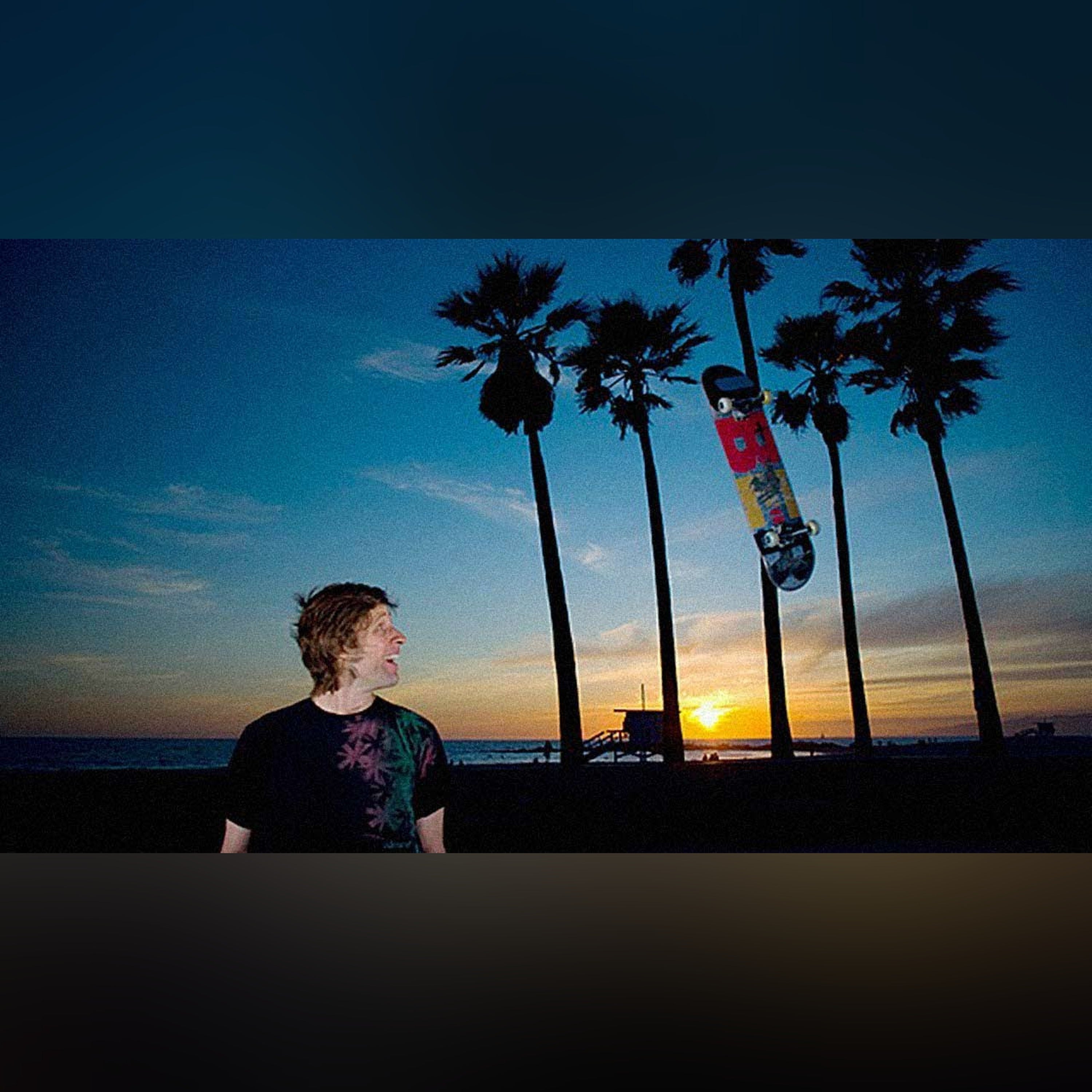
The last thing Rodney Mullen, the godfather of street skating, wanted were competitive victories. In this exuberant talk he shares his love of the open skateboarding community and how the unique environments it plays in drive the creation of new tricks -- fostering prolific ingenuity purely for passion's sake. (Filmed at TEDxUSC.) Uploaded 21-08-13 Talk by Rodney Mullen.
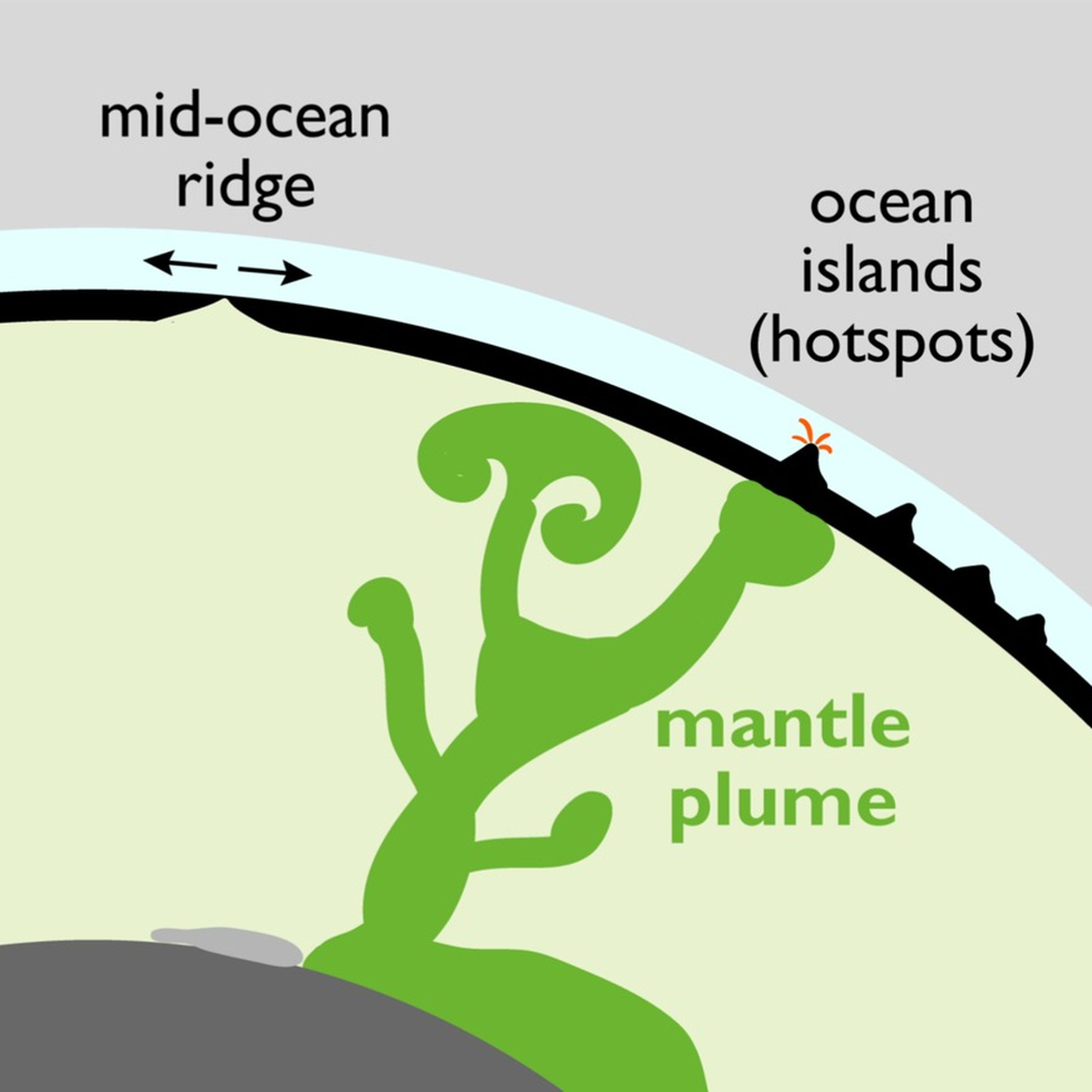
Which parts of Earth's mantle held water from the start, and how has that changed? Rita Parai explains how noble gases, which travel with water, help answer this. Her modeling shows that the deep mantle feeding plumes such as Hawaii and Iceland started out much drier than the shallow mantle beneath mid-ocean ridges, which may be why it has resisted mixing for four and a half billion years. Today the plume source is the wetter of the two, so most of its water must have come from the surface. Parai is Associate Professor of Earth, Environmental, and Planetary Sciences at Washington University in St. Louis. For figures, photos and a transcript, go to geologybites.com/rita-parai.
In which John Green teaches you about the Holy Roman Empire by teaching you about Charles V. Charles Hapsburg was the Holy Roman Emperor, but he was also the King of Spain. And the King of Germany. And the King of Italy and the Lord of the Netherlands and Count Palatine of Burgundy. In short, Charles was runnin' thangs in much of the world during his reign. Charles ruled a lot of countries, and he was also known for encouraging intellectual discourse and even spoke out against slavery, in a limited way. So why did he consider himself a failure, and why did he break up the Empire when he abdicated in 1556? Mainly because the Holy Roman Empire didn't work very well. It was huge, and it didn't have any means of directly raising taxes. Plus, it was a pretty crazy time in Europe anyway, and Charles found himself in charge of the Catholic-Church-Endorsed Empire during the time of Martin Luther and the Protestant Reformation. John will teach you a bit about how Charles put the Empire together
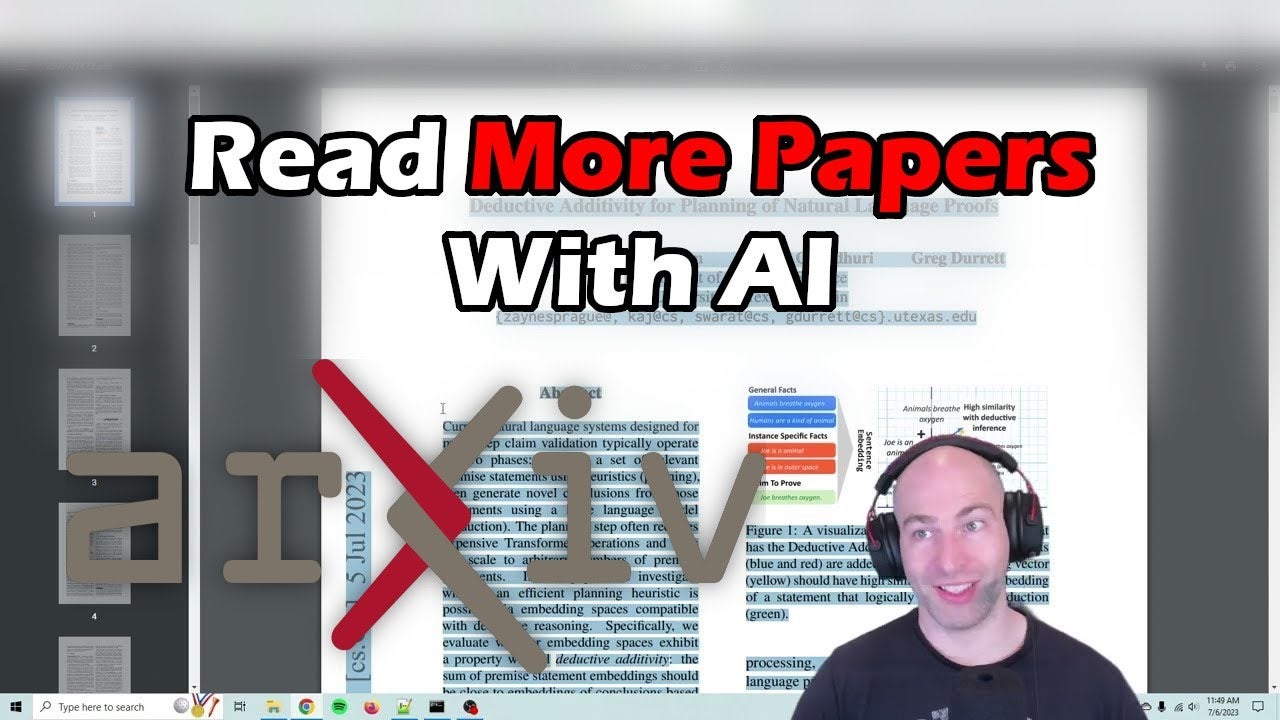
Accelerating Science with AI: Quickly Read Every Paper and Get Key Insights in Bulk Episode release date: 7 Jul 2023 Core Ideas: Metamodernism: Narratives and emergence view of reality - Reduce suffering - Increase prosperity - Increase understanding mantra: Seek knowledge. DISCLAIMER: This is a community-driven show. ------- Keywords: openai, superintelligence, david shapiro, ai consciousness
Download a free audiobook and support TED-Ed's nonprofit mission: https://www.audible.com/ted-ed -- Bizarre things happen in dreams: you fly, or conjure an all-you-can-eat buffet out of thin air, or get chased by witches through the halls of your school. But the strange things that happen in dreams don’t seem strange at the time. So, how do you know you’re not in a dream right now? Is there a way to prove that you're awake? Daniel Gregory digs into the philosophical theories of wakefulness. Lesson by Daniel Gregory, directed by Daniel Stankler. Support Our Non-Profit Mission ---------------------------------------------- Support us on Patreon: http://bit.ly/TEDEdPatreon Check out our merch: http://bit.ly/TEDEDShop ---------------------------------------------- Connect With Us ---------------------------------------------- Sign up for our newsletter: http://bit.ly/TEDEdNewsletter Find us on Twitter: http://bit.ly/TEDEdTwitter Peep us on Instagram: http://bit.ly/TEDEdInstagram ----------
Most of us rarely stop to think about everything protest has given us. In this solo episode, Corinna shares highlights from an intimate evening with Annie Leonard and André Carothers, authors of Protest: Respect It. Defend It. Use It., at Patagonia's Santa Cruz store, and reflects on what free speech means to her. She reminds us that rights we enjoy today were won through protest, and that they need people to keep using them. Then she gets practical, with three ways to act: reach out to your representatives, engage in local politics where you may have a greater chance of affecting the outcome, and make it personal. You will hear why a letter that tells your story is stronger than a copied petition, and why your voice matters. Topics Covered An evening with Annie Leonard and André Carothers at Patagonia's Santa Cruz store Why Protest is one of Corinna's all-time favorite books from Patagonia Books, and a guide she will give her kids What free speech means to Corinna, from hosting this p
Uploaded 29-01-18 View full lesson: https://ed.ted.com/lessons/why-is-nasa-sending-a-spacecraft-to-a-metal-world-linda-t-elkins-tanton In 2026, an unmanned NASA spacecraft is scheduled to arrive at 16 Psyche, a massive, metallic asteroid floating somewhere between the orbits of Mars and Jupiter. Why is NASA so interested in this heavy metal asteroid? Are we going to mine all that metal, or build a giant space magnet? Linda T. Elkins-Tanton explains how the real answer can be found right under our feet. Lesson by Linda T. Elkins-Tanton, animation by Eoin Duffy. Thank you so much to our patrons for your support! Without you this video would not be possible! Simon Holst Ravn, Doreen Reynolds-Consolati, Rakshit Kothari, Melissa Sorrells, Antony Lee, Husain Mohammad, Dino Hrnjić, Max Shuai Tang, Côme Vincent, Astia Rizki Safitri, Alan Froese, Zhufeng Wang, alessandra tasso, Daniel Mardale, Jamerson Chingapanini, Gerald Onyango, Dalton Valette, Katrina Harding, Ezgi Yersu, Al the Scottish Wi
What’s really happening inside a black hole? Imagine that you’re flying through space, when suddenly you start to get dragged toward a dark abyss. Reality as you know it starts to change. Time begins to warp. And you start to feel this strange sort of sensation of being stretched and squashed… You’re falling into a black hole, one of the most astonishing places in our universe. Some are so big they can fit over 60 of our solar systems across them, with masses up to 100 billion times our Sun. And once you fall into one past a certain point, nothing can escape. ... Or can it? I wanted to know the latest cutting edge research about black holes, so I called up my favorite physicist, Dr. Brian Cox to answer the question: If you fell into a black hole, what would actually happen to you? What would it feel like? And what does our newest science tell us is really happening inside a black hole? Chapters: 0:00 What if you fall into a black hole? 1:20 What is a black hole, really? 2:20 How do we
Explore the science of how corticosteroids sneak into our cells to help fight allergic reactions, rashes, asthma, and harmful immune responses. Uploaded 17-06-20 -- Steroids: they’re infamous for their use in sports. But they’re also found in inhalers, creams to treat poison ivy and eczema, and shots to ease inflammation. The steroids in these medicines aren’t the same as those used to build muscle. In fact, they’re all based on yet another steroid— one our body produces naturally, and we can’t live without. Anees Bahji explores the science of corticosteroids. Lesson by Anees Bahji, directed by Nick Hilditch. Animator's website: http://nickhilditch.com (http://nickhilditch.com/) Sign up for our newsletter: http://bit.ly/TEDEdNewsletter Support us on Patreon: http://bit.ly/TEDEdPatreon Find us on Twitter: http://bit.ly/TEDEdTwitter Peep us on Instagram: http://bit.ly/TEDEdInstagram View full lesson: https://ed.ted.com/lessons/can-steroids-save-your-life-anees-bahji Thank you so much to
Question? Ask Dr. Bikman’s Digital Mind (multilingual): Dr. Bikman’s Community & Coaching Site: https://insuliniq.com (https://insuliniq.com/) Summary: Dr. Bikman explains how insulin resistance may contribute to benign prostatic hyperplasia (BPH), the noncancerous enlargement of the prostate. Although aging and male sex hormones are important, he argues that metabolic health helps explain why prostate growth varies so much among men. He connects that growth to familiar symptoms, including a weaker urine stream and frequent nighttime bathroom trips. Ben reviews observational human studies linking higher fasting insulin, abdominal obesity, diabetes, and metabolic syndrome with larger prostates or faster growth. He describes insulin and IGF-1 as growth signals, then explores how visceral fat, altered sex-hormone metabolism, and chronic inflammation could reinforce the process. Laboratory and animal research support several proposed mechanisms, while human findings on some hormone pathway
In which John Green teaches you about the beginning of the so-called Age of Discovery. You've probably heard of Christopher Columbus, who "discovered" America in 1492, but what about Vasco da Gama? How about Zheng He? Columbus gets a bad rap from many modern historians, but it turns out he was pretty important as far as the history of the world goes. That said, he wasn't the only pioneer plying the seas in the 1400s. In Portugal, Vasco da Gama was busy integrating Europe into the Indian Ocean Trade by sailing around Africa. Chinese admiral Zheng He was also traveling far and wide in the largest wooden ships ever built. Columbus, whether portrayed as a hero or a villain, is usually credited as the great sailor of the 15th century, but he definitely wasn't the only contender. What better way to settle this question than with a knock-down, drag-out, no holds barred, old-fashioned battle royal? We were going to make it a cage match, but welding is EXPENSIVE. Chapters: Introduction 00:00 No
I'm an accelerationist Episode release date: 16 Aug 2024 Core Ideas: Metamodernism: Narratives and emergence view of reality - Reduce suffering - Increase prosperity - Increase understanding mantra: Seek knowledge. DISCLAIMER: This is a community-driven show. ------------ Keywords: superintelligence, ai research, artificial intelligence, ai development, ai education, gpt
In today's brief: See-through UFO in Oregon: a Wilsonville family says a silent craft as wide as three airliners hovered outside a 12-year-old's bedroom window. Rocks in the Texas dark: deer hunters say something threw a branch and rocks at them in Davy Crockett National Forest, then followed them out. Saudi stone circles: interlocking rings of volcanic rock near Al-Qunfudhah look deliberately designed, but nobody knows what for. The vanishing signal: a deep-space radio source pulsed every 62 minutes, then disappeared. Avi Loeb's observatory: his radar, AI and telescope UAP observatory in Ithaca moves into construction. Quick hits: Curiosity's seasonal hint of liquid water on Mars, the Shroud of Turin's crowded DNA, and the 90-day blackout rumour that is not. Every story and source: https://believepod.com/ufo-paranormal-news-18-november-2026/ New episodes every morning. Keep your eyes on the sky. Sources: International Business Times UK: https://www.ibtimes.co.uk/oregon-woman-reports-a
Discover how much electricity humanity uses, and how clean energy sources could help revolutionize our energy supply in the future. Uploaded 09-03-21 -- All around the world, millions of people are flipping a switch, plugging in, and pressing an ‘on’ button every second. So how much electricity does humanity use? And how much will we need in the future? Discover how much energy it takes to power the world, and how clean energy sources could help revolutionize our electricity supply. Directed by Lisa LaBracio. Animation and art direction: Vicente Nirõ, AIM Creative Studios In partnership with Bill Gates, inspired by his book "How To Avoid A Climate Disaster": http://bit.ly/PlanForZero Support Our Non-Profit Mission ---------------------------------------------- Support us on Patreon: http://bit.ly/TEDEdPatreon Check out our merch: http://bit.ly/TEDEDShop ---------------------------------------------- Connect With Us ---------------------------------------------- Sign up for our newslett
How much of your life are you wasting trying to control things that were never yours to control? One of the biggest sources of stress, frustration and emotional exhaustion in life is our constant desire to control outcomes, circumstances and other people’s behaviour. We want people to think a certain way, behave a certain way and make decisions that align with what we believe is right. When they don’t, we become frustrated, disappointed and sometimes resentful. But here’s the reality. You cannot control what other people think, say or do. You cannot control the past, predict every future outcome or guarantee that life will unfold according to your expectations. The more energy you invest in trying to control these things, the less energy you have available to control the one thing that genuinely matters: yourself. In this episode of The Strong Life Project, we explore the importance of letting go of control and developing the emotional intelligence to recognise the difference between w
In this calm and sleepy facts episode, we explore the quiet, fascinating world of human behavior, from the smallest unconscious habits to the deep patterns that have shaped how people live, think, and connect for thousands of years. We begin with the brain itself, a tireless organ that automates most of daily life so efficiently that people rarely notice it working, and then move into the hidden world of habits, priming, and the mere exposure effect, where simple repetition can quietly reshape preferences without anyone realizing. From there we wander into the social side of behavior, discovering how people instinctively mirror each other’s body language, why groups can change the way individuals think and act, and how the deep human need to belong has been a driving force since the earliest communities gathered around firelight. We explore cognitive biases like loss aversion, the planning fallacy, and the spotlight effect, learning how the mind bends reality in small but consistent wa
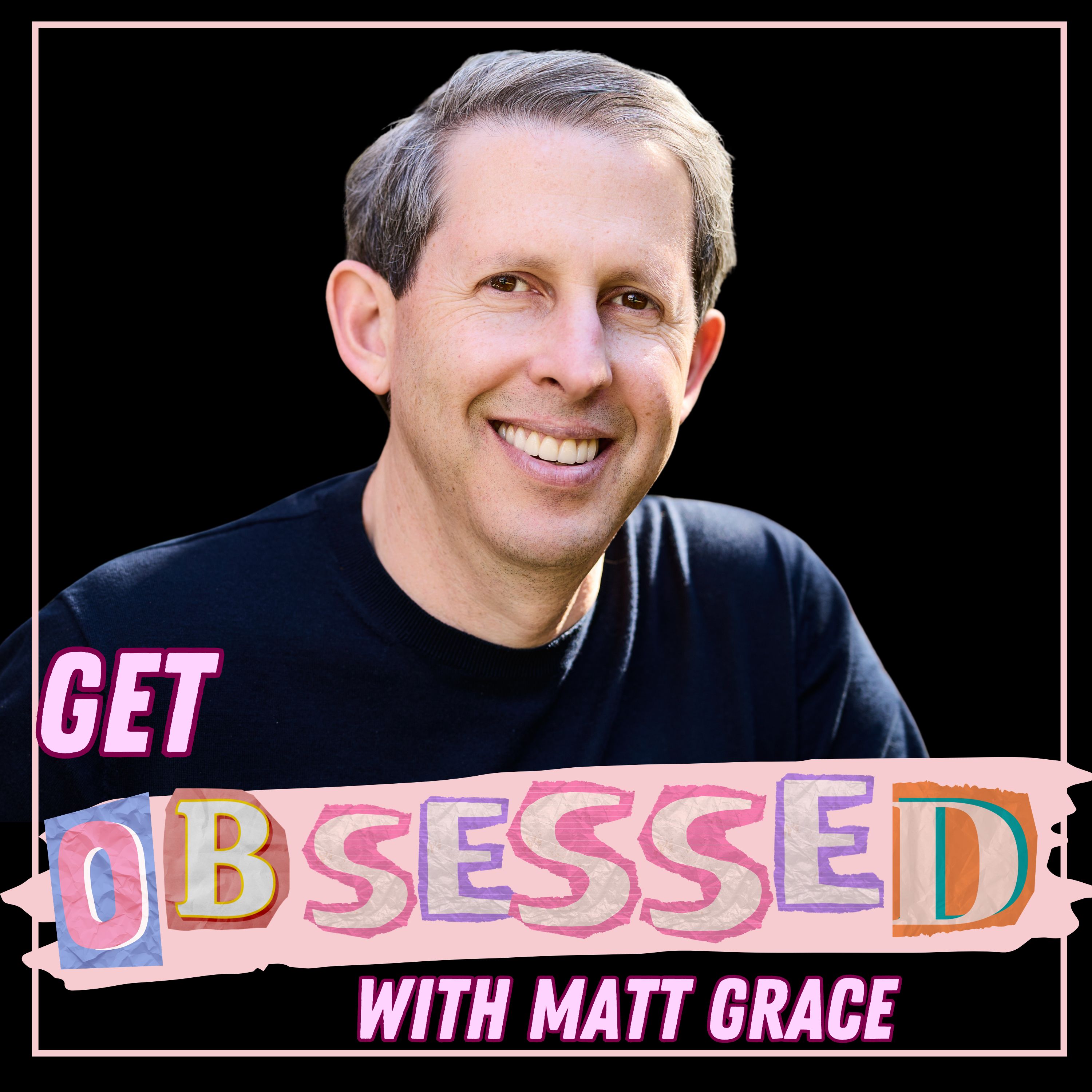
What happens when every safety net keeps catching you, until the day it doesn’t? Matt Grace joins Julie Lokun and Mika Altidor to share his raw, unfiltered journey from years of severe drug, alcohol, and sex addiction to more than two decades of sobriety. Matt traces his story back to its roots: childhood behavioral struggles, family history, divorce, privilege, and the enabling that let him dodge consequences again and again. He explains why accountability, firm family boundaries, and service to others finally became the foundation of his recovery. He also talks about why so many loving families unknowingly prolong addiction. Drawing on more than 10,000 hours of mentoring individuals and families, Matt shares what he’s learned about addiction treatment, why making amends is essential to lasting change, and what real hope looks like on the other side. This is an honest, practical, and inspiring conversation for anyone fighting for recovery, or loving someone who is, and for anyone dete
Mandy agreed to spend two nights aboard the Queen Mary mostly because her sister loved ghost stories. Mandy was far more skeptical and deliberately avoided learning too much about the ship’s famous hauntings. If something strange happened, she didn’t want suggestion convincing her she had seen a ghost. The first night, she woke to footsteps stopping directly outside their room, followed by a woman’s soft voice. When Mandy opened the door, the corridor was empty. The following night, she saw a woman in a dark, old-fashioned dress standing at the end of a hallway. Later, the same woman appeared on deck—and walked through a door Mandy discovered was locked. By then, Mandy had begun to wonder whether the woman wasn’t simply appearing around her. Maybe she knew Mandy could see her. #QueenMary #HauntedQueenMary #GhostStories #HauntedShip #Paranormal #GhostEncounter #HauntedPlaces #SpiritEncounter #Unexplained #LostSoul #GhostWoman #Apparition #Hauntings Love real ghost stories? Want even mor