Drew and Lindsay Haven spent years working in the Silicon Valley tech industry, but eventually felt they needed a change. Lindsay left the video game industry about a decade ago. Drew left his job about a year and a half ago, becoming disillusioned with the company culture. Their story is the latest in our series, “Clocked Out,” (https://www.marketplace.org/clocked-out) which follows people who’ve left the workforce. More on this: Why people are dropping out of the workforce and not looking for new jobs: ‘The market wore me down’ (https://www.cnbc.com/make-it/2026/08/02/why-people-are-dropping-out-of-the-workforce-and-not-looking-for-new-jobs-the-market-wore-me-down.html) — from CNBC The U.S. labor market may soon face a new crisis: Too few workers (https://www.cbsnews.com/news/us-labor-shortage-boomer-retirements-wages/) — from CBS News Why are so many men opting out of the labor force? (https://www.marketplace.org/story/2026/11/03/labor-force-participation-for-primeage-men-has-droppe
Trace the 9,000 year old history of the domestication of corn, or maize, and its effects on global agriculture. Uploaded 26-11-19 -- Corn currently accounts for more than one tenth of our global crop production. And over 99% of cultivated corn is the exact same type: Yellow Dent #2. This means that humans grow more Yellow Dent #2 than any other plant on the planet. So how did this single variety of this single plant become the biggest success story in agricultural history? Chris Kniesly investigates the rise of this wonder-crop. Lesson by Chris A. Kniesly, directed by Artrake Studio. Animator's website: https://www.artrake.com (https://www.artrake.com/) Sign up for our newsletter: http://bit.ly/TEDEdNewsletter Support us on Patreon: http://bit.ly/TEDEdPatreon Find us on Twitter: http://bit.ly/TEDEdTwitter Peep us on Instagram: http://bit.ly/TEDEdInstagram View full lesson: https://ed.ted.com/lessons/how-corn-conquered-the-world-chris-a-kniesly Thank you so much to our patrons for your
Open source is facing a security problem unlike anything we’ve seen before. Maintainers are overwhelmed, developers are drowning in low-quality vulnerability reports, and AI is making it easier than ever to search for weaknesses at scale. In Destination Linux Episode 491, Ryan, Jill, and Zeb sit down with Aisle CEO and Co-Founder Ondrej Vlcek for a fascinating conversation about the future of open-source security. Ondrej takes us through his journey into cybersecurity, his career at Avast, and what ultimately led him to co-found Aisle. From there, we dig into what’s broken with the traditional “scan, prioritize, and patch” approach, how developers can separate real threats from mountains of noise, and how AI is changing the battle between attackers and defenders. We also explore how Aisle fits into developer workflows, who the platform is designed for, the challenges facing projects such as PHP, and what autonomous security could mean for open-source software. Plus, Community Feedback
Scott Kupor helped build a16z from three people into a firm with hundreds of employees. Now, as Director of the U.S. Office of Personnel Management, he’s applying some of the same lessons about talent, incentives, and organizational design to a workforce of roughly two million federal employees. Scott joins Founders host David Senra to tell the story of a16z’s earliest days, from joining Marc Andreessen and Ben Horowitz during the 2008 financial crisis to borrowing Michael Ovitz’s CAA model to build a venture firm around specialized networks and services for founders. He explains why a16z chose to market itself when venture firms traditionally didn’t, how early wins like Skype accelerated the firm’s growth, and why it eventually reorganized around specialized investing teams. Then they turn to Scott’s move into government. He lays out his effort to build a more merit-based federal workforce, attract younger technical talent, and create what he calls “permissioned risk” so government em
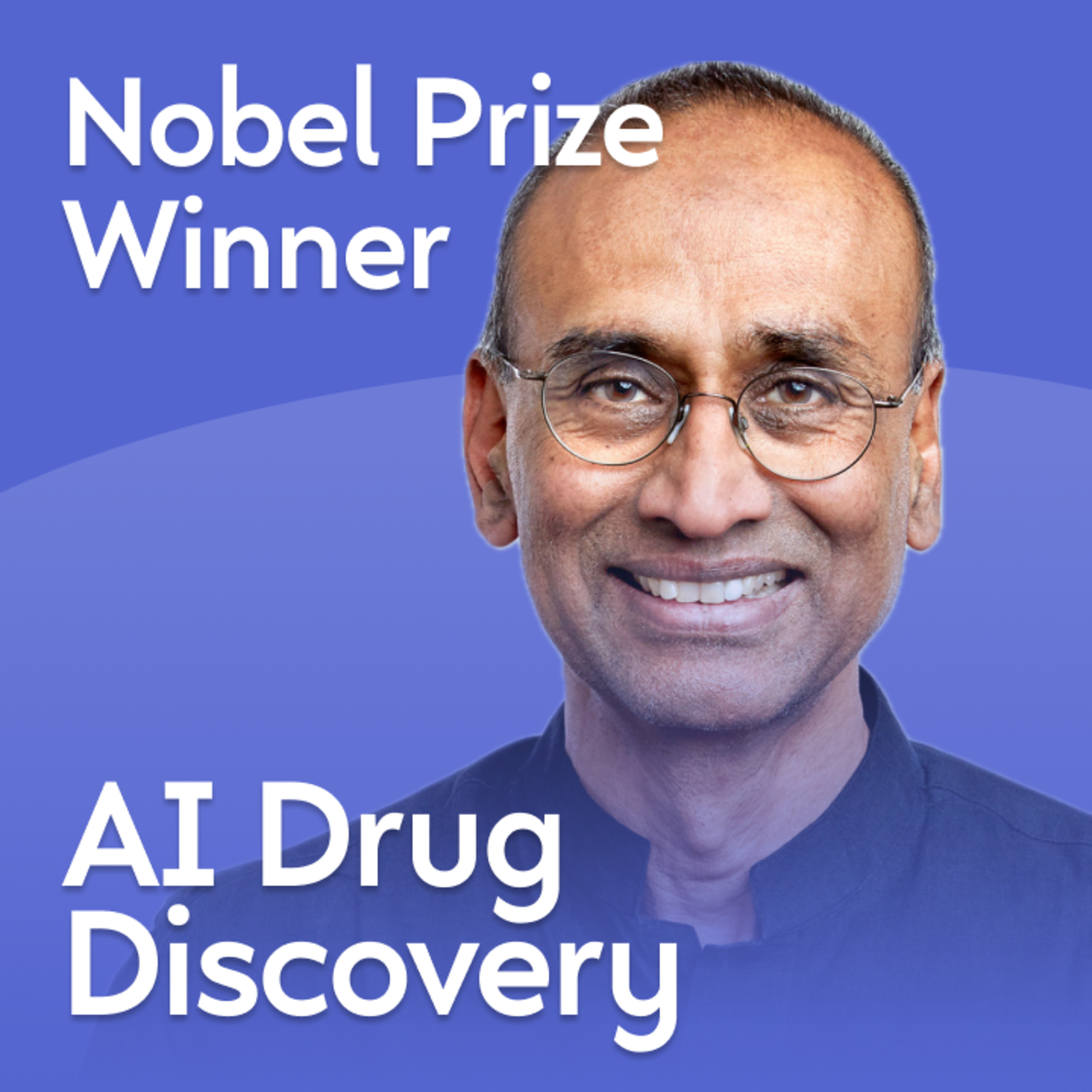
Venki Ramakrishnan (Molecular biologist, Nobel Prize): "The experimental part [of drug discovery] is always going to be the bottleneck." Recent headlines about using AI to speed up drug discovery made me curious about what that looks like and where it is today. So I flew to the UK to interview Venki Ramakrishnan who is on the scientific advisory board of Demis Hassabis' Isomorphic Labs. He has described himself as a "failed physicist" starting originally with a physics PhD who changed fields because he felt his work was incremental. After pivoting into molecular biology without a degree he discovered the field of work that eventually led to his Nobel prize. So aside from drug discovery, I also asked him about how AI is impacting the field of biology, how biology compares to physics, and the politics behind the Nobel prize. Podcast links: • YouTube: https://www.youtube.com/watch?v=-1q0zA21AkY • Transcript: https://www.developing.dev/p/e074-venki-ramakrishnan Thank you to this episode's
It’s becoming increasingly clear that the negative impact of phones on our lives is larger than we’d like to admit. Maybe it’s time to move beyond tips and hacks to explore more serious interventions. But what would these look like? In this episode, Cal dispatches correspondent Dale Davidson on a world-spanning investigation of some of the more extreme solutions people have deployed to reclaim their lives from their devices. Get your questions answered by Cal! Here’s the link: https://bit.ly/3U3sTvo Video from today’s episode: youtube.com/calnewportmedia (0:00) Can we escape our internet hell? (4:36) Act 1 (27:37) Act 2 (41:40) Act 3 (1:06:46) Closing comments Links: https://www.wsj.com/lifestyle/phone-screen-time-prison-pg-sittenfeld-8c3b186b?st=JjqsTg&reflink=desktopwebshare_permalink (https://www.wsj.com/lifestyle/phone-screen-time-prison-pg-sittenfeld-8c3b186b?reflink=desktopwebshare_permalink&st=JjqsTg) https://hangingup.substack.com/?utm_campaign=profile_chips (https://hangingup.
Show Description Chris upgraded his webcam (YOLO amiright?), Dave broke up with Elgato but helped bring automatic picture-in-picture to Chromium, left tabs vs pin tabs, the quest to replace Arc, and Chromium and Webkit browser options in 2026. Listen on Website (https://shoptalkshow.com/740/) Links YoloLiv YoloCam S7 (https://link.amazon/B05S9tVl9) Elgato Facecam 4K (https://link.amazon/B0iIx1Zo1) Arc-like Automatic Picture in Picture in Chromium (https://daverupert.com/2026/10/arc-like-automatic-picture-in-picture-in-chromium/) Tupo (https://playtupo.com/) Zen browser (https://zen-browser.app/) Dia browser (https://www.diabrowser.com/) CrestBrowser (https://crestbrowser.com/) Ardia.dev (https://ardia.dev/) Aside (https://aside.com/) The Four Tiers of Tab Importance (https://chriscoyier.net/2026/09/15/the-four-tiers-of-tab-importance/) CodePen WebMCP (https://blog.codepen.io/docs/pens/codepen-ai/webmcp/) Helium.computer (https://helium.computer/) Arcium (https://github.com/dr-baker/Arc
With the bigger battery pack, Ford expects around 300 miles of EPA range. I explain the size without relying on pictures: a Ford Maverick footprint, smaller than a Ranger, with more interior room than a Toyota RAV4, according to Ford. For charging and home backup, it has a NACS port and vehicle-to-grid technology, but Ford has not released battery capacity or charging-time figures.
Moose horrifies the show with his habit of saving his fingernails and using them as toothpicks, which somehow leads to a listener admitting she finds it attractive. Plus, Roz struggles with being home alone, Mocha's Montreal trip causes some tension, a debate over Pokémon card scalpers gets heated, and a listener shares an embarrassing gym story after accidentally blasting the podcast for everyone to hear. We chat with Rivka Aisha about her viral and controversial obituary, while Maurie catches up with Jessel Taank from The Real Housewives of New York City and Tatiana Maslany about her new film The Only Living Pickpocket in New York. Hosted by Simplecast, an AdsWizz company.
Three schemas. Bronze, silver, gold. The diagram got nods in the architecture review. Then two dashboards land in the same leadership meeting with two different active customer counts, and the head of finance asks which one is right. The trail ends at bronze, where rows that failed parsing were quietly dropped. The vendor keeps thirty days. Every label was there. What the medallion was invented to fix was not, and the pipeline had rebuilt the old mess across three schemas. In this episode: - What pipelines looked like before bronze, silver and gold, and the three pains the diagram was drawn to fix - Why dropping bad rows at bronze feels clean and quietly decides how far back you can rebuild - When skipping a layer is the right call, and why seven layers is not a safer bet than three - The question to ask about every gold table before your next architecture review This episode is for Databricks data engineers who build or inherit a medallion architecture and have wondered what silver is
From sidewalk kicks to full-on physical blockades, people are harassing delivery robots. A professor was reportedly arrested for attacking one. Plus, a dozen delivery robots jammed a Chicago sidewalk, and a DoorDash driver reportedly faked deliveries with AI.
Until recently, many teachers only got one word of feedback a year: "satisfactory." And with no feedback, no coaching, there's just no way to improve. Bill Gates suggests that even great teachers can get better with smart feedback -- and lays out a program from his foundation to bring it to every classroom. Uploaded 16-08-13 Talk by Bill Gates.
Would you hand a stranger your bank passwords, your private messages, and control of your personal information? That’s the ask when the stranger is an AI agent, like Meta Muse, Claude Duet, or OpenAI Dots. In this special episode from Open to Debate, recorded live at the Masters of Scale Summit in San Francisco on October 22, 2026, Jeff Berman, co-host of Masters of Scale, moderates a debate on the question: should we stop trusting AI agents with our information? Arguing yes, Meredith Whittaker, president of Signal, says the convenience comes at the cost of our privacy, since agents need sweeping access that could undermine encryption, expose personal data, and create new vulnerabilities for hackers. Arguing no, Neil Chilson, head of AI policy at the Abundance Institute, counters that existing laws, competition, and targeted safeguards can manage the risks without giving up the productivity gains. So how much control is too much? Follow Open to Debate on YouTube (https://www.youtube.co
T.J. Jones joins Cinco to share how he tracked down ten of the last surviving B-17 airmen of the Mighty Eighth Air Force for his documentary, 10 Good Men. The film pairs their firsthand accounts with restored footage from both old American and German archives to tell the story of the daylight bombing campaign over Europe. Jones talks about everything from the bombers’ nose art to what the men remembered about flying into combat. It’s an amazing and untold story!
Interview - Danielle Russell - The Attack Surface Changed: Who Reassesses Risk After the Approval? The attack surface now changes faster than any team can reassess it, as employees add integrations, grants, and agents to apps long after they were approved. Danielle Russell, VP of Product at Nudge Security, explains what continuous reassessment looks like in practice: which changes deserve a response, which work agentic AI can take on, and where analysts still make the call. She also makes the case that security still owns the risk after approval, even when it never saw the change that created it. Segment Resources: Modernize your TPRM program with adaptive risk management for SaaS and AI (https://www.nudgesecurity.com/post/adaptive-risk-management-launch) Nudge Security Unveils Adaptive Risk Management press release (https://www.nudgesecurity.com/press/nudge-security-unveils-adaptive-risk-management) The security work nobody wants to do is the risk nobody’s watching (https://www.nudges
I was in college when Napster hit, and the RIAA instantly became the big villain because it was suing kids for downloading music. That was when I decided to go be a copyright lawyer, which set the rest of my career in motion — and Mitch Glazier was in the background as a young lawyer at the RIAA, on the other side of those cases. So part of me was very deeply, very genuinely surprised to discover just how much fun I had talking to Mitch, who's now on the same side as musicians and audiences in the fight against AI. Read the full interview transcript on The Verge (https://www.theverge.com/podcast/1029684/riaa-mitch-glazier-napster-ai-labels-music). Links: Major labels propose rules to keep AI slop off charts | The Verge (https://www.theverge.com/ai-artificial-intelligence/973741/ai-music-major-record-labels-charts) Suno snatched songs from YouTube, Genius, and Deezer | The Verge (https://www.theverge.com/ai-artificial-intelligence/966072/suno-ai-music-training-scraping-youtube-hack) Vil
AI agents are being pitched for almost every part of sales, marketing, and customer support, from AI SDRs to support bots that resolve tickets without a person. But most businesses aren't excited about agents for their own sake. They want more leads, more closed deals, and happier customers. For go-to-market teams, that raises practical questions about where automation helps and where people still need to stay involved. How much of the sales process can an agent handle? How do you build enough trust to let one talk to your customers? And how do you know it's working? Duncan Lennox is the Chief Product and Technology Officer at HubSpot, where he oversees the product portfolio and leads Engineering, Product, UX, Next Bets, and IT and Security. Before HubSpot, he held roles at Google, most recently as general manager of the Applied AI team in Google Cloud, and at Amazon Web Services, where he was general manager of Elastic File System. He also co-founded two enterprise SaaS startups, serv
Ford initially announced the Lightning at 40,000 US dollars after incentives. Within a year, its base price was close to 60,000 US dollars, while Ford mostly promoted the expensive versions. I explain why today's used demand points to the price changing—not the truck suddenly becoming better.
Researchers at TU Wien have developed a promising approach to make quantum communication far more reliable. By applying time-reversal symmetry and engineering how light travels through a waveguide, their simulations suggest that single photons could be absorbed with nearly perfect efficiency, overcoming a major limitation in qubit-to-qubit transfers. The technique could help pave the way for more efficient quantum computers and communication networks. This episode includes AI-generated content.
This is an AI narration of "Two Kinds of Test-Time Scaling" (https://www.forethought.org/research/two-kinds-of-test-time-scaling) by James Tillman. The article was first released on 9th November 2026. You can read more of our research at forethought.org/research (https://www.forethought.org/research). Outline: (01:44) 1. Compute Extrapolation (01:48) 1.1. What is it, and how does it relate to test-time scaling? (10:14) 1.2. What would its consequences be? (18:25) 2. Recent History (29:28) 3. Conclusion
AI search visibility means little if the recommendation gets your business wrong. In this episode, Chris sits down with Justin Inman, founder and CEO of emberos and a former Google enterprise growth leader, to explore how AI-generated answers shape brand discovery. They discuss generative engine optimization, the shift toward zero-click search, and why accurate recommendations depend on signals across your website, reviews, publishers, and creators. Justin explains how his team approaches AI brand management by tracing the sources behind inaccurate answers and identifying which information to correct. The conversation covers testing customer questions across chatbots, the limits of visibility scores and content shortcuts, and the challenge of measuring AI-assisted purchases. Justin also shares how Granola, Claude, and HubSpot support his meeting preparation, with human review remaining essential. Listen to learn what to check first and how to assess whether your brand is being recommen
The kids are using AI for homework, and it hands over the answers. Flip one switch and it becomes a tutor. I'll tell you how to turn it on. Plus, we help Michele use AI with her students for a Veterans Day project, and how to prep for a radio interview.
Dig into the era of the Khmer Rouge in Cambodia, which perpetuated a genocide that killed a quarter of the country’s population. -- From 1975 to 1979, the Communist Party of Kampuchea ruled Cambodia with an iron fist, perpetrating a genocide that killed one fourth of the country’s population. Roughly one million people were executed as suspected political enemies or due to their ethnicities, and another million died of starvation, disease, or overwork. How did this happen? Timothy Williams details the rise of the Khmer Rouge. Lesson by Timothy Williams, directed by Héloïse Dorsan-Rachet. Support Our Non-Profit Mission ---------------------------------------------- Support us on Patreon: http://bit.ly/TEDEdPatreon Check out our merch: http://bit.ly/TEDEDShop ---------------------------------------------- Connect With Us ---------------------------------------------- Sign up for our newsletter: http://bit.ly/TEDEdNewsletter Find us on Twitter: http://bit.ly/TEDEdTwitter Peep us on Instag
https://clearmeasure.com/developers/forums/ Today's guest is Chris Harbert, founder and CEO of Testery, a test orchestration platform that runs Playwright, Cypress, and Selenium suites in parallel and gates deployments with evidence from every run. Chris got into test automation nearly 20 years ago as a developer practicing TDD at an early Agile adopter, and today he speaks internationally on DevOps, test automation, and AI at conferences like TestCon Europe, STAREAST, and KCDC. He also hosts the Developers Who Test podcast, where recent episodes have covered testing RAG systems and the DORA AI Capabilities Model. Lately he has been writing about what AI coding agents mean for quality, including his post "Is AI Silently Disappearing Your Features?" and "The Design Pattern AI Companies Don't Want You to Know," published June 15, 2026. Testery Website - https://testery.com/ Testery Blog - https://blog.testery.io/ Developers Who Test - https://www.developerswhotest.com/ Chris' Website - h