Listen through the publisher, then discuss the episode here or arrange an in-person Roundtable. Your city determines where to meet.
Roundtables are designed for groups of four, with a shared subject and room for everyone to speak. Come for discussion, with no dating expectation.
In this episode, we break down aromatic compounds, a crucial topic for the Biochem and Chem/Phys sections of the MCAT. You’ll learn what makes a compound aromatic, how to identify them using Huckel’s Rule, and the difference between aromatic, antiaromatic, and nonaromatic compounds. Sam Smith covers key examples like benzene, toluene, and phenol, and explains their role in biological systems like DNA and the electron transport chain. With practical tips and MCAT-focused insights, you'll be ready to tackle questions on aromatic compounds with confidence. Jump into the conversation: (00:00) Introduction and Med School Coach Promotion (01:03) Introduction to the Topic: Aromatic Compounds (02:08) Definition of Aromatic Compounds and Electron Delocalization (04:43) Explanation of Huckel’s Rule and Aromaticity Criteria (07:59) Introduction to Antiaromatic Compounds (09:58) Definition of Polycyclic and Heterocyclic Aromatic Compounds (12:02) Common Aromatic Compounds to Know: Benzene, Toluene, Phenol, Aniline (14:54) Properties of Aromatic Compounds: Physical, Stability, Fluorescence, Basicity (20:15) Aromatic Compounds in Biology: Amino Acids, DNA/RNA, Electron Transport Chain (28:14) Conclusion and Outro
Episode information is provided by the publisher. Listening takes place on the publisher’s service.
Learn more about Audible at: https://www.audible.com/spacetime or text spacetime to 500 500! Uploaded 09-05-19 PBS Member Stations rely on viewers like you. To support your local station, go to: http://to.pbs.org/DonateSPACE Quantum computing is cool, but you know what would be extra awesome - a quantum internet. In fact if we want the first we’ll need the latter. And the first step to the quantum internet is quantum cryptography. Check out the new Space Time Merch Store! Support Space Time on Patreon Need a Black Hole Refresher #cryptography #quantumcomputing #spacetime Hosted by Matt O'Dowd Written by Graeme Gossel and Matt O'Dowd Graphics by Leonardo Wille Directed by Andrew Kornhaber Produced By: Kornhaber Brown Quantum theory may seem like an obscure subject of questionable relevance to the average person. But in fact much of our technological world depends on our understanding of the quantum properties of the subatomic universe. And soon, perhaps very soon, we’ll be interacting w
Uncover the oil industry’s decades-long campaign to discredit climate change science regarding the danger of fossil fuels. -- Throughout the 1980s, oil industry reps discussed the dangers of burning fossil fuels, acknowledging the risk their product posed to the future of humanity. However, instead of warning the public or pivoting towards renewable energy sources, they doubled down on oil — and launched a decades-long campaign to discredit climate change science. Stephanie Honchell Smith digs into Big Oil's tactics. Lesson by Stephanie Honchell Smith, directed by Sofia Pashaei. This video made possible in collaboration with Speed & Scale Learn more about how TED-Ed partnerships work: https://bit.ly/TEDEdPartner Data and graph shown at 5:43 by Statista: https://www.statista.com/chart/11673/the-soaring-costs-of-climate-change Support Our Non-Profit Mission ---------------------------------------------- Support us on Patreon: http://bit.ly/TEDEdPatreon Check out our merch: http://bit.ly/
Before the holiday leftovers come out, here is what a year of pesticide policy is putting back into them. This bonus episode opens with the news: an executive order boosting glyphosate production, a Supreme Court ruling that limits state lawsuits over Roundup's cancer warnings, and EPA approvals of new pesticides that scientists say meet the definition of forever chemicals, a label the agency disputes. We also ask what it means that the Make America Healthy Again movement, and its leader, Robert F. Kennedy Jr., are defending those choices. Then you'll hear Kelly Ryerson, the Glyphosate Girl, explain what glyphosate may be doing to our bodies and soil, where it hides in everyday foods, and the practical steps you can take today to limit your exposure. This interview was recorded before the news above broke, for Nutrition Without Compromise, a podcast brought to you by Örlö Nutrition, a brand Corinna works with. It was originally published as episode 68 in fall of 2023. Episode blog page
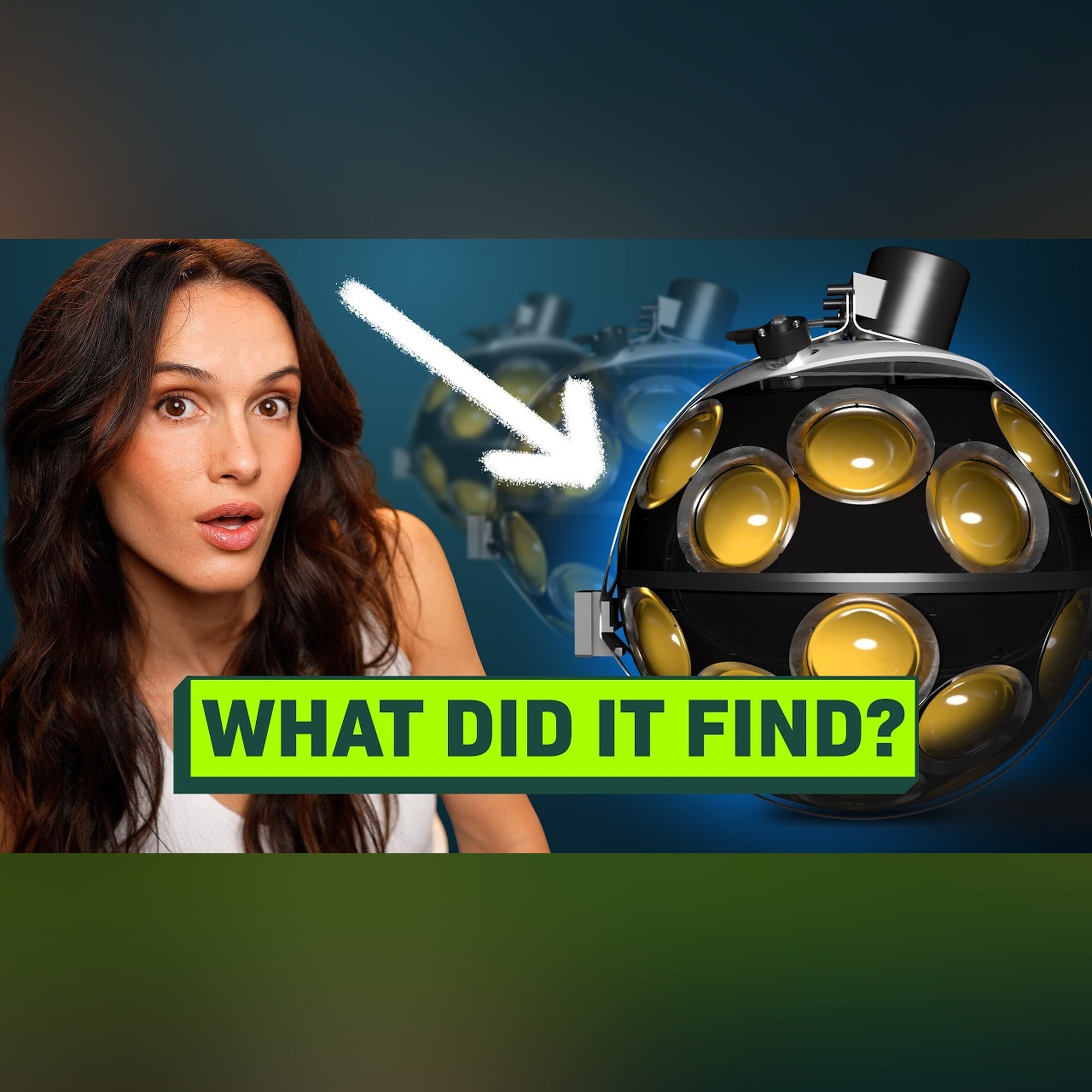
Off the coast of Sicily, there’s a massive underwater machine. It looks like a forest of floating spheres… And on the surface, hidden in an abandoned winery, a computer watches them and waits. And in 2023, they saw something… Something WAY smaller than an electron tore through that forest, setting off a signal nearly 30x more powerful than anything like it we’ve seen before, which means something HUGE must have happened way out in space. This crazy experiment is not alone! Down in Antarctica, buried deep in the ice, are over 5000 more of these mysterious spheres. Together, these two machines – called KM3net and Ice Cube – are part of a massive global effort to give us a brand new way to find and look inside the biggest, most extreme, cosmic events in our universe. But to do it, they need to catch the most elusive particle in all of physics. And in this episode of HUGE* If True, we’re going to show you how… This episode was made possible by AT and T, the official connectivity partner of
We've talked a lot about this year's heatwaves and the impacts they have had on farming. We've talked less about the impact on the sea, fishing and ocean life, but this week that's what we're going to focus on, looking both at what's happening now in our warming seas and what future projections are. A report out last month warned that by 2050 warming seas could 'fundamentally reshape marine ecosystems' and so jeopardise food security. The government agency CEFAS - the Centre for Environment, Fisheries and Aquaculture Science - projected the impact of climate change on marine life. We speak to the co-lead author Dr Elena Couce. We also speak to Professor Michel Kaiser from The Lyell Centre at Heriot-Watt University about what warmer waters mean for the fishing industry, and consumers. Nitrogen fertiliser is a big topic in agriculture. It's used to help plants grow, but the ongoing war in the Middle East continues to affect global fertiliser supplies and push up prices, and using less of
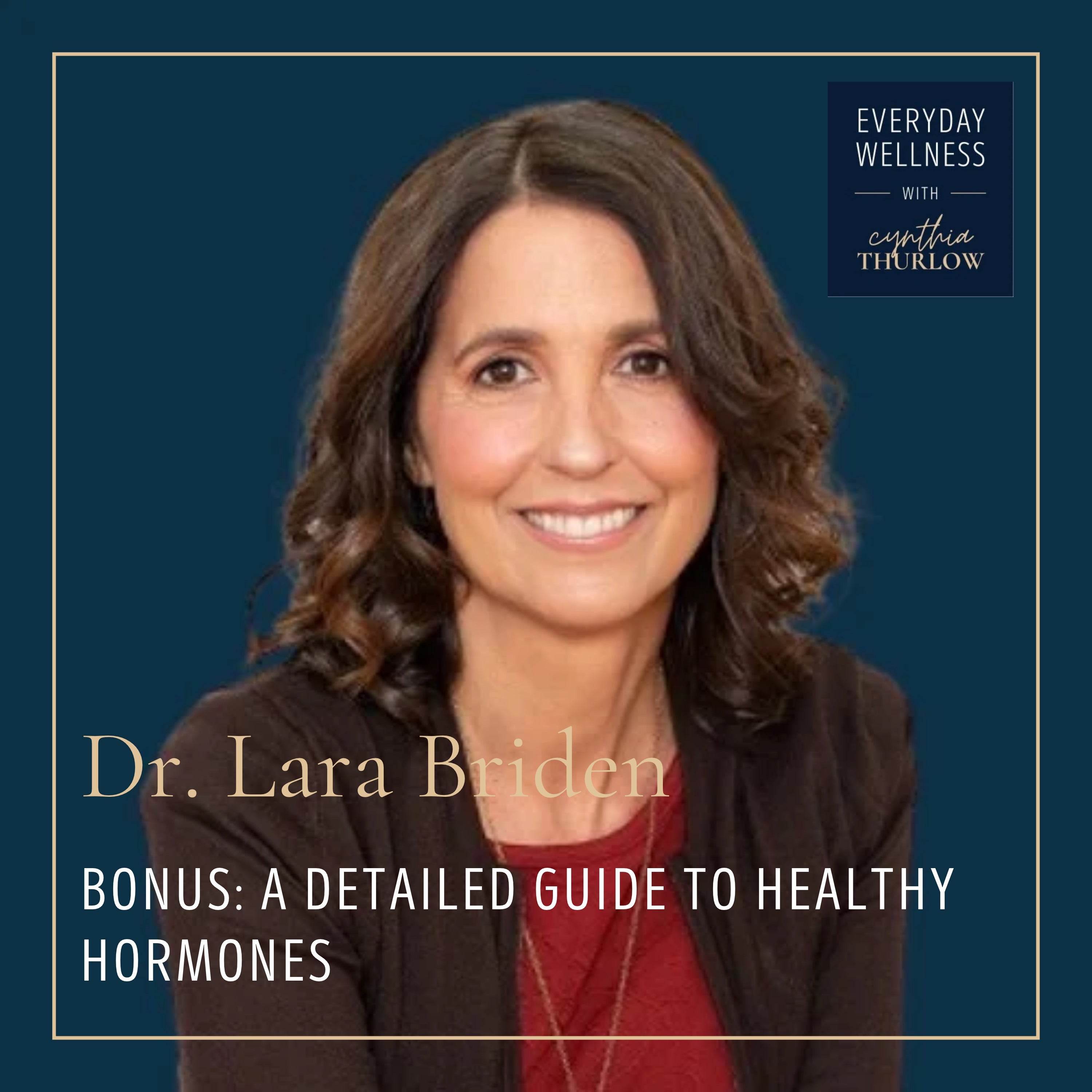
I am excited to connect with Dr. Lara Briden today! She is one of my favorite naturopathic doctors and the author of the bestselling books Period Repair Manual and Hormone Repair Manual. She has 25 years of experience in women's health, and she currently has consulting rooms in Christchurch, New Zealand, where she treats women with PCOS, PMS, endometriosis, perimenopause, and many other hormone- and period-related health problems. Dr. Briden is a wealth of information! She brings a fresh perspective and a positive voice to the health and wellness space, and I often recommend her book, Hormone Repair Manual, to my clients and patients. Today, she and I dive into her background as an evolutionary biologist and discuss how she became passionate about supporting and advocating for women throughout their lives. We talk about perspectives on aging, what the second puberty (perimenopause) is, and the impact of histamine, mast cell granulation, and estrogen. We discuss fat redistribution in mi
Aging is an essential topic for the MCAT, and in this episode, we’ll explore it from multiple angles. We start with the biological aspects of aging, including key processes like telomere shortening, cell senescence, and mitochondrial dysfunction—each providing insight into how and why cells age. From there, we dive into how aging impacts the brain, including the types of memory and cognitive functions that either decline or improve with age. Lastly, we’ll cover the sociology of aging, focusing on the life course theory, the social significance of aging, and demographic changes. Expect a comprehensive breakdown of these concepts, with real-world applications and examples to reinforce your understanding. Jump Into the Conversation: (00:00) Intro (02:30) Cellular markers of aging: Protein aggregation and telomere shortening (04:55) Exploring cell senescence and autophagy dysregulation (07:20) Mitochondrial dysfunction and its role in cellular aging (09:10) Deep dive into telomeres and the
In this episode, we cover the topic of viruses. We explore a comprehensive range of subtopics including the definition and structure of viruses, their life cycles, and the differences between transduction and transfection. We also discuss virus classification, viral mutations, and subviral particles. This material will primarily appear in the Bio/Biochem section of the MCAT. Jump into the conversation: [00:00] Introduction [01:57] Definition of a virus [02:55] Virus structure [10:41] The viral life cycle [17:34] The bacteriophage life cycle [21:40] The retrovirus life cycle [21:40] The retrovirus life cycle [27:11] Virus classification [32:09] Viral mutation [40:31] Subviral particles
The Doppler Effect is a crucial concept for the MCAT, particularly in the Chemistry & Physics section. We'll explore how the Doppler effect occurs when a wave source moves relative to an observer, affecting the observed frequency and wavelength. Using practical examples like an ambulance speeding towards you, we'll bring these concepts to life. We'll also break down the Doppler effect equation, examining what it reveals—and what it doesn’t—about wave behavior. By the end of this episode, you'll have a solid understanding of The Doppler effect and will be ready to tackle any related questions on the MCAT. Jump into the conversation: (00:00) Introduction to the MCAT Basics (02:09) Conceptual Explanation of the Doppler Effect (03:55) Example: Doppler Effect with an ambulance (04:55) Speed of sound and wave propagation (05:31) Impact of ambulance motion on sound wave speed (06:37) Relationship between wave speed and frequency (07:30) Detailed explanation of sound frequency (08:45) Introduc
Public health information should explain uncertainty even when simpler messages are easier to communicate.
Share your view, then see how readers voted. No sign-in required. This poll is shared across stories.
Do you agree or disagree?
Common Quandary
A Common Quandary to discuss
Another conversation to explore, separate from this news story.
Software says a student cheated with AI. Is that enough to fail the paper?
A teacher suspects several essays were written with AI. Detection software marks one student's work as highly likely to be generated, but the software is known to make mistakes and the student denies using it.
How should responsibility be assigned when evidence is powerful but unreliable?