Discover Frank Herbert’s science fiction classic, “Dune,” which tells the story of a man catapulted into the middle of a planetary revolution. Uploaded 17-12-19 -- A mother and son trek across an endless desert. Wearing special suits to dissipate heat and recycle moisture, the travelers aren’t worried about dying of thirst. Their fears are much greater. Soon, the sound of the desert is drowned out by a hissing: a mound of sand 400 meters long bursts from the desert floor and races towards them. This is the world of “Dune.” Dan Kwartler dives into the epic story. Lesson by Dan Kwartler, directed by Recircle. Animator's website: https://www.recircle.net (https://www.recircle.net/) Sign up for our newsletter: http://bit.ly/TEDEdNewsletter Support us on Patreon: http://bit.ly/TEDEdPatreon Find us on Twitter: http://bit.ly/TEDEdTwitter Peep us on Instagram: http://bit.ly/TEDEdInstagram View full lesson: https://ed.ted.com/lessons/why-should-you-read-dune-by-frank-herbert-dan-kwartler #bookt
On today’s episode, we’re talking about the biggest El Niño season in 1000 years! We get into the impacts that are predicted to happen globally and what has happened in the past. We discuss if the predictions are still as bleak as they were, what new predictions are coming out now and how concerned you should be. To leave us a message on El Niño, or podcast topics or anything, Sidenote by AsapSCIENCE, please visithttps://www.asapscience.com/chat Source: Hosted on Acast.
In which John Green explores F. Scott Fitzgerald's novel of the Jazz Age, The Great Gatsby. John introduces you to Nick Carraway, Jay Gatsby, Daisy and Tom Buchanan, and the other characters in the novel, and tries to look beyond the surface story to figure out what this thing is ABOUT. Set in the 1920s against a conflicted backdrop of prohibition and excess, The Great Gatsby takes a close look at the American Dream as it existed in Fitzgerald's time. It turns out, it had a lot to do with money and status, and it still does today. John will cover the rich symbolism of the novel, from the distant green light to the pale gold of wealth and decay. Also, Paris Hilton drops by. Turn on the captions. You'll like it. Consider supporting local bookstores by purchasing your books through our Bookshop affiliate link https://bookshop.org/shop/complexly or at your local bookseller. Crash Course is on Patreon! Want to find Crash Course elsewhere on the internet? Facebook - http://www.facebook.com/Y
Religion and science have had some famously messy fights, but do they always have to be in conflict? In this episode of Crash Course Religions, we’ll look at some ways religion and science are more than just enemies. Introduction: The Three Sisters 00:00 Earth's Age 0:55 Creation vs. Evolution 1:51 Galileo 3:45 The Conflict Thesis 5:53 Traditional Ecological Knowledge 8:32 Review & Credits 10:56 *** Support us for $5/month on Patreon to keep Crash Course free for everyone forever! https://www.patreon.com/crashcourse Or support us directly: https://complexly.com/support Join our Crash Course email list to get the latest news and highlights: https://mailchi.mp/crashcourse/email Get our special Crash Course Educators newsletter: http://eepurl.com/iBgMhY Thanks to the following patrons for their generous monthly contributions that help keep Crash Course free for everyone forever: Shruti S, Ryan Lueckenotte, Spilmann Reed, Brandon Thomas, Emily Beazley, Forrest Langseth, Rie Ohta, oranjeez,
What if an overlooked particle played a crucial role in making our existence possible? A new cosmological theory suggests that an ancient, heavy neutrino may have briefly dominated the universe's energy after the Big Bang, influencing the delicate imbalance between matter and antimatter. Even more intriguing, its effects could have left detectable signatures in primordial gravitational waves, potentially offering scientists a new way to investigate the universe's earliest moments. This episode includes AI-generated content.
How do giant planets end up orbiting dangerously close to their stars? New simulations suggest that supersonic shock waves in their atmospheres can drain orbital energy, driving planets inward. Depending on the intensity of these disruptions, a planet may settle into a tighter orbit or lose much of its atmosphere. This mechanism could help explain the mysterious distribution of hot Jupiters and other giant exoplanets. This episode includes AI-generated content.
Explore how fiber optics uses light to transmit data over long distances, and with integrated photonics, expands our virtual world beyond the internet. Uploaded 22-04-19 -- In 2012, a team of researchers set a world record, transmitting 1 petabit of data— that’s 10,000 hours of high-def video— over a fifty-kilometer cable, in a second. This wasn’t just any cable. It was a souped-up version of fiber optics, the hidden network that links our planet and makes the internet possible. What is fiber optics and how does it work? Sajan Saini explores the vital technology. Lesson by Sajan Saini, directed by Artrake Studio. Learn more about integrated photonics: https://aimphotonics.academy (https://aimphotonics.academy/) Learn how integrated photonic chips are made: https://www.aimphotonics.com (https://www.aimphotonics.com/) Sign up for our newsletter: http://bit.ly/TEDEdNewsletter Support us on Patreon: http://bit.ly/TEDEdPatreon Find us on Twitter: http://bit.ly/TEDEdTwitter Peep us on Instag
Scientists are trying to figure out what makes something funny. We compare notes with comedians Atsuko Okatsuka (https://atsukocomedy.com/), Josh Johnson (https://www.joshjohnsoncomedy.com/), Dulcé Sloan (https://www.dulcesloan.com/), and Chris Fleming (https://chrisflemingfleming.com/) (Originally published in 2023) Guests: Allie Volpe (https://www.vox.com/authors/allie-volpe), Vox correspondent; Peter McGraw (https://leeds-faculty.colorado.edu/mcgrawp/pdf/HuRL.html), professor at University of Colorado Boulder; Caleb Warren (https://eller.arizona.edu/people/caleb-warren), professor at the University of Arizona And please email us! [email protected] We read every email. Thank you!
To hear an ad-free version of this episode, join our Patreon (http://patreon.com/cw/outsideinradio). Producer Felix Poon used to be a reckless moped driver who weaved in between semi trucks. Now he’s a cautious cyclist constantly looking over his shoulder for the slightest sign of danger, wondering why he still bikes at all. To figure it out, Felix enlists the help of other cyclists. A city bike commuter who dismisses his mom's concerns about his safety. A self-identified "fat" woman who gets back on the bike after years of not biking. And a father who wished his son would risk the kind of scraped knees and broken bones he got when he was a kid. Together, Felix and the gang consider what biking means to their lives, and what, at the end of the day, gets them back on the saddle. Featuring Reece Taylor Williams, Marley Blonsky, and Taylor Quimby. Produced by Felix Poon. For full credits and transcript, visit outsideinradio.org (http://outsideinradio.org/) CONNECT WITH US No question is t
In the world of ecology, the only constant is change - but change can be good. Today Hank explains ecological succession and how ecological communities change over time to become beautiful, biodiverse mosaics. Table of Contents 1. Primary Succession 1:56:1 2. Secondary Succession 3:36 3. Climax Community Model 5:11 4. Intermediate Disturbance Hypothesis 7:25:1 Reference: Crash Course is on Patreon! Want to find Crash Course elsewhere on the internet? Facebook - http://www.facebook.com/YouTubeCrashCourse Twitter - http://www.twitter.com/TheCrashCourse Instagram - https://www.instagram.com/thecrashcourse/ CC Kids: http://www.youtube.com/crashcoursekids
Uploaded 24-05-18 View full lesson: https://ed.ted.com/lessons/what-is-dust-made-of-michael-marder Less than a tenth the size of an ant, a dust mite’s whole world is contained in the dusty film under a bed or in a forgotten corner. This realm is right under our noses, but from our perspective, the tiny specks of brilliant color blend together into a nondescript grey. What are these colorful microscopic particles? Michael Marder explores the science of dust. Lesson by Michael Marder, animation by Mette Ilene Holmriis. Thank you so much to our patrons for your support! Without you this video would not be possible! Irindany Sandoval, William Bravante, Elizabeth Parker, Sai Krishna Koyoda, Therapist Gus, Samuel Barbas, Betsy Feathers, Maxwell Ingram, Ajinkya Deshmukh, Victoria Soler-Roig, Abdulmateen Aderinto, Pavel Maksimov, Barbara Younker, Cyrus Garay, Yvette Mocete, Mike Azarkman, Valeria Sloan Vasquez, Patricia Alves Panagides, William Biersdorf, Michael Aquilina, Vinamr L. Sachdeva,
Wildfires, hurricanes, heat waves and floods are growing more frequent and more costly, and communities are racing to adapt. But new infrastructure only helps if people use it, and warnings only work if people act on them. Gabrielle Wong-Parodi, PhD, of Stanford University, and Brett Gelino, PhD, of the University of Massachusetts Lowell, discuss what a climate-resilient community looks like; why repeated alerts can lose their urgency and how officials can convey risk without causing people to tune out; and how research can get into the hands of planners and emergency responders who need it.
Hank gets to the more violent part of community ecology by describing predation and the many ways prey organisms have developed to avoid it. TABLE OF CONTENTS Herbivory and Parasitism 1:43 Predatory Adaptation 3:39 Cryptic Coloration 4:25 Mullerian Mimicry 5:43 Batesian Mimicry 6:38 Resources: http://www.youtube.com/watch?v=37hHBgaZymo&feature=fvwrel (http://www.youtube.com/watch?feature=fvwrel&v=37hHBgaZymo) Thanks to the Boone and Crockett Club for letting us film the introduction to this video in their headquarters here in Missoula: http://www.boone-crockett.org/about/about_headquarters.asp?area=about Crash Course is on Patreon! Want to find Crash Course elsewhere on the internet? Facebook - http://www.facebook.com/YouTubeCrashCourse Twitter - http://www.twitter.com/TheCrashCourse Instagram - https://www.instagram.com/thecrashcourse/ CC Kids: http://www.youtube.com/crashcoursekids
El Niño is strengthening across the Pacific, and its effects can ripple far beyond the ocean. Chris breaks down what El Niño actually is, how it shifts weather patterns around the world, and why this event matters for people, wildlife, and ecosystems. From drought, flooding, and heat to disrupted marine food webs, coral bleaching, wildfire risk, and changing breeding patterns, this episode explores how one natural climate cycle can influence life across the planet. Chris also looks at how human-caused climate change is altering the background conditions in which El Niño now occurs, and why forecasting, preparation, and resilient ecosystems matter more than ever. Timeline 00:00 El Niño Overview 02:52 How El Niño Works 06:06 ENSO Phases Explained 07:25 Climate Change Amplifier 10:09 2026-2027 Outlook 13:00 Rainfall Drought Flood Risks 15:22 Human Impacts And Equity 21:33 Ocean Food Web Disruption 27:21 Coral Reefs Heat Stress 30:23 Terrestrial Wildlife Impacts 36:33 Forecasting And Prepa
Could comets have delivered the ingredients for life on early Earth? A University of Cambridge study challenges this long-standing theory, suggesting that high-speed impacts may have destroyed fragile organic molecules before they could trigger prebiotic chemistry. Mars may have offered more favorable conditions, but the findings raise new questions about how life’s essential building blocks first appeared. This episode includes AI-generated content.
Is quantum randomness truly fundamental, or can it emerge from deeper mathematical principles? A new analysis by Oxford researcher Jiaxuan Zhang challenges five major attempts to derive the Born rule, the foundation of quantum probability. By exposing an overlooked assumption in these approaches, the research reveals a deeper question about whether chance can ever be explained without already assuming it. This episode includes AI-generated content.
For millenia, curious minds have been trying to find a universal piece of evidence that tells us someone is lying. From polygraph tests to studies examining eye contact and body language - it seems like science has come close, but decoding lies from truth remains complicated. This episode, host Dr. Samantha Yammine welcomes Dr. Leanne ten Brinke who runs the Truth and Trust Lab and specializes in research about lies and deception. Sam also responds to a listener request to explain why this years’ El Niño is set to cause intense weather across the planet and she breaks down a new study showing how neuroplasticity leads to an increased level of eyesight for those who are profoundly deaf. Link to Show Notes HERE (https://docs.google.com/document/d/1BMoQRTyUFRi4YCa0HoPPaDracVLQhzmE9p18Z7PcDc0/edit?usp=sharing) Still curious? Terms apply. Hosted on Acast.
Together, nitrogen, oxygen and argon make up 99.93% of our air. So what’s the other .07%? Find out what makes up the air you breathe. Uploaded 10-05-21 -- Take a deep breath. In a single intake of air, your lungs swell with roughly 25 sextillion molecules, ranging from days-old compounds, to those formed billions of years in the past. In fact, many of the molecules you’re breathing were likely exhaled by members of ancient civilizations and innumerable humans since. But what exactly are we all breathing? Amy Hrdina and Jesse Kroll investigate. Lesson by Amy Hrdina and Jesse Kroll, directed by Sharon Colman. Support Our Non-Profit Mission ---------------------------------------------- Support us on Patreon: http://bit.ly/TEDEdPatreon Check out our merch: http://bit.ly/TEDEDShop ---------------------------------------------- Connect With Us ---------------------------------------------- Sign up for our newsletter: http://bit.ly/TEDEdNewsletter Find us on Twitter: http://bit.ly/TEDEdTwitt
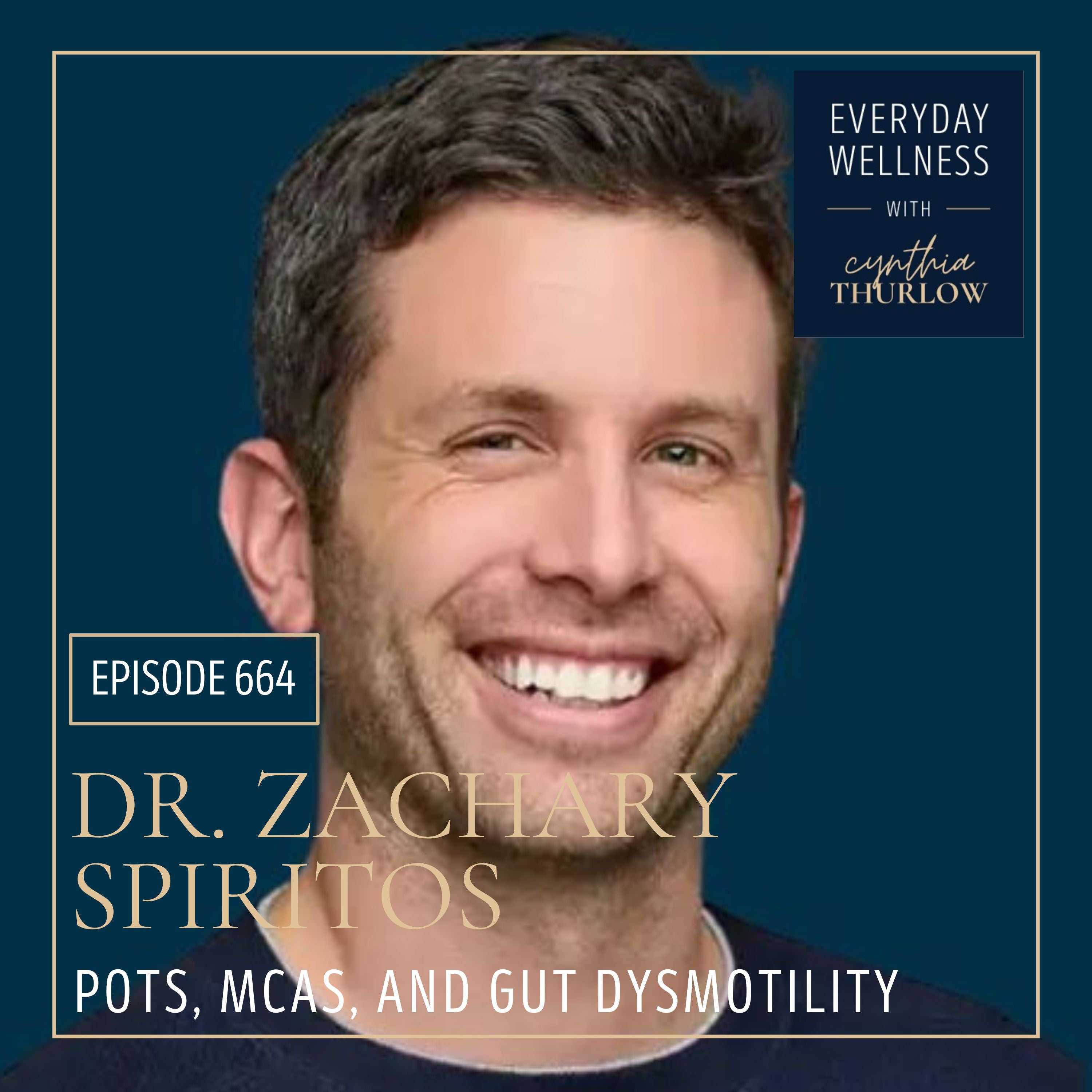
Today, I’m delighted to connect with Dr. Zach Spiritos. A double board-certified gastroenterologist in internal medicine with a fellowship in neurogastroenterology, he founded Ever Better Medicine, a practice built around treating complex, chronic, and often underrecognized conditions at the intersection of the gut and the nervous system. In today’s conversation, Dr. Spiritos and I speak at length about how patients get dismissed by the medical system. We explore irritable bowel syndrome as immune dysregulation and common symptoms that he sees with this diagnosis. We discuss hypermobility and the 13 subtypes of Ehlers-Danlos syndrome, with hypermobility closely linked to inflammation, MCAS, and immune dysregulation. We cover several commonly missed GI complications in hypermobile patients, including how POTS and MCAS often overlap with GI dysmotility, MALS, and how nutrition and stress influence symptoms. Dr. Spiritos also shares his views on constipation and the importance of staying
Yes, Chickenology is a real word. And we have questions. Such as: should you get a chicken?! Chicken-haver and author of “Under the Henfluence” Tove Danovich stops in to recall how her casual backyard chicken experiment turned into an obsession, a lifestyle, and then a book. We chat about junglefowl, chicken competitions, egg prices, chicken statues, bird personalities, coop logistics, avian flus, shell hues, earlobes, live chicken cams, and more on this Part 1. Stay tuned next week as we address a record-breaking number of listener questions. And watch out for leghorns. Buy Tove’s book: Under the Henfluence: Inside the World of Backyard Chickens and the People Who Love Them (https://bookshop.org/p/books/under-the-henfluence-inside-the-world-of-backyard-chickens-and-the-people-who-love-them-tove-danovich/18670810?ean=9781572843219) Visit Tove’s website (https://www.tovedanovich.com/) and follow her on Instagram (https://instagram.com/tovekdanovich) and Bluesky (https://bsky.app/profile
Adam Conover joins Rachel and Lauren to talk about his newest standup special. The trio discuss human sexuality, faking male orgasms, napping while holding a heavy metal key and a plate, and an ego war concerning human spontaneous combustion. The Weirdest Thing I Learned This Week is a podcast by Popular Science. Share your weirdest facts and stories with us in our Facebook group or tweet at us! Click here to learn more about all of our stories! Links to Rachel's TikTok, Newsletter, Merch Store and More: https://linktr.ee/RachelFeltman Rachel now has a Patreon, too! Follow her for exclusive bonus content: https://www.patreon.com/RachelFeltman Link to Jess' Twitch: https://www.twitch.tv/jesscapricorn Link to all of Jess' content: https://www.jesscapricorn.com/ -- Follow our team on Twitter Rachel Feltman: www.twitter.com/RachelFeltman Produced by Jess Boddy: www.twitter.com/JessicaBoddy Popular Science: www.twitter.com/PopSci Theme music by Billy Cadden: https://open.spotify.com/artist/
Acclaimed ornithologist and writer J. Drew Lanham’s obsession with birds began when he was a kid, when he wished to take flight alongside them. He tried out cardboard wings and an umbrella, trying to defeat gravity. He kept refining his designs and finding better jump-off spots. He eventually gave up on trying to fly, but he never stopped loving birds. More info and transcript at BirdNote.org (https://www.birdnote.org/podcasts/birdnote-daily/spark-bird-drew-lanham-takes-flight). Want more BirdNote? BirdNote is a nonprofit. Hosted by Simplecast, an AdsWizz company.
Today I sit down with Brendan Graham Dempsey, Director of Research at the Institute of Applied Metatheory, where he thinks about human meaning-making systems. It’s rare that I have someone on the pod who doesn’t specialize in Asian traditions, but I thought a conversation with Brendan might help crystalize some of the ideas we’ve been discussing so far this season. We talk about what kind of spirituality is possible after postmodernism, the advantages of an integrative worldview, and how to decide which perspective should win out over others when they’re in conflict. In our conversation, it is apparent that Brendan and I are coming at this from different directions, but ultimately we discover some common ground. If you want to hear scholars and practitioners engaging in multidisciplinary conversations about Asian religious, medical, healing, and mystical traditions, then subscribe to Black Beryl wherever you get your podcasts. If you would be willing to help support the pod so we can p
SpaceX Daily Colossus 2 now leads global AI compute with 1.11 million H100 equivalents at its Memphis site. Top News Colossus 2 tops AI compute rankings SpaceXAI’s Colossus 2 cluster reached an estimated 1.11 million H100-equivalent GPUs at the Memphis facility, surpassing OpenAI’s Stargate at 1.02 million. Blackwell systems continue to be added with further expansions planned. Power, cooling, and hardware delivery remain the practical constraints on further scaling. ... Sources: finance.biggo.com (https://finance.biggo.com/news/33da14df-26b5-4e4d-a356-b4e03cad9b9d) · tradingview.com (https://www.tradingview.com/news/stocktwits:839268376094b:0-spacex-could-match-google-s-27-year-data-center-buildout-in-18-months-outpace-even-chinese-rivals-semianalysis/) · blocksandfiles.com (https://www.blocksandfiles.com/flash/2026/11/04/musks-colossus-dc-cluster-whats-the-storage-situation/5307253) · reuters.com (https://www.reuters.com/video/watch/idOVA4H3ADD/) · nasaspaceflight.com (https://www.na