Cutting emissions is the first job, but scientists say we also need to remove carbon that is already in the air, and how we do it will decide whether people trust it. Ugbaad Kosar brings a human-rights lens to the question, shaped by the 2011 drought and famine that reached her family in Somalia. In this conversation she explains the range of carbon removal approaches, from soil and forests to direct air capture and the ocean, and why the land-based options may be the ones ready to go today. She also makes the case that community input is not a courtesy but a requirement, with data centers as a real-time lesson, and shares what Carbon180's CORE framework asks of anyone building a project. You will leave with practical ways to get informed and speak up when a project is proposed near you. Show Note: 00:00 – Why Land-Based Carbon Removal Benefits Go Beyond Carbon 00:28 – Introduction to Care More Be Better 00:47 – Meet Ugbaad Kosar: Equity and Justice at Carbon180 02:26 – Ugbaad’s Journe
Is utopia just too utopian? In this episode of Crash Course Political Theory, we’ll explore visions of utopia from Plato to bell hooks. And we’ll investigate whether “the good place” is a good-for-nothing, impractical daydream—or a path to charting political futures. Crash Course Political Theory #11 Introduction: EPCOT 00:00 Plato's "Republic" 1:03 Thomas More's "Utopia" 2:41 Marxism & Critiquing Utopia 4:59 Libertarianism 7:08 Progressive Utopias 8:27 Review & Credits 9:49 Sources: https://docs.google.com/document/d/1u5zJCbVA0xCurLbQwWzcxXEdlqXAPpAyYVS1quwKIis/edit?usp=sharing *** Support us for $5/month on Patreon to keep Crash Course free for everyone forever! https://www.patreon.com/crashcourse Or support us directly: https://complexly.com/support Join our Crash Course email list to get the latest news and highlights: https://mailchi.mp/crashcourse/email Get our special Crash Course Educators newsletter: http://eepurl.com/iBgMhY Thanks to the following patrons for their generous m
Art and politics may seem like mortal enemies, but they’re more like best frenemies forever. In this episode of Crash Course Political Theory, we take a trip back in time to see how artists have shaped political perceptions and how politicians have tried and failed to stop them. Crash Course Political Theory #12 Introduction: Barbie & Beyoncé 00:00 Art & Plato 0:57 Art & the Nazi Regime 3:07 Committed Art 5:51 Autonomous Art 8:03 Confederate Statues 9:21 Review & Credits 11:29 Sources: https://docs.google.com/document/d/1u5zJCbVA0xCurLbQwWzcxXEdlqXAPpAyYVS1quwKIis/edit?usp=sharing *** Support us for $5/month on Patreon to keep Crash Course free for everyone forever! https://www.patreon.com/crashcourse Or support us directly: https://complexly.com/support Join our Crash Course email list to get the latest news and highlights: https://mailchi.mp/crashcourse/email Get our special Crash Course Educators newsletter: http://eepurl.com/iBgMhY Thanks to the following patrons for their generous
In this episode, we focus on personality and the theories relevant for the MCAT. We’ll cover key perspectives, such as psychoanalytic theory, humanistic theory, and trait theory, along with the influence of social cognitive and biological factors on personality development. You’ll get an overview of the different personality disorders, categorized into clusters like odd or eccentric behavior, dramatic or erratic behavior, and anxious or fearful behavior. You’ll also gain an understanding of specific disorders, including narcissistic personality disorder, antisocial personality disorder, and obsessive-compulsive personality disorder. Jump into the conversation: (00:00) Intro (01:01) Introduction to Personality (01:41) Defining Personality (03:27) Overview of Personality Theories (06:11) Psychoanalytic Theory: Id, Ego, and Superego (09:03) Humanistic Theory: Achieving Individual Potential (10:16) Trait Theory: Stable Traits Over Time (11:06) Five-Factor Model of Personality (12:08) Socia
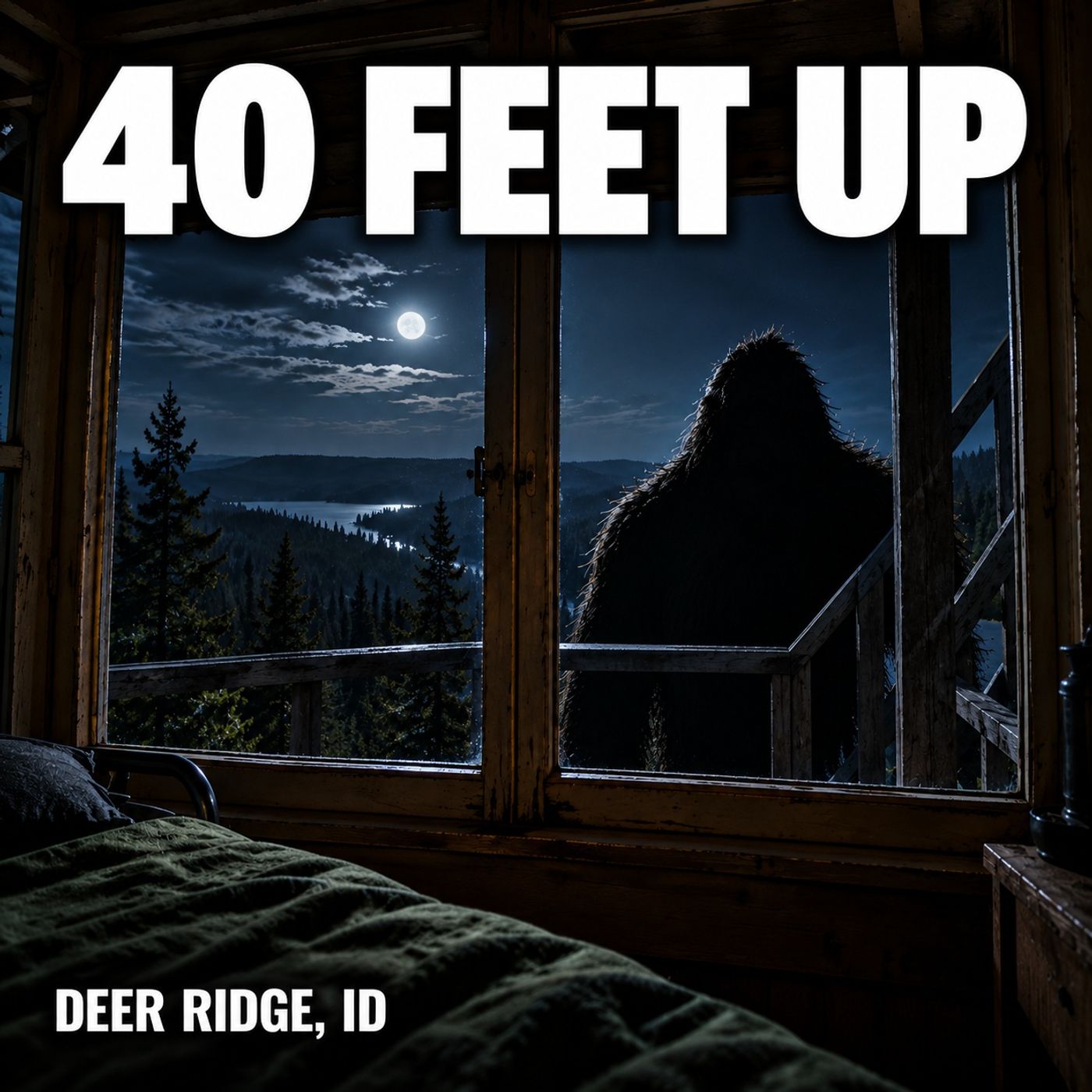
Something was climbing the stairs toward their window—40 feet above the Idaho forest. In 1990, Willie and a friend rented Deer Ridge Lookout for stargazing and hiking. On their final night, shortly after turning out the lights, they felt the entire tower tremble. Whatever was coming up paused at each landing. Then an enormous head-and-shoulders silhouette appeared in the window. Willie shares what happened next in Bigfoot Society Episode 1233, including the detail about its retreat that still leaves him searching for answers. More witnesses bring accounts from across the country: a Texas trucker describes a nine-foot figure crossing a highway in four steps, a former horseback rider recalls something that resembled forest debris standing up and walking away, and a woman remembers a fire lookout’s warning near California’s Thompson Peak. A Colorado hunter also recounts stones hitting his tent and oversized impressions discovered near camp. Remote lookouts. Isolated highways. Familiar tra
We visit a family home in the Usk Valley to investigate Wales’s first documented Leisler’s bat maternity roost. The species is rarely seen, and records in Wales are scattered, with much of the available information coming from acoustic surveys that can be difficult to interpret. The discovery offers an opportunity to learn more about a bat that remains poorly understood in Britain. We hear how Lucy and Andy discovered bats in their attic after moving into an old converted farm building. During a heatwave, young bats came down into the house, prompting the owners to seek advice from the Bat Conservation Trust and local wildlife carers. Ecologist Carys initially expected to find a more familiar species, but a closer look revealed a large Leisler’s roost alongside brown long-eared bats. We discuss what is known about Leisler’s distribution, roosting and movement. The species is recorded in parts of Wales, but there are no previous records of a maternity colony in the area. Leisler’s bats
⚠️ Content warning: This episode discusses non-suicidal self-injury (NSSI) and suicidality in adolescents. Some listeners may find this content upsetting. If you or someone you know is struggling, please reach out to a mental health professional or crisis service in your area. Learn more at 'Understanding and Responding to Self-Harm: Latest Evidence and Clinical Practice (https://www.acamh.org/event/understanding-self-harm/)' Can debt and financial stress really affect a teenager's mental health? In this episode of Mind the Kids, host Clara Faria — an academic clinical fellow in child psychiatry — sits down with researchers Nita de Neve-Enthoven and Susan Ravensbergen, PhD candidates in the Department of Psychiatry at Erasmus University Medical Center, Rotterdam, to unpack their new study on debt, experienced financial scarcity, and their links to non-suicidal self-injury (NSSI) and suicidality in adolescents at risk for psychopathology. Drawing on data from the iBerry study — a landma
Dennis Hong introduces seven award-winnning, all-terrain robots -- like the humanoid, soccer-playing DARwIn and the cliff-gripping CLIMBeR -- all built by his team at RoMeLa, Virginia Tech. Watch to the end to hear the five creative secrets to his lab's incredible technical success. (Filmed at TEDxNASA.) Uploaded 15-08-13 Talk by Dennis Hong.
Universal screening is one of the most powerful tools in a Multi-Tiered System of Supports (MTSS)—yet too often, it's also one of the most underutilized. That's what CORE Learning's Senior Director of Learning and Development Carrie Thomas Beck, Ph.D., explores with host Susan Lambert, Ed.D., on this new episode of Science of Reading: The Podcast. Together, Carrie and Susan discuss what universal screening is and why it's essential to any MTSS; how to use screening data to form groups and drive targeted instruction; how screener data reveals both individual student risk and the health of your system at the grade, building, and district level; and what a structured data-review protocol looks like in practice. Show notes: Find more Science of Reading resources on scienceofreading.amplify.com (http://scienceofreading.amplify.com/). Register for our upcoming Science of Reading program webinar series: Reading Comprehension in Action (https://go.info.amplify.com/fy26_elemlitsolutions_sormtss
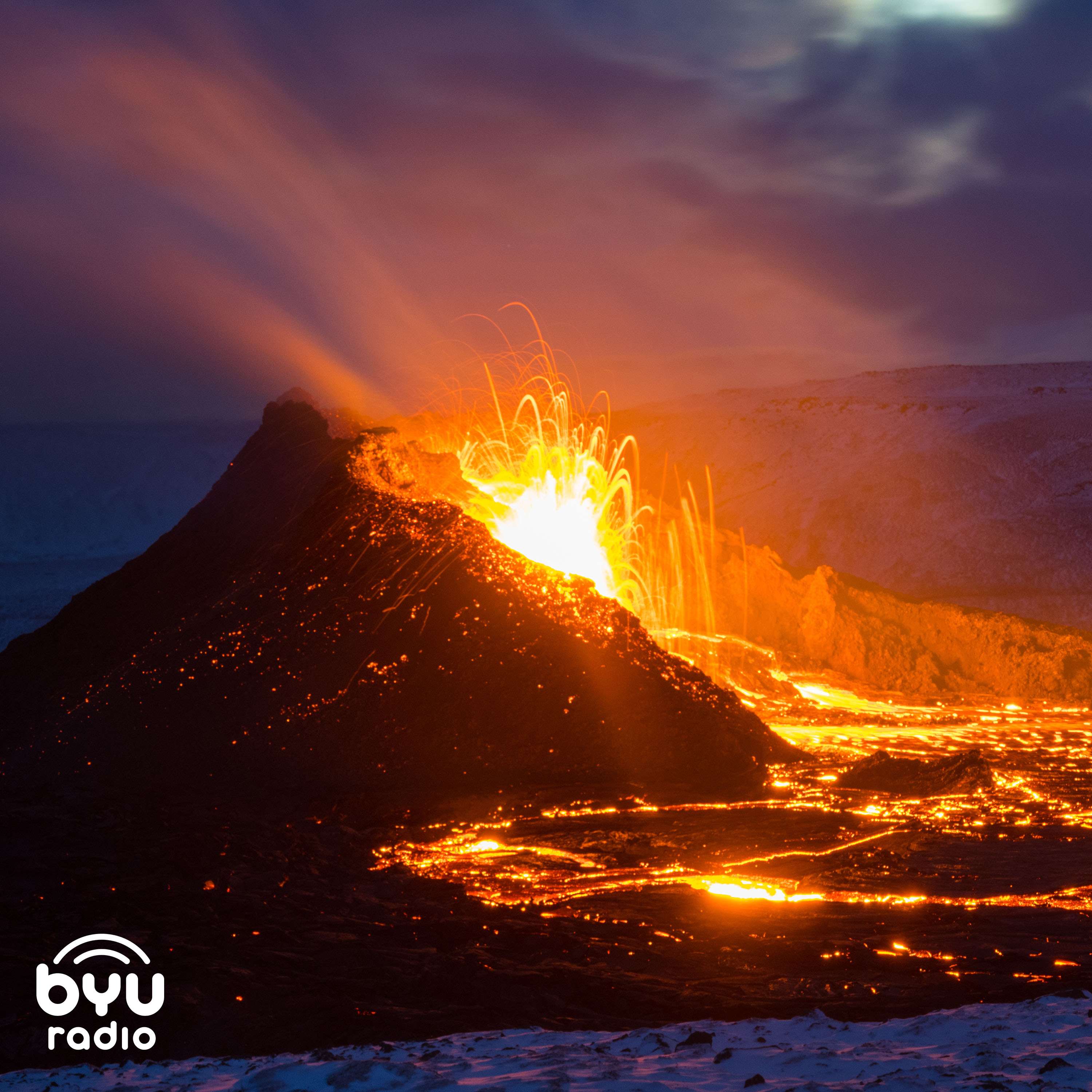
In a Scottish whiteout, Cal Flyn lost all sense of up and down, then fell through the snow into a rushing river. It was one of the most frightening moments of her life, but it hasn’t stopped her from seeking out wild places. For her book The Savage Landscape, Cal tracked bears in Transylvania, hiked closer than she should have to an erupting volcano in Iceland, and climbed Mount Sinai alongside pilgrims from across the world. Listen in as she shares with Marcus Smith some of the things she’s learned about the places we call wilderness. Guest: Cal Flyn, author of The Savage Landscape: How We Made the Wilderness and Islands of Abandonment Chapters (0:00) Lost in a Whiteout (8:42) The Highlands and the Pull of the Wild (14:09) The Bears of Transylvania (28:40) Too Close to a Volcano (36:36) What Counts as Wilderness? (41:39) Mount Sinai and a Shooting Star (47:26) The Deep Sea and the Ineffable
In which John Green examines Romeo & Juliet by William Shakespeare. John delves into the world of Bill Shakespeare's famous star-crossed lovers and examines what the play is about, its structure, and the context in which it was written. Have you ever wanted to know what iambic pentameter is? Then you should watch this video. Have you ever pondered what kind of people actually went to see a Shakespeare play in 1598? Watch this video. Were you aware that wherefore means "why?" Whether you were or not, watch this video. In Shakespeare's time, entertainment choices ranged from taking in a play to watching a restrained bear try to fight off a pack of dogs. Today on YouTube, our entertainment choices are just as wide-ranging. So you can either choose to watch the modern equivalent of bear-baiting (another cinnamon challenge) or you can be edified and entertained by John and Crash Course. So wherefore are you reading this description instead of watching the video? Consider supporting local bo
In this episode from the Farming on the Fringe Forum, we sit down with actor, filmmaker and regenerative farming advocate Rachel Ward from Rachel’s Farm. Rachel shares her personal journey of learning to farm holistically, the challenges and discoveries along the way, and how reconnecting with the land has reshaped her thinking about food and farming. She also introduces her latest venture, FarmThru, which aims to bridge the gap between regenerative farmers and consumers, making it easier for people to support farming practices that are better for the land, animals and communities. Watch Rachel's farm for free - https://www.youtube.com/watch?v=x597VmhNZdE More info visit - farmthru.com.au/au The Farming on the Fringe Forum was delivered by Local Land Services in partnership with the NSW Department of Climate Change, Energy, the Environment and Water under the Primary Industries Productivity and Abatement Program (PIPAP). This podcast was produced by Grow Love Project and supported by G
While race and religion may seem separate, they are inextricably linked. In this episode of Crash Course Religions, we’ll unpack racism’s roots in religious colonialism, its presence in Indigenous boarding schools, and its effects on our world today. Introduction: Indian Residential Schools 00:00 What Is Race? 0:46 Racism 2:02 Race & Religion 3:46 The Doctrine of Discovery 4:42 Anti-Muslim Racism 6:29 Reconciling with Indigenous Peoples 8:23 Review & Credits 10:34 *** Support us for $5/month on Patreon to keep Crash Course free for everyone forever! https://www.patreon.com/crashcourse Or support us directly: https://complexly.com/support Join our Crash Course email list to get the latest news and highlights: https://mailchi.mp/crashcourse/email Get our special Crash Course Educators newsletter: http://eepurl.com/iBgMhY Thanks to the following patrons for their generous monthly contributions that help keep Crash Course free for everyone forever: Shruti S, Ryan Lueckenotte, Spilmann Reed
This week Craig continues our conversation on presidential powers by looking at those NOT found in the Constitution - implied or inherent powers. We’ll talk about how the President uses their power to negotiate executive agreements, recommend legislative initiatives, instate executive orders, impound funds, and claim executive privilege in order to get things done. Implied powers are kind of tough to tack down, as they aren’t really powers until they’re asserted, but once they are, most subsequent Presidents chose not to give them up. So we’ll try to cover those we’ve seen so far and talk a little bit about reactions to these sometimes controversial actions from the other branches of Congress. Support is provided by Voqal: http://www.voqal.org (http://www.voqal.org/) This episode is sponsored by Squarespace: http://www.squarespace.com/crashcourse Chapters: Introduction: Informal Powers of the President 00:00 Informal powers of the President 0:50 Inherent power to use troops 1:20 War Po
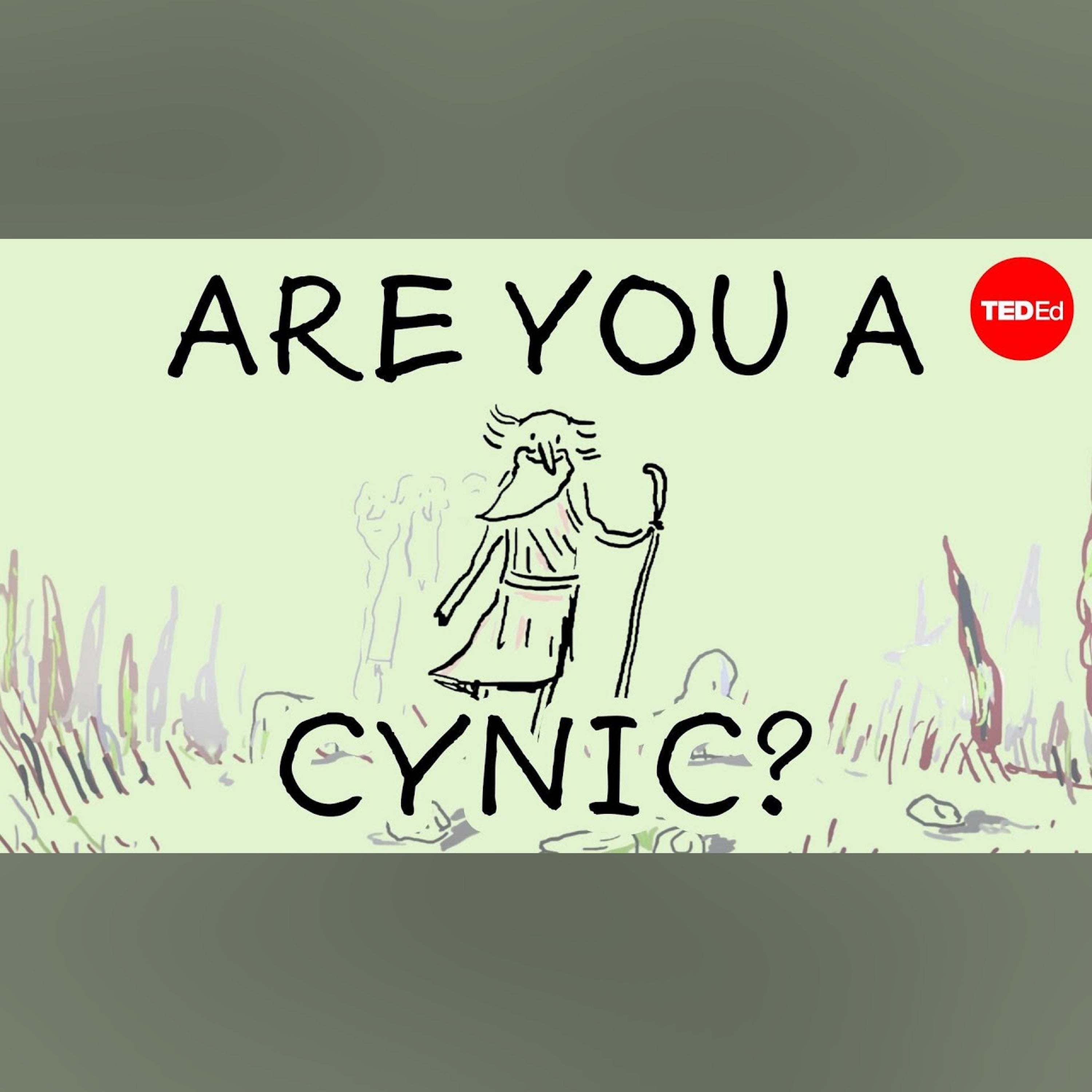
Explore the ancient Greek philosophy of cynicism, which calls for the rejection of materialism and conformity in favor of a simple life. Uploaded 19-12-19 -- In the 4th century BCE, a young Diogenes of Sinope was found to be counterfeiting coins. He was stripped of his citizenship, his money, all his possessions and sent into exile. He decided he would live self-sufficiently, close to nature, without materialism, vanity, or conformity and only then could he be truly free. William D. Desmond details how Diogenes gave rise to the philosophy of cynicism. Lesson by William D. Desmond, directed by Avi Ofer. Animator's website: https://www.aviofer.com (https://www.aviofer.com/) Sign up for our newsletter: http://bit.ly/TEDEdNewsletter Support us on Patreon: http://bit.ly/TEDEdPatreon Find us on Twitter: http://bit.ly/TEDEdTwitter Peep us on Instagram: http://bit.ly/TEDEdInstagram View full lesson: https://ed.ted.com/lessons/the-philosophy-of-cynicism-william-d-desmond Thank you so much to ou
It started as a joke between friends: a dusty Ouija Board pulled from the back of a closet, a few drinks, and a group of people who didn’t really believe they were talking to anything. Most of the answers were strange enough to be funny, and nobody took the session very seriously. Then the planchette spelled something unexpectedly specific, followed by Angie’s name. She laughed it off and went home convinced one of her friends had been moving it. But over the next few hours, a series of unsettling events made that explanation harder to hold onto. By morning, everything had returned to normal. Whatever happened seemed to begin and end within the space of one very strange night—but it was enough to make Angie wonder whether the Ouija Board had been more than a game after all. #OuijaBoard #GhostStories #Paranormal #Ouija #HauntedHouse #ParanormalEncounter #SpiritBoard #Unexplained #GhostStory #Hauntings #TerrifyingEncounter Love real ghost stories? Want even more? Want even more? Stay con
Why do humans have red blood, while other animals have green, purple, or even yellow blood? In this episode of Tiny Show and Tell Us, we explore the surprisingly colorful world of animal blood, from Antarctic ice fish with nearly transparent blood to green-blooded skinks and purple-blooded peanut worms. Then we enter tick territory and investigate how a tick bite leaves some people unable to eat red meat and other animal products. The answer involves a condition known as alpha-gal syndrome, where a tick bite can trigger an immune response to the alpha-gal sugar found in many mammals.
This is a Grave Talks CLASSIC EPISODE! For Christina Westervelt, the paranormal was never something distant or abstract—it was part of family life. Growing up with a father who loved ghost stories and paranormal exploration, curiosity came naturally. What began as lighthearted outings and shared fascination slowly evolved into something deeper as Christina got older. As she moved from casual interest into serious paranormal investigation, Christina found herself chasing the same questions many investigators face: who is still here, why they remain, and what connects the living to the dead. Along the way, the experiences became more complex—and the answers less clear. In this episode of The Grave Talks, Christina shares her journey from childhood curiosity to a lifelong pursuit of the unexplained, and how following the paranormal path ultimately left her with more questions than certainty. #TheGraveTalks #ParanormalPodcast #GhostStories #ParanormalInvestigation #LifeAfterDeath #Supernat
Food producers and farmers have been giving their reaction to a draft deal on EU trade re-alignment. The document outlines the details for sanitary and phytosanitary, or SPS regulations, and is expected to be discussed at the EU Summit planned for November 20th. When Brexit came into force six years ago, the SPS agreement was pivotal to many UK food export businesses. Shellfish producers, seed potato growers, cheesemakers and meat processors found they had to complete extra paperwork to export to the EU as a 'third country', often leaving their businesses less competitive. Some shut down completely, others found new markets. We speak to industry experts and producers to find out what the changes will mean. All week we're discussing how farmers can improve their water management - saving winter water and using it more carefully during the dry months. After the experience of this summer when three of its four reservoirs ran dry, Riverford Organic Farmers in Devon has been exploring how m
Welcome to episode 21 of The BirdGuides Podcast! David and Josh are joined by Arjun Dutta, Bioacoustics Support Officer at the British Trust for Ornithology (BTO), to discuss bird acoustics, sound recording, noc-mig, the BTO's Acoustic Pipeline and much more. In this episode Arjun's birding beginnings and early interest in acoustics The BTO's acoustic pipeline – what is it and how does it work? Noc-mig addiction! Sound recording field highlights Favourite birdsong How perfect can AI sound recognition models become? Episode timestamps 01:20 – Arjun's birding beginnings and early interest in acoustics 10:23 – The BTO Acoustic Pipeline 30:32 – Noc-mig and field recording 42:03 – Future outlook Links Get in touch by emailing [email protected] Enjoyed this episode? Have you experimented with noc-mig or other sound recording before? Let us know! How to stay connected Instagram: @_birdguides (https://www.instagram.com/_birdguides/) Facebook: BirdGuides (https://www.facebook.com/BirdGuide
Welcome to the first episode of Crash Course Astronomy. Your host for this intergalactic adventure is the Bad Astronomer himself, Phil Plait. We begin with answering a question: "What is astronomy?" Check out the Crash Course Astronomy solar system poster here: http://store.dftba.com/products/crashcourse-astronomy-poster -- Chapters: Introduction 00:00 What is Astronomy? 3:00 Who Studies Astronomy? 3:50 Origins of Astronomy 5:27 Astrology vs Astronomy 6:19 Geocentrism 7:51 Revolutions in Astronomy 8:58 Astronomy Today 10:26 Review 11:29 -- PBS Digital Studios: http://youtube.com/pbsdigitalstudios Follow Phil on Twitter: https://twitter.com/badastronomer Crash Course is on Patreon! Want to find Crash Course elsewhere on the internet? Facebook - http://www.facebook.com/YouTubeCrashCourse Twitter - http://www.twitter.com/TheCrashCourse Instagram - https://www.instagram.com/thecrashcourse/ CC Kids: http://www.youtube.com/crashcoursekids -- Photos: http://en.wikipedia.org/wiki/Earth%27s_mag
Were any dinosaurs venomous? The idea has made headlines, but the evidence for the best-known candidate, Sinornithosaurus, doesn't hold up. In this Dinosaur Bite, Iszi Lawrence and Dr Dave Hone look at the claim that this small dinosaur had venom-delivering teeth. Dave explains why the supposed venom groove is better understood as part of the process of tooth replacement, and why the apparent space for a venom gland in its skull is far from convincing. The discussion also gets into the difference between venomous and poisonous animals, and why it can be difficult to tell what a fossil's anatomy really means. The answer is less sensational than a venomous dinosaur, but it's a useful example of how a striking idea can catch on even after the evidence has been challenged. Support Terrible Lizards and get access to bonus episodes and other extra content on Patreon: https://patreon.com/terriblelizards RAWR!
A Christmas tree farmer with dementia disappears. His wife never reports him missing. Can anyone find out why? A Private Matter is a five-part series from Bear Brook about what happens when family estrangement and the growing dementia crisis conspire to create an epic tragedy of humble proportions, spawning a criminal investigation and a supernatural search for answers. A Private Matter is the third season of Bear Brook (https://www.bearbrookpodcast.com/), the critically-acclaimed true crime podcast from New Hampshire Public Radio hosted by Jason Moon. Bear Brook is a production of NHPR's Document team (https://www.nhpr.org/document).
Interactions between species are what define ecological communities, and community ecology studies these interactions anywhere they take place. Although interspecies interactions are mostly competitive, competition is pretty dangerous, so a lot of interactions are actually about side-stepping direct competition and instead finding ways to divvy up resources to let species get along. Feel the love? Table of Contents 1) Competitive Exclusion Principle 2:02 2) Fundamental vs. Realized Niche 3:48 3) Eco-lography / Resource Partitioning 5:25 4) Character Displacement 7:29 5) Mutualism 9:15 6) Commensalism 9:55 References http://www.jstor.org/discover/10.2307/1383283?uid=3739960&uid=2129&uid=2&uid=70&uid=4&uid=3739256&sid=21101174112437 (http://www.jstor.org/discover/10.2307/1383283?sid=21101174112437&uid=3739960&uid=2129&uid=2&uid=70&uid=4&uid=3739256) Crash Course is on Patreon! Want to find Crash Course elsewhere on the internet? Facebook - http://www.facebook.com/YouTubeCrashCourse Twitt