AI agents are getting smarter, but every new agent still has to learn who you are. What if your preferences, priorities, relationships, and digital context could move with you instead? First Person Labs co-founder Ken Liu joins a16z’s Martin Casado and Joel de la Garza to introduce Second, a personal context layer designed to understand what you’re doing across your digital life and make that context available to the agents you choose. They discuss how Second can proactively connect information across conversations and applications, why protecting such personal data requires a different security architecture, and the longer-term vision of AI that doesn’t just respond to prompts, but understands enough context to know when and how to help. Resources: Try Second:https://2.computer (https://2.computer/) Learn more about First Person Labs: https://fpl.company/ Follow Ken Liu: https://www.linkedin.com/in/kenziyuliu/ Follow Martin Casado on X: https://x.com/martin_casadoa16z.com (https://a16
Ever wonder why we aren’t exact clones of our parents, or why siblings aren’t exactly alike? The reason traces back to meiosis. In this episode of Crash Course Biology, we’ll discover how egg and sperm cells get made and learn why you’re a totally unique remix of your parents’ DNA. Introduction: Why Are We All Unique? 0:00 Gametes 1:33 Meiosis 4:09 The Phases of Meiosis 4:44 Nondisjunction 7:14 Why We Aren't Clones 8:18 Meiosis & Genetic Diversity 9:49 Review & Credits 11:32 This series was produced in collaboration with HHMI BioInteractive, committed to empowering educators and inspiring students with engaging, accessible, and quality classroom resources. Visit https://BioInteractive.org/CrashCourse (https://biointeractive.org/CrashCourse) for more information. Are you an educator looking for what NGSS Standards are covered in this episode? Check out our Educator Standards Database for Biology here: https://www.thecrashcourse.com/biologystandards Check out our Biology playlist here: h
Hank takes us on a trip around the body - we follow the circulatory and respiratory systems as they deliver oxygen and remove carbon dioxide from cells, and help make it possible for our bodies to function. Table of Contents 1) Respiratory System 00:48 2) Simple Diffusion 00:55 3) Respiratory Anatomy 02:35 a) Trachea to Capillaries 03:10 4) Lung Function & Thoracic Diaphragm 04:37 5) Circulatory System 05:35 6) Circulatory Anatomy 05:54 a) Left Ventricle to Capillary Beds 06:50 b) Veins to Left Atrium 08:46 7) Endotherms & Ectotherms 09:20 References: This video uses the following sounds from Freesound.org: "00559 deep breathing 1.wav" by Robinhood76 Crash Course is on Patreon! Want to find Crash Course elsewhere on the internet? Facebook - http://www.facebook.com/YouTubeCrashCourse Twitter - http://www.twitter.com/TheCrashCourse Instagram - https://www.instagram.com/thecrashcourse/ CC Kids: http://www.youtube.com/crashcoursekids
In the debut episode of our new book club, we dive into Entangled Life, by Merlin Sheldrake, a fascinating exploration of the hidden world of fungi. Join us as we discuss mushroom intelligence, underground fungal networks that connect plants, fungi with more than 23,000 mating types and the surprising role a ”pretty golden mold” played in making penicillin widely available. Recommended Reading: Entangled Life. Merlin Sheldrake. Random House, 2020 (https://www.penguinrandomhouse.com/books/566795/entangled-life-by-merlin-sheldrake/) See the hidden fungal network so big it could stretch to Proxima Centauri and back (https://www.scientificamerican.com/article/see-the-hidden-fungal-network-so-big-it-could-stretch-to-proxima-centauri-and-back/) Out of Sight, ‘Dark Fungi’ Run the World from the Shadows (https://www.scientificamerican.com/article/mysterious-dark-fungi-are-lurking-everywhere/?search=fungus) Our theme music was composed by Dominic Smith.
SLAM DUNK: OpenAI, DeepMind, and UN all weigh in on GLOBAL AI Watchdogs and Safety!Episode release date: 27 Oct 2023Spreading awareness about the works of some of the leading educators in the AI revolution. Core Ideas: Metamodernism: Narratives and emergence view of reality - Reduce suffering - Increase prosperity - Increase understanding mantra: Seek knowledge. ELABORATE: Add depth and detail to understanding, weaving comprehensive and nuanced explanations.DISCLAIMER: This is a community-driven show. ---------------SLAM DUNK: OpenAI, DeepMind, and UN all weigh in on GLOBAL AI Watchdogs and Safety!Episode release date: 27 Oct 2023Spreading awareness about the works of some of the leading educators in the AI revolution. Core Ideas: Metamodernism: Narratives and emergence view of reality - Reduce suffering - Increase prosperity - Increase understanding mantra: Seek knowledge. ELABORATE: Add depth and detail to understanding, weaving comprehensive and nuanced explanations.DISCLAIMER: This
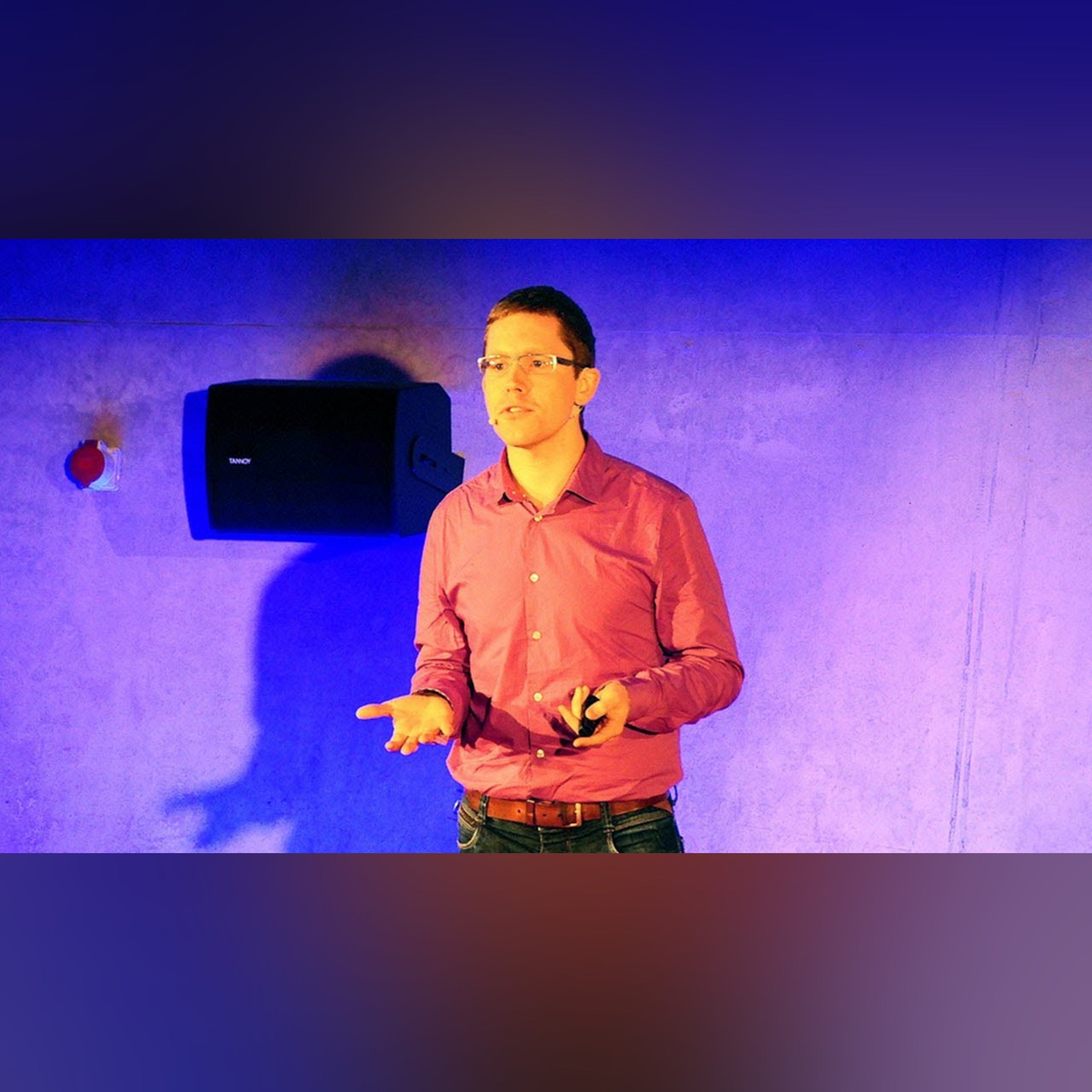
What does your chair say about what you value? Designer Sebastian Deterding shows how our visions of morality and what the good life is are reflected in the design of objects around us. (Filmed at TEDxHogeschoolUtrecht.) Uploaded 21-08-13 Talk by Sebastian Deterding.
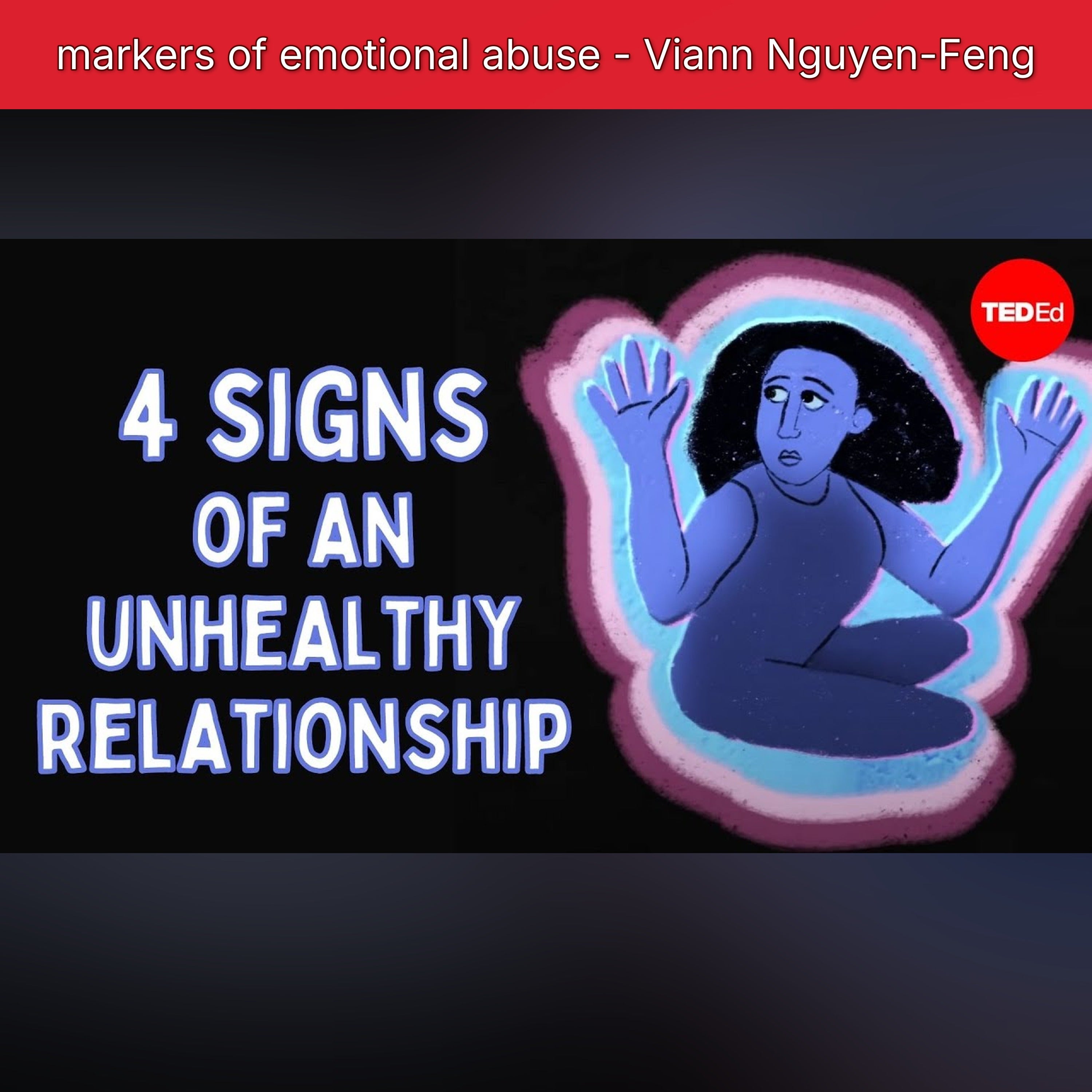
Learn how to spot some of the most common signs of emotional abuse and what you can do if someone is experiencing these behaviors. -- Emotional abuse can be incredibly damaging, increasing a person’s chances of developing depression and anxiety. But these behaviors can be subtle and difficult to spot, both from within and outside a relationship. It also often makes people doubt their perceptions of their own mistreatment. How can we recognize these patterns in real life? Viann Nguyen-Feng shares common signs of emotional abuse. Lesson by Viann Nguyen-Feng, directed by Yael Reisfeld. Support Our Non-Profit Mission ---------------------------------------------- Support us on Patreon: http://bit.ly/TEDEdPatreon Check out our merch: http://bit.ly/TEDEDShop ---------------------------------------------- Connect With Us ---------------------------------------------- Sign up for our newsletter: http://bit.ly/TEDEdNewsletter Find us on Twitter: http://bit.ly/TEDEdTwitter Peep us on Instagram:
Welcome to Crash Course: Futures of AI! Our host Kousha Navidar is here to guide you through the ins and outs of our potential AI futures. AI is changing FAST so rather than doing a full Crash Course series of 12+ episodes, we’ve prepared a mini-series of just the basics. Crash Course will never tell you what to think and we’re not the type of organization that responds to breaking news in real time. Instead, we’re here to offer a zoomed-out foundation upon which to base your own opinions as you continue to learn from other outlets about the world that’s changing around us. Crash Course: Futures of AI will cover: -What even is AI? What’s the history of this thing and how quickly has it evolved to what exists today? -How could AI transform society? Will AI cause the next Industrial Revolution, and what might that mean for workers and the environment? -How powerful could AI become? How do we measure the progression of AI? What are the consequences we’re already seeing, and what might be
The Voyager 1 spacecraft, launched in 1977, just hit a milestone no man-made object has ever reached: one light-day from Earth. Over 16 billion miles away. And it’s carrying the Golden Record, a message from humanity to the universe. Our friends at This Is Love (https://open.spotify.com/show/5NbejKILPHoCOUSepy81nD) dig into how it was made and the love story at the heart of it. Guests: Phoebe Judge, host of This is Love (http://thisislovepodcast.com/); Ann Druyan (https://carlsaganinstitute.cornell.edu/ann-druyan), documentary producer and creative director of The Golden Record Watch us on Netflix (https://www.netflix.com/title/83045846)! For show transcripts, go to https://drive.google.com/drive/folders/1bMXuLuyy3zTLCnblKVWUBq4Gd84PY8sGvox.com/unxtranscripts (http://vox.com/unxtranscripts) http://vox.com/unxtranscriptshttps://drive.google.com/drive/folders/1bMXuLuyy3zTLCnblKVWUBq4Gd84PY8sGFor more, go to https://www.vox.com/unexplainablevox.com/unexplainable (http://vox.com/unexplaina
Nachos are delicious. And versatile because today they're also going to help us learn a thing or two about your digestive system. Nachos can provide us with energy and raw materials, by first ingesting something nutritious, propelling it through the alimentary canal where it will be mechanically broken down, and chemically digested by enzymes until my cells can absorb their monomers and use them to make whatever they need. And eventually, there will be pooping. Pssst... we made flashcards to help you review the content in this episode! Find them on the free Crash Course App! Download it here for Apple Devices: https://apple.co/3d4eyZo Download it here for Android Devices: https://bit.ly/2SrDulJ Chapters: Introduction: Why We Eat Food 00:00 Digestive System: Your Body's Disassembly Line 2:18 Structure of the Digestive System 4:18 Ingestion 6:24 Propulsion 7:00 Mechanical Breakdown 7:38 Digestion 8:01 Absorption 8:30 Defecation 8:50 Review 9:50 Credits 10:27 *** Crash Course is on Patreo
We’re all susceptible to infectious disease of some kind or other, but not everyone is equally likely to be the victim of an outbreak. The fact is, inequalities both between and within communities mean that some people are at higher risk than others. In this episode of Crash Course Outbreak Science, we’ll look deeper at the factors that lead to this uneven distribution of outbreaks. This episode of Crash Course Outbreak Science was produced by Complexly in partnership with Operation Outbreak and the Sabeti Lab at the Broad Institute of MIT and Harvard—with generous support from the Gordon and Betty Moore Foundation. Sources: https://www.sciencedirect.com/science/article/pii/S1201971216310682#bib0145 (https://www.sciencedirect.com/science/article/pii/S1201971216310682) https://apps.wr (https://apps.wr/) ho.int/iris/bitstream/handle/10665/43644/9789241595346_eng.pdf https://unctad.org/topic/transport-and-trade-logistics/review-of-maritime-transport#:~:text=Around%2080%25%20of%20the%20vol
MARAGI work: Starting on the Conductor Microservice Episode release date: 23 Aug 2022 Core Ideas: Metamodernism: Narratives and emergence view of reality - Reduce suffering - Increase prosperity - Increase understanding mantra: Seek knowledge. DISCLAIMER: This is a community-driven show. ----------- Keywords: ai agents, ai philosophy, future technology
Dig into the science of soy, and discover what makes soybeans such versatile plants and whether it’s healthy for you and the planet. -- Soybeans have been cultivated in Asia for thousands of years, and have since spread across the globe. Today, soy is in so many foods that most people consume it every day without even knowing it. So, what makes soybeans so versatile? And is our global obsession healthy or harmful? Francesca Bot explores why this single plant is used in everything from mayonnaise to biodegradable plastic. Lesson by Francesca Bot, directed by Frederico Pinto, Hype CG. Support Our Non-Profit Mission ---------------------------------------------- Support us on Patreon: http://bit.ly/TEDEdPatreon Check out our merch: http://bit.ly/TEDEDShop ---------------------------------------------- Connect With Us ---------------------------------------------- Sign up for our newsletter: http://bit.ly/TEDEdNewsletter Find us on Twitter: http://bit.ly/TEDEdTwitter Peep us on Instagram:
Releasing this on the tails of release of LMHR CCTA study data, here: https://www.metabolismjournal.com/article/S0026-0495(24)00080-5/abstract Follow on X: https://x.com/nicknorwitz/status/1803088031689367761 Quote: "After a mean duration of 4.7 years of carbohydrate restriction-induced elevations in #LDL-cholesterol [mean 272 mg/dl, max 591 mg/dl], a metabolically healthy cohort of subjects on a ketogenic diet [#LMHR] did not have greater atherosclerotic burden than participants from a population based cohort with similar risk profiles but markedly lower [123 mg/dl] LDL-C." JAMA Cardiology Paper: https://pubmed.ncbi.nlm.nih.gov/32049305/ Chapters 0:00 – Introduction 0:41 – Thought Puzzle: Patient A (FH) vs Patient B (LMHR) 2:34 – JAMA Cardiology Study 4:35 – LDL/ApoB vs Plaque Progression Graph 5:20 – Lizards 5:55 – Return to Thought Puzzle Terms - LDL cholesterol: The cholesterol component found in circulating LDL lipoprotein particles. - ApoB: An apolipoprotein on LDL and related pa
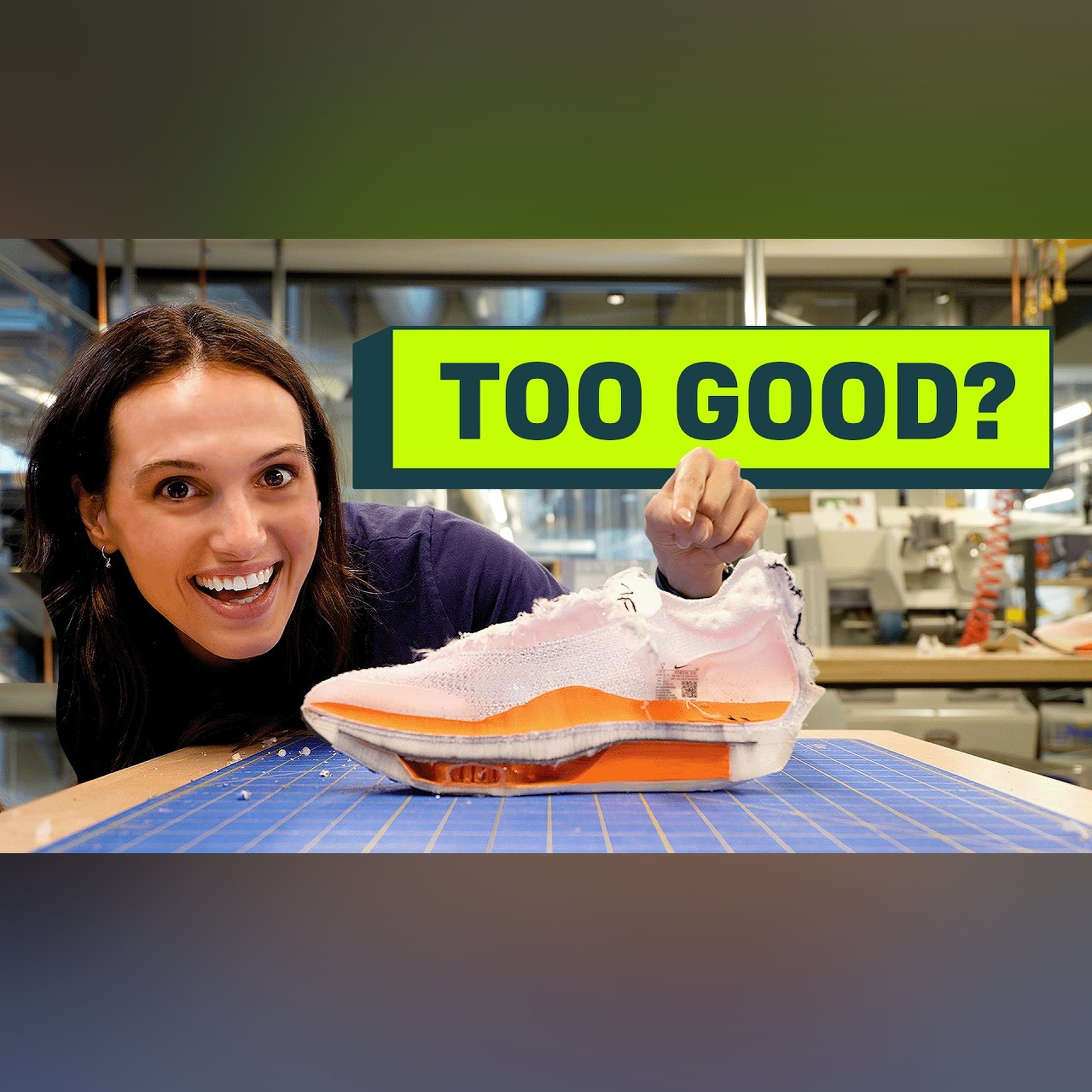
When is sports gear so good it’s actually cheating? There is a ton of cool sports gear that’s banned from sports for making athletes too good. Swimsuits that make a swimmer too streamlined, gloves that make a receiver’s hands too grippy, bats that let a player hit the ball too hard, and shoes that help a runner go too freaking fast… They call it “TECH DOPING,” using physical gear to gain an unfair advantage. In this video, I’ll show you the banned gear you won’t see at the Paris Olympics, and the cutting edge tech you will see that’s on the very limit of what’s allowed. You might be thinking, hold on, no gear should give athletes an advantage! But… we don’t run barefoot anymore. We don’t swim naked. We use tech to play sports. And that tech is always improving, pushing forward what humans can do. So… where’s the line? This is about way more than sports. In every part of our lives, technology pushes forward what we can do! And it’s up to us to decide what we want from it. This video is
BONUS QUESTION STARTS AT 12:02 Watch the video here (with no ads) or on YouTube: https://youtu.be/SnKwe-h9zCQ What's the current role of AI in real Astronomy research? What events this year caught me off guard? Are we living in a huge black hole? And in Q&A+, what's going on with all the AI cookiecutter science channels on YouTube? 00:00 Intro 00:25 [@rJaune] Can you point out places in Astronomy where Machine Learning has been an important part of discovery? 03:58 [@paigepotter4682] What’s a recent “this wasn’t on my bingo card” astronomical discovery or development? 05:35 [@Marko21] What’s going on with Juno mission, is it still orbiting Jupiter? 08:18 [@vistotutti6037] Is our entire Universe inside an enormous Black Hole? 12:02 [@lindsayboe4914] Am I concerned about all of the AI cookiecutter "science" channels that are popping up on YT spewing misinformation? 16:50 Final thoughts
Sleep better with Pillow: https://pillow.app/bettersleep Experience gentle rainfall over a serene lake, creating the perfect ambient soundscape for deep sleep, meditation, and relaxation. Let these soothing nature sounds calm your mind and promote peaceful rest and focus. This episode includes AI-generated content.
On today’s episode, we’re talking about how Greg became a biological father… DADDY! LOL! Also, we get into our spooky sperm testing results, new research on why sperm could be causing infertility issues and why sperm counts are continuing to decline across the world. To leave us a message on Sperm donation/family planning, topics you would like to know about or anything Sidenote by AsapSCIENCE, please visithttps://www.asapscience.com/chat Sources: Hosted on Acast.
Today on Crash Course Astronomy, Phil dives into some very dark matters. The stuff we can actually observe in the universe isn’t all there is. Galaxies and other large structures in the universe are created and shifted by a force we detect mostly indirectly, by observing its impact: DARK MATTER. Check out the Crash Course Astronomy solar system poster here: http://store.dftba.com/products/crashcourse-astronomy-poster -- Chapters: Introduction: Dark Matter 00:00 Discovery of Dark Matter 0:55 What is Dark Matter? 3:50 Axions 4:33 Gravitational Lensing and the Bullet Cluster 5:15 What Effect Does Dark Matter Have on the Universe? 8:50 Review 10:48 -- PBS Digital Studios: http://youtube.com/pbsdigitalstudios Follow Phil on Twitter: https://twitter.com/badastronomer Want to find Crash Course elsewhere on the internet? Facebook - http://www.facebook.com/YouTubeCrashCourse Twitter - http://www.twitter.com/TheCrashCourse Tumblr - http://thecrashcourse.tumblr.com (http://thecrashcourse.tumblr.c
View full lesson: http://ed.ted.com/lessons/how-does-math-guide-our-ships-at-sea-george-christoph Without math, would our seafaring ancestors ever have seen the world? Great mathematical thinkers and their revolutionary discoveries have an incredible story. Explore the beginnings of logarithms through the history of navigation, adventure and new worlds. Lesson by George Christoph, animation by the Hobizals.
Termination and relocation might seem like totally unrelated policies—but they were part of the same disappearing act. In this episode of Crash Course Native American History, we’ll learn how terminating federal recognition for more than a hundred Native nations while encouraging Native people to move to cities served the same goals. Introduction: The Menominee 00:00 Historical Context 0:38 The Urban Indian Relocation Program 3:03 The Termination Act 3:56 Terminating the Menominee 5:10 Effects of Termination 6:03 Effects of Relocation 7:54 Restoring the Menominee 8:57 Review & Credits 10:58 Sources: Want to know more about how this series was made? Learn more here: https://docs.google.com/document/d/17yp3u28s40TdjyrJniIf4U9YA8wPtvQ1g1B-HSHQ2Q4/edit?tab=t.0#heading=h.6vtzps565m2 (https://docs.google.com/document/d/17yp3u28s40TdjyrJniIf4U9YA8wPtvQ1g1B-HSHQ2Q4/edit?tab=t.0) *** Support us for $5/month on Patreon to keep Crash Course free for everyone forever! https://www.patreon.com/crash
What is RAVEN? Overview, Introduction, and Community Update - Friday, February 3, 2023 Episode release date: 3 Feb 2023 Core Ideas: Metamodernism: Narratives and emergence view of reality - Reduce suffering - Increase prosperity - Increase understanding mantra: Seek knowledge. DISCLAIMER: This is a community-driven show. ------ Keywords: singularity, ai education, tech singularity, ai safety, cognitive ai
View full lesson: http://ed.ted.com/lessons/what-you-might-not-know-about-the-declaration-of-independence-kenneth-c-davis Uploaded 01-07-14 In June 1776, a little over a year after the start of the American Revolutionary War, the US Continental Congress huddled together in a hot room in Philadelphia to talk independence. Kenneth C. Davis dives into some of the lesser known facts about the process of writing the Declaration of Independence and questions one very controversial omission. Lesson by Kenneth C. Davis, animation by Karrot Animation.
Today Phil follows up last week’s look at the death of low mass stars with what comes next: a white dwarf. White dwarfs are incredibly hot and dense objects roughly the size of Earth. They also can form planetary nebulae: huge, intricately detailed objects created when the wind blown from the dying stars is lit up by the central white dwarf. They only last a few millennia. The Sun probably won’t form one, but higher mass stars do. Check out the Crash Course Astronomy solar system poster here: http://store.dftba.com/products/crashcourse-astronomy-poster -- Chapters: Introduction 00:00 White Dwarfs 1:26 Planetary Nebulae 3:59 How Do Planetary Nebulae Get Their Shape? 5:56 Structure and Color of Planetary Nebulae 8:12 Will the Sun Become a Planetary Nebula? 9:35 Review 10:16 -- PBS Digital Studios: http://youtube.com/pbsdigitalstudios Follow Phil on Twitter: https://twitter.com/badastronomer Want to find Crash Course elsewhere on the internet? Facebook - http://www.facebook.com/YouTubeCra