Listen through the publisher, then discuss the episode here or arrange an in-person Roundtable. Your city determines where to meet.
Roundtables are designed for groups of four, with a shared subject and room for everyone to speak. Come for discussion, with no dating expectation.
If you work in women’s health, you already know the golden rule: just when you think you’ve got a guideline memorized, the ink dries, and the updates drop. Medicine moves fast, and this month is no exception. Today, we are diving straight into the fresh-off-the-press October 2026 ACOG Practice Advisory on Premature Ovarian Insufficiency. Now, if you’re thinking, 'Wait, didn’t ACOG just reaffirm their POI guidance last year in 2025?'- you aren't crazy! They did. But clinical evidence doesn't wait around. ACOG has officially updated its stance to align directly with international consensus from ESHRE-the European Society of Human Reproduction and Embryology. So, what actually changed? How are we shifting our diagnostic thresholds, workups, and long-term hormone replacement strategies for these patients? We're covering all of it-the new shifts, the clinical pearls, and what you need to change in your practice starting today. Let’s get into it. 1. ACOG PA POI October 2026 2. ACOG Committee Opinion No. 605, Primary Ovarian Insufficiency in Adolescents and Young Women; July 2014.
Episode information is provided by the publisher. Listening takes place on the publisher’s service.
I Ate 1000 Sardines in a Month, Video: https://youtu.be/_Th54GWd8WY How Sardines Supercharged my Metabolism, Letter: https://staycuriousmetabolism.substack.com/p/the-weird-anti-insulin-hormone-that?r=40ekz2 Omega-6/3 Ratio Can Be Misleading, Letter: https://staycuriousmetabolism.substack.com/p/how-we-got-omega-fat-wrong-this-will?r=40ekz2 Best Omega-3 for the Brain, Letter: https://staycuriousmetabolism.substack.com/p/why-omega-3-supplements-dont-work?r=40ekz2 If you want to get your Omega-3 via Omega Quant, click on this link: https://omegaquant.com/ref/864 Fatty Acid Research Institute: https://www.faresinst.org (https://www.faresinst.org/) Description: In this conversation, I sit down with Professor William Harris, one of the world’s leading experts on omega-3 and omega-6 fatty acids, to cut through confusion around fish oil, seed oils, cardiovascular health, and brain health. We break down what omega-3 and omega-6 fats actually are, why their chemistry matters, and how they’re conv
Viewers like you help make PBS (Thank you ) . Support your local PBS Member Station here: https://to.pbs.org/DonateSPACE Uploaded 18-04-18 To find out more, visit: https://brilliant.org/SpaceTime Now that gravitational waves are definitely a thing, it’s time to think about some of the crazy things we can figure out with them. In some cases we’re going to need a gravitational wave observatory - in fact, we've already built one. You can further support us on Patreon at https://www.patreon.com/pbsspacetime Get your own Space Time t-shirt at http://bit.ly/1QlzoBi Tweet at us! @pbsspacetime Facebook: facebook.com/pbsspacetime Email us! pbsspacetime [at] gmail [dot] com Comment on Reddit: http://www.reddit.com/r/pbsspacetime Help translate our videos! https://www.youtube.com/timedtext_cs_panel?tab=2&c=UC7_gcs09iThXybpVgjHZ_7g (https://www.youtube.com/timedtext_cs_panel?c=UC7_gcs09iThXybpVgjHZ_7g&tab=2) Previous Episode: The Physics of Life (ft. It's Okay to be Smart and PBS Eons!) https://w
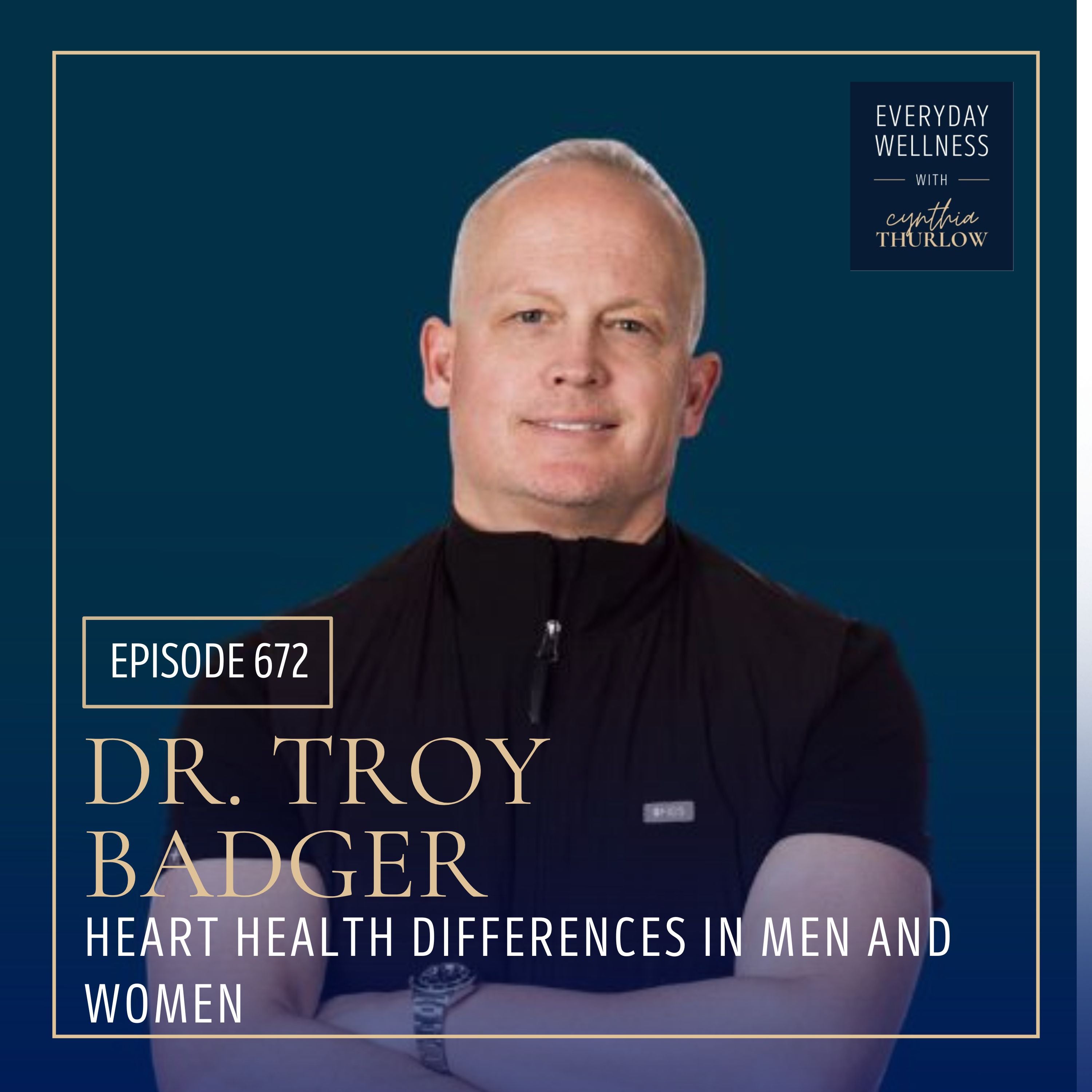
Today, I’m honored to connect with Dr. Troy Badger. He is a board-certified cardiologist and interventionalist and the founder of Cardiostrong, a concierge preventive cardiology clinic in Provo, Utah, focused on reducing cardiovascular risk, optimizing metabolic health, and improving strength and cardiorespiratory fitness for executives and athletes. In today’s conversation, we discuss Dr. Badger’s gender- and age-specific approach to heart health, including treatment differences for men and women, and diagnoses such as INOCA, SCAD, vasospastic disease, and Takotsubo. We examine emotions and their influence on heart health, coronary ischemia and cardiomyopathies, labs and diagnostics, how Dr. Badger assesses risk in his patients, and the differences between a CAC and a CCTA. Dr. Badger also shares the labs he finds essential for all patients and discusses the role of VO2 Max, cardiovascular training, and lifestyle—specifically nutrition, the use of GLP-1 drugs, and a multidisciplinary
What NVIDIA is trying to build next… You're probably hearing a lot about AI, DeepSeek, NVIDIA and more right now. If you want the big picture (and to start from the beginning), watch this Huge Conversation with NVIDIA CEO Jensen Huang. In the last few years, NVIDIA has skyrocketed to become one of the world's most valuable companies. That's because, beginning in the 90s, they led a fundamental shift in how computers work, now unleashing the current explosion of what’s possible with technology. A huge amount of the most futuristic tech you’re hearing about - in AI, robotics, gaming, self-driving cars, breakthrough medical research - relies on new chips and software designed by him and his company. During the dozens of background interviews I did to prepare for this, what struck me most was how much Jensen Huang has already influenced all our lives over the last 30 years, and how many are saying it’s just the beginning of something even bigger… We all need to know what he’s building and
In Brought to You By: How Corporations Warped the Truth, Conned the Public, and Broke Democracy (https://bookshop.org/a/12343/9781639736331), Amy Westervelt exposes the plot hidden within the familiar story of science denial. Over the last century, Big Industry has built a vast apparatus of think tanks, lobbyists, sponsored university labs, and obliging news networks to con the public and fool decision-makers, poisoning the informational ecosystem and warping the nature of truth along the way. With her signature wit and incisiveness, Westervelt introduces the masterminds of corporate misinformation: Herb Schmertz, the public relations pioneer who made Mobil “the thinking man's oil company;” Richard Edelman, the PR guy who helped the dairy industry vilify oat milk; David Petraeus, the disgraced spy chief using counter-insurgency tactics to discredit climate science; and many more. She shows how these company men have worked to usher in an era of unprecedented corporate control. Only by
Are we in an AI stock bubble, or are investors betting on a genuinely bigger economy? Justin Wolfers examines AI stock valuations with Stacey Vanek Smith, separating what the technology could do for the economy from what investors might actually earn. A deliberately hypothetical valuation exercise shows why a trillion-dollar company isn't automatically absurd—but a breakthrough for society doesn't guarantee profits for shareholders. Competition can give you powerful tools at low prices while squeezing the companies selling them. The Thanksgiving turkey problem illustrates why a long run of good news can hide rare, severe risks. Justin connects that analogy to fat tails and the peso problem, then explains why spotting a bubble and successfully betting against it are different challenges. He also unpacks what the CAPE ratio can—and can't—tell you about whether stocks are overpriced. The stakes are your savings, not just Wall Street's scoreboard: Justin discusses an S&P 500 decline of 7.5
If you’ve scrolled through your feed lately, you might havecaught a buzzworthy new study suggesting that eating avocados during pregnancy could lower your odds of having a C-section by more than a quarter. On the surface, it sounds like an easy, delicious prescription—grab some guacamole and avoid major surgery. Today, we’re going to put that study under the microscope. We’re dissecting the November 2026 Kuopio Birth Cohort paper by Cheng and colleagues to see what the data actually says- and more importantly, what itdoesn't. Because in obstetrics and nutritional science, how a study is designed, who funds it, and what variables get left out can completely change how we interpret the results. Understanding a study's limitations isn't about being cynical; it's about separating real clinical breakthroughs from statistical noise so you can make truly informed decisions. Let's dive into the data- no spin. Aspire Drinks - Greentea-powered energy drink: 1. F. W. Cheng, N. A. Ford, K. Backman
Welcome back to the show. Let’s take a quick step back in time. Think about how far we’ve come: we went from pressing a classic OB fetoscope up against a pregnant belly just to catch a faint, muffled thumping, to relying on advanced, continuous electronic monitoring. We live in an era of high-tech obstetrics. But even with all these modern advancements, room for error still exists, especially during the high-stakes chaos of the second stage of labor. In fact, this exact vulnerability was flagged as a critical warning in ACOG’s Clinical Practice Guideline Number 10. The issue? Relying on an external fetal heart rate Doppler that can silently mistake the maternal heart rate for the fetal heart rate. And now, a team of authors from New York writing in the AJOG are bringing even sharper focus to this danger, introducing a brand-new term for your clinical radar: "The Dolphin Sign." It’s a striking visual descriptor for a phenomenon born from maternal-fetal Doppler ambiguity—and if it goes u
Now, if you’ve been in OB care for more than a month, you know that preeclampsia is one of those topics we talk about constantly. We have endless guidelines, algorithms, and diagnostic criteria plastered all over our unit walls. But here’s the truth: despite all the literature out there, the real world doesn't always read the textbook. The clinical nuances… The gray areas…That’s where things get tricky. Take a classic labor and delivery scenario: Your patient in active labor throws a blood pressure in the severe range. You follow protocol and get a repeat BP 15 minutes later—and it’s back down in the non-severe range. So, what now? Does that initial single severe reading still count toward a diagnosis of preeclampsia with severe features, or does severe range have to be sustained? And let’s make it even more interesting: What if later in the shift, she hits another severe-range BP, but again, it drops to non-severe on the 15-minute recheck- yet both of those spikes under that standard
Officials should step aside from decisions involving a potential personal conflict of interest.
Share your view, then see how readers voted. No sign-in required. This poll is shared across stories.
Do you agree or disagree?
Common Quandary
A Common Quandary to discuss
Another conversation to explore, separate from this news story.
A $300 package lands at your door by mistake. Do you keep it?
A package containing expensive headphones arrives with your address but another person's name. The retailer says it has already replaced the order and does not ask you to return it.
If no one appears to lose, what still makes keeping it right or wrong?