Could ultrasound interrupt the brain’s addiction loop? [Sponsored]
16 min
Listen through the publisher, then discuss the episode here or arrange an in-person Roundtable. Your city determines where to meet.
Roundtables are designed for groups of four, with a shared subject and room for everyone to speak. Come for discussion, with no dating expectation.
Addiction hijacks the brain’s reward circuitry, and current treatments often struggle to break its grip. In this episode, neuroscientist and neurosurgeon Ali Rezai of the WVU Rockefeller Neuroscience Institute explains how an experimental, noninvasive focused-ultrasound treatment aimed at the nucleus accumbens could quiet cravings so that therapy and medication work better. He also describes how wearables and AI might flag people at risk of relapse before it happens. This podcast was produced for WVU Rockefeller Neuroscience Institute by Scientific American Custom Media, a division separate from the magazine’s board of editors.
Episode information is provided by the publisher. Listening takes place on the publisher’s service.
I Ate 1000 Sardines in a Month, Video: https://youtu.be/_Th54GWd8WY How Sardines Supercharged my Metabolism, Letter: https://staycuriousmetabolism.substack.com/p/the-weird-anti-insulin-hormone-that?r=40ekz2 Omega-6/3 Ratio Can Be Misleading, Letter: https://staycuriousmetabolism.substack.com/p/how-we-got-omega-fat-wrong-this-will?r=40ekz2 Best Omega-3 for the Brain, Letter: https://staycuriousmetabolism.substack.com/p/why-omega-3-supplements-dont-work?r=40ekz2 If you want to get your Omega-3 via Omega Quant, click on this link: https://omegaquant.com/ref/864 Fatty Acid Research Institute: https://www.faresinst.org (https://www.faresinst.org/) Description: In this conversation, I sit down with Professor William Harris, one of the world’s leading experts on omega-3 and omega-6 fatty acids, to cut through confusion around fish oil, seed oils, cardiovascular health, and brain health. We break down what omega-3 and omega-6 fats actually are, why their chemistry matters, and how they’re conv
Explore how pulling an all-nighter can impact your cognitive function, and find out what happens to your brain when you don't sleep. -- You’re just one history final away from a relaxing spring break. But you still have so much to study! You decide to follow in the footsteps of many students before you, and pull an all-nighter. So, what happens to your brain when you stay up all night? And does cramming like this actually help you prepare for a test? Anna Rothschild explores how a sleepless night impacts your cognitive function. Lesson by Anna Rothschild, directed by Biljana Labović. Animation by Noam Sussman & Ali Kellner, Homework Studio. This video made possible in collaboration with the Bezos Family Foundation Learn more about how TED-Ed partnerships work: https://bit.ly/TEDEdPartner A special thanks to Dr. Mathias Basner, Andrew Fuligni, Adriana Galván, and UCLA Center for the Developing Adolescent who provided information and insights for the development of this video. Support Ou
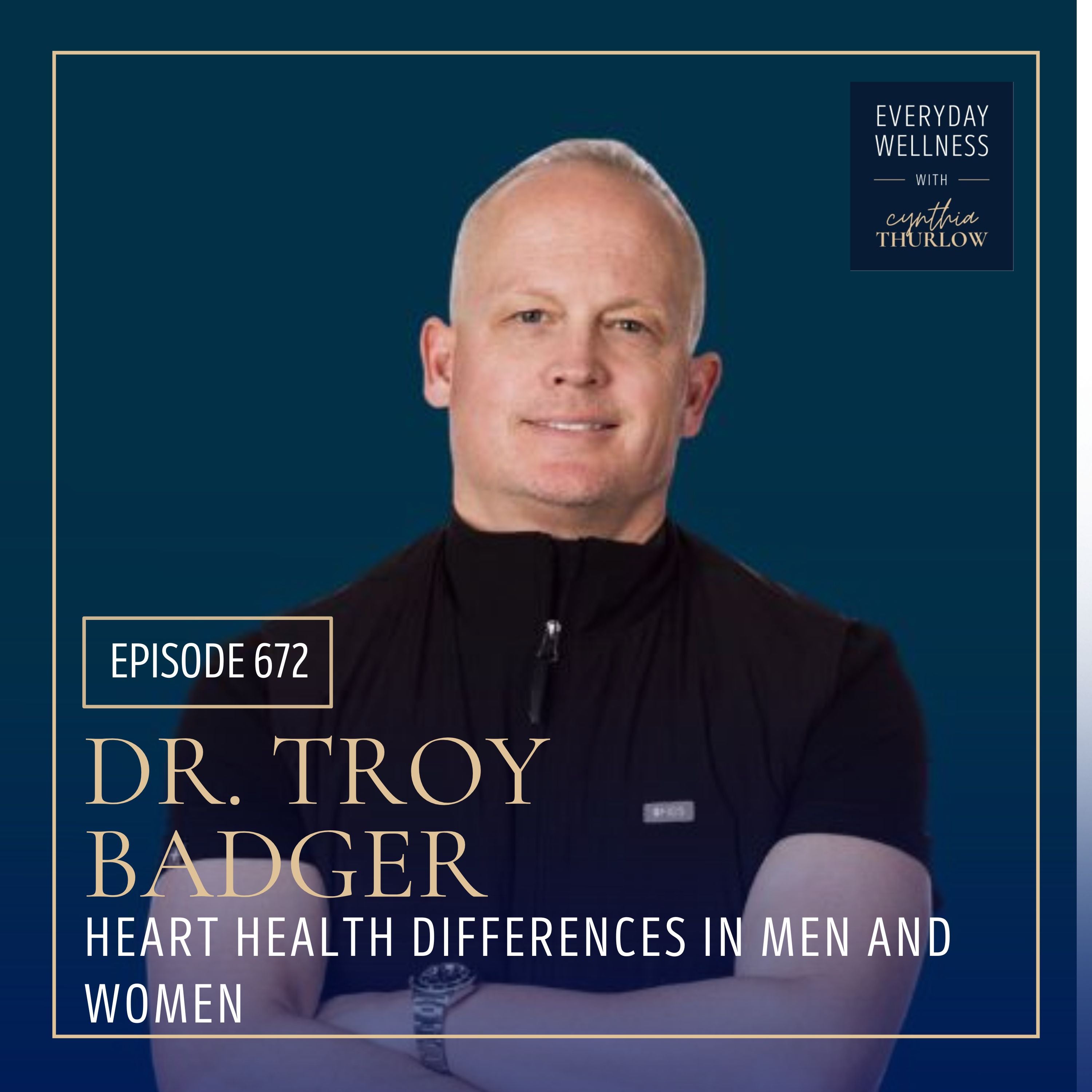
Today, I’m honored to connect with Dr. Troy Badger. He is a board-certified cardiologist and interventionalist and the founder of Cardiostrong, a concierge preventive cardiology clinic in Provo, Utah, focused on reducing cardiovascular risk, optimizing metabolic health, and improving strength and cardiorespiratory fitness for executives and athletes. In today’s conversation, we discuss Dr. Badger’s gender- and age-specific approach to heart health, including treatment differences for men and women, and diagnoses such as INOCA, SCAD, vasospastic disease, and Takotsubo. We examine emotions and their influence on heart health, coronary ischemia and cardiomyopathies, labs and diagnostics, how Dr. Badger assesses risk in his patients, and the differences between a CAC and a CCTA. Dr. Badger also shares the labs he finds essential for all patients and discusses the role of VO2 Max, cardiovascular training, and lifestyle—specifically nutrition, the use of GLP-1 drugs, and a multidisciplinary
In Brought to You By: How Corporations Warped the Truth, Conned the Public, and Broke Democracy (https://bookshop.org/a/12343/9781639736331), Amy Westervelt exposes the plot hidden within the familiar story of science denial. Over the last century, Big Industry has built a vast apparatus of think tanks, lobbyists, sponsored university labs, and obliging news networks to con the public and fool decision-makers, poisoning the informational ecosystem and warping the nature of truth along the way. With her signature wit and incisiveness, Westervelt introduces the masterminds of corporate misinformation: Herb Schmertz, the public relations pioneer who made Mobil “the thinking man's oil company;” Richard Edelman, the PR guy who helped the dairy industry vilify oat milk; David Petraeus, the disgraced spy chief using counter-insurgency tactics to discredit climate science; and many more. She shows how these company men have worked to usher in an era of unprecedented corporate control. Only by
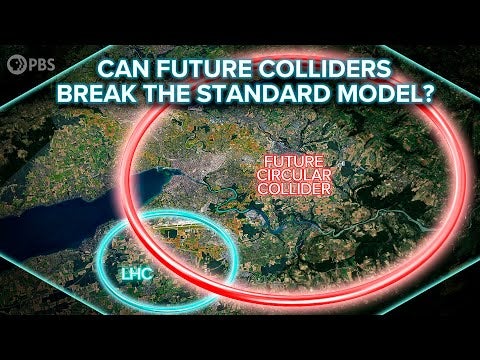
PBS Member Stations rely on viewers like you. To support your local station, go to: http://to.pbs.org/DonateSPACE ↓ More info below ↓ Uploaded 24-08-20 Sign Up on Patreon to get access to the Space Time Discord! Check out the Space Time Merch Store If you wanna make an omelet you gotta break a few eggs. And by omelet I mean a theory of everything, and by eggs I mean a billion billion subatomic particles obliterated in the next generation of giant particle colliders. Hosted by Matt O'Dowd Written by Dan Garisto and Matt O'Dowd Graphics by Leonardo Scholzer, Yago Ballarini, and Pedro Osinski Directed by: Andrew Kornhaber Camera Operator: Bahaar Gholipour Executive Producers: Eric Brown and Andrew Kornhaber End Credits Music by J.R.S. Schattenberg: https://www.youtube.com/channel/UCRl6-nb4iOnsij-vnpAjp0Q In June, the consortium of Europe’s top particle physicists published their vision for the next several years of particle physics experiments in the EU. A big part of that is the Future C
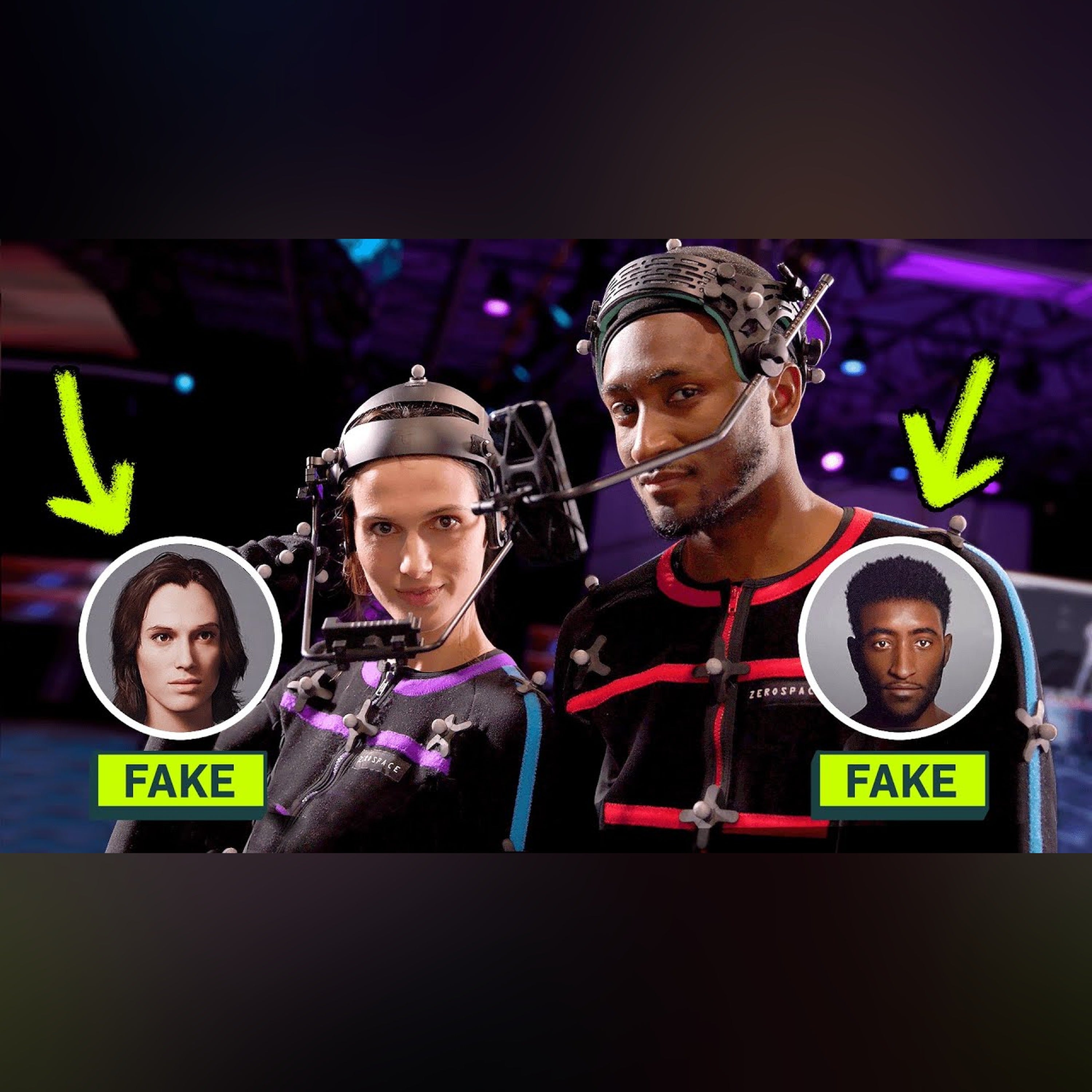
This new tech is changing how movies get made. So @mkbhd and I tested it out... Watch MKBHD's video: https://youtu.be/RM7SobH8ZO0 I’ve been obsessed with sci-fi movies since I was a kid. I love being transported to another world. But lately, I’ve been wondering: How do those worlds look so… REAL? The tech behind movies has exploded in complexity and realism, changing how stories come to life on screen. Luckily, at the same time, those tools are becoming more and more available to more people telling stories. It’s not just blockbusters like Avatar 2 or Avengers or Dune. It’s also smaller budget films like Everything Everywhere All at Once or even… YouTube creators? In this video, Marques Brownlee and I test out 3 movie-making tools that are changing how movies, shows, and maybe even YouTube videos (??) get made. We’re at ZeroSpace Studios in New York to show you how each of these crazy technologies work - and how you might be able to use them. Along the way, we hit big questions like: W
In the rainforests of Madagascar, one species of lemur displays a striking resemblance to an opera singer. Like trained sopranos, these lemurs use special vocal techniques to make their calls carry across the forest. In this episode of Science Quickly, we dive into fascinating new research into how this one species, Indri indri, evolved to have such a striking musical ability and how scientists are tuning in with conservation in mind. Recommended Reading: “Dynamics of Jaw Kinematics and Fundamental Frequency Suggest Vocal Tract Tuning in the Indris’ song,” by Filippo Carugati et al, in PLOS Computational Biology. Published online September 21, 2026 (https://journals.plos.org/ploscompbiol/article?id=10.1371%2Fjournal.pcbi.1014781) “Passive Acoustic Monitoring for the Estimation of Density of the Singing Lemur (Indri indri),” by Valeria Ferrario et al, in Conservation Science and Practice. Published online October 9, 2026 (https://conbio.onlinelibrary.wiley.com/doi/10.1111/csp2.70428) Ou
In the debut episode of our new book club, we dive into Entangled Life, by Merlin Sheldrake, a fascinating exploration of the hidden world of fungi. Join us as we discuss mushroom intelligence, underground fungal networks that connect plants, fungi with more than 23,000 mating types and the surprising role a ”pretty golden mold” played in making penicillin widely available. Recommended Reading: Entangled Life. Merlin Sheldrake. Random House, 2020 (https://www.penguinrandomhouse.com/books/566795/entangled-life-by-merlin-sheldrake/) See the hidden fungal network so big it could stretch to Proxima Centauri and back (https://www.scientificamerican.com/article/see-the-hidden-fungal-network-so-big-it-could-stretch-to-proxima-centauri-and-back/) Out of Sight, ‘Dark Fungi’ Run the World from the Shadows (https://www.scientificamerican.com/article/mysterious-dark-fungi-are-lurking-everywhere/?search=fungus) Our theme music was composed by Dominic Smith.
What does it mean to do math in a world where artificial intelligence might do it better? That’s the question mathematicians are grappling with as AI systems advance. Could this technology be a boon to the field, or should mathematicians unite to fight against it? On this episode of Science Quickly, Scientific American senior reporter Joseph Howlett reads his December/January cover story, “The End of Math as We Know It.” In his piece, he speaks with leaders in the field who are embracing AI as an opportunity to solve age-old problems and others who see it as a hindrance to the true art of mathematics. Science Quickly is produced by Rachel Feltman, Fonda Mwangi, Allison Rodgers and Jeff DelViscio. This episode was edited by Allison Rodgers. The original article was fact-checked by Jennifer Hackett and copyedited by Angelique Rondeau and Aaron Shattuck.’
Public funding for a small group can be justified when the wider community also benefits.
Share your view, then see how readers voted. No sign-in required. This poll is shared across stories.
Do you agree or disagree?
Common Quandary
A Common Quandary to discuss
Another conversation to explore, separate from this news story.
A pricey AI tutor can turn B students into A students. Should schools let them use it?
An effective AI tutor adapts to each student and dramatically improves performance, but its subscription is expensive. A public school cannot provide it to everyone and worries that allowing its use will deepen existing inequality.
Should access be limited when a beneficial tool cannot yet be shared fairly?