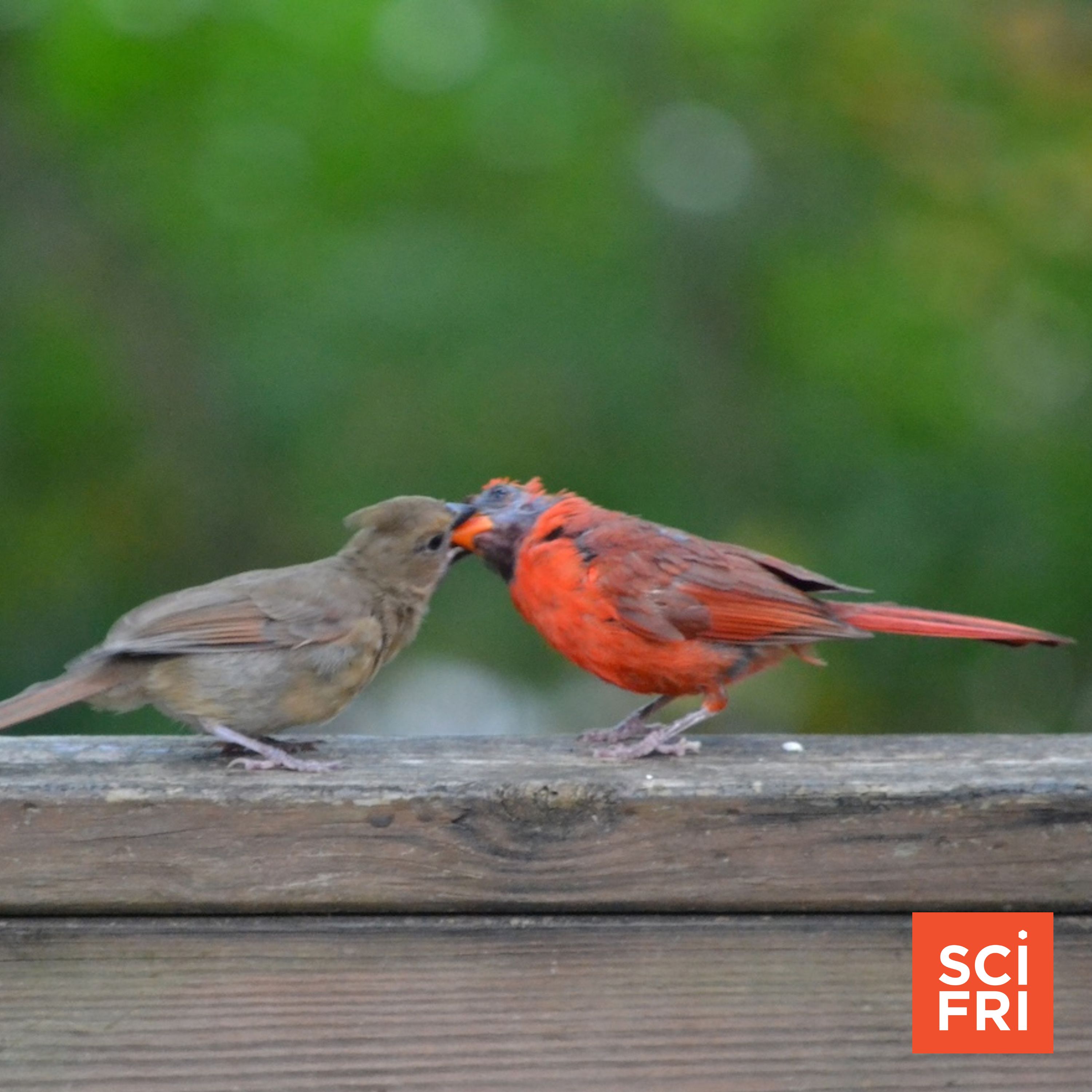
How, and why, to connect with wildlife in your own backyard
20 min
Listen through the publisher, then discuss the episode here or arrange an in-person Roundtable. Your city determines where to meet.
Roundtables are designed for groups of four, with a shared subject and room for everyone to speak. Come for discussion, with no dating expectation.
Many of us have gotten sucked into the tiny dramas unfolding in our backyards, or on the bird feeder or the fire escape. But not everyone can turn those observations into a best-selling book. Author Margaret Renkl joins Host Flora Lichtman to talk about the SciFri Book Club pick for November and December, “The Comfort of Crows: A Backyard Year.” (https://bookshop.org/a/18570/9781954118461) In it, she tells the stories of her own yard over the course of a year to help her make sense of the changes in our world and in her own life. Read an excerpt from “The Comfort of Crows.” (https://www.sciencefriday.com/articles/comfort-of-crows-book-excerpt/) Learn more (https://www.sciencefriday.com/scifri-book-club/) about the SciFri Book Club. Guest: Margaret Renkl is a writer and author of the book “Comfort of Crows: A Backyard Year.” Transcripts for each episode are available within 1-3 days at sciencefriday.com (https://www.sciencefriday.com/segments/scifri-book-club-reads-the-comfort-of-crows-a-backyard-year/). Got a science question that’s keeping you up at night? Call us: 877-472-4374 Hosted by Simplecast, an AdsWizz company.
Episode information is provided by the publisher. Listening takes place on the publisher’s service.
In Brought to You By: How Corporations Warped the Truth, Conned the Public, and Broke Democracy (https://bookshop.org/a/12343/9781639736331), Amy Westervelt exposes the plot hidden within the familiar story of science denial. Over the last century, Big Industry has built a vast apparatus of think tanks, lobbyists, sponsored university labs, and obliging news networks to con the public and fool decision-makers, poisoning the informational ecosystem and warping the nature of truth along the way. With her signature wit and incisiveness, Westervelt introduces the masterminds of corporate misinformation: Herb Schmertz, the public relations pioneer who made Mobil “the thinking man's oil company;” Richard Edelman, the PR guy who helped the dairy industry vilify oat milk; David Petraeus, the disgraced spy chief using counter-insurgency tactics to discredit climate science; and many more. She shows how these company men have worked to usher in an era of unprecedented corporate control. Only by
What if your AI agent could find the people you should know before you even start looking? Cosign is building a professional network around reputation and trusted recommendations, and now agents can use that network too. MTS host Sophia Dew sits down with a16z’s David Booth and Cosign’s Bella Nazzari to discuss what they’ve learned since launching Cosign, why traditional profiles often miss the operators doing the most important work, and how the Cosign Awards are surfacing talent through the people willing to vouch for them. They also explore an emerging behavior: people connecting their agents to Cosign to continuously find relevant people, lists, and opportunities, and what professional networking could look like when both humans and their agents participate. Resources: Follow David Booth: https://x.com/davidbooth Follow Bella Nazzari: https://x.com/nazzari Follow Sophia Dew: https://x.com/sophiadew Learn more about Cosign:https://cosign.co/ Connect your agent to Cosign:https://cosi
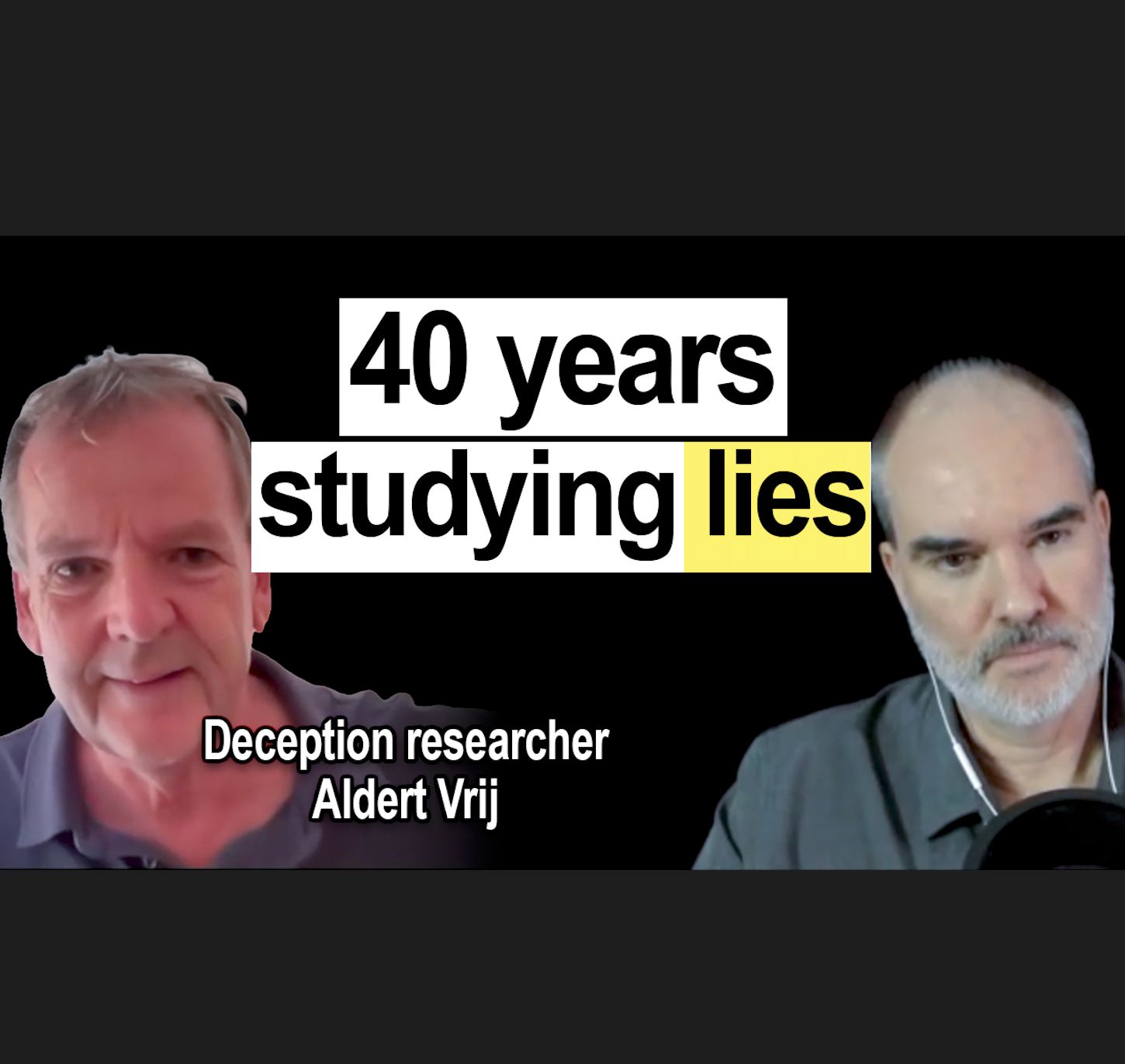
What actually works when it comes to detecting lies, and why are so many popular ideas about reading people and nonverbal behavior at odds with the scientific research? I talk with Aldert Vrij, one of the world's leading deception-detection researchers, who has spent almost four decades studying these topics. We discuss why what people say is far more revealing than their body language; why the perceived “sexiness” of reading nonverbal behavior has contributed to widespread myths and misconceptions; whether vocal behaviors like pitch, volume, and hesitation contain meaningful clues; and whether there's value in analyzing minor word choices and turns of phrase, as is done in so-called “statement analysis.” We discuss Paul Ekman's legacy as a source of faulty ideas about deception, micro-expression-based deception detection training, and the strategies that popular “body language experts” use to appear scientifically credible while simultaneously promoting ideas that conflict with the sc
Sometimes all you need to identify a bird is a single feather. Because collecting bird feathers is prohibited in the U.S. to protect birds from poachers, start by taking a photo with a common object for scale. Then you can use online resources like the iNaturalist app or Featherbase website to help you solve the mystery. Keep your prime suspect in mind when you’re back where you found the feather and you might get to see the bird itself — feathers and all. More info and transcript at BirdNote.org (https://www.birdnote.org/podcasts/birdnote-daily/what-if-you-only-have-feather). Want more BirdNote? BirdNote is a nonprofit. Hosted by Simplecast, an AdsWizz company.
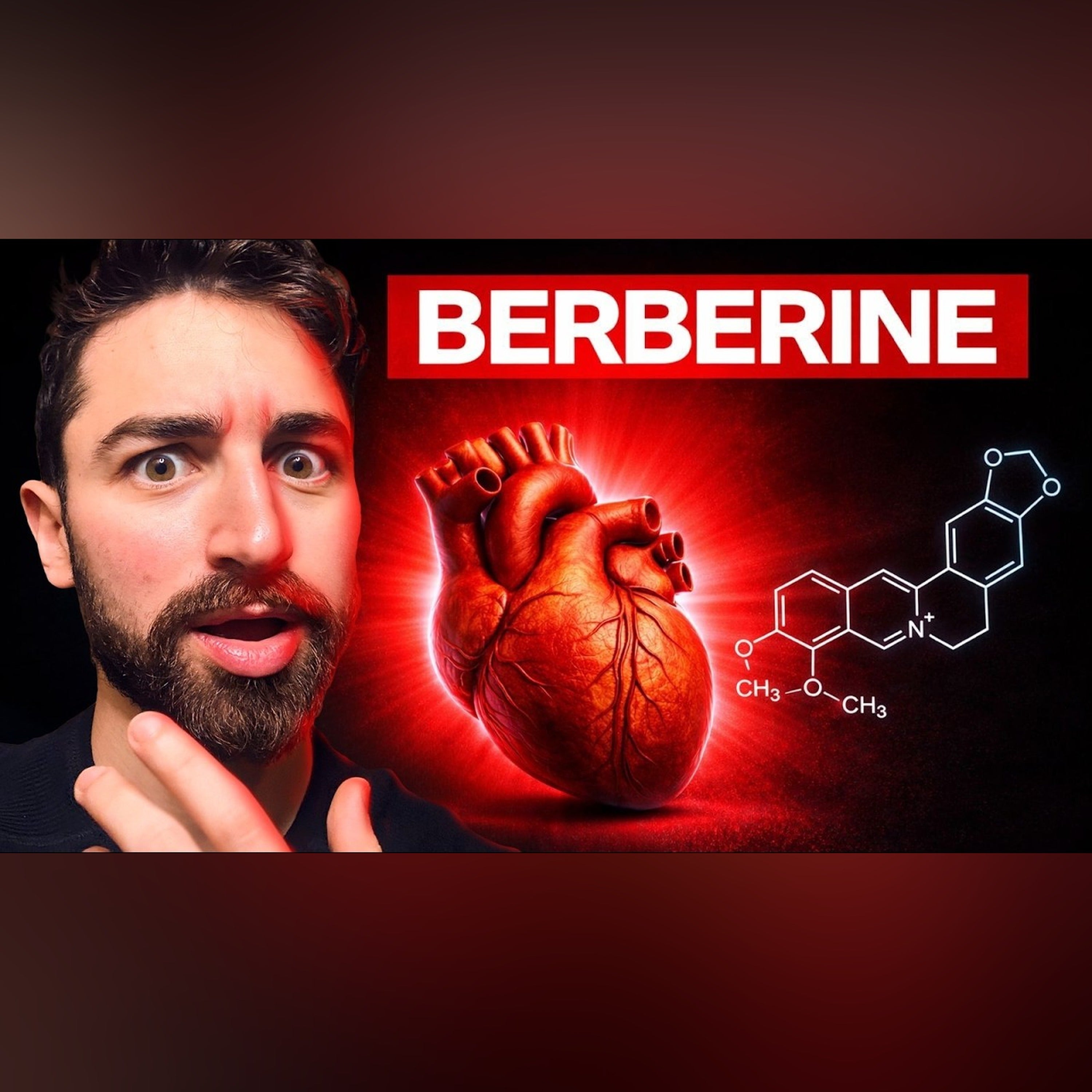
For extra nuances, all the references and early access to data like these, see the best-selling science letter: https://staycuriousmetabolism.substack.com/p/how-berberine-lowers-cholesterol?r=40ekz2 In this video, we unpack the stunning mechanism behind berberine, the yellow plant alkaloid that increases LDL receptors not by starving the liver of cholesterol, but by stabilizing the blueprint that cells use to builds them. It’s a twist in human biochemistry that reshaped how I think about cholesterol manipulation — and it might reshape how you do too. Then I’ll take you inside my own high-stakes N=1 experiment Hundred Health Link: https://www.hundred.com/STAYCURIOUS Discount Code: STAYCURIOUS50 knocks $50 off membership As a scientific advisor at Hundred Health, I candidly hold a small equity stake in the company. I’ve chosen to partner with Hundred Health because I genuinely believe it has the potential to be a disruptive force for good in personalized healthcare. It’s a tool unlike an
How can you make your voice heard in a noisy world? The key is public speaking and presentation literacy, and we can help: http://bit.ly/TMCPSApp Uploaded 14-01-21 -- Storytelling is an ancient art; as humans developed language and culture, we learned to share our stories, thoughts, and dreams. And that storytelling evolved into public speaking, and our audience— thanks to the internet— is the whole world, not just a campfire. So how can we make our voices heard in such a busy space? Chris Anderson digs into why presentation literacy is the skill of the future. Lesson by Chris Anderson, directed by Avi Ofer. Support Our Non-Profit Mission ---------------------------------------------- Support us on Patreon: http://bit.ly/TEDEdPatreon Check out our merch: http://bit.ly/TEDEDShop ---------------------------------------------- Connect With Us ---------------------------------------------- Sign up for our newsletter: http://bit.ly/TEDEdNewsletter Find us on Twitter: http://bit.ly/TEDEdTwit
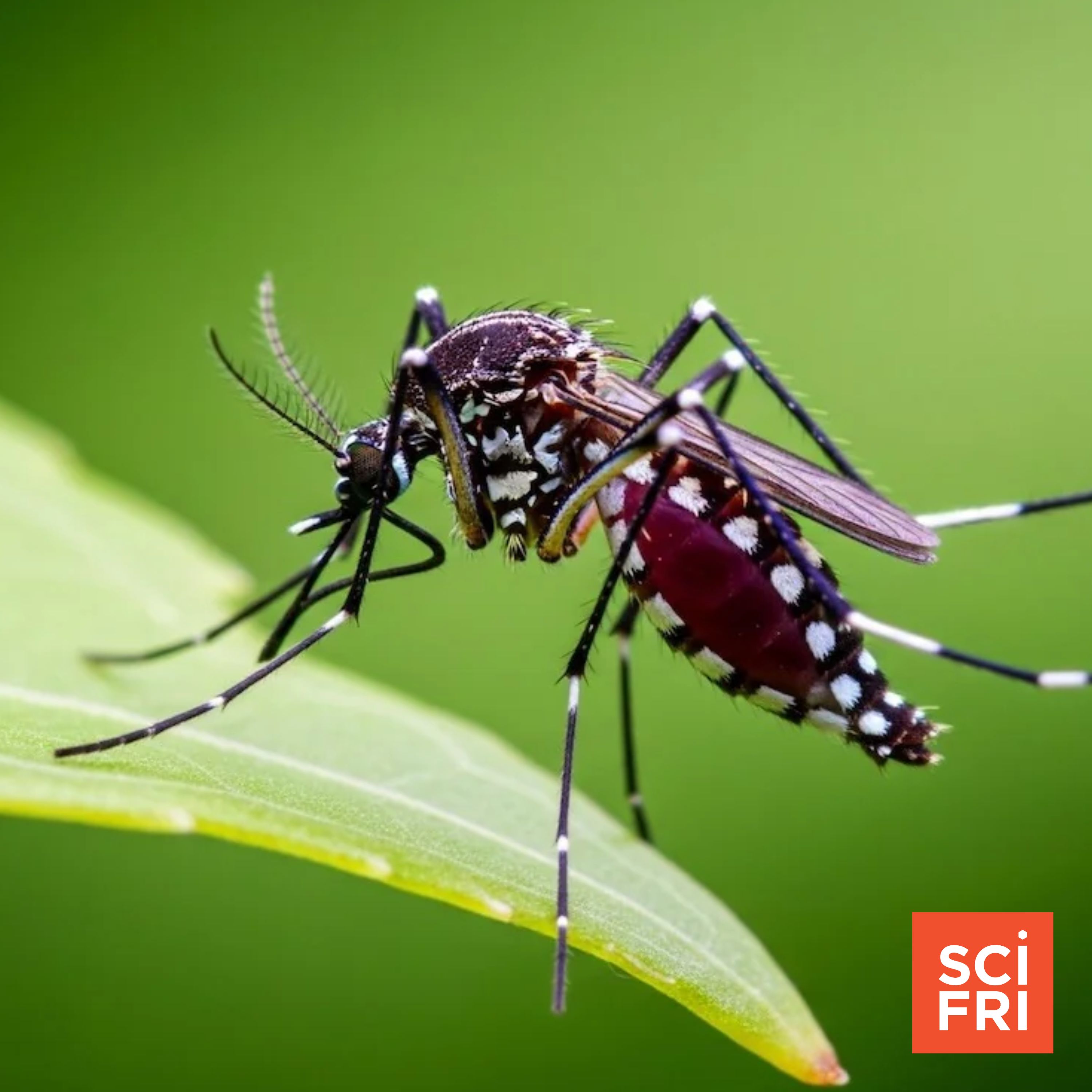
In Florida, three counties have declared states of emergency due to rising cases of dengue (https://www.sciencefriday.com/segments/floridas-dengue-outbreak/)—a viral infection spread by mosquitos carrying the dengue virus. There have been around 1,000 cases (https://www.cdc.gov/dengue/data-research/facts-stats/current-data.html) in the state this year, making it the largest outbreak (https://apnews.com/article/dengue-virus-outbreak-florida-7f0bda2b0a1e7895e834010f38cedb1e) in the continental U.S. in decades. But this is part of a larger story. Over the last couple of decades, the number of dengue cases has surged globally, and dengue is becoming more common in places it hasn’t historically been. So what’s behind these shifts? And what public health measures should we be thinking about? Flora chats about this with epidemiologist Gabriela Paz-Bailey, chief of CDC’s dengue branch in San Juan, Puerto Rico. Guest: Dr. Gabriela Paz-Bailey is an epidemiologist and chief of the dengue branch i
On November 18, the Voyager 1 spacecraft reached a cosmic milestone (https://www.sciencefriday.com/segments/voyager-1-is-a-full-light-day-away/), passing one light-day in distance from Earth, over 16 billion miles. That means that any transmission to or from Voyager takes a full 24 hours to arrive. NASA’s Jennifer Rocca joins Ira Flatow to mark the achievement, and look back on the legacy of the nearly 50-year flight of Voyager 1. Then, in an archival interview (https://www.sciencefriday.com/segments/are-we-there-yet-voyager-1-finally-answers-yes/) from 2013, Ira talks about the mission with the late Ed Stone, who managed the Voyager project for 50 years. Guest: Jennifer Rocca is NASA JPL deputy division manager for astrophysics flight projects. Transcripts for each episode are available within 1-3 days at sciencefriday.com (https://www.sciencefriday.com/segments/voyager-1-is-a-full-light-day-away/). Got a science question that’s keeping you up at night? Call us: 877-472-4374 Hosted by
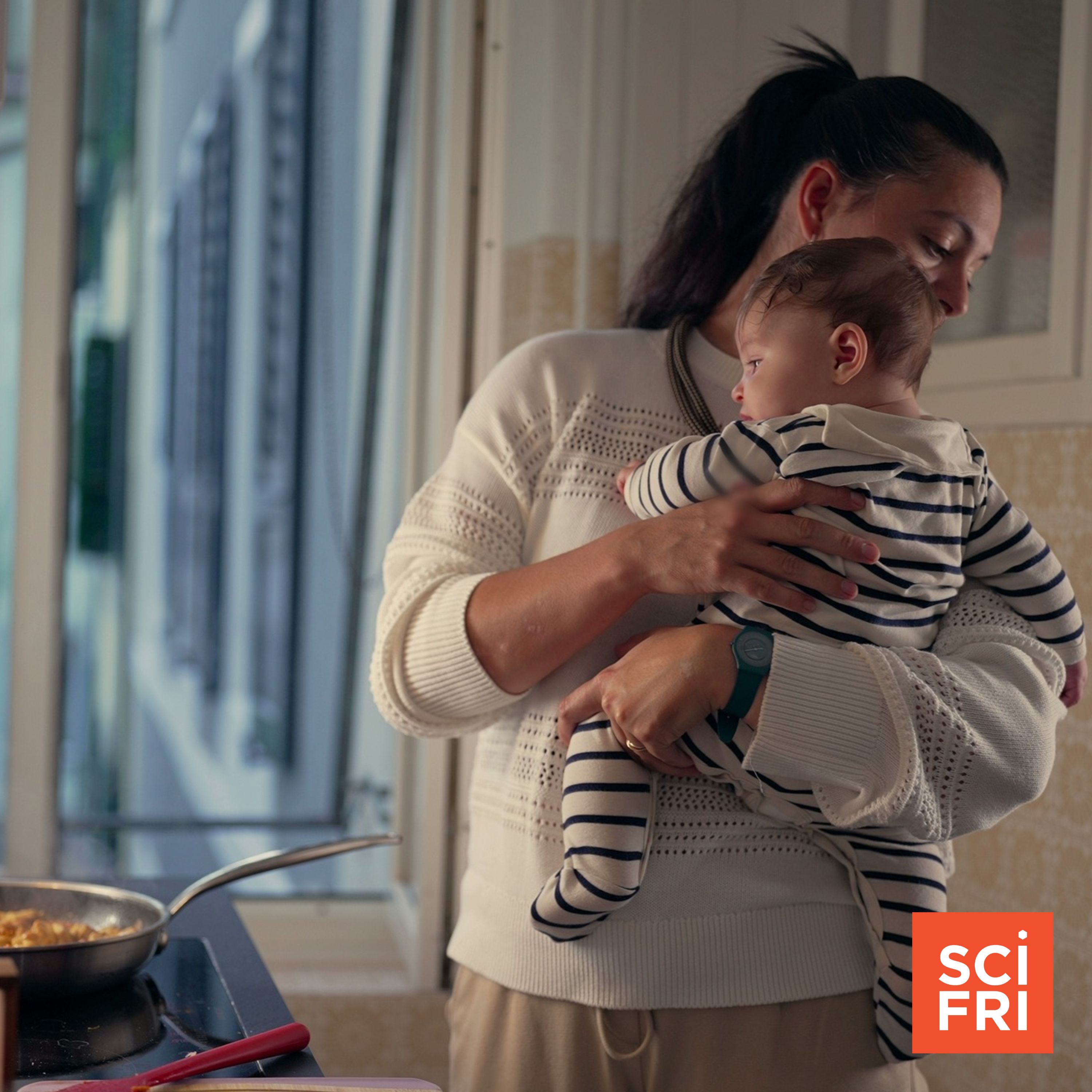
The term “mommy brain” has been popularized to describe a range of changes people experience (https://www.sciencefriday.com/segments/neuroscience-behind-mommy-brain/) during pregnancy and postpartum. They can include forgetfulness and brain fog, or larger personality changes, like a sudden fear of heights or increased paranoia. But how much of this can be tied to changes in the brain? And what happens to the brains of parents who haven’t given birth themselves? Neuroscientist Susana Carmona studies brain changes in pregnancy and parenthood. She joins Flora to talk about what she’s learned, and her new book, “A Mother’s Brain.” (https://bookshop.org/a/18570/9780262054782) Read an excerpt from “A Mother's Brain: The New Science of the Neuro-Maternal Revolution” (https://www.sciencefriday.com/articles/a-mothers-brain-book-excerpt/) Guest: Dr. Susana Carmona is a neuroscientist and author of “A Mother’s Brain: The New Science of the Neuro-Maternal Revolution.” She’s based in Madrid, Spain.
Health advice should account for people's income, time, and practical circumstances.
Share your view, then see how readers voted. No sign-in required. This poll is shared across stories.
Do you agree or disagree?
Common Quandary
A Common Quandary to discuss
Another conversation to explore, separate from this news story.
You find a wallet full of cash. Can you take a finder’s fee before returning it?
You find a wallet containing identification and several hundred dollars. Returning it will require a detour and some effort. The owner would probably never know if a small amount were missing.
Can an unrequested good deed entitle someone to compensation?