Online voting is not like online banking… Get your Henson razor (with 100 extra blades): http://hensonshaving.com/cleo This year, more people will likely vote than ever before in history. It’s being called the “The Ultimate Election Year”, when countries with half the world’s population can vote for their leaders. This big test of democracy requires millions of polling stations and billions of ballots. But voting’s not always easy! People might deal with long lines or need to travel far distances. In the US, we vote on a Tuesday, so people often need to take time off work… I’m really excited to vote! And I’ve also been wondering… wouldn’t it be easier if I could just… hit a button on my phone? Why can’t I vote online? And what would happen if I could? Over the past two months, I called up a bunch of voting and security experts to try to answer that question. And the answer I found is more controversial, complicated, and high stakes than I could have ever imagined… Chapters: 0:00 Why ca
The human brain remains one of the greatest unsolved mysteries in science. We have roughly 86 billion neurons firing in a way that somehow produces intelligence, and yet the brain is still largely a black box. In the early days of AI, researchers looked to the brain for clues about how to build smarter machines. But today, that relationship has been flipped on its head. Join Professor Hannah Fry and neuroscience researchers Maria Eckstein and Kim Stachenfeld to see how scientists are using AI to better understand the human mind. Please leave us a review on Spotify or Apple Podcasts if you enjoyed this episode. We always want to hear from our audience whether that's in the form of feedback, new idea or a guest recommendation! Hosted by Simplecast, an AdsWizz company. See https://pcm.adswizz.com for information about our collection and use of personal data for advertising.
Learn More About 80,000 Hours at: https://www.80000hours.org/spacetime PBS Member Stations rely on viewers like you. To support your local station, go to:http://to.pbs.org/DonateSPACE Sign Up on Patreon to get access to the Space Time Discord! From hoverboards to flying cars to cloud cities, anti-gravity is a staple of science fiction and our dream of a less Earth-bound future. But in the real universe gravity appears to be a purely attractive force. Feels like its main MO is keeping us stuck to the surface of this lonely rock. But maybe if we science hard enough we can remove the fiction from science fiction. For the sake of our flying cars we should at least try. And for many years, physicists have wondered whether a certain well-known exotic material may experience gravitational repulsion from the Earth. That material is antimatter, and physicists at CERN have just completed a very long and very difficult experiment to answer a seemingly simple question: does antimatter fall down, o
In this calm and sleepy facts episode, we turn inward to explore the quiet, extraordinary science of human memory, the invisible system that holds together every experience, every face, and every half forgotten song from childhood. We begin with what memory actually is, not a recording stored neatly in a single place but a living reconstruction, rebuilt each time it is recalled and subtly reshaped in the process. We journey into the neuroscience behind it all, from the hippocampus, the small seahorse shaped structure at the center of memory formation, to the synapses that strengthen each time a memory is revisited, to the remarkable role sleep plays in moving the day's experiences from temporary storage into the deeper architecture of the brain. We explore the different kinds of memory, from the episodic memories that let us relive a moment in vivid detail to the procedural memories that let us ride a bicycle without thinking, to the brief sensory traces that hold the echo of a sound f
Dive into the mind-bending works of Argentinian writer Jorge Luis Borges, whose work pioneered the literary style magical realism. Uploaded 11-07-19 -- What would it be like to have a limitless memory? Can the meaning of life be found in an infinite library? Is time a labyrinth or a single moment? Jorge Luis Borges explored these questions of infinity in his many works. His body of essays, poems and stories pioneered the literary style known as magical realism— and each was just a few pages long. Ilan Stavans dives into the world of Borges. Lesson by Ilan Stavans, directed by Aim Creative Studios. Sign up for our newsletter: http://bit.ly/TEDEdNewsletter Support us on Patreon: http://bit.ly/TEDEdPatreon Find us on Twitter: http://bit.ly/TEDEdTwitter Peep us on Instagram: http://bit.ly/TEDEdInstagram View full lesson: https://ed.ted.com/lessons/the-magical-mathematical-fictions-of-jorge-luis-borges-ilan-stavans Thank you so much to our patrons for your support! Without you this video wo
When a young man moved into a Kentucky townhouse with his sister, he noticed something unusual near the top of the stairs: a handprint on the wall. There was nothing particularly frightening about it, but what happened when they tried to paint over it was difficult to explain. No matter how many times they covered it, the handprint kept coming back. And that wasn't the only strange thing happening in the house. Before long, he began hearing unexplained footsteps and experiencing an uncomfortable feeling that someone was watching him. He tried to find reasonable explanations, but the experiences continued, often when he knew he was alone. Then one night, he heard something that made the activity even more unsettling. Was the townhouse simply an old building with a few unusual quirks—or was something making its presence known? #RealGhostStoriesOnline #TrueGhostStories #HauntedTownhouse #MysteriousHandprint #GhostlyChildren #UnexplainedFootsteps #KentuckyGhostStories #ParanormalEncounters
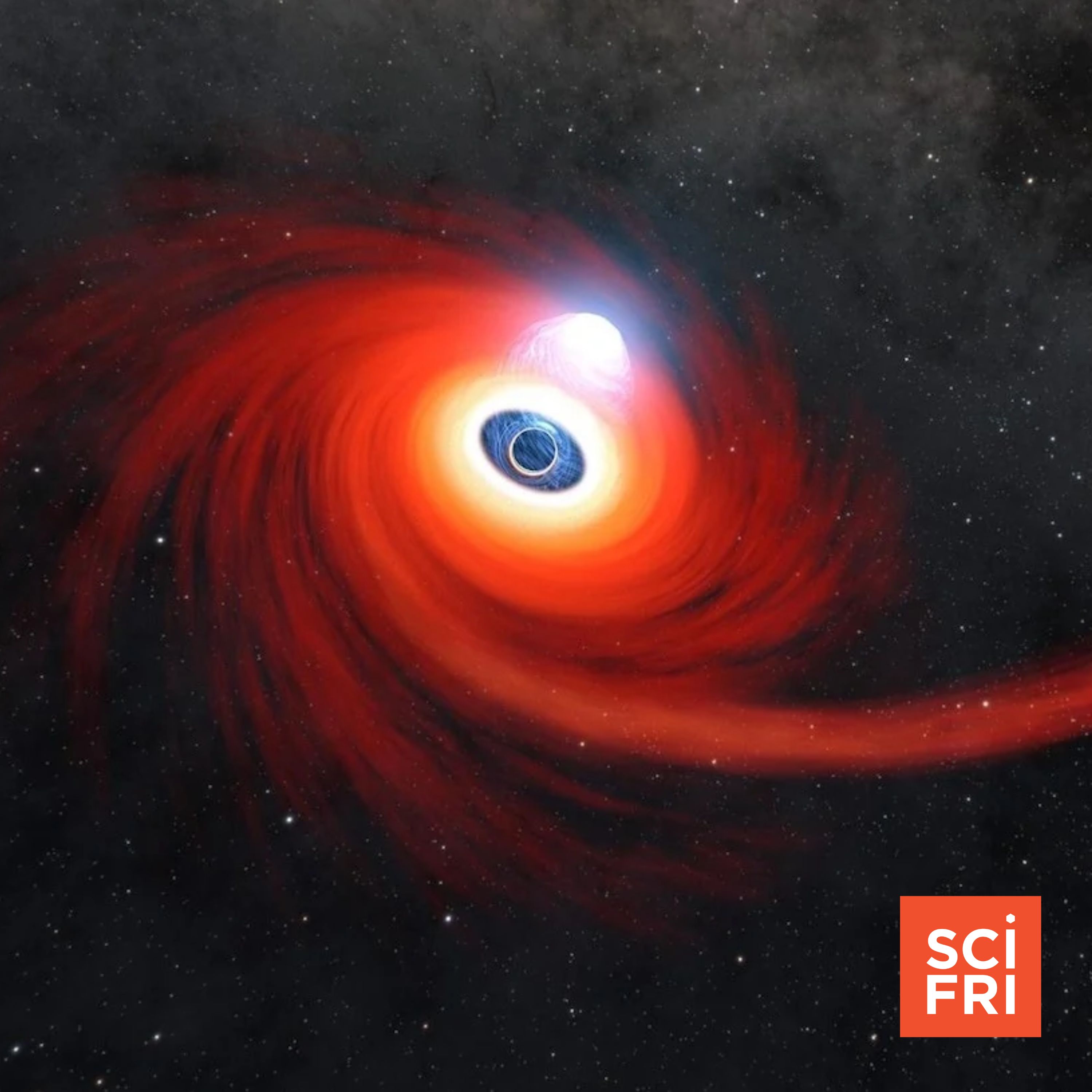
How do black holes work, and could they be attached to mini-universes? Is there only one universe, or a multitude of different universe possibilities? And is time travel ruled out by the laws of physics? Astrophysicist Janna Levin wrestles with these ideas and more in a new YouTube miniseries called “In Theory.” (https://www.youtube.com/watch?v=DzXwaYNCL5Y) She joins Ira to talk about some of the weird and wonderful mysteries of the universe (https://www.sciencefriday.com/segments/most-expansive-ideas-in-the-universe-astrophysics?%2Futm_source=wnyc) and spacetime. Guest: Dr. Janna Levin is the Claire Tow Professor of Physics and Astronomy at Barnard College. She’s also host of a new StarTalk miniseries called “In Theory.” Transcripts for each episode are available within 1-3 days at sciencefriday.com. (https://www.sciencefriday.com/segments/most-expansive-ideas-in-the-universe-astrophysics?%2Futm_source=wnyc) Got a science question that’s keeping you up at night? Call us: 877-472-4374
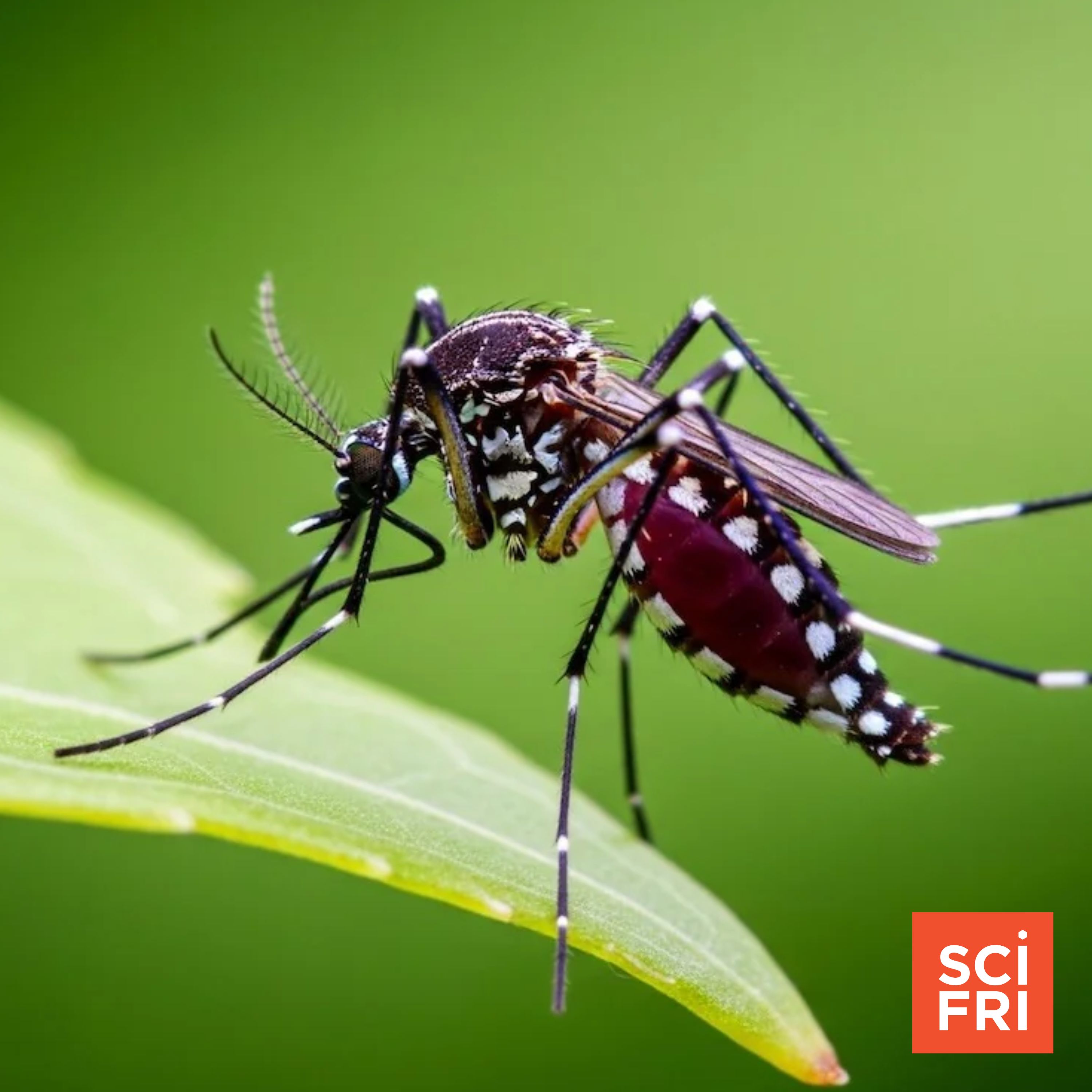
In Florida, three counties have declared states of emergency due to rising cases of dengue (https://www.sciencefriday.com/segments/floridas-dengue-outbreak/)—a viral infection spread by mosquitos carrying the dengue virus. There have been around 1,000 cases (https://www.cdc.gov/dengue/data-research/facts-stats/current-data.html) in the state this year, making it the largest outbreak (https://apnews.com/article/dengue-virus-outbreak-florida-7f0bda2b0a1e7895e834010f38cedb1e) in the continental U.S. in decades. But this is part of a larger story. Over the last couple of decades, the number of dengue cases has surged globally, and dengue is becoming more common in places it hasn’t historically been. So what’s behind these shifts? And what public health measures should we be thinking about? Flora chats about this with epidemiologist Gabriela Paz-Bailey, chief of CDC’s dengue branch in San Juan, Puerto Rico. Guest: Dr. Gabriela Paz-Bailey is an epidemiologist and chief of the dengue branch i
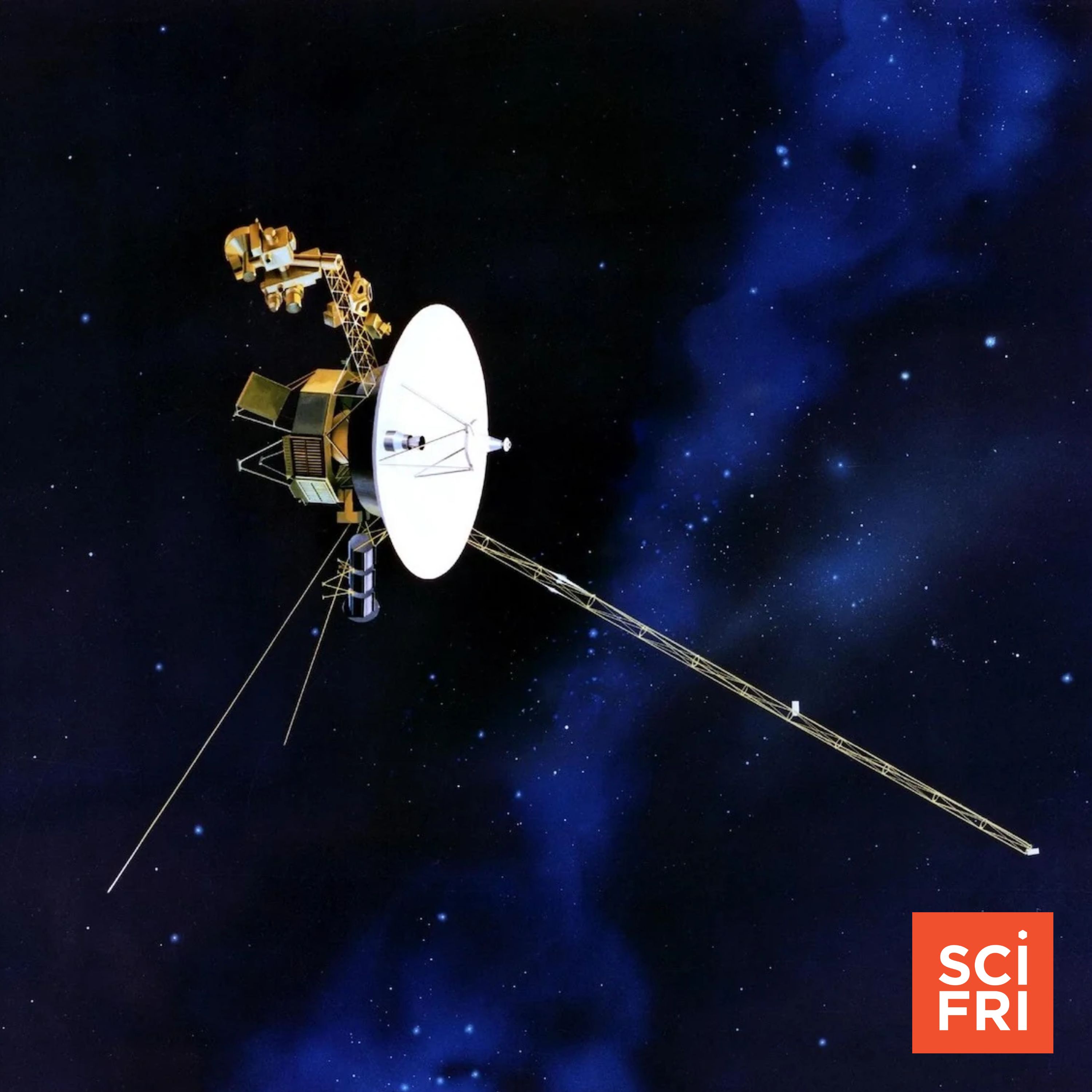
On November 18, the Voyager 1 spacecraft reached a cosmic milestone (https://www.sciencefriday.com/segments/voyager-1-is-a-full-light-day-away/), passing one light-day in distance from Earth, over 16 billion miles. That means that any transmission to or from Voyager takes a full 24 hours to arrive. NASA’s Jennifer Rocca joins Ira Flatow to mark the achievement, and look back on the legacy of the nearly 50-year flight of Voyager 1. Then, in an archival interview (https://www.sciencefriday.com/segments/are-we-there-yet-voyager-1-finally-answers-yes/) from 2013, Ira talks about the mission with the late Ed Stone, who managed the Voyager project for 50 years. Guest: Jennifer Rocca is NASA JPL deputy division manager for astrophysics flight projects. Transcripts for each episode are available within 1-3 days at sciencefriday.com (https://www.sciencefriday.com/segments/voyager-1-is-a-full-light-day-away/). Got a science question that’s keeping you up at night? Call us: 877-472-4374 Hosted by
An essential service should remain open until a workable alternative is available.
Share your view, then see how readers voted. No sign-in required. This poll is shared across stories.
Do you agree or disagree?
Common Quandary
A Common Quandary to discuss
Another conversation to explore, separate from this news story.
Your neighbor keeps playing music at midnight. How many friendly warnings do they get?
A neighbor regularly plays music late enough to disturb your sleep. Friendly requests help briefly, but a formal complaint could threaten their lease in a building with few affordable options.
How far should empathy extend when someone repeatedly ignores your needs?